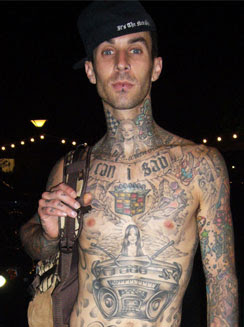
I was thinking about this in relation to control and certainty. That from the position of uncertainty or anxiety regarding something or someone consumption of that thing or being brings certainty, it brings control. Learning about something for instance brings a maleable control over that knowledge. The understanding of it brings it within your being. You consume it. Only then can you properly relate it.
But then consider voodoo and cannabilism. The idea is that in the consumption of their flesh and albino bones you also consume their essence/spirit/power. Lust too is like cannabilism, the focus is on the body, the flesh. The shape of the thighs and buttocks. The breasts. The taste, the smell. All equal to the sensations of eating a meal.
But what about the person? There’s an impasse. How to get their mind, their thoughts, their feelings? You sink your teeth in. You probe their mind. You desire to know. To understand. That way, there’s no uncertainty nor confusion. No shadows.
The desire to consume is the fulfillment of various basic needs (for e.g. thirst, hunger, protection from elements). Eating an apple brings control, from somewhere outside, into my body and makes me certain that I am capable of addressing the given emotional state that came to exist inside of me temporarily (hunger in this case). Love, I believe then, is the lust for another’s mind and our cannibalistic, physical rituals are a method of bootstrapping. Of bringing us ever closer to sensorially apprehending the one thing that we wish more than anything to “taste”: what another mind is thinking. It is, potentially, one of the highest needs that man can experience and I am sure that its evolution is tangled in the history of precedent animals.
There is also a desire to consume things that are inessential to one’s practical existence (i.e. wants-which by definition are inherently unfulfillable). One is in this case not consuming to understand anything but rather it is empty consumption to feed a void in one’s self-worth.
I think then that there are very basic and clearly defined needs and ones that certainly tend to bring anxiety and confusion (if not addressed appropriately), those being the more transcendental needs. We certainly do live in an age where people are profoundly certain of everything they do not want, but have no idea of what they really do need. Most people have been fooled by a mechanism by which one may profit from their emotional volatility because they never do search within themselves and listen to the voice of “hunger”.
Flower in a crannied wall,
I pluck you out of the crannies,
I hold you here, root and all, in my hand,
Little flower-but if I could understand
What you are, root and all, and all in all,
I should know what God and man is.
I think we only consume that which relates to our sense of identity. Our sense of identity is a hungry beast and it needs to be fed. That which does not relate to identity is toxic. May explain the high level of consumption in individualistic cultures.
It seems obvious to me that we’re only consuming the way we do here in the US because it serves to ‘fill a void’ that can never truly be satisfied. Very few implement moderate consumption in all their affairs.
I will make the claim that everyone is consumed by or consumes too much of something. Whether it’s healthy eating habits, money, position, power, religion, sex, drugs, fear, ‘love’. We all contradict the idea of temperance. Please disagree not in speech but in action.
The things that seem the most necessary to our survival,( wife,job,house,god) could at any moment be taken or leave. Now why did we allow ourself to be consumed in turn consuming for control as much as we could this object/idea.
People out of their element or even comfort zone are true objects of entertainment.
Most people- as apart of getting a feeling of control back and entering back into their comfort zone or element they indulge or consume- something, anything to feel like they did before
It seems obvious to me that we’re only consuming the way we do here in the US because it serves to ‘fill a void’ that can never truly be satisfied. Very few implement moderate consumption in all their affairs.
I will make the claim that everyone is consumed by or consumes too much of something. Whether it’s healthy eating habits, money, position, power, religion, sex, drugs, fear, ‘love’. We all contradict the idea of temperance. Please disagree not in speech but in action.
The things that seem the most necessary to our survival,( wife,job,house,god) could at any moment be taken or leave. Now why did we allow ourself to be consumed in turn consuming for control as much as we could this object/idea.
People out of their element or even comfort zone are true objects of entertainment.
Most people- as apart of getting a feeling of control back and entering back into their comfort zone or element they indulge or consume- something, anything to feel like they did before
I was not getting at anything. Just saying that we consume only that we our identity relates to. I do not like spicy foods (a personal preference based on what I perceive) and thus I do not consume spicy food. There are many people who identify as a person who likes spicy food and so consume spicy food. Some people like paper thin women and so consume paper thin women. Others feel that only dogs like bones and so they consume women who a larger than a straw.
That which we identify with we consume. That which we don’t identify with we do not consume. The bigger the identity the bigger the consumption (generally through a perceived threat or lack of control). A person with a large sense of identity has a lot to lose and has a lot to control.
I agree with your comments and I feel they do not contradict what I have said. Do you think my words contradict yours?
Bringing in “identity” is a bit of a stretch, if all you’re really saying is “people consume what they like.” You don’t need to word it so that it sounds deeper than it really is. I know the desire to try to deepen your post with concepts like “identity” and “metaphysical chemistry” and “dialectics,” but if all you’re saying is “People consume what they like,” it’s much simpler to just leave it like that. Throwing in identity is just trying too hard.
I do not think it is just trying too hard. People generally do not like random things.
People generally like things that form part of their identity. This is a concept used in advertising (that works) and to illustrate: Travis from Blink 182.
It is obvious in this scenario that it is not just a matter of what he likes - it is a part of who he is (his identity).
If you mean “people consume what they like,” it’s plainer to just say that.
Two statements:
“People’s consumption is based on their sense of identity.”
“People buy what they like.”
They apparently mean the same thing to you. Between the two, which sounds more pretentious? Which seems more likely to be misunderstood?
Everybody agrees that people buy what they like, so saying that would be uncontroversial and not really at all deep, but since you wanted to appear more insightful than that, you chose to word it in the pretentious way. That’s what’s trying too hard.
If you don’t understand how I know that they mean the same thing to you, you gave it away here:
“Identifying as a person who likes spicy food” is the same as “liking spicy food,” so your whole Identity bologna is just a fancier way to say that it’s about what people like.
Welcome, M.M.,
Indeed hunger describes an important apect of all living beings and demands consumption. As for identity, IMHO, there are two ways of looking at it. 1. You are what you eat gets into the biological necessities of organisms. 2. You are what you wear becomes a human reason for consuming products. In what sense do these types of self-identification really matter?
What of the ideal that identity is based on character, not on relying on superficial trinkets of self-expression sold in the marketplace and advertised as “this is the real you”?
I am what I have i.e. I am what I consume. The consumption of things is to take its perceived or assumed qualities and value into oneself. These jeans are sexy and as a result of owning them I too will be sexy. This car evokes power as I, too, will do when I own it, and this house evokes status as I also will do when I own that, too. If I am not sexy, powerful, or without status my self-esteem is diminished. I am worthless because I own nothing of worth. This is the consumerist, or the individual of the consumerist society.
Ierellus, as always I enjoy your posts, it would be very nice is identity rested on character. If only, if only. We might then be able to organise a less pathological society.
Agree with … I am what I eat
But I also believe… I eat what I am … is valid.
Just thinking here… what if we connect these two together
… I am what I eat I eat what I am
Take out duplication
… I am what I eat what I am
And repeat
… I am what I eat what I am what I eat what I am what I eat what I am
Does it then become an endless psychological process of?
… I am… I eat… I am… I eat…
Does it matter if it begins with consumption (I eat) or with identity (I am)?
And yes, it would be nice to be a consumer of character rather than trinkets.
Well, no. The point is being a consumer, in the psychological sense and not just in the everyday sense, is negative. So being a consumer of character is just as damaging as being a consumer of trinkets. I mean, the OP was never about trinkets but about the obsession of consuming others, we can turn others (characters) into consumable objects just as we can an iPhone, the illustration illustrates that in effect.
Is there an alternative?
How is one not to be a possessive lover, a clingy friend, or a suffocating parent? These are all expressions of the consumer, or of the having i mode of existence as opposed to the being mode of existence (E.Fromm).
I was aware of the original context of the OP (made clear with the image)
I can be a consumer of
I do not see consumption as negative (psychologically) but rather as what is being consumed.
In the above it is possessive, clingy, and suffocating that are negative aspects of consumption.
I believe we are what we eat does not only imply negativity. It can also imply a caring lover, independent friend, and distant parenting.
Well, you’ve already half-conceded your point. To be an independant friend is to not have consumed the friend - you’re independant. Consumption means that you are dependant. And a distant parent, is merely one step away from being “independant” too. But being an independant lover is the difficult one I believe. Yes, you can have consumed them and act as a caring lover but can you let them go also if it came to it? That’s is what independance would require?
So, yes, consumption = dependance.
I’m not sure. Think of Buddhism, to be free from suffering you’d have to be free from craving i.e. to not have the desire to consume.
I guess it depends on what item a person believes they are consuming
Correct, but it means that you have consumed the "independent” part of “independent friend” rather than the “clingy” part of “clingy friend”.
I’m not sure that is the goal of Buddhist psychology. I would assume the goal of Buddhist psychology is to break the links of dependent origination (wheel of becoming). There is a distinction in breaking dependence (becoming independent) and breaking the links of dependant origination (independent of becoming).
Wiki quote alert # 1 (from Ajahn Sucitto):
Wiki quote alert # 2 (about E. Fromm):
And sorry in advance for pulling out the wiki quotes but thanks for the discussion (I am learning a lot).