a man amidst mankind: back again to dasein

Heidegger’s “Being and Time” explores Dasein and temporality, revealing how human existence is deeply intertwined with time and authenticity.

Viktoriya Sus at The Collector

Which, of course, is what any number of folks around the globe do. Some because their lives revolve around subsisting from day to day. While others simply leave all that ontological and teleological stuff to the ecclesiastics. For them, taxonomy is encompassed in one or another scripture. Then the objectivists among us who insist that what existence entails is embedded in their own [and only on their own] dogmatic assumptions. Ideologues for example.

Heidegger…the Einstein of philosophy? And any point of departure that allows someone to reconcile their philosophy of life with National Socialism, with fascism, with Nazis, is going to be rejected by any number of us.

Then back to the same boat we are all in. In other words, what did it really mean for Heidegger to speculate about ontology given the gap between what he himself assumed about existence and all that there is to know about it going back to…to what?

Here, however, I’m inclined to suggest that both theory and practice are crucial components of any assessment of phenomena. Yes, I often complain about those here whose assumptions revolve almost entirely around theoretical constructs. Instead, in regard to morality, my complaint pertains to those who never seem to come down out of the theoretical clouds in order to inform us how these largely abstract assumptions are relevant to the behaviors they choose.
You don’t ever reply to the ones who do, though.

Heidegger’s “Being and Time” explores Dasein and temporality, revealing how human existence is deeply intertwined with time and authenticity.

Viktoriya Sus at The Collector

Grappling with dasein from my own frame of mind revolves around the assumption that the lives we actually live are profoundly impacted in being born and raised here instead of there, and being born and raised now instead of then. In other words, the historical and cultural parameters of our lives.

This part:

On the other hand, is there a philosophical assessment of this such that deontologists can pin down the optimal moral values? Moral values rooted in reason such that they are applicable to all rational human beings?

I’m reminded here of Ayn Rand who insisted that, historically and culturally, all any community needed was a John Galt amongst them to set them straight regarding morality…metaphysically? That, in other words, Marx and Engels were fools in suggesting this often revolved around political economy instead.

To wit:

“Political economy is the interdisciplinary study of the intertwined relationship between politics and economics, examining how governments, public policies, and political institutions interact with economic systems, markets, and social outcomes. It explores how factors like wealth, trade, and resource distribution influence political processes and, conversely, how political decisions shape economic development, labor markets, and societal inequality within a nation or the global system.” AI

Being-in-what-world? And my point is often that, in regard to morality and politics, it is precisely when we do come down out of the philosophical clouds and attempt to intertwine theory and practice that failures to communicate begin to mount and mount and mount.

So, sure, religions, political ideologies, schools of philosophy, etc., are invented to make all that situational ethics stuff go away.

How about linking Heidegger’s assessment of care to his assessment of…Nazis? Or, perhaps, to an assessment of a moral conflagration such as abortion.

On the other hand, how is this linked historically and culturally such that my own understanding of dasein is effectively challenged?

Given particular social, political and economic contexts.

Heidegger’s “Being and Time” explores Dasein and temporality, revealing how human existence is deeply intertwined with time and authenticity.
Viktoriya Sus at The Collector

The idea of it is one thing, but a way to be sure that everyone’s idea of it is correct one? In a world where complex social, political and economic variables are ever evolving and changing over the centuries.

Though, for any number of moral objectivists among us, all of that is moot. Go ahead, ask them why.

Then my own existential spin on it pertaining to conflicted human interactions in the is/ought world: a man amidst mankind: back again to dasein

When and where you are thrown adventitiously at birth can have an enormous impact on who you come to think you are. And, as well, regarding how you have come to think the world around you unfolds.

Here, of course, the historical, cultural and experiential variables intertwined in any particular individual’s life are all but impossible to calculate. Even in regard to the either/or world.

But: At least there the empirical and experiential “facts of life” appear to be applicable to everyone,

Now you’re talking!

But then…

On the other hand: Category:Hammer assaults - Wikipedia

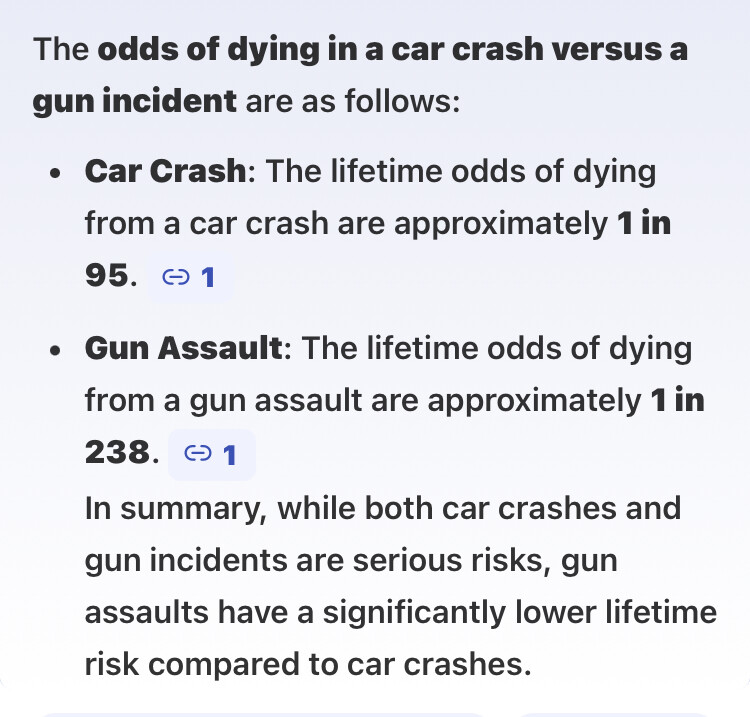
And, of course, when discussions of right and wrong, good and bad, true and false, etc., come around to guns and firearms watch the ofttimes “my way or the highway”, “my way or else”, “one of us vs. one of them” folks exploding come out of the proverbial woodwork.

you mean… ?

Heidegger’s “Being and Time” explores Dasein and temporality, revealing how human existence is deeply intertwined with time and authenticity.

Viktoriya Sus at The Collector

On the other hand, what does matter most here, the above or the fact that the above always unfolds for each of us individually out in particular worlds historically and culturally…worlds understood existentially and experientially given our own uniquely individual relationships.

In fact, in my view, that largely explains why, over the years, philosophers have provided us with any number of theoretical assessments of human interactions…conjectures intertwining human relationships at the intersection of identity, value judgments, conflicting goods and political economy. But the only way many of them then back up their conclusions is by insisting others must define and defend the meaning that they themselves have given to the words in the argument.

Then back to the part where some – many? most? – objectivists insist all of this is actually subsumed in their own [and only in their own] moral and political philosophy. It is already encompassed in The One [And The Only One] True Path To Enlightenment. And the only way that can ever be yours is if yours is theirs.

Then the part where Heidegger himself connected the dots here between Being and Time and…Mein Kampf?

Heidegger’s “Being and Time” explores Dasein and temporality, revealing how human existence is deeply intertwined with time and authenticity.

Viktoriya Sus at The Collector

On the other hand, how, given a particular set of circumstances, do we pin down with any degree of sustained sophistication the manner in which a particular past begets a particular present begets a particular future? Dasein after all revolves around the Benjamin Button Syndrome which revolves around the assumption that there are always going to be any number of existential variables in the lives we live that are beyond our either wholly understanding or fully controlling.

How else to explain the fact that historically, anthropologically, socially, politically, economically, etc., we have encountered any number of human communities embedded diversely all up and down the moral, political and philosophical spectrum. In other words, in regard to value judgments, past and present conflicts are only likely to be sustained further into the future.

With no end in sight?

Yes, human behaviors are clearly influenced by what can be very, very different pasts and presents. But then my point here is to remind others that philosophers have failed to provide mere mortals in a No God world with anything in the way of a deontological moral philosophy. Instead, we have been confronted over and over and over again with any number of moral objectivists all insisting that only their very own One True Path actually is.

This part…

Of course: living authentically.

Again, just out of curiosity, is there anyone here who can reconcile this frame of mind with becoming a Nazi? Instead, in my view, this is more readily explained given my own assessment of dasein here: a man amidst mankind: back again to dasein

Heidegger’s “Being and Time” explores Dasein and temporality, revealing how human existence is deeply intertwined with time and authenticity.

Viktoriya Sus at The Collector

The connection between human existence and time is important for understanding Martin Heidegger’s ideas, and it shows us something fascinating about ourselves. At the core of this connection is a concept called “ecstasis.”

In Heidegger’s view, ecstasis describes how humans stand outside themselves in time. Rather than thinking of past, present, and future as separate things, ecstasis suggests that they all work together to shape who we are.

Theoretically? Philosophically? Analytically?

On the other hand, in regard to our actual day to day interactions, what [existentially] does the above mean? And for those here who believe they do grasp its “for all practical purposes” applications, please note how ecstasis impacts your own behaviors given particular contexts.

As though over the centuries historically and culturally, actual individuals in a world awash in contingency, chance and change, aren’t going to have many, many very different and offtimes conflicting assessments of how the past, present and future are intertwined.

Then the part where all the objectivists among us insist they have already either invented or discovered the only rational manner in which mere mortals [God or No God] ought to be intertwined.

Again, however, for those willing to explore this further, how is Heidegger’s assessment of “being there” the same and different from my own assessment?

In other words, for those convinced they grasp Heidegger’s Dasein, how do you imagine he would react to the OP here: a man amidst mankind: back again to dasein