Yep, you still have your “folder” at least. Big wave big wave.
It’s a wonder you have yet to discover the magic of a google search 
Then again you are muslam, so. Dark Age mentality is pretty well baked in.
1 Like
Bubble boy got a folder, it’s a no brainer. How is that unreasonable? How did the AI dissertation go btw.
Well, I’ve always found it problematic how you tend to talk about “truth” or “the truth”. Relationships based on the quest for (the absolute) truth, sharing in that quest, valuing that quest, sure; or based on a shared view of (the absolute) truth and a shared valuation of that view, likewise. But you tend to speak as if you know (the absolute) truth, share in that knowledge and value it and that sharing. Which would be more like a sect, albeit a sect of philosophy (the Academic, the Peripatetic, the Stoic, etc.)…
Well, religion. There’s really only philosophy and religion: religion the rule and philosophy the exception.
That’s good to hear, as I’d been getting the impression that you adhere to the maxim in vino veritas (not just literally)…
But what does that mean, then?
“Why do you pursue truth?”
—“Because it’s true!”
“Okay…  ”
”
Can you please unconceal the enthymeme (hidden premise—I learned this word from Ichthus of all people) in the syllogism:
Premise 1: “Truth is true.”
Premise 2: ?
Conclusion: “I pursue truth.”
I mean, obviously something to the effect of “I pursue what is true”, and surely you pursue it because you value it, but why? Is it like that “Good is good”-thread, where you value it because (you believe) it’s good for you and others? But if so, how? You just said:
::
Well, that may be a case of “potato, potahto”, or it could be because English is not my native language. In any case, yes, you’ve just described one of the four major reasons for disguising or hiding certain truths, or certain views. Another is that harm may befall the author, yet another that it may be more educational to let people figure out certain things by themselves (Ichthus actually believes that ChatGPT and the like do this, and consciously so…), and finally there’s the peculiarly modern one, simplifying or falsifying certain truths or views in order to boost their influence and effect social change…
Well, I’m arguing that this is not always the case, and wasn’t in the most famous case, when the natural philosopher, if not sophist, Socrates (as depicted in Aristophanes’ Clouds, for example) sought wisdom among and beyond the clouds: it was only following that, through the consequences and repercussions thereof, that he, or at least his students Plato and Xenophon, learned that wisdom was not what he’d thought it was. This is the apparent origin of political philosophy, not in the least in the sense of the attempt to unconceal what you called one’s “political-ideological intentions” etc.
Well, that reminds me again of the notion that we could rid ourselves entirely of our “political-ideological intentions” etc… The example you give here is, in my view, a riddable or adjustable kind of illusion within a web of what Plato’s Parmenides called “dreaming and shadow-painting” that seems to encompass our entire outlook—and inlook.
I do agree with this.
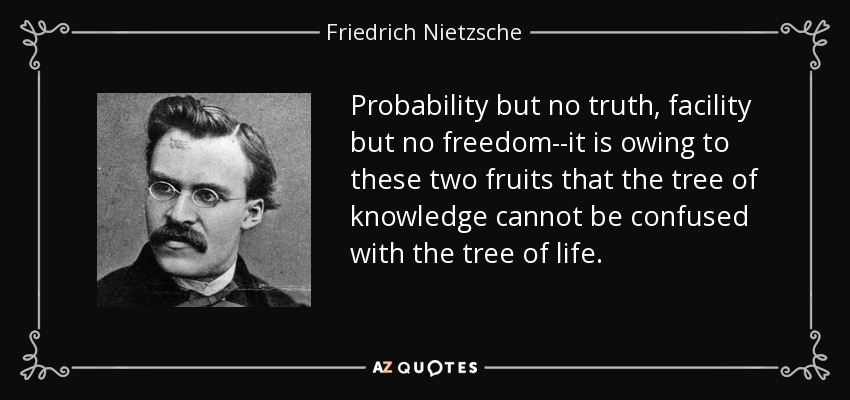
That reminds me of Nietzsche:
“My mission: the dehumanization of nature and then the naturalization of the human being after it has gained the pure concept ‘nature’.” (Workbook Spring-Fall 1881 11 [211].)
Yet for Nietzsche, the truths of the human being are ultimately its irrefutable errors—the concept “will”, for example. Hence Nietzsche first humanizes nature as will to power and nothing besides, and only then naturalizes the human—rid of all its refutable errors, to be sure…
This is just generalizing. If you think I am wrong about something, say so, and we will discuss it.
The inability to be able to talk about the truth is, again, very odd to me. Even my definition of truth as literally “that which exists; that which is; reality; whatever is the case” is apparently too mind-bogglingly complicated for most people to process. Again, very odd. But I am not really surprised at this point. Fixed pointed out how rare philosophers are in the world, in a way I think he was making a defense for the failings of philosophy but to me it is only a further accusation against not only philosophy but humanity as a whole. Do humans really care about truth? Do they REALLY have a reserved conceptual category and assign primacy to it in their mind for “that which is true” at exclusion of all other concerns or interests or personal investments? I think so, but that category is generally quite small, underutilized and taken advantage of whenever convenient.
You might say religion is the basis, but I would say psychology is. Religion falls down to an intersection between human psychology and sociological/evolutionary value. The only thing opposed to that is philosophy, valuing truth as such and for its own sake simply because it is the truth.
Me claiming that I value the truth in that way, or that I think a certain claim or statement is true, is not at all problematic, in fact it is the basis and requirement for any kind of philosophy or serious discussion to even occur. If I am debating or discussing with someone and they say “just so you know, I value what is true simply because it is true, for its own sake without by own personal benefit or biases” then I would be like, holy shit I found an actual authentic and intelligent human being to chat with, wow incredible. But when I say it, people like you react as if I did something offensive or highly incorrect.
Somehow the basis for philosophy (accurate reality-alignment) has been so undermined that it is considered weird or offensive to even talk about “truth” or “the truth”. Yet again, if you think anything I say here or anywhere else on this site is wrong, you are always free to say so and we can discuss it. I don’t make claims to know something is true without being able to explain why I think that.
Religion is, again, a product of sociological-evolutionary necessity combined with basic human psychology. People need to believe something, stories that make sense about their world. Religion is at least useful in those ways even if it habituates people into not thinking critically, obeying authority blindly, and committing to constant double-think (they claim to believe things, even to themselves they claim to believe them, yet at the same time they also know that they don’t REALLY believe them). All of that is pretty bad. However, religion can also act as a way to maintain a baseline level of spiritual openness, a transcendent orientation for people who otherwise wouldn’t know or have a way to do that. So again, religion has some value, despite all of the negatives associated with it.
I am not anti-religion, but I do understand what it is and the limits of it.
In any case, religion is not a serious alternative to philosophy because religion is not interested in finding the truth. You would have a better argument claiming that science is the only alternative to philosophy, at least science PRETENDS to be interested in finding the truth.

I’m so glad you approve.
It means that I understand that truth is valuable for its own sake, and therefore I pursue it accordingly, because of that value.
This is not complicated.
“Truth is true” is a true statement, but doesn’t add much in the context of a discussion like this, certainly not from your perspective.
Again, I pursue truth because I understand that truth is valuable and that pursuing truth is therefore also a valuable thing to do. In fact, and in a way truth is the ONLY valuable thing or, not only but rather, highest value because it already by definition and of necessity includes EVERYTHING. It also includes every other value, whatever those other values might be. So by pursuing truth I get the added benefit of being able to also discover and pursue a lot of other valuable things by extension.
You might pursue religion because it is valuable to you. Great, you go for it. I am not going to pretend like I don’t understand why you would (or wouldn’t) pursue it. So why are you acting like you don’t understand why someone would pursue truth?
Then again, are you even a philosopher? What kind of philosopher would claim not to understand why someone pursues the truth? Do I need some kind of special personal benefit to come out of it in my own life for me to engage in that pursuit? Is that really how you see the world, anything worth doing must result in secondary benefit to me personally in some way? Do you not understand that certain things have intrinsic value and it is the recognition of that intrinsic value alone that can act as a basis for someone to pursue them?
You are asking why someone would pursue something that is valuable? Are you seriously asking that?
The answer is already in the question. The very concept of value includes why someone would respond to value in a way of pursuing it.
Socrates, in my reading of his dialogues, did not seek truth. He might have sought wisdom.
If certain truths might be harmful or negatively impact you somehow then there is a motivation to not seek or know those truths. That can be phrased as wisdom, the avoidance of things (in this case, certain truths) that might result in harm, danger, loss to oneself, etc. Recall this is precisely an example I used to show why philosophy needs to be elevated into alethempeiria.
You can still go on philosophizing if you want to, avoiding certain truths because they might have some unwelcome impact on you for whatever reason, but that is not truth-seeking. You might be “loving wisdom” and that might be all you are able to aspire to. Again, good for you, do that then. But don’t pretend like you are not deliberately choosing ignorance over truth whenever truth and your own personal good might appear to come into some conflict.
Politics is properly the attempt to apply philosophy (truth (i.e. accurate reality-alignment)) under the framework of wisdom-love, to problems of a social or group nature. People coming together to live in proximity and solve complex social problems, necessitates certain solutions and means of achieving those solutions. That is what politics is for, that is what politics is. It is not, as is often claimed to be the case, “power” or even ideology. Ideology is another example of something resulting from the mixture of sociological-psychological motivation and needs with a real-world framework, in this case that framework would be the larger conceptual space generated by politics and the historical thus-far ideas and products of political work. Within that space, certain ideas are given priority and link with other ideas; ideology is when a larger pattern of idea-priorities and -connections emerges within that space and this forms an active, potentiating link to the person’s own personal psychological motives-needs as well as extending out into the sociological fabrics in which that person is also embedded.
Again, like with religion, truth in such a context is at best a secondary consideration or an underlying (lucky?) assumption. Truth would not be valued directly within ideology or religion because that would undermine the very structure by which ideologies and religions hold themselves in existence (self-value). Said more simply or in modern parlance, a person who subscribes to an ideology or a religion is not going to allow themselves the free reign of truth-exploration when that results in cognitive dissonance (when it will or could be expected to produce a result that runs counter to their already accepted ideological or religious beliefs and feelings).
I don’t know about all that, but I never said we should or could rid ourselves entirely of political-ideological intentions. I never even said politics or ideology were bad per se. I just pointed out what they are.

Yeah, that stuff Nietzsche wrote about is actually nothing like what I am talking about here.
But if you really want to criticize me for my love of truth and pursuit of truth itself for its own sake, regardless of where in the fuck that might take me or how or why, this might be a good place to start:
I’d welcome feedback, although it was written before I realized the idea of alethempeiria, I think that feedback can still be usefully integrated into this topic. Although of course that depends on that feedback’s quality.
Valuing it without one’s own personal values, though?.. I think not. I think your (coherent) position is (or would be) that you’re this contingent self-valuing which just happens to value the truth (supposedly), and whatever any self-valuing values is what’s compatible and beneficial to its structure (circuit). So when you say:
—your accusation is just a negative valuation of a species of contingent self-valuings by another contingent self-valuing. Unless you’d still argue, as in your “Good is good”-OP, that:
Indeed, the fact that you wrote this only about a year ago is still dumb-founding to me. I mean, sure, such an intuition is the rule, no exception, but that’s only because others are more or less similar to us and survival (of the species) has long required such a morality… Moreover, as we were just saying, philosophers too are exceptions. So are you saying truth is good for people as a rule? But why then aren’t they truthful as a rule?
Well, there’s psychology and psychology. Every soul (psyche) has a psychology, but only a few do psychology. Like having and doing philosophy, actually… And yeah, by ‘psychology’ I also meant evolutionary psychology, sociology and social psychology, etc.
Necessity, or contingency… Neither the social and environmental, nor basic human psychology has ever been static. In my view, all irrational values (worthships!) are religious; only philosophy comes (somewhat) close to rationality, and really only once it becomes political philosophy (which is really religious philosophy in that same, peculiar sense): once it begins to discover all the hidden ways in which natural philosophy is still irrational, moral-political-religious…
Well, that’s just a value, though one I just so happen to share. 
I didn’t mean an alternative way of seeking the truth, just the alternative, period. As for science, in its root that’s natural philosophy, though it may lack political-philosophic enlightenment and have been influenced by “ethical and religious considerations”, to speak with Whitehead.
“Valuable for its own sake”… What does that even mean? It seems to me you haven’t even started asking yourself some very basic questions—uncovering the complexities underlying some basic apparent simplicities.
Or wait, do you mean truth value? Like, truth has a positive truth value (the binary value 1, true, as opposed to 0, false)? Surely not, right? I mean, surely it does not make you dance for joy when you see a led light turn on or something?
It’s nice that you’d acknowledge my perspective, but this doesn’t add anything for me. You “understand that truth is valuable”—but valuable to whom or what? If not to yourself, isn’t it some abstract kind of understanding? Maybe that truth is valuable to itself, because truth is self-valuing and self-valuing transposes values… So is it a kind of compersion then, valuing the fact that other self-valuings are valuable to themselves just as you are valuable to yourself?
Does this mean the value you speak of doesn’t have to be positive? It can be a ‘disvalue’ as I’ve called it, something that’s valued negatively or neglibibly positively (i.e., as “worthless”)?
Because people pursue religion because they believe doing so is predominantly positive for them. So you believe pursuing truth is predominantly positive for you?
That question contains hidden assumptions, don’t you see that? Like, you know what a philosopher is, supposedly because you yourself are one; and, you understand why you (supposedly) pursue the truth…
No, I’m asking why you think it’s valuable (for you)…
But is what you believe is valuable (for you) necessarily valuable (for you), and vice versa? Isn’t it true that self-valuing, as conceived by Jakob himself, absolutely doesn’t have to be conscious?
So you’re indeed saying that truth can be good for you (a value you—therefore—pursue) while not being good to you or something? I mean, it’s fine if that’s what you’re saying, I’m just trying to understand (or to make you see if it turns out it doesn’t make sense).
And this is inferior to direct truth-valuation or the free reign of truth-exploration how? Those structures and people are equally self-valuings, after all…
Having corresponded with Jakob/Fixed a lot about self-valuing, and having thought a lot about it, I think it’s very much like it. The will to power was the root of self-valuing, after all.
“[H]umans probably exist in a layer just-above the current layer of our typical human world-experiences as something like a pure spiritual or mental being/entity or soul.”
Well, at least you said “probably” and not “certainly”, I guess…
Where did @Destiny go? I wanted her responses and further comments here.
Zeroeth I will get to your post probably later today.
I am really trying to be genuine here. But you don’t make it easy. Even though I can see you are trying.
Truth is truth. If I value it because of what it is, because I understand it has value, then so be it. If that is confusing to you, well, I don’t know what to tell you. Maybe philosophy isn’t for you.
There is always a “why and for whom” behind every value, that goes without saying. Yet the fact something has reasons for being what it is, does not somehow refute the thing itself. Gold has value, for example, and people seek gold because they understand it has value. Do they need to know all of the reasons why it has value to them and to other people, does all of that NEED to factor into their seeking gold? No, it doesn’t. The fact they already understand it HAS VALUE is sufficient.
Of course there’s nothing wrong with knowing the reasons. I and you both already know the reasons why truth is valuable. So what’s the problem here?
I am not negatively valuing the species, I am pointing out a fact and inquiring into the further meaning (and consequences) of it. The fact at hand is that philosophers are very, very rare among humans. I think this is because most people do not seek truth for its own sake, they seek truth (reality) only when it personally benefits them or makes them feel good somehow. So they ignore truths that don’t affect them right away, and they especially ignore truths that result in discomfort or something inconvenient for themselves.
If you think the above description is incorrect, they say so. Explain why.
Why do you keep bringing up that other topic about good and bad? You asked if truth is good for people “as a rule”. That is the wrong question, at least from a VO perspective, and shows you did not understand what I was saying about good and bad.
Good and bad are hyper-specifics. They simply are what they are, for whatever reason they are that and this already always includes the sum total context involved in that. It depends on the being for whom good is good and bad is bad. From this further general cases can be derived, like “generally it is good for people to eat food”. Exceptions prove the rule, as you were alluding to. And truth is like good and bad in this case. It simply is what it is. Maybe that is why you keep returning to this? Yet you don’t seem to understand it.
Truth means reality. Whatever exists, including however and whyever it is what it is. It might help if you can accept that.
Does reality need a reason to value itself? Does a value itself need a reason to value itself? Yet A=A, value = value. If something IS a value then it IS TRUE that it IS a value. Again, everything has reasons. So what? You can talk about those reasons separately from talking about the thing itself. It’s like I am saying “gold has value” and all you keep doing is responding with “but WHY does gold have value?? Why do you value it personally to yourself??” That is missing the point. Maybe I don’t value it personally to myself, that doesn’t matter because I still understand that it has value. Maybe I have traumatic experiences of being beaten with gold bricks for some odd reason as a child, and how I don’t like to think about gold or be around gold, maybe I truly negatively value it, and yet I sitll understand that it has value.
There is such a thing as putting aside your own personal considerations, biases and subjective stuff in order to consider what is objectively factually true beyond yourself. Do you understand that? Or is everything ‘always about you’?
Truth is not always black and white, which is also to say that being truthful is not always black and white either. I already explained that people do value truth but typically only when they think it affects them personally somehow. Otherwise they tend to ignore it, or even de-value it if it might cause them some inconvenience. Do you not understand this? Do you not understand why this causes so many problems?
And people lie because it gives them some benefit, or prevents some discomfort or bad thing happening to them. Lying is different though because in order to lie you must already know that you are being dishonest, so you are aware of the truth but choosing to act counter to it or to conceal the truth from others. It is also possible to lie truthfully, i.e. to lie on one level of a truth but in the service of a greater truth. Or to betray one value because it maintains a greater value. Again, I am sure you already understand all of this stuff. Which is why I am confused why you keep acting like you don’t get it.
I really don’t understand your takes on religion or politics, but that is OK because it is outside the scope of this topic anyway.
Unless you want to go into details about how it’s relevant to the OP.
I find it confusing you do not understand this. Either you genuinely don’t get it, or you are pretending like you don’t get it. “You “understand that truth is valuable”—but valuable to whom or what?” --irrelevant to the issue at hand. You and I both know the reasons truth is valuable, why are you pretending otherwise? You and I both know to whom truth is valuable, why pretend otherwise?
I refuse to believe you don’t already know these things, because they are THAT basic. I think you are trying to bait me by acting ignorant, playing the innocent fool so I have to explain myself even further. Yet that is a waste of time. I am not going to sit here repetitively explaining stuff that we both already know.
Keep pretending like you don’t understand how truth is valuable. See where that gets you in life, or philosophy.
Radical skepticism really is a disease of the mind. After a certain point, so many years I guess, you just can’t help yourself but play the innocent fool, acting like you don’t know what you know. Cutting down your own seeking and searching mind because it gives you an excuse to uphold a certain threshold in the discussion, a threshold that you think gives you a degree of leverage over the issue and other person. Very tragic. Acting in that way has absolutely nothing to do with philosophy. And I am not going to entertain it for very much longer.
??
People pursue things that have value. Sometimes even if not to themselves personally. And philosophy (alethempeiria) is a special case even here. I understand this is very rare in the human species, clearly you are among the common masses who do not understand this. So how would I convince you of the value of truth, when you already don’t know it?
How about this: since truth=reality, the more you value and understand the truth the more real you become.
Does that begin to stir a brief awakening of understanding in your mind?
You didn’t answer the question.
Because you are pretending to not know why truth is or would be valuable. It is getting tedious.
Yes, and you are conflating multiple different things here.
There is actual value, then there is perceived value. These are not always the same.
There is value as such, the FACT that something has value, and then there is the personal value to yourself. Again, these are not always the same.
There is conscious (intentional, willful, understood) valuing, and then there is ‘unconscious’ or structural-level valuing (which can be pure structure and form, or it can be something like the unconsciousness of the animal biological level that operates on instincts/drives). Again, and for the third time now, these are not always the same (or leading to the same object or outcome).
This is not the place for such a specific detailed breakdown of valuing and self-valuing. We already have topics about VO. Pick one and write your questions in there, we can address them in greater depth at those places. If you want back into BTL you can talk to Fixed about that, I am fine having you back but only with his permission.
The real kicker here is that you just really do not understand why someone would value the truth simply because it is the truth. You can’t grasp this. You think “it must have some personal value to him, he must get something out of it…”. I consider that mindset very silly, childish even. Narcissistic if I am being perfectly honest, although I wouldn’t ascribe that to you here because I think you are genuinely just not getting it. Contra to the above where I said you are playing the fool (and maybe in some way you are doing both).
Can I break this down even more simply? I value truth. Sometimes I learn a truth that is “good for me” (gives some benefit to me or whatever). Other times I learn a truth that is “bad for me” (gives me some detriment or whatever). Most of the time I simply learn truths that expand my understanding and philosophical scope and ability. My mind IS a philosophical process. I don’t need to derive secondary goods or bad in order to value my own mind, my own self.
Get it?
Again you conflate two things that are not the same. Just because a person or a structure is a self-valuing does not mean that it exists or is operating in the same way as other self-valuings. The mere fact that two things (all things, really) can be accurately described as self-valuings does not automatically mean they are all identical in every way, or even in any way (other than the initial insight that they are all self-valuings).
And you need to ask why avoiding truths because of cognitive dissonance is inferior to directly valuing truth and freely exploring it for its own sake without giving into cognitive dissonance? Again, a real philosopher would not ask such a thing unless he was just trying to bait someone. Then again, you did mention that you admire Socrates…
I’d like to see what Fixed has to say about that.
1 Like
Yeah, if this is philosophy, maybe I’m just not arrogant enough. Anyway, suppose you “understand” that truth has value. You then value it because it has value; it does not have value because you value it—i.e., it’s not just that it can be said to have value, for you, because you believe it has value. You value it because it has value, but not necessarily for you, at least not directly.
Does it? Maybe it does. Maybe it even does for me. But maybe you shouldn’t assume that what goes without saying for you goes without saying for your interlocutors, even the worthy ones among them.
Not really. They need to have at least some idea of why or how it’s valuable to themselves, whether it be that it can be exchanged with other people for things that are (more) directly valuable to themselves, or that it’s directly valuable to them because of its physical or supposed alchemical properties, etc.
Again, you shouldn’t assume that, on either count.
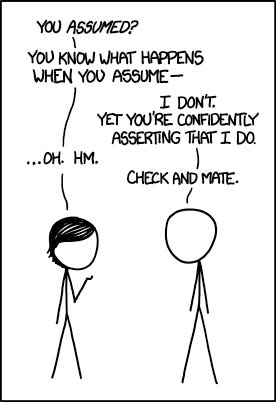
Okay, so you don’t think an accusation necessarily implies a negative valuation. So when you speak of “only a further accusation against not only philosophy but humanity as a whole”(!), you mean “only” merely in the sense of “merely”: “It’s just a further accusation against humanity as a whole—not judging or anything!”…
Well, those may be two different things; it’s not a given that reality is a value, in the sense of something valuable.
Yes: for someone or something.
ARE they that basic, or do you just BELIEVE they are that basic? DO we both know to whom truth is valuable, or do you just BELIEVE we both know to whom truth is valuable? Same for the reasons truth is valuable.
If truth or reality includes all thing, and thereby the values of all things, doesn’t this mean it contains both positive and negative values, perhaps to an equal amount, and may thereby itself be net neutral or even negative? I mean, surely you’re not saying all things are of (net) positive value for all things?
Not necessarily brief, but yes, of understanding of you…
Premise 1: “Truth = reality.”
Conclusion: “The more one values and understands the truth, the more real one becomes.”
In order for your syllogism to be valid, this must be your enthymeme:
Premise 2: “The more one values and understands reality, the more real one becomes.”
Well then, why should this statement be true? Let’s first consider the second verb, “understands”. I can see how understanding reality may be said to make one more real. In fact, this is integral to Nietzsche’s task:
“[T]his type of man that he [Zarathustra] conceives, conceives reality as it is, being strong enough to do so; this type is not estranged or removed from reality but is reality itself and exemplifies all that is terrible and questionable in it—only in that way can man attain greatness.” (Nietzsche, Ecce Homo, “Why I Am a Destiny”, section 5, unknown translator(s).)
And from here, I can also see how your first verb may be apt here:
“My formula for greatness of man is amor fati: that one does not want anything differently, not forward, not backward, not to all eternity. Not merely to bear the necessary, even less to conceal it—all idealism is mendaciousness before the necessary—, but to love it…” (op.cit., “Why I Am So Clever”, section 10, my translation.)
Valuing as the superlative of under-standing, loving as the superlative of bearing ((with)standing!)… But your assertion was not just your conclusion or enthymeme, but first and foremost the converse, that truth or reality is valuable, indeed the most valuable.
Premise 1’: “The more one values and understands the truth, the more real one becomes.”
Conclusion’: “The truth is (the most) valuable.”
Of course, post hoc is propter hoc here, so one may say:
Premise 2’: “Whatever makes one more real the more one values and understands it, is valuable. (And the more it has this quality of making one more real the more one values and understands it, the more valuable it is.)”
(GG3.1PEIMF—Google Gemini 3.1 Pro Extended is my friend.)
This premise, however, is at this point a mere assertion. And even if it’s true, it leads us to the following question: “Is reality valuable because our valuing it makes us more real, or does it make us more real because it is inherently valuable?” This is basically the Euthyphro dilemma:
| The Horn | The Premise Interpretation | The Fatal Flaw |
|---|---|---|
| Horn A: Value is Instrumental | Reality has no intrinsic value. It is only defined as “valuable” because of the service it provides (making the agent more real). | The Bootstrapping Problem. You cannot genuinely “value” reality if you know it has no intrinsic value. Valuing it becomes a selfish, instrumental calculation to upgrade your own existence, which undercuts the authenticity of the “valuing” that is required. |
| Horn B: Value is Intrinsic | Reality is inherently valuable, which is exactly why aligning with it (understanding and valuing it) makes an agent more real. | The Contradiction. If reality is inherently valuable, then its value is not derived from its capacity to make you more real. Such derivation would get the causal arrow backward. |
My good friend does also offer us a potential escape:
“For instance, in Spinozist or Neo-Platonic thought, there is no separation between ‘Reality’ and ‘Value.’ To understand reality is to value it, because reality and perfection/value are the exact same substance. In this view, you don’t value reality to become more real; rather, the act of understanding reality simply is the act of your mind participating in the reality of the universe, which inherently expands your own being.”
But this brings us back to Nietzsche again: if understanding is valuing, creating, willing to power, then one must will reality to be what it is if one is to understand reality as it is… (Note the ambiguity of the verb “to conceive”!)
The reason you think it’s valuable (for you) is that I’m (allegedly) pretending not to know why truth is or would be valuable? 
I do. In fact, this means it’s is exactly as I thought:
Or, as Lampert puts it:
“[‘]“Why knowledge at all?”’ This is the question of the book, the question put by the Sphinx or by Oedipus in its very first section: What is the value of the will to truth? Why not rather comforting illusions? [The chapter] ‘Our Virtues’ puts philosophy on trial again, accused by everyone, by the basic will of the mind in profound fear and bolstered by the assurance of secure morality: Why not quiet sanity? Why this insane devilishness?
‘And we, pressed in this way, the we who’ve already asked this of ourselves a hundred times, we found and find no better answer…’ Than what? The accused has no better answer than the answer just given that there are two natural inclinations of mind [i.e. the religious and the philosophic]. Or the answer given in the following section that philosophy is an inescapable gift of nature. Or the answer given in the whole book that philosophy accords with what it discovers, the way of all beings [see my note on the verb “to conceive”, above.]” (Nietzsche’s Task. An Interpretation of Beyond Good and Evil, on section 230 of Nietzsche’s book.)
Does your profile picture also make you a she? 
@Zeroeth_Nature I’ll ask you now to stop this conversation here, because it no longer applies to the OP. If you want to continue talking about value and such, please make another topic or choose one of the VO topics that already exist.
If you want to continue talking about Alethempeiria then that’s ok.
1 Like
“Alethempeiria” - cool word there, ProfessorX.
Just as an amusing sidenote, your neologism reminded me of the word “Alethiometer,” which was the technical name of the “Golden Compass” from Philip Pullman’s fantasy trilogy called “His Dark Materials”.
When I asked Google’s AI Assistant: “What is the purpose or function of the alethiometer?”, it stated the following…
AI Assistant:
The primary purpose of the alethiometer is to reveal the absolute truth about the past, present, and future.
I guess my sidenote point is that Pullman must have been well acquainted with the Greek word “ἀλήθεια” (Aletheia).
Also, you might get a kick out of knowing that when I asked Google for the definition of the word - Alethempeiria, Copilot chimed-in with the following…
Copilot:
Alethempeiria is a neologism proposed by philosopher ProfessorX as a redefined and elevated concept for philosophy, combining the Greek root ἀλήθεια (truth, reality, disclosure, not-forgetting) with the English word experience www.ilovephilosophy.com.
In this framework, Alethempeiria is presented as “truth-experience” — the idea that philosophy’s highest function is not merely abstract reasoning or love-based connection, but the cultivation of authentic, open, and truthful human relationships through shared experience. It emphasizes:
Truth as the foundation: honesty, openness, and the removal of hidden judgments or secrets.
Experience as the medium: lived, shared engagement in thought, intention, and mutual vulnerability.
ProfessorX argues that only under the guidance and intention of philosophy can relationships achieve the “purest most truthful connections,” where individuals can be “totally themselves” without fear of false judgment www.ilovephilosophy.com. This concept is intended to replace or expand the traditional definition of philosophy, positioning it as a practice that fosters deep, unguarded human connection rooted in mutual truth.
In essence, Alethempeiria is a philosophical ideal where truth and lived experience are inseparable, and where philosophy serves as the primary context for authentic human relating.

“AI may make mistakes. Please verify important info.”

2 Likes
ProfessorX, there’s a lot of stuff in this thread and - well, but there’s one elephant in the room we have to address before anything else can make any sense. Your assertion that truth equals reality. This is simply not true. They are different concepts. If you decide to equate them for your own use, that is fine, but it’s a kind of liberty I can not take. It’s like equating world with planet, or eating with digesting, or even with food - and then you say a thing like ‘truth is true’. This is like saying redness is red. Which is just not true.
These things matter, bigly.
Truth is in the ear of the listener.
I sounded like Mr Miyagi just then.
1 Like
If you think truth is something other than “what is real”, I would be interested in your definition of either: truth, or reality.
If you seriously can not discern the difference then Im very disappointed.
I am just asking you what your definitions are, or how you see these as being different.