Also, another fascinating subject of conversation is the differences between Theravada and Mahayana practices of Buddhism, their unique historic differences as well.
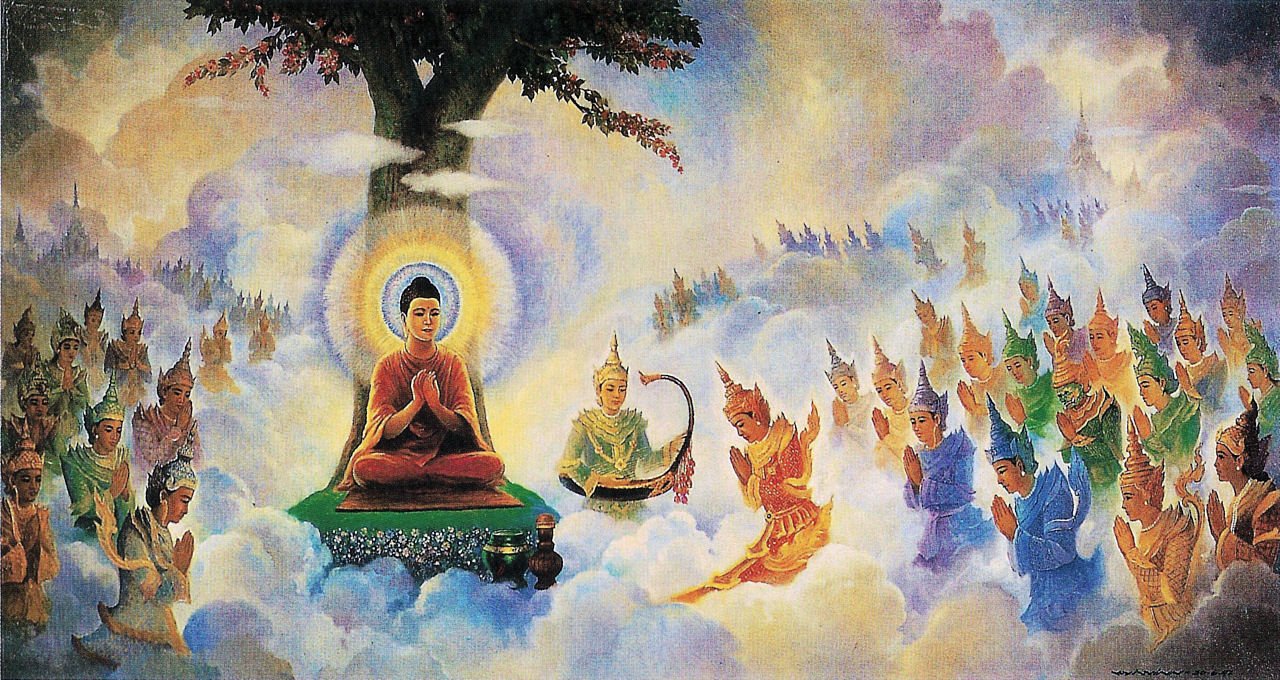
“Those who desired to enter the order created by Prince Siddhattha were specifically asked: Are you really a man? It is taken as a premise in this case that not all those who appear to be human are really ‘men.’ The views, widespread in ancient India as elsewhere, that in some men animal beings were reincarnated – or vice versa: that some men would be ‘reborn’ in this or that ‘animal womb’ – may be understood symbolically: they refer, that is, to human existences whose central element is guided entirely by one of those elemental forces that externally manifest themselves in the normal way in one or other animal species. We have, moreover, already spoken of the limitations arising out of various ‘races of the spirit.’
A third point is that an original condition imposed by the canon for admission into the order was of being of male sex. Eunuchs, hermaphrodites, and women were not accepted. The Ariyan Road to awakening was considered as substantially and essentially manly. ‘It is impossible, it cannot be’ – says a canonical text {Bardo Thodol } – ‘that a woman should arrive at the full enlightenment of a Buddha, or become a universal sovereign {cakkavatti }; likewise it is impossible for her to ‘conquer heaven, nature, and the universe,’ to ‘dominate celestial spirits.’
The Buddha considered women insatiable in respect of two things: sex and motherhood; so insatiable that they cannot free themselves from those cravings before death. He repeatedly opposed the entry of women into the order: when he finally admitted them, he declared that, as a flourishing field of rice prospers no longer when a parasitical grass invades and spreads in the field, so the saintly life in an order does not prosper if it allows women to renounce the world – and he tried to limit the danger by promulgating opportune rules.
Later, however, less intransigent views became widespread: even in the canonical texts – in spite of these words of the Buddha – There figure women who have entered into the current of awakening and who expound the doctrine of the Ariya, until the texts of the prajnaparamita, instead of the simple mode of address ‘noble sons,’ there appears, without further ceremony, ‘noble sons and noble daughters’ – a sign, among others, of the easing of the spiritual tension of original Buddhism.”
–Evola, Julius
“In the beginning, Buddhism was the truth understood by those few, who alone had really achieved illumination and who appeared as bhikkhu or wandering ascetics. Then, around these, the upasaka, lay followers, collected and increased and who, according to the canonical formula, had taken refuge in the Buddha, the doctrine, and the order. The order, however, did not resemble a church and the doctrine still less a religion. Women were originally excluded. The unity of the order was essentially due to a strict style of life. It was only later, and with decadence fully recognized as such by the ancient texts, that precepts and rules multiplied.
The decadence of Buddhism was inevitable once it began to spread: for the Ariya Doctrine of Awakening is closer than any other to a path of initiation that may be understood and trodden only by the few whom, together with exceptional strength, there is present a lively aspiration for the unconditioned. And even racial and caste influences played their part: not for nothing have we insisted on the ‘Aryan’ quality of the doctrine under discussion. Frontiers to comprehension exist in the normal way, and they are conditioned by the race of the spirit and, in part, by the body itself.
As soon as Buddhism was adopted by the masses and not only passed to levels where foreign influences survived or were re-aroused, but spread evenly to peoples of notably different stock, changes and alterations became inevitable.”
–Evola, Julius
“The prejudices that have been created or encouraged by certain quite special, abnormal, and un-Aryan forms of ascesis we have already removed. Let no one, then, declare that ascesis means renunciation, flight from the world, inaction, quietism, or mortification. The affirmation of a background of pure trancendency to balance a world that is ever more and more the captive of immanency, is the first point and the first task. But another point, no less important, concerns that very action that lie so close to the heart of our contemporaries. Indeed, one could justly maintain that those who despise all asceticism know nothing of what action really is, and what they exalt is merely an inferior, emasculated, and passive form of action. The sort of activism that consists in fever, impulsiveness, identification, centerless vertigo, passion, or agitation, far from testifying power, merely demonstrates impotence. Our own classical world knew this well: the central theme of the Ciceronian oration Pro Marcello is just this: there is no higher power than that of mastery over oneself. Only those who possess this mastery can know what is true action, which shows them also to the outside world, not as those who are acted upon, but as those who truly act. We remember the illuminating Buddhist saying: he who goes, stands still – he who stands still, goes. For this very reason, in the traditions springing from the same root all movement, activity, becoming, or change was referred to the passive and female principle, while to the positive, luminous, masculine principle were attributed the particular qualities of immobility, unchangeability, and stability. We can, then, definitely affirm the existence of an ascesis that in no way signifies quietism but that is, rather, the prerequisite for a higher, aristocratic ideal of activity and virility. This ideal – let it be noted – is in no way a monopoly of the east.
The basic idea with which we are dealing is traditionally Aryan, whence we can also find it among ourselves. The same idea was expressed on the metaphysical plane by Plotinus when he spoke of the becoming that is only ‘the flight of beings that are and that are not,’ or by Aristotle when he discussed the ‘still Mover,’ or, on the ethical plane, by the Roman Stoa with its emphasis on the sidereal and the unchangeable element of the mind as the basis of all human effort and dignity. One who is the cause and effective master of motion does not himself move. He inspires and directs action, but he himself does not act, in the sense that he is not transported, he is not involved in action, he is not action, but is, on the other hand, an impassive, utterly calm and imperative superiority, from whom action proceeds and on whom it depends.
As opposed to this idea of true and mastered action, which is only thinkable, however, on the basis of purification from the samsaric element, one who acts while identifying himself with his action, impulsively, urged by passion, by desire, by the irrational, by restless need or vulgar interest, such a one does not really act, but is acted upon.
However paradoxical it may sound, his is a passive action – he stands under the sign, not of virility, but of femininity. And under the sign of femininity, the whole modern ‘telluric’ and activist world stands. It is only a lower, anti-aristocratic form of action that predominates here. Otherwise, it actually betrays that half-conscious desire to deafen and distract, that agitation and clamor that reveal dread of the silence, the internal isolation, the absolute being of higher nature, or it becomes a weapon employed in the revolution of man against the eternal that indeed marks the limit of the samsaric ‘ignorance’ and intoxication of fallen beings.”
–Evola, Julius
When numbers rise spiritual nihilism becomes an inevitable necessity.
In thee east, demographic pressures necessitated Buddhism…long before the same occurred in the west…Abrahamism emerged only when it was necessary to deal with growing numbers of people lost and looking for hope.
Spirituality of slaves - herd psychology, as Nietzsche called it.
1 Like
Buddha was a postmodernist.
“The Buddha liked to use metaphors such as a blazing fire or a rushing stream to describe the human personality. It had some kind of identity, but was never the same from one moment to the next. Unlike the postmodernist idea, however, anatta was not an abstract, metaphysical doctrine but, like all his teachings, a program for action. Anatta required Buddhists to behave day by day, hour by hour, as though the self did not exist. Not only did the concept of ‘self’ lead to unskillful thoughts about ‘me’ and ‘mine,’ but prioritizing the self led to envy, hatred of rivals, conceit, pride, cruelty, and—when the self felt threatened—violence. The Buddha tried to make his disciples realize that they did not have a ‘self’ that needed to be defended, inflated, cajoled, or enhanced at the expense of others. As a monk became expert in the practice of mindfulness, he would no longer interject his ego into passing mental states, but would regard his fears and desires as transient, remote phenomena that had little to do with him. Once a monk had achieved this level of dispassion, the Buddha explained to his monks, he was ripe for enlightenment. ‘His greed fades away, and once his cravings disappear, he experiences the release of the mind.’”
[The Great Transformation]
-Armstrong, Karen
Identity is subsumed in a collective that can reach levels of a universal abstraction. Practitioners experience this as relief, pleasure, a state of ‘nibbana,’ ecstatic euphoria. Self-consciousness is assuaged by eliminating the self, source of continuous anxiety. All becomes ‘esoteric,’ i.e., subjective, mystical.
“One day a Brahmin found the Buddha sitting under a tree and the sight of his serenity, stillness, and self-discipline filled the priest with awe. The Buddha reminded him of a tusker elephant: there was the same sense of enormous strength and massive potential brought under control and channeled into an extraordinary peace. The Brahmin had never seen a man like that before. ‘Are you a god, sir?’ he asked. ‘An angel… or a spirit?’ ‘No,’ the Buddha replied. He had simply revealed a new potential in human nature. It was possible to live in this world of pain at peace, in control, and in harmony with one’s fellow creatures. Once people had cut the roots of their egotism, they lived at the peak of their capacity and would activate parts of their beings that were normally dormant. How should the Brahmin describe him? ‘Remember me,’ the Buddha told him, ‘as one who is awake.’”
[The Great Transformation]
-Armstrong, Karen
‘Wokeness,’ in postmodern lingo.
There are those, like me, who claim that the Buddha’s original teachings were more Aryan (Hellenic) and far less modernistic (Christian).
“But, Ānanda, if women had not obtained the Going-forth from the home life into homelessness in the doctrine and discipline made known by the Tathāgata, the holy life would have lasted long, the true Dhamma would have lasted 1,000 years.
But now that they have gotten to go forth… this holy life will not last long, the true Dhamma will last only 500 years. Just as a clan in which there are many women and few men is easily plundered by robbers and thieves, in the same way, in whatever doctrine and discipline women get to go forth, the holy life does not last long…
Just as a man might make an embankment in advance around a great reservoir to keep the waters from overflowing, in the same way I have set forth in advance the eight rules of respect for bhikkhunīs that they are not to transgress as long as they live.”
—Cullavagga X.1
Buddha was opposed to allowing women into his spiritual covenant. Later he was modernized. Recently, he’s been updated once again, adjusting his teachings to modern sensitivities.
Like all teachings they go through phases where they are adapted to whatever social and cultural dictates exists in a particular time and place – in the process much is twisted in ways that no longer agree with the original.
“A Buddha must have the 32 marks of being a great man – one of which is being male.”
[Buddhavamsa 2.59]
—Khuddaka Nikaya
The question arises: was the original Buddha governed by more backward cultural upbringing or was his wisdom timeless?
Were the subsequent revisions to his teachings appropriate or were they an adaptation meant to meet modern requirements, marketing Buddhism to wider audiences?
It’s true there are Buddhist nuns but like any monastic religious tradition very few women enter into such organizations, their number is so small or minimal that it doesn’t change much of anything. A majority of Buddhist monastic life is led by a majority of men and even with that monks are segregated away from the nuns. Very few women have the patience or conviction for Buddhist monastery life by comparison. 
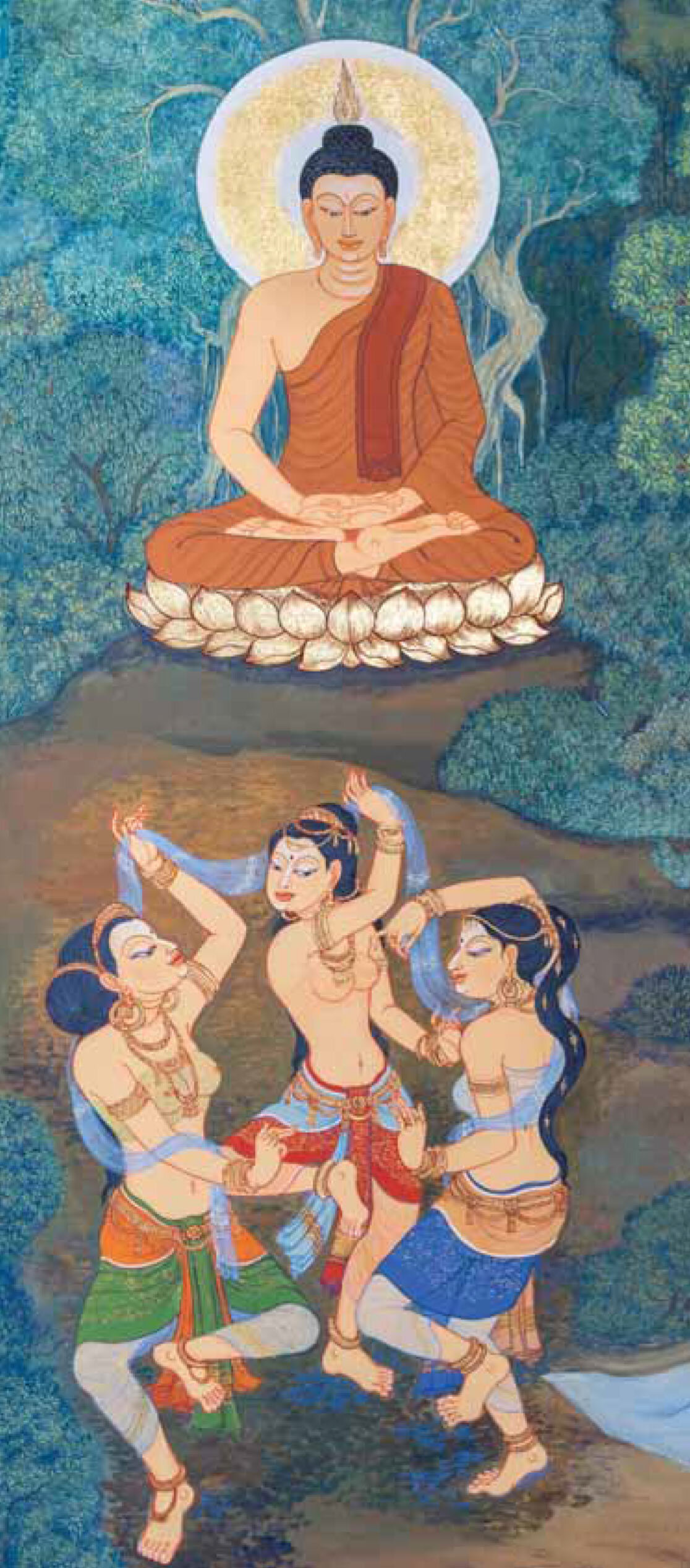
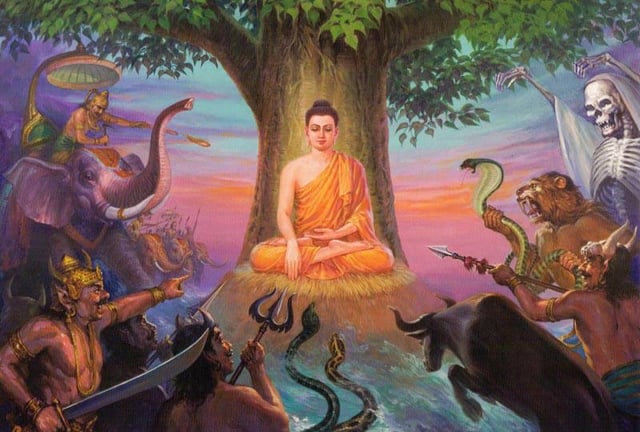
People have probably seen me post a bunch of Buddhist iconography images like this one below here, it is the three daughters of Mara trying to seduce and tempt Buddha away from meditation to enlightenment. There is a belief system in the difference between men and women, not as postmodern as you assume concerning Buddhist beliefs.
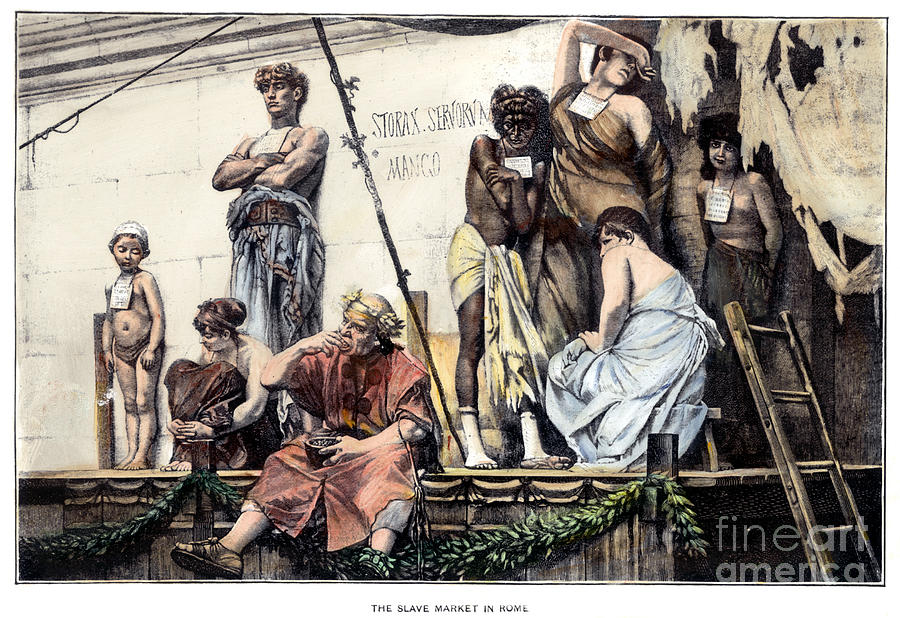
It’s interesting, you complain about Judaism knowing their end goal is to enslave the gentiles of the entire world which you righteously defend against, and yet when it concerns slavery of other organizations you have nothing but disdain for slave uprisings.
Do you secretly wish you were Jewish? They make it no secret for what they have in store for all outsiders in terms of master slave dynamics. If elitism based upon slavery of those you view as being inferior lessers is your worldview, Judaism is your religion.
Is it because you prefer a specific kind of slavery organization over another? Curious minds want to know. There are consequences to elitism and pyramid social organization hierarchies, for me slave uprisings are natural consequences of such structures in terms of reaction, the retaliation against slavery also being natural.
I’ll admit I don’t know all of your views, so if I have assumed something wrong here feel free to point it out in reply.
I oppose lies and those who go against nature.
I never oppose slave uprisings.
I oppose slaves pretending to be free when they are still enslaved.
1 Like
Better to be a slave to nature than under the whip of another.
You cannot be a “slave to nature”…you ARE nature.
Trying to free yourself from nature is a death wish - self-annihilation (nihilism).
1 Like
If you use the words slave, condemned freeman, law-abider…
… versus rebel, fugitive, law-breaker…
… versus master, diplomat, legislator…
…what happens to your definition of nature?
1 Like
Buddhism is an out of consciousness synch knowledge gathering meditative practice which knows nothing about reality because it ignores/dismisses the individual who initially decided to go inwards in the first place to practice it.The moral to the story being don’t eat from the tree of knowledge or you will die spiritually.
1 Like
Nature, Karen, is based on mutations.
Random mutations - caused by flux (interactive ordered & chaotic energies).
Mutations that offer an advantage are propagated…those that are neutral become part of the organism awaiting triggers - those that are disadvantageous lead to death…or degeneracy…insanity…ugliness, unfitness.
Men intervene protecting disadvantageous mutations, Karen…and so we get moderns, like you.
1 Like
You haven’t the first clue what you are talking about Silenus.You make stuff up as you go along.Stop trying to explain stuff.Everything is meaningless to you….lol…..you claim as such.
You are nothing more than a lifeless binary processing biological machine which exists because it needs to exists to claim that it doesn’t exist.
You are spiritually dead Silenus.Nothing makes any sense unless you are spiritually alive because all of the physical is BINARY…How many times do you need reminding of this?
Why do you claim to be a psychotic Silenus? You do if you claim to be a misrepresention of reality, (an illusion).Has nobody pointed this out to you before?
Think rationally before you posts absolute nonsense because you are making a complete and utter fool of yourself.
You are trying to explain meaning and claiming at the same time that there is no meaning to anything which is absolutely hilarious/ridiculous and confirms that you are utterly insane.
Somehow I am thinking you’re a fan of the Hindu caste system, what’s your main point here exactly? Something, something, natural aristocracy of mankind I am betting.
Social order. And the caste system is social order.
1 Like
I am not opposed to social cultural order, I just prefer a social order based on mutualism.
When societies become so unequal, tyrannical, oppressive, and apathetic they cannot survive for very long. Look no further than the modern United States for example. For me and my views I prefer stability with security.
Social stability is increased by cultural and ehtnic homogeneity.
1 Like
I agree with you on this, the problem is, what do you do with a people who have no sense of themselves? What do you do with a people so atomized by individualism and solely motivated by greed, ambition, materialism, and capitalism? What do you do with a people who have no sense of belonging to a collective? What do you do with a people willing to sacrifice their poorest and vulnerable members of society for their own ambitions just to get ahead in the competitive rat race?
If the west collapsed tomorrow a majority of people would fight each other over resources and the loss of money, power, or prestige. Would a majority fight over ethnicity, race, or nationalism? Probably not.
Personally I prefer dialogue, mutual debate, and communication as I think violence should never be embraced as a first choice for anything, but I will say if the current political polemics stay the same as they are now where racial or ethnic balkanization continues unabated, there will probably be an ethnic civil war some point in the distant future, I am still hoping reason will win out over war, we shall have to see. Ideally all people would come together in mutual understanding challenging the evil wickedness that rules over this world currently, but that’s not always the case and not even I can tell the future one hundred percent accurately.
Also, in nations like the United States, Canada, New Zealand, or Australia 100% racial and ethnic homogeneity becomes much more problematic, something to think about.
Timocracy…
Citizenship is earned not expected.
A state can decide the terms and criteria.
I would prefer ethnicity to be the primary (genes)…then paidiea, upbringing (memes) and then will, expressing a desire to belong.
1 Like
Interesting political idealism, but you still have to get from the collapse of a society, the violent transition in between, and eventual reactionary political revolution to get there. It’s all about the details as they say.