# Lessons on Causality
**URL:** https://www.ilovephilosophy.com/t/lessons-on-causality/44973
**Category:** Philosophy
**Created:** [August 26, 2017, 6:19pm UTC](https://www.ilovephilosophy.com/t/lessons-on-causality/44973 "2017-08-26T18:19:50Z")
**Posts on this page:** 20
**Page:** 14
### Author:  [@James\_S\_Saint](https://www.ilovephilosophy.com/u/James_S_Saint)
#### Post date: [September 30, 2017, 10:48pm UTC](https://www.ilovephilosophy.com/t/lessons-on-causality/44973/261 "2017-09-30T22:48:59Z")
> [@gib](#):
>
> > [@James S Saint](#):
> >
> > So if the universe was ever in a state of non-time, no-changing, how could it ever become different than that? How could changing begin without already being there?
>
> But that’s just it–there is no such “state” of nothingness for the universe to be in. Again, you’re imagining being there in that state of nothingness (unwittingly making it into “something”). The universe doesn’t change from nothingness to somethingness. It doesn’t “pop” into existence from a state of nothingness; you just have to wrap your head around the fact that any attempt to imagine a state “before” the Big Bang is invalid, even if you want to say that state is “nothingness”.
First, the argument had nothing at all to do with imagining myself anywhere. But I do have to say that you need to reign in your imagination. You seem to be imagining that there can be neither existence nor non-existence. That is illogical, irrational.
It would certainly seem that, by definition, either there is nothingness (the absence of existence) or there is existence. What other option is there? Explain to us how there could conceivably be neither existence nor non-existence, neither changing nor non-changing.
---
### Author:  [@gib](https://www.ilovephilosophy.com/u/gib)
#### Post date: [October 1, 2017, 12:04am UTC](https://www.ilovephilosophy.com/t/lessons-on-causality/44973/262 "2017-10-01T00:04:32Z")
> [@Magnus Anderson](#):
>
> > [@gib](#):
> >
> > You must also have reason to believe a universe with no beginning and no end is necessary.
>
> Um, no. Before you can even ask whether the universe has a beginning and an end you must:
>
> 1. define what the word “universe” means (it means nothing, by the way)
> 2. define what it means for the “universe” to have a beginning and an end (which, given the above, means nothing)
Defining one’s terms is only necessary if it becomes apparent that we disagree on meanings, or if you know from the outset that you’re using an unconventional definition. Otherwise, conversations can begin under the assumption that everyone shares common definitions.
I’m not sure why you say “universe” means nothing though. Why would it mean nothing?
---
### Author:  [@gib](https://www.ilovephilosophy.com/u/gib)
#### Post date: [October 1, 2017, 12:05am UTC](https://www.ilovephilosophy.com/t/lessons-on-causality/44973/263 "2017-10-01T00:05:03Z")
> [@James S Saint](#):
>
> Explain to us how there could conceivably be neither existence nor non-existence, neither changing nor non-changing.
I would but I’m not in the habit of defending strawmen. My stance is that there is existence, and that non-existence is not a state that can exist.
---
### Author:  [@James\_S\_Saint](https://www.ilovephilosophy.com/u/James_S_Saint)
#### Post date: [October 1, 2017, 12:29am UTC](https://www.ilovephilosophy.com/t/lessons-on-causality/44973/264 "2017-10-01T00:29:11Z")
> [@gib](#):
>
> > [@James S Saint](#):
> >
> > Explain to us how there could conceivably be neither existence nor non-existence, neither changing nor non-changing.
>
> I would but I’m not in the habit of defending strawmen. My stance is that there is existence, and that non-existence is not a state that can exist.
Oh contraire…
> [@gib](#):
>
> But that’s just it–there is no such “state” of nothingness for the universe to be in.
No “strawman”. You said it in defense of your argument. Either there is always existence or there is a condition of non-existence that can be the “state”.
If you are now going with “there is only existence”, then we are back to an eternal universe with no beginning.
---
### Author:  [@gib](https://www.ilovephilosophy.com/u/gib)
#### Post date: [October 1, 2017, 2:12am UTC](https://www.ilovephilosophy.com/t/lessons-on-causality/44973/265 "2017-10-01T02:12:52Z")
> [@James S Saint](#):
>
> No “strawman”. You said it in defense of your argument. Either there is always existence or there is a condition of non-existence that can be the “state”.
Nice addition. If by “always” you mean all time that exists, then sure, but time is not necessarily eternal, at least not retrospectively.
> [@James S Saint](#):
>
> If you are now going with “there is only existence”, then we are back to an eternal universe with no beginning.
I’m afraid not James, you simply lack the imagination to conceptualize a temporally limited universe without feeling compelled to impose a “before”.
---
### Author:  [@James\_S\_Saint](https://www.ilovephilosophy.com/u/James_S_Saint)
#### Post date: [October 1, 2017, 3:32am UTC](https://www.ilovephilosophy.com/t/lessons-on-causality/44973/266 "2017-10-01T03:32:22Z")
> [@gib](#):
>
> > [@James S Saint](#):
> >
> > No “strawman”. You said it in defense of your argument. Either there is always existence or there is a condition of non-existence that can be the “state”.
>
> Nice addition. If by “always” you mean all time that exists, then sure, but time is not necessarily eternal, at least not retrospectively.
>
> > [@James S Saint](#):
> >
> > If you are now going with “there is only existence”, then we are back to an eternal universe with no beginning.
>
> I’m afraid not James, you simply lack the imagination to conceptualize a temporally limited universe without feeling compelled to impose a “before”.
No, your word games do not supersede your lack of rationality. As easily seen, it is you who cannot stick with logic.
But yes, I lack the imagination that would propose a state of neither existence nor non-existence. That kind of imagination, the world could do without.
---
### Author:  [@gib](https://www.ilovephilosophy.com/u/gib)
#### Post date: [October 1, 2017, 3:38am UTC](https://www.ilovephilosophy.com/t/lessons-on-causality/44973/267 "2017-10-01T03:38:38Z")
Well James, there’s not a lot more I can do to prove my point, which was merely that the difficulty with which we try to imagine a beginning to the universe without a “before” to precede it is an imaginative impossibility, not a logical one, but you seem bent on confounding the two. Oh well, can’t convince everybody. Until next time, James, until next time.
---
### Author:  [@James\_S\_Saint](https://www.ilovephilosophy.com/u/James_S_Saint)
#### Post date: [October 1, 2017, 4:08am UTC](https://www.ilovephilosophy.com/t/lessons-on-causality/44973/268 "2017-10-01T04:08:59Z")
> [@gib](#):
>
> Well James, there’s not a lot more I can do to prove my point, which was merely that the difficulty with which we try to imagine a beginning to the universe without a “before” to precede it is an imaginative impossibility, not a logical one, but you seem bent on confounding the two. Oh well, can’t convince everybody. Until next time, James, until next time.
It is entirely a “logical impossibility”. But it takes a logical mind to follow logic. You had to know before your first reply that you were not going to be able to rationally contradict me.
You would have a nearly impossible time trying to prove to me that fundamental logic (if not A, then not-A) is erroneous.
---
### Author:  [@Magnus\_Anderson](https://www.ilovephilosophy.com/u/Magnus_Anderson)
#### Post date: [October 1, 2017, 8:46am UTC](https://www.ilovephilosophy.com/t/lessons-on-causality/44973/269 "2017-10-01T08:46:12Z")
> [@Gib](#):
>
> Defining one’s terms is only necessary if it becomes apparent that we disagree on meanings
You have to demonstrate that your words have a reference to something that is concrete. You don’t have to do that though. Most people don’t.
---
### Author:  [@Urwrongx1000](https://www.ilovephilosophy.com/u/Urwrongx1000)
#### Post date: [October 1, 2017, 8:49am UTC](https://www.ilovephilosophy.com/t/lessons-on-causality/44973/270 "2017-10-01T08:49:11Z")
> [@gib](#):
>
> Well James, there’s not a lot more I can do to prove my point
Exactly, it’s you who cannot convince others that the universe has a beginning. You cannot reproduce your hypothesis in a lab. You lack evidence. Science is not on your side, despite “microwave radiation in a galaxy 10000000000 miles and years and whatever away”. Basically, you don’t know. And that’s fine. My contention is more about why and how you believe, what you believe, along with its popularity.
Obviously a majority of humans believe in Creationism/Big Bang Theory one way or another. They, like you, believe “time has a beginning”. Which as James mentioned, is illogical.
---
### Author:  [@Urwrongx1000](https://www.ilovephilosophy.com/u/Urwrongx1000)
#### Post date: [October 1, 2017, 9:06am UTC](https://www.ilovephilosophy.com/t/lessons-on-causality/44973/271 "2017-10-01T09:06:44Z")
My premise is simple and very logical.
If humans form their ideas of the universe only within the confines of consciousness, then it will seem to them (the majority) that time begins and ends relative to consciousness. This is false, however, because physical existence does not depend upon the mind, or consciousness, to exist. Existence \> consciousness.
Unlike the majority, like gib offers here, believe consciousness \> existence.
That the universe must ask the permission of humans, before existing. And then, after gaining permission from humans, then the universe can “begin”…
---
### Author:  [@Urwrongx1000](https://www.ilovephilosophy.com/u/Urwrongx1000)
#### Post date: [October 1, 2017, 9:11am UTC](https://www.ilovephilosophy.com/t/lessons-on-causality/44973/272 "2017-10-01T09:11:20Z")
If people believe that consciousness (Subjectivity) is greater than, precedes existence (Objectivity), then yes, it will make sense to a majority of people that “time began” and “the universe” began or “God did it”. Because to them, consciousness is the predicate of existence.
The majority: “Nothing can exist before being conscious of it.”
Thus, all that exists, depends on human perspectives. Complete subjectivism.
Before you were born, nothing existed. Then you were born, and existence popped into being ex nihilo. After you die, then existence and the universe will end.
Because everything revolves around you.
Right gib?
---
### Author:  [@James\_S\_Saint](https://www.ilovephilosophy.com/u/James_S_Saint)
#### Post date: [October 1, 2017, 10:30am UTC](https://www.ilovephilosophy.com/t/lessons-on-causality/44973/273 "2017-10-01T10:30:42Z")
> [@Urwrongx1000](#):
>
> If humans form their ideas of the universe only within the confines of consciousness, then it will seem to them (the majority) that time begins and ends relative to consciousness.
So far, no one is making that argument. Gib’s argument is similar to yours but in reverse. Gib is saying that “before time” is “beyond your imagination” and that is why he is right and we are wrong. Of course that is a non-sequitur argument. But he is not saying that the truth is dependent upon our consciousness, rather that our consciousness is insufficient to realize the truth (a claim of objectivity not subjectivity).
For the past 40 years or so the masses have been infected with the idea that logic is merely a man-made, sometimes erroneous concept, a man-made god. But that is not true. Such deception has been merely a part of the promotion of chaos and irrationality so as to subdue the masses with bewilderment, insecurity, and weakness of mind.
---
### Author:  [@Urwrongx1000](https://www.ilovephilosophy.com/u/Urwrongx1000)
#### Post date: [October 1, 2017, 10:36am UTC](https://www.ilovephilosophy.com/t/lessons-on-causality/44973/274 "2017-10-01T10:36:35Z")
> [@gib](#):
>
> ^ That seems rather arbitrary. It’s your thread, your claims. I’m just a gadfly letting you know you’ve failed to convince. I simply added the competing alternative you’re up against.
You claim the position that the universe has a beginning. I claim that it does not. Your affirmation is in the positive, therefore the onus is upon you, not me, to convince others that the universe has a beginning. However you are arguing from a position and perspective of the majority (of humanity). So those that disagree with you, doubt you, like myself, require an argument. You have to explain how and why, you believe what you believe. What is your faith? Why do you believe “the universe” has a beginning? What is “the universe” anyway? You have not addressed anything, and you propose to be taken seriously? You’ve started off on all the wrong steps thus far. Remember you are on a philosophy forum. You need to present your case for a positive assertion (that the universe has a beginning).
> [@gib](#):
>
> This is not how infants naturally see the world, but a rare view arrived at by certain philosophers after giving the matter extensive and quite elaborate thought (not that it makes them right but…).
It actually is. Conscious organisms have no reason to think, at first, that consciousness is common among other thinking organisms. With animals it’s even easier and more obvious. They operate on instinct and don’t do much ‘thinking’ at all. Thought, meditation, contemplation, all these acts occur after a specie establishes comfort, free time, and luxury. Laziness allows for musing.
Now, demonstrate to me your counter-points.
> [@gib](#):
>
> I don’t think this is even true of animals as simple as dogs. Assuming the animal in question has similar neural hardware to that of humans–namely, a system in the brain whose function it is to simulate or compute its position in a 3D environment–then the simple act of moving through the animal’s environment should be enough to eliminate geocentrism from its brain. If the animal honestly believes at first that he is at the center of the universe, then the minute it moves away from that spot, it should be aware that it is no longer at the center of the universe. After a while, most animals get the idea that if there is a center to the universe at all, it’s not always going to be exactly at the spot where they’re standing.
The center moves with the ego. Simple animals don’t even know about “the universe” or any “beginnings” of time. You’re overlooking this part.
Conjectures about “the beginning of everything” appear in humans and history. Do you know why? Do you know how? What part does faith and pop religion play? Is it not an artifice that humans believe “God did it”, and furthermore, use this premise as the basis of all total causality, that all causes begin with their conjectured religion?
> [@gib](#):
>
> ^ This is ironic because the view I’m defending–the Big Bang and the expansion of the universe–depends on a rejection of geocentrism. The idea is that everything is expanding relative to everything else–the Earth is not special, we are not special.
You certainly do not present your views as such.
I used to believe that humans had “gone beyond” or “matured past” geocentricism. But, this is a false presumption. Just because people repeat what they are told in school, that everything does not revolve around the earth (humanity), doesn’t mean they actually believe it or understand it. They don’t understand it, because, as I mentioned, average people lack sophistication and the reasoning ability to understand why and how geocentricism, or even heliocentricism, are both false. Again, this is because humanity is taken as the predicate, the basis of ‘relativity’.
Imagine deep space in a ship. What then of speed of light, distance, “years”? Isn’t it obvious that what humans know of light, speed, distance, time, are all relative to earth?! You keep skipping over this point. So I know you haven’t really taken it in yet. You don’t really understand.
Does light travel at different speeds through different mediums? Yes, it does! It travels through air, water, a crystal, some materials, faster or slower than others. So even “speed of light” and “light year” especially, are selectively relative. Relative only to specific conditions and prerequisites. Thus they are flawed, and can be (and are) mistaken.
> [@gib](#):
>
> This is a common fallacy made by objectivists. The idea that objectivity constitutes transcending subjectivity or your own consciousness is wrong. How do you arrive at objectivity in the first place if not by experience and thought, the products of consciousness? Objectivity is a culmination, a product, of subjective experiences. It is not the opposite.
No, because an understanding of objective existence requires reason, not necessarily other people or even the admission of other subjective, conscious perspectives. In other words, objectivity is based on logic and rationality. This is necessarily true to propose the condition that “there exists things and events outside your awareness”. Without suppositions, how can any individual know of what exists “outside” sense-perception? How can an individual be aware of what is beyond his or her experiences?
There is a better method to approaching this point. Physical phenomenon, forces, “natural law”, all have patterns and motions. A tree falls in the woods. It doesn’t require a person there to hear and see it, in order for it to fall down. This is the very solipsistic premise that I’m battling. If you agree with me, a tree doesn’t require permission from humans, to fall down, while unseen and unheard, then perhaps this discussion can move forward.
> [@gib](#):
>
> Are you comparable to the top scientists in human history? No. If they can be wrong, and badly wrong, then why are your claims or beliefs any better? I’m not saying they are. I’m challenging you to qualify yours.
Qualification requires an honest discussion. Nothing can be qualified when one person or party has premises that they’re unwilling to expose or give up. All cards need to be on the table.
> [@gib](#):
>
> I can’t believe all this is coming from me challenging you to offer your alternatives to the Big Bang theory.
I would very much like to offer that alternative.
But first you need to doubt your Big Bang Theory. And to do this, you need to explain exactly why and how you believe what you do. You need to prove your faith.
But is it not a mere faith in (Abrahamic) god? You believe there is a beginning of the universe, because that is what you were instructed as a child and throughout your life? You had never doubted it, before now? You have never done philosophy, before now? Why do you dabble in philosophy if you cannot doubt anything of real importance or relevance? Have you never questioned all the (human) institutions which led you to believe that there is a “beginning” to the universe, to existence, to time.
Have you ever considered that they’re wrong? Very wrong, not just a little bit wrong, but very very wrong?
> [@gib](#):
>
> It’s clear to me now that despite all the progressions of the greatest scientists and philosophers of the ages, that still, the average human is as geocentric and human-centric as ever before. I doubt the average human is geocentric; most people probably know the Earth revolves around the Sun. Still believing that s/he/you are the center of existence. That the universe begins and ends with (your) consciousness. And that when you go to sleep at night, existence collapses with your consciousness. Nothing outside “me”.
No…average people repeat their indoctrination in schools. They say the earth revolves around the sun, or sun around the earth, but this doesn’t necessarily demonstrate their understanding. As mentioned, average people still conceive of existence as solipsistic, such that existence revolves around human consciousness. Specifically…that existence revolves around human “collective” consciousness (they then equate that to “god”).
> [@gib](#):
>
> don’t believe anything, not absolutely. I bring up the Big Bang theory only to see how you counter it… and you’ve performed quite poorly. But having said that, the picture of a “beginning to time” that you ask for and which I would deliver is just that: the theory of the Big Bang.
>
> No, it’s not just an “explosion”. It’s a theory about space and time themselves. It says that space and time began as a “singularity” (whatever that means–a really, really small nugget) with all mass and energy compacted within it. The expansion of time and space, and with it the separation of all matter and energy from itself, is more the creation of time and space, or the insertion thereof between objects, and not a force that propels things outward like an explosion. There is no reason to suppose there was time before the singularity unless you want to say there was a “before” (which you don’t have to). The singularity didn’t “pop” into existence ex nihilo since that presupposes a “before”, a time during which there was nothing and then spontaneously there was something. The fact that there was nothing before the Big Bang just means there was no “before”.
>
> ^ That’s just the picture though. I’m not one for trying to “prove” anything, just presenting to you the alternatives and saying: that’s what you’re up against. Try to tear it down. It’s a challenge. I like to challenge. ILP’s no fun otherwise.
It’s easy to tear it down. It’s not believable and it’s not realistic. There’s no reason for me to believe that everything in the universe is “expanding away from everything else”. Relativity wouldn’t make sense, if that’s what you believe. Instead some galaxies are moving some directions, and others are moving other directions. There is no “expansion away from everything” because, again, this presumes that humans are using humanity as the ultimate source of everything, which is false.
Can you demonstrate any rational points in the theory that demonstrate how, from relative positions across the universe, your premises remain true?
Obviously not everything in the universe is “expanding” as that would mean there is no source, at all, by which to measure as a standard for expansion. Because then those standards would be expanding too. Therefore it’s illogical.
---
### Author:  [@Urwrongx1000](https://www.ilovephilosophy.com/u/Urwrongx1000)
#### Post date: [October 1, 2017, 10:40am UTC](https://www.ilovephilosophy.com/t/lessons-on-causality/44973/275 "2017-10-01T10:40:58Z")
> [@gib](#):
>
> That’s not exactly what I said.
> [@gib](#):
>
> That’s not even a grammatically correct sentence. You don’t just take a noun and say it’s relative to something. You need a predicate, either a verb or an adjective: the universe is big relative to X. The universe is expanding relative to X. But nice try building a strawman! 😃
You’re arguing semantics and then criticizing my arguments? At least I stay on point.
---
### Author:  [@Urwrongx1000](https://www.ilovephilosophy.com/u/Urwrongx1000)
#### Post date: [October 1, 2017, 10:47am UTC](https://www.ilovephilosophy.com/t/lessons-on-causality/44973/276 "2017-10-01T10:47:05Z")
> [@gib](#):
>
> And for what it’s worth, I even have my own view of what really happened at the moment of the Big Bang. Like I said in an earlier post, I believe time merges with scale as one approaches the moment of the Big Bang. By “scale” I mean a dimension defined by “resolution,” and by “resolution” I mean the size of the details a thing is composed of. So you could say a human being is one singular object at lower resolutions but a composite of billions of cells at a higher resolutions. Either way, it’s the same human being; he (or she) hasn’t changed in size. Likewise, you could consider the universe at many levels of resolution: trillions of elementary particles, as collections of atoms and molecules, as systems of ordinary human sized objects, as billions of planets and solar systems, as billions of galaxies, or as a singular whole we call “the universe”. If you take the latter dimension and consider it a “5th dimension” (like Einstein considered time a “4th dimension”) then you can give it the same treatment as Einsteinian relativity gives time and space (i.e. it can bend, warp, fuse, fission, etc.). Next step: picture a 2D graph where time is the horizontal axis and scale is the vertical axis. The “linear” assumption is that as you go back in time, scale does not change–it remains orthogonal to the temporal dimension–and likewise as you go up in scale, time does not change–it remains orthogonal to the dimension of scale. But my theory is that as you go further back in time, the graph should be drawn with the temporal axis merging up. And as you go up in scale, the graph should be drawn with the scale axis merging to the right. The axes meet at the point of the Big Bang. Time effectively becomes scale and scale effectively becomes time. What this means, essentially, is that there is something “special” about the singularity from which the Big Bang sprung, special in such a way that it wasn’t just the “first” event to occur in time. Ultimately, the singularity from which the Big Bang sprung is a principle–the principle of existence itself–represented to us physically in its simplest form. The ensuing expansion of the universe is not so much a physical event, but a logical consequence of what this universal principle entails. It would be similar to saying that 1 entail .5 + .5 and that entails .25 + .25 + .25 + .25–an expansion that doesn’t happen in time but “all at once”–like the whole being comprised of the parts all at once–something that can be graphed along the dimension of scale rather than time. So given all that, my take on the Big Bang and the “beginning” of time is such that there is no “first” event per se but that time slowly merges into scale as one approaches the Big Bang and therefore the very nature of time changes as one approaches the Big Bang. The “beginning” becomes more the “whole”–which is far less problematic as far as I’m concerned.
>
> ^ Again, just another picture, an alternative. Not gonna fight tooth and nail to “prove” it, but you asked and there it is.
All of that really seems nothing more than “something out of nothing”, Ex Nihilo (ir)rationale.
From nothing, came something. Very Christian, theologically. That’s really where your thoughts are based. It’s obvious the connection between Big Bang Theory and Creationism, except that one is watered down and re-labeled with the seal of “Science!”
But relabeling doesn’t mean that is what it is.
One of the main reasons, if not the main reason, I dispute your claim of a beginning of the universe, is because I know how people think. I know their logic, their rationales, the whys and hows. I know this because I’ve spent decades searching, seeking, challenging. When it comes to the bottom-line, when tested, people mostly boil their values and beliefs down to faith. They believe what they believe, mostly because they are indoctrinated to, passed down knowledge from sources that can be traced, and then they believe what they do based mostly on what they believe will be achieved from their beliefs.
So I ask you, and everybody else, why do you believe the universe has a beginning? Because that is what you were told as a child? Because “all things have a beginning?” (they don’t…) And what are these “beginnings” you claim? That reminds me, of how I came to learn about Teleology. People believe in beginnings and endings because rationality very much requires concise and simplified methods of reducing generalities, and especially to reduce “the universe” to something comprehensive and understandable.
Thus a mere human stands in awe at existence, and because the mind is limited, must therein immediately apply its own limitation, as a projection, upon everything else.
A human limitation upon existence. “Because I begin, so too must existence.” But this is not so. Because consciousness is not a beginning, nor is it an ending. Going to sleep is not a final end. Waking up is not a final beginning. Rather these are processes, and existence does not require consciousness, does not require your or my or anybody else’s permission to exist. Existence is greater than human desire, control, and power.
So here is another point then. The weakling human, standing before the awe of the universe, wants to render, reduce, and wrap his arms around, all of existence. Humans want to build a wall around everything, so that, the mind can begin to understand it.
It is this compulsion, cognition, thought, pathology, that causes you and everybody else, to say “this is a beginning” and “that is an ending”. Because without that notion of beginning and ending, you must be lost, correct? Better to find direction, to grab hold of floating driftwood, when out in the middle of the ocean? Because without that direction, what would humanity be doing then, except drifting aimlessly and without control?
Minds have a compulsion to gain direction in life. Without this (false sense of security) then yes, they can lose all their values, beliefs, faith, that they hold so dear.
You’re on a philosophy forum. Start doubting, what you believe in. Start from the strongest foundation. So what then is your premise, your “beginning” to everything, except what I’ve already laid out?
---
### Author:  [@James\_S\_Saint](https://www.ilovephilosophy.com/u/James_S_Saint)
#### Post date: [October 1, 2017, 11:24am UTC](https://www.ilovephilosophy.com/t/lessons-on-causality/44973/277 "2017-10-01T11:24:24Z")
> [@Urwrongx1000](#):
>
> So I ask you, and everybody else, why do you believe the universe has a beginning?
Why do you believe that circles have sides? You had to turn a blind eye to logic to excuse your claim.
> [@Urwrongx1000](#):
>
> You’re on a philosophy forum. Start doubting, what you believe in. Start from the strongest foundation.
That would be the very definitions of the words that you are using. 🕶
---
### Author:  [@Urwrongx1000](https://www.ilovephilosophy.com/u/Urwrongx1000)
#### Post date: [October 1, 2017, 12:33pm UTC](https://www.ilovephilosophy.com/t/lessons-on-causality/44973/278 "2017-10-01T12:33:15Z")
> [@James S Saint](#):
>
> Why do you believe that circles have sides? You had to turn a blind eye to logic to excuse your claim.
Incorrect, what did I say?
Did I not say “as a shape approaches infinite sides it becomes a circle?”
Yes I did, logically sound and flawless. Your error was in not seeing subtlety, and admitting that a Chiliagon, for all intents and purposes, is a circle, despite having sides (unseen by human eyes).
---
### Author:  [@WendyDarling](https://www.ilovephilosophy.com/u/WendyDarling)
#### Post date: [October 1, 2017, 12:43pm UTC](https://www.ilovephilosophy.com/t/lessons-on-causality/44973/279 "2017-10-01T12:43:47Z")
Circles have no sides. Circles are made up of points. A chiliagon is not a circle, rather the illusion of a circle as perceivable by the naked eye.
---
### Author:  [@Urwrongx1000](https://www.ilovephilosophy.com/u/Urwrongx1000)
#### Post date: [October 1, 2017, 1:03pm UTC](https://www.ilovephilosophy.com/t/lessons-on-causality/44973/280 "2017-10-01T13:03:30Z")
All shapes have sides.
Here is James, Wendy, and Arc’s argument:

That’s your “circle” compared to this:
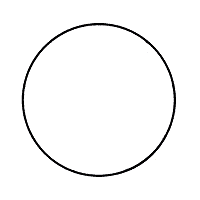
Should be obvious who the winner is here… (me!)
[Previous page](https://www.ilovephilosophy.com/t/lessons-on-causality/44973.md?page=13)
[Next page](https://www.ilovephilosophy.com/t/lessons-on-causality/44973.md?page=15)