This is the second time that you have opted for hearsay instead of going to the source. Now you are a true modern day intellectual. I am truly impressed by such rigor.
All beliefs can simply be boiled down to addiction. A need that can only be fullfilled by a fix. Yep, Phil I was thinking of that other thread.
We have needs in our sentient mind desires and wants that we cannot get filled except by faith belief, hope and fantasy. Beliefs are the drug for a mind that requires something anything to fill that gaping need. Emotions are only symptoms of the addiction.
You can Plato it, Spinoza it and anyone else it, to give a more complicated explanation of something so simple. Our sentient mind has needs that can only be fulfilled by becoming addicted to beliefs, faith, hope and fantasy. We each have our drug of choice that fulfills our specific needs.
Your not exactly coherant now are you?
I put it this way,
That human body system which must acqiure things in the envirnment from which to abstract forms that can be applied to human behavior such that those forms sustain and promote the life of the body.
That is functional,
dysfunctional is all of our excuses for falling short of that.
Only giving back what I’m getting from you. It is apparent that you did not even read the Doidge quote and haven’t read much past the 18th century.
Quite coherent, I was saying similar to you, with a much simpler rendition. Why flummox everything with complications of quotes, fancy terms and ego. I prefer simple when simple is all that is required. I leave the complications for emergency use only. 
Well, one of us is cohearant. I am half asleep. Been off for the 2 week shut down, now I have to get my inner clocks synced to a time schedual.
Decided to make a wooden dinosour with my son tonight, he is 7, will get him into making things himself, should be fun.
Ierrellus:
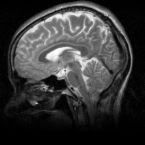
[b]Daniel Dennett stated the same thing in his book: Consciousness Explained. However, the hard problem of consciousness, as detailed by David Chalmers and others remains: consciousness and the physical (if the physical even exists) are two ontologically distinct entities.


For example:[/b]
[b]"To have any chance of making the case, a type-A materialist needs to argue that for consciousness, as for life, the functions are all that need explaining. Perhaps some strong, subtle, and substantive argument can be given, establishing that once we have explained the functions, we have automatically explained everything. If a sound argument could be given for this surprising conclusion, it would provide as valid a resolution of the hard problem as any.
Is there any compelling, non-question-begging argument for this conclusion? The key word, of course, is “non-question-begging”. Often, a proponent will simply assert that functions are all that need explaining, or will argue in a way that subtly assumes this position at some point. But that is clearly unsatisfactory. Prima facie, there is very good reason to believe that the phenomena a theory of consciousness must account for include not just discrimination, integration, report, and such functions, but also experience, and prima facie, there is good reason to believe that the question of explaining experience is distinct from the questions about explaining the various functions. Such prima facie intuitions can be overturned, but to do so requires very solid and substantial argument. Otherwise, the problem is being “resolved” simply by placing one’s head in the sand.
When we observe external objects, we observe their structure and function; that’s all. Such observations give no reason to postulate any new class of properties, except insofar as they explain structure and function; so there can be no analog of a “hard problem” here. Even if further properties of these objects existed, we could have no access to them, as our external access is physically mediated: such properties would lie on the other side of an unbridgeable epistemic divide. Consciousness uniquely escapes these arguments by lying at the center of our epistemic universe, rather than at a distance. In this case alone, we can have access to something other than structure and function."
(Chalmers, David J: Moving Forward On The Problem Of Consciousness, consc.net/papers/moving.html)
[/b]
Plasticity and neurogenesis is empirical fact–yet none of this solves the hard problem of consciousness (“why must these systems necessarily give rise to consciousness?”) and there remains the skeptical (or metaphysical) hypothesis that the brain itself and the psychophysical relations between the brain and verbal reports that a subject is having such and such experience are only an aspect of a greater simulated reality, with the external world being nothing in appearance and behavior like the content of our conscious experience.
That is to say:
[b]When the possibility of a matrix is raised, a question immediately follows. How do I know that I am not in a matrix? After all, there could be a brain in a vat structured exactly like my brain, hooked up to a matrix, with experiences indistinguishable from those I am having now. From the inside, there is no way to tell for sure that I am not in the situation of the brain in a vat. So it seems that there is no way to know for sure that I am not in a matrix.
Let us call the hypothesis that I am in a matrix and have always been in a matrix the Matrix Hypothesis. Equivalently, the Matrix Hypothesis says that I am envatted and have always been envatted. This is not quite equivalent to the hypothesis that I am in the Matrix, as the Matrix is just one specific version of a matrix. For now, I will ignore the some complications that are specific to the Matrix in the movie, such as the fact that people sometimes travel back and forth between the Matrix and the external world. These issues aside, we can think of the Matrix Hypothesis informally as saying that I am in the same sort of situation as people who have always been in the Matrix.
The Matrix Hypothesis is one that we should take seriously. As Nick Bostrom has suggested, it is not out of the question that in the history of the universe, technology will evolve that will allow beings to create computer simulations of entire worlds. There may well be vast numbers of such computer simulations, compared to just one real world. If so, there may well be many more beings who are in a matrix than beings who are not. Given all this, one might even infer that it is more likely that we are in a matrix than that we are not. Whether this is right or not, it certainly seems that we cannot be certain that we are[/b] not in a matrix.
(Chalmers, David J: The Matrix As Metaphysics, consc.net/papers/matrix.html)
[b]Closely related to the Matrix Hypothesis is the Omphalos hypothesis,
en.wikipedia.org/wiki/Omphalos_hypothesis
So it seems that there[/b] ARE logically possible alternatives to the general belief that:
-
The accidentally forming brain (thanks to millions of years of trial-and-error natural selection), compared to every other object in the universe composed of the same atoms----
-
Somehow possesses the ability to create simulated realities (dreams, daydreams, and waking reality)and—
-
Is able to luckily produce the RIGHT KIND of simulated reality—one which just so happens to be a facsimile of the physical, non-conscious external world (!)
Imagine the odds.
Jay M. Brewer
blog.myspace.com/superchristianity
Sorry.Lady K.,
I did not start this thread in order to have it derailed by closed-mindedness. If we cannot quote sources, we are back to opinion vs. opinion, which has no resolution. In looking for a take on religion that could include everyone, I can’t glady tolerate statements that are either too obscure or too biased. I’ve included here references to persons who would have us see beyond Cartesian dualism and Platonic absolutism in order to find some agreement that can be beneficial for everyone.
Phil, I’d appreciate it if you would abstain from putting your outdated ideas into this thread. I’d rather see it ended than extended by closed-mindedness.
Then end it.
One of us is certainly outdated, and closed minded. Threaten someone as short as you. I don’t take kindly to it.
True and, Contributions should always be open minded at both ends.
Lady K., I prefer simple also. Quotes often simplify.
Phil,
What I object to is your notion that current ideas that allow neuroscientists to envisage brain plasticity and evolutionary psychologists to see epigenetics as our realm of personal reality somehow perpetuates a myth. These studies are myth-busters, not myth-starters or perpetuators. And the primary myth these researches have had to dispel is the emotionally satisfying, tenacious myth of dualism as found in Plato and Descartes.
When I speak of derailing a thread, I refer to those who post positions devoid of any clarifications that could raise objection to the status of rigor.
I have been accused of dishing out homilies (not as true grits ). So I’ve tried to present arguments with quotes from those involved in current research, in hopes of substantiantiating my claims. Now that seems to be verboten.
It’s a no win situation. I don’t mean by winning having to defeat another’s position on anything. I mean being able to see a debate in which pros and cons can rise above personal opinion.
Personal, religious or nonreligious ideas given here do not upset. They are the goal of this thread. It’s not my way or the highway.
I enjoyed your post. From what I remember of Dennett’s “Consciousness Explained” he was not too fond of what he called the Cartesian theater. I think he was smart enough to realize that raising the hard problem of consciousness does not necessitate reversion to outmoded ideas.
Way back in 1949 Gilbert Ryle , in “The Concept of Mind”, laid Cartesian dualism low by describing it as requiring a “ghost in the machine”, which, philosophically leads to infinite regress.
I think “Consciousness Explained” fizzles out near the end of the book, raising more questions than answers. But, if we have in our brains a possible 10 to the millionth power neural connections (Edelman), our notions of what they can do amount to best-guess scenarios based on recurrences. This certainly cannot be explained in dualistic or absolutist terms.
And, lately, Dennett seems to have jumped on the bandwagon of let’s bash religious fundies, as if swatting flies somehow removes the offal in which they breed.
Ierrellus:
[b]And at the end of the day, those 10 to the millionth power neural connections (out of the 100 billion neurons making up the system), are an aspect of a specific type of subjective experience generating neural function that in turn gives rise to still a further belief that the 10 to the millionth power neural connections somehow have counterparts that exist in the external world beyond the simulation of the 10 to the millionth power neural connections.
If consciousness arises from the brain, this implies that by an incredible stroke of luck, we were “pre-programmed” by blind and unthinking natural chains of cause and effect between microscopic physical objects to possess the correct number and type of NCC’s (neural correlates of experience) enabling the generation of a simulated reality that contains these billions of “virtual” neurons and neural connections.
Imagine the odds of a physical object (the brain) being capable of producing simulated realities in the first place, and the odds of this particular physical object luckily producing THAT TYPE of simulated reality that simulates the going’s-on of a reality inaccessible to consciousness. Amazing, huh? Takes greater faith than faith in the existence of God or the Matrix Hypothesis.[/b]
Ouch.
Jay M. Brewer
blog.myspace.com/superchristianity
Pheno,
Please forgive my offal remark. It’s reaction to unecessary impositions of mental pain.
The matrix concept is probably derived from certain scientific studies that show that what our senses perceive is expressed in the brain in the only language brains have–electrochemical connections. Topographical maps of how the brain experiences body parts (Penrose, et.al.) amount to brain areas that respond to stimulation in the various body parts and vice versa. Consequently, one might come to believe that the brain is involved in virtual reality just because it contains no “ghost in the machine”, no homunculus, and no real pictures of tables and chairs. That opinion overlooks the processes by which a brain can produce vivid images from neuronal connections.
Although one’s perceptions depend on a mix and match of genomic, physical and cultural data, they accurately depict what exists outside our brains. If this were not so, we could not adapt to anything and would become extinct. Brain’s do not exist as an internal reality somehow divorced from external reality. They cannot afford such a disconnect.
Culture is a major factor in human evolution. It appears to me that we are evolving from physical to mental dependence for survival. If that is truly the case, the physical will atrophy. The sci-fi reduction of humans to a brain in a jar is not likely to happen. We still have enough fertile irrationality to prevent it. Thus a need for some sort of religion may be a survival mandate. Just don’t preach me a wedgie!
Ierrellus:
No problem. It was that the analogy was a bit eye-boggling. I saw it and went: “…Wow…” 
ILovePhilosophy correspondent “Bane” said the same thing in an earlier thread a while back. The idea of Facsimile Realism (the notion that our sensory experiences are a reasonable facsimile of the external world) is quite commonsense from the angle of survival, but it assumes:
-
That a physical, mind-independent reality MUST exist—despite the fact that logically possible alternatives exist–such as the notion that reality, for all we know, may be purely phenomenological in aspect.
-
That nature (if God does not exist) “cares” whether or not we survive. The fact that the brain, shaped and structured as it is and functioning as it does, just so happens to give rise (through electrical activity) of a virtual reality that just so happens to accurately portray the “external world” is sometimes (perhaps habitually or conditionally) described in a shockingly teleological way; as opposed to the notion that blind, deaf, and dumb nature accidentally produced—of all things—a virtual-reality machine (the brain) that luckily produces a reasonable facsimile of the external world which luckily supports human survival.
[b]The seeming fact of the matter is that there is (conceptually) a number of logically possible scenarios that explain the same evidence. The Matrix Hypothesis (secular or theistic) is indistinguishable from normal Facsimile Realism. Do we somehow possess an epistemic power that tells us that the Matrix Hypothesis is somehow dead wrong? Can we demonstrate the “impossibility” of the Matrix Hypothesis and the absolute, undeniable truth of Facsimile Realism? Can we demonstrate the greater likelihood of FR over MH, given that both are indistinguishable in terms of how the world appears and behaves and that objective reality may in fact belie Facsimile Realism due to the real existence of MH?
In the end, we have no epistemically honest way of knowing that the only world that could possibly and logically exist involves the activity of random, physical, external-world processes that would crush the external-world counterpart of our physical bodies or “blow it to bits” if we did not somehow possess this absurd machine:[/b]
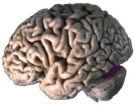
[b]—which, out of every other object in the universe (composed of identical atoms arranged in different order) happens to be “just what the doctor ordered”—in that it can somehow produce just the right kind of virtual reality that enables the external-world counterparts of our physical bodies to survive the rigors of external-world physical motions and forces threatening to compromise the homeostatic function of those bodies— through the creation of sensation, cognition, and emotion that just so happens to express themselves in the form of congruent responses instigating appropriate survival-promoting physical behavior.
Imagine the odds.[/b]