When I said “merely” in this context, it was not explicitly meant to be defined as an “inclusive” merely.
It was not meant to imply that it equaled = “tried to run into him + running into him”.
It was meant as “running into him superceded the “tried to” part”. That running over him was of more importance than whether she tried to or not.
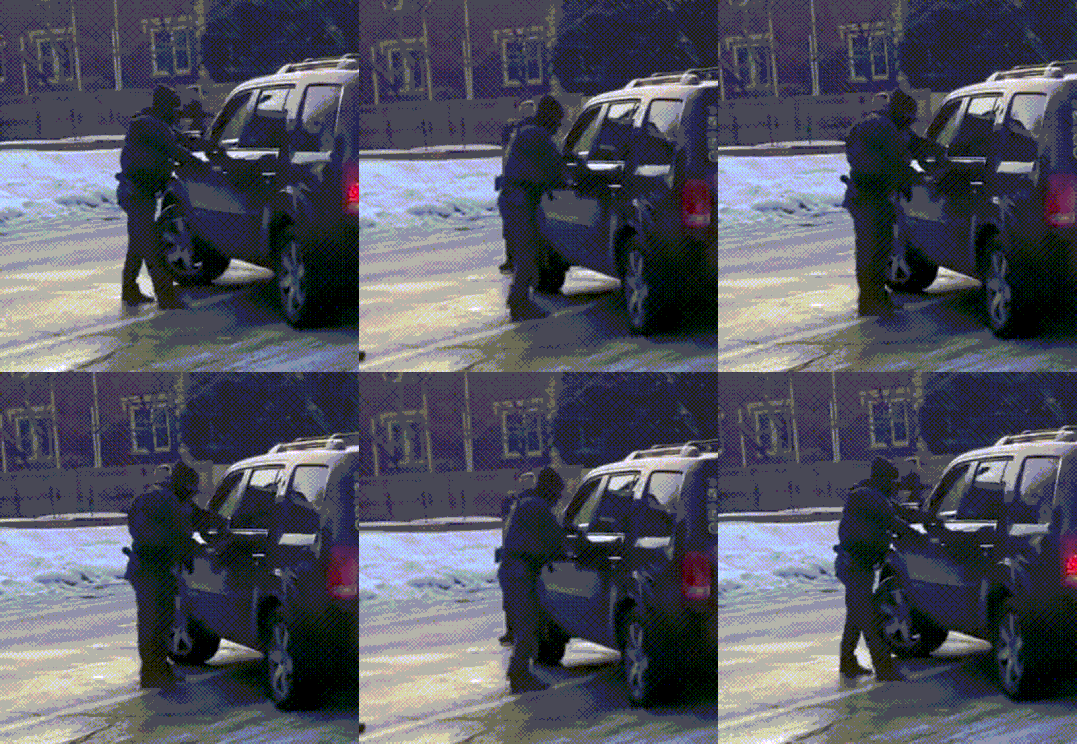
Its impossible to know what she had planned in her mind, but from the footage, she had the gas pedal going on, when an officer was in front of her car, that’s what we know.
In any other situation, the driver would be in the wrong, even if the driver made as an excuse such as “they weren’t even looking in front of them when they bumped into someone in front of them” or something.
Less so if the car was already moving at speed, such as they stopped to look at their phone and didn’t see the road in front of them, but in this scenario they were resisting arrest while surrounded by officers, then drive the car backwards, change gear to forwards then slam the gas pedal hard (perhaps also losing tire traction), while an officer is in front of them.
Any other scenario, there would be no argument if the driver was in the wrong, such as if a civilian was in front of the car and they slammed on the gas pedal like that, starting from a net velocity of 0 mph, and the excuse “the driver didn’t see what was in front of them” would not be likely to hold water.
So, for example, if a car is moving 40 mph down a road, they stop to look at a phone for a few seconds, then they run over a pedestrian accidentally, they would still go to jail but it would be more understandable than say, a car in a parking lot where a Civilian for some strange reason is standing in front of their car, but the Civilian is not threatening them, but perhaps the Civilian is a drunk man or something, then they floor the gas pedal onto the Civilian.