Repetition of error doesn’t make a correction.
Agreed… but… as if.
there is no error Ichthus…
Matthew 7:21-23
21 “Not everyone who says to me, ‘Lord, Lord,’ will enter the kingdom of heaven, but the one who does the will of my Father who is in heaven. 22 On that day many will say to me, ‘Lord, Lord, did we not prophesy in your name, and cast out demons in your name, and do many mighty works in your name?’ 23 And then will I declare to them, ‘I never knew you; depart from me, you workers of lawlessness.’
You’re a believer aren’t you Ichthus…and? …as if that is of any use to you.
My last on-topic contribution:
Pardon the de-rail.
yes. These are the type of people I’m talking about when I say leftist cringe. You see these demonic shitposters all over social media these days.

1 Like
So, if I am understanding you correctly, you are saying that the positive and negative of EM force is viewed incorrectly by mainstream science and philosophy, because they see it as + = - in the sense that one cancels the other out, achieving neutrality, when in fact that is not what happens and the + and - are simply achieving an alternating vibration or sine wave-like state, over and over, hence why all of existence in a sense is “vibrational” and things work in cycles, waves, up and down etc. which means that + and - should be seen as part of the same one thing that is waving or vibrating, and it is those waves/vibrations that produce differences which, for example can be utilized or rather recreated by our computers with the transistor states being 1 or 0, we are effectively copying how reality already works.
Waves are waves, vibrations, ups and downs linked by their underlying mediums (the stuff that is ‘waving’) so you say that “+ and - = + and -”, basically, is that more or less accurate? Or maybe I am misunderstanding this.
Yes that religious statue outside CERN is disconcerting, but it makes sense as a symbol of what you are describing too, the alternation of creation and destruction can be seen as a kind of wave or higher level vibration occurring across reality.
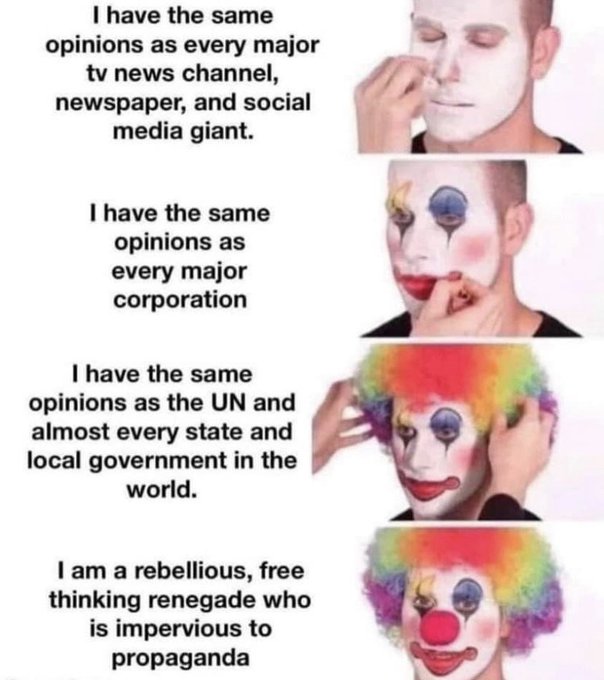
Yes, they are programmable n-zombies. I say n-zombie instead of p-zombie because they are normie-zombies. The mainstream narratives tell them what to think and how to feel about almost everything.
2 Likes
Scientists are just like liberal politicians, whores for big money and the highest bidders pretending to have valued principles that are in reality virtually non-existent.
Trust the science assholes.

1 Like
Take two spinning particles with N and S poles.
They interact in the following combinations NN;NS;SN;SS.
It’s impossible to cancel out these interactions between 2 spinning particles let alone the countless other particles that make up all matter so mainstream science is totally incorrect when it claims that attractive and repulsive electromagnetic force ABSOLUTES!!! cancel out.
The TRUTH is mainstream science wants them to cancel out because they don’t want force ABSOLUTES!!! around at the start of their science for obvious reasons.
They claim that good is bad and and bad is good.
Can you describe a scenario in which the term anti-science can be used in a descriptive sense?
In practice, the call is for ‘measures’ (e.g. ‘to combat antiscience’ in the Scientific American article).
The idea of prosecution would be applicable from the perspective of the people who would be affected by those measures.
An example:
Harvard University professor David Ropeik declared:
These are real deaths… It is absolutely fair to charge that opposition to this particular application of genetically modified food has contributed to the deaths of and injuries to millions of people. The opponents of Golden Rice who have caused this harm should be held accountable.
The Human Toll of Anti-GMO Hysteria: 1.4 Million Life Years Lost Since 2002
It seems to me that the label anti-science cannot be used in a descriptive sense, because it is used as a label related to people’s beliefs and ideas.
Biddle in his paper often clarifyingly refers to the anti-science label as “anti-science or engaged in a war on science”, to highlight the contextual meaning of the label.
The anti-science label seems inherently intended to create a situation of “war against science” in which opponents can be challenged and combated on ideological rather than philosophical grounds.
It may be intended to create an ‘imperative for action’ that can play out on a broader political scale, for example through the enforcing of policies with harder ‘measures’ than otherwise would be morally possible.
In practice this could cause people to lose their voice (to feel being silenced). In the  Philippines example case, MASIPAG, a farmer-scientist network in the Philippines, responded with the following to the global media’s response to their ban of GMO Golden Rice:
The Guardian’s article incorrectly and deceivingly claims
convinced the court to halt GMO Golden Rice operations. The case details are public knowledge, yet The Guardian ignored the facts, akin to a colonialist disregarding the true narrative of the locals.
The Guardian consciously lumped the number of Filipino GMO Golden Rice opponents into local farmers, which to us is a clear step to silence the narrative of the Filipino people.
In this case the Filipino people were being backed by the Supreme Court in their country. This essentially broke the anti-science narrative, and in response the global media attempted to deflect blame to Greenpeace.
Reason: Greenpeace Crusade Will Blind and Kill Children
The Spectator: Children could die because of Greenpeace’s Golden Rice Activism
The demand for ‘measures to combat antiscience’ could potentially have caused (forced) such a court to side with ‘science’, by which the people would have been both silenced and heavily stigmatized as child killers. They would endure detrimental social consequences, for example by actions of their own government against them if they were to protest.
This is not limited to far-away countries. In the  UK the government is now framing a move towards deregulation of GMO as “following the science” despite 85% of responses to a public consultation being against deregulation. The government is essentially ‘enforcing’ it on the basis of the momentum created by the anti-science label, or perhaps it is itself forced by it.
If this were to have happened in Philippines and were the government to have stated “we follow the science”, as many other governments often state in public communication, the message of MASIPAG about feeling silenced would have been actual.
The Guardian consciously lumped the number of Filipino GMO Golden Rice opponents into local farmers, which to us is a clear step to silence the narrative of the Filipino people.
The law requirement rests on the idea in modern society that the moral imperative for prosecution should be limited and restricted by legal institutions. In practice, the moral imperative could differ.
AI described the meaning of the term prosecution as following:
Prosecution fundamentally refers to the systematic processing of individuals based on a moral, legal, or social imperative. While traditionally understood within the narrow confines of legal institutions as the formal charging and trying of individuals for criminal offenses, the term can be more broadly interpreted as a mechanism of social control.
Economic coercion strategies, driven by a specific moral imperative, create systemic pressures that enforce policies. When individuals challenge these policies, the underlying power structures can deploy punitive measures that silence, oppress, and punish dissent. Through this process, economic tactics become a mechanism of prosecution, transforming resistance into a controlled and suppressed social response.
I think you’re right to worry about the *rhetorical* use of “anti-science” as a war-cry.
But I don’t think it follows that the term can never be descriptive — it just needs to be anchored to specific *behaviors* rather than to “having the wrong opinion”.
For example, “anti-science” could (descriptively) pick out a pattern like:
- systematic misrepresentation of studies (quote-mining, cherry-picking, refusing to cite primary sources)
- immunizing a claim against disconfirmation (“any counterevidence is part of the conspiracy”)
- moving goalposts in a way that blocks revision (demanding impossible standards only when inconvenient)
- persistent refusal to engage with the relevant expert literature *as literature* (not as propaganda)
That’s close to what you might call epistemic vice: it’s about how someone handles evidence, not which team they’re on.
On “prosecution”: if we stretch the word to mean *any* social pressure or consequence, then everything becomes “prosecution” (peer disagreement, reputational loss, employers setting standards, journals desk-rejecting weak work, etc.). That makes the concept less useful.
I’d keep a sharper distinction:
- **Legal prosecution**: the state uses criminal law.
- **Institutional sanctions**: employers, universities, platforms, journals, etc.
- **Moral condemnation / rhetoric**: shaming, blame, “you have blood on your hands” language.
Ropeik’s quote (about “holding accountable”) is a good example of rhetoric blurring those lines. It’s morally loaded, and can be used to justify sanctions. But calling it “prosecution” in the same breath as criminal law risks collapsing importantly different mechanisms.
So I agree the label is often deployed to create a “war on science” framing — but I still think we can describe certain *methods of inquiry* as more or less science-aligned, without turning disagreement itself into heresy.
I think you’re right that the label is often used as a cudgel (“we are Science, you are the enemy”), especially in policy disputes. But I don’t think that exhausts the meaning of the term.
A descriptive use is possible if you tie it to *methods and conduct*, not to “having the wrong conclusion”. For example: systematic quote-mining, refusing to engage primary sources, immunizing claims against disconfirmation (“any counterevidence is part of the conspiracy”), or treating “peer review” and “replication” as inherently illegitimate.
So I’d say: the term is *often* used ideologically, but it can still be used descriptively when it’s (a) behavior-anchored, (b) domain-specific (anti-vax isn’t the same thing as “anti all science”), and (c) separable from the policy question of what “measures” are justified.
This doesn’t sound anti-science to me:
Read: https://drive.google.com/file/d/1MUjTo75NYM0hreL3_7F3uHt9D2KMBX1N/view?usp=drivesdk
Here’s the TOC:
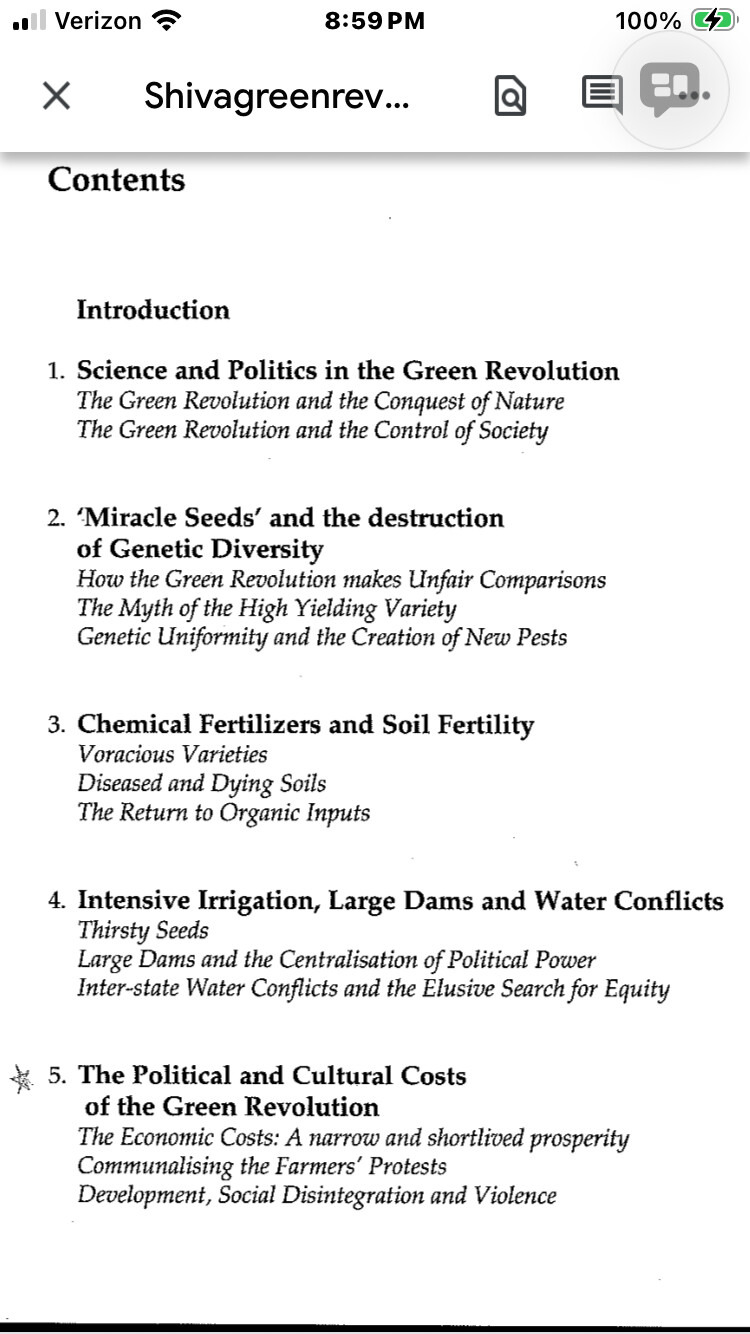
The “green revolution” sounds like a money/power grab clothed in good intentions.
Wouldn’t a descriptive use of the term require an ideological bias that is opposed to science itself directly, rather than just any bias that would potentially result in a striving or position that deviates from what science deems valid by its own standards or status quo beliefs?
If this would be the case, could you provide practical examples in which people have such a specific bias?
Biddle writes in his paper:
The “anti-science” or “war on science” narrative has become popular among science journalists.
The popularity of the term indicates that it is used on a bigger scale. This by itself is a factor for consideration with regard the potential validity of the term.
Suggesting that the term could be valid when it concerns people who have a bias specifically against science, wouldn’t match the actual situation in which the term is used and is to be examined.
In the paper opposition against GMO is used as an example. People are labeled anti-science when ‘not following the science’ on ideas about GMO, but science is in no position to judge various moral concerns.
As David Hume concluded: “the facts of science provide no basis for values”.
I am not anti science at all….I merely highlight the fact that cognitively biased mainstream science became irrelevant because it was unable to explain the psychological because it simply could not explain how binary data is produced in the cosmos.
No binary data ….no sounds;visions;sensations are experienced by the SELF.…it’s as simple as that.
Good pushback — and I think you’ve basically just identified why the term becomes sloppy in public debate.
If by “anti-science” you mean “has an explicit ideology whose *content* is opposed to the scientific method as such” (e.g. “experiments can’t tell us anything; controlled evidence is irrelevant”), then yes: that’s a narrower, cleaner definition.
But notice: most “anti-science” accusations in the wild are not aimed at people who reject *methodology*; they’re aimed at people who reject a *consensus claim* (or a policy justified by it). That’s why Biddle’s point matters.
So I’d split the idea into two labels:
-
*Anti-method* (genuinely anti-science): “revelation/authority is the only route to knowledge; experiments are suspect; falsification is irrelevant.”
-
*Anti-consensus / anti-institutional trust*: “I don’t trust journals/institutions/experts; I suspect capture; I think studies are biased.” That can be rational or irrational depending on evidence.
Examples of (1) do exist, but they’re less common in mainstream politics than people think:
- some forms of creationism/young-earth literalism when they explicitly deny radiometric dating, geology, and evolutionary inference as legitimate ways of knowing
- ideological “alternative medicine” subcultures that treat randomized trials as corrupt *in principle* and replace them with “my truth / vibes / tradition” as a general epistemic rule
But a lot of GMO/green-revolution objections are closer to (2) + Hume’s point: they’re about values, power, and acceptable risk, not about whether the method of science works.
If you define “anti-science” narrowly as (1), I’m mostly with you. I just think public usage usually slides into (2), and that’s where it becomes a rhetorical weapon.
The call itself would not be prosecution. Not even the call by the article in Scientific American that the developed world should build infrastructure to combat antiscience. These are calls that pave the way for prosecution.
We must mount a counteroffensive and build new infrastructure to combat antiscience, just as we have for terrorism and nuclear proliferation.
The moment that a government accepts these advises from the broader scientific community (Scientific American’s publication is illustrative) and implements policies to ‘combat antiscience’, it would result in prosecution.
The “following the science” rethoric links the anti-science label to actual prosecution of people.
Governments are asked or even forced through economic coercion tactics (e.g. sanctions) to “follow the science”, by which the anti-science label becomes a political matter that can be ‘combatted’ like terrorism and nuclear proliferation.