thoughts on determinism

Reconciling Determinism and Free Will: A Compatibilist Perspective
Innocent Ociti

On the other “other hand”, however, compatibilism still makes absolutely no sense to me. Well, other than because my brain, wholly in sync with the laws of matter, compels me to be flummoxed when contemplating it only as [up until now] I only ever could have been.

Now, the libertarians may well be right here. But they are no less just like all the rest of us in being unable to explain “scientifically” or “philosophically” [other than up in the intellectual clouds] how, when, biologically, life began to evolve here on planet Earth, it “somehow” evolved into autonomous human beings. It just…happened.

And most libertarians that I have met simply shrug off the points I raise regarding the role that dasein plays in predisposing mere mortals in a No God world to embrace particular sets of political prejudices. Biases rooted existentially in particular historical, cultural and personal interactions.

Yes, this and the arguments that I note in the OPs here:

ilovephilosophy.com/viewtop … 1&t=176529
ilovephilosophy.com/viewtop … 1&t=194382
ilovephilosophy.com/viewtop … 5&t=185296

Finally, back to this…

“Compatibilism, on the other hand, places a greater emphasis on the idea that we are responsible for our actions because they are in line with our desires and motivations, even if those desires and motivations are themselves determined by prior causes.”

Those “internal” – intuitive – factors that come into play for human beings that “deep down inside” convince them [including me] that they have free will. Even though these desires and motivations are themselves determined by prior causes?
Is Free Will Necessary For Moral Responsibility?
A case for rethinking their relationship
Carrie Figdor and Mark Phelan

How “widely agreed” in the philosophical community? For some years now I have been trying to bump into an argument able to convince me that “somehow” a wholly determined universe and moral responsibility are compatible. And here I assume further that compatibilists themselves are no less wholly compelled to think what they do about it. So, it’s ever and always back to the profound mystery embedded in biological life evolving into self-conscious human beings here on planet Earth.

There you go!

What do I keep missing here when the compatibilists get around to Mary and Mike?

Okay, Mr. Compatibilist, how is this applicable or not applicable to Mary and Mike? And, in regard to the human brain, how is what they did [abort/rape] not in turn interchangeable with how the rest of us react to what they did? Autonomically, wholly in sync with the laws of matter.

Is Free Will Necessary For Moral Responsibility?
A case for rethinking their relationship
Carrie Figdor and Mark Phelan

Then the part [of course] where I note the predicament all of us face here. Including the authors. Strawson distinguishes optimists from pessimists as he does. But how on Earth would he go about determining if this distinction itself was something he was able make autonomously? Instead, if this distinction is no less intertwined with our own distinctions no less intertwined in brain matter that compels all of us to distinguish only as we ever could in the only possible material reality.

Same thing regarding what we come to think that freedom means. Some here assume they thought this up of their own volition. It means only what it does to them because they introspect autonomously. Others assume that, on the contrary, we reward or punish behaviors as we do because we were never able not to. Justification is moot to the laws of nature.

Unless, perhaps, it’s not? Back to what may well be the profoundest mystery of them all: The possibility of teleology in a No God world.

What do the pantheists/Spinozans have to say about that: quora.com/Is-there-such-a-t … -pantheism

Free will & Moral responsibility
AQA Ethics

Just out of curiosity, any libertarians/advocates of free will here who do believe they are able to actually demonstrate that we have autonomy. Or, instead, are you willing/able only to take a leap of faith to the “belief” “in your head” that “somehow” when matter evolved into biological life here on Earth and became us we “just did” acquire it.

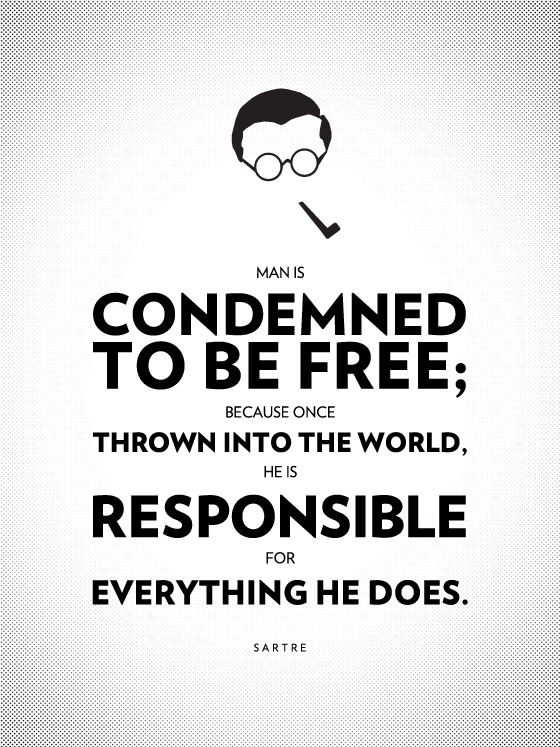
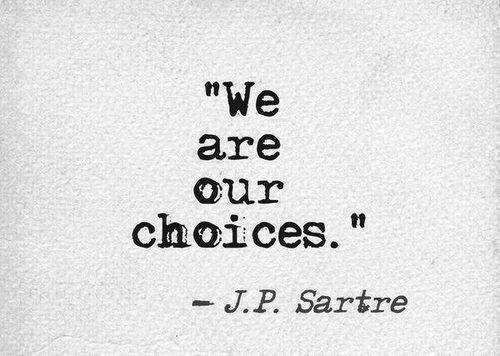
Sartre, no doubt, for some, offers up the worst of all possible worlds: “somehow” we did acquire free will. But what on Earth and for all practical purposes does this mean if any behaviors that we do choose are no more essentially rational and purposeful than any other behaviors? Then, in the is/ought world, it’s just a matter of how more or less “fractured and fragmented” you become.

Here, however, we are back to engaging human psychology in order to probe the extent to which human psychology itself is or is not autonomous. Matter having evolved into brains actually able to ponder what that means.

And whether one way or another it can do this because it freely opted to choose to.

Also, I suspect, if we did “somehow” acquire free will, it’s much easier to assume that there is but One True Path to understanding the world around us.

Fortunately, there are lots and lots of paths…

en.wikipedia.org/wiki/List_of_r … traditions
en.wikipedia.org/wiki/List_of_p … ideologies
en.wikipedia.org/wiki/List_of_s … philosophy

…to choose from.

Quote - Sartre, Jean-Paul (4).jpg


Herd psychology is the first to deny and denounce free-will, desiring to sacrifice whatever small degree of independence it enjoys in the hope of increasing its survival potentials through its surrender to an external will, whether it be conceptualized as a supernatural being or a collectivization of identity into a uniformity of beings.
Schopenhauer himself could not let go of a super-being, existing outside space/time and causality, replacing it with a more Buddhistic alternative he named ‘will.’

Free will & Moral responsibility
AQA Ethics

Go ahead, try to think that through. Isn’t the human brain that thinks up philosophical grounds for things like free will the same human brain that experiences emotional and psychological states that are merely assumed to be autonomous?

What if human psychology is capable only of creating the illusion of free will?

Until we grasp the extent to which human genes themselves are able to create a bona fide autonomy, how would we go about determining what constitutes a genetic fallacy?

Are human genes “somehow” able bring about free will? And, here and now, what is the most comprehensive understanding of how human genes and the human brain are intertwined in the laws of matter?

Did your brain, wholly in sync with your genes, compel you to come up with one set of theoretical assumptions about human psychology and free will rather than another? Okay, beyond a “world of words” how would this be substantiated?

Here, in fact, is the author encompassing how in a world of words, Sartre might defend himself…

What if, instead, Sartre’s starting premise is one that he was never able of his own free will not to opt for? That if others were only able to understand his argument as they must they were never able not to misunderstand it. Meaning that for all practical purposes understandings and misunderstandings themselves are essentially interchangeable. Just as using an a priori or an a posteriori approach are.

Then straight back up into the clouds…

And then the part where many ponder how on Earth an omniscient God can possibly be reconciled with human autonomy itself.

Just one more thing to boggle our own minds going all the way back to, well, we don’t even really know what that is, do we? Just as for most [including me as often as not] we “just know” that we have free will.

Free will & Moral responsibility
AQA Ethics

That’s the point I come back to over and again. In fact, many who embrace free will come back to that in turn. The only possible explanation for free will is God. Just as objective morality is derived from God so is autonomy. Or are we to believe that in a No God universe mindless matter just “somehow” became living, biological matter that…became us?

God or No God, however, free will is no less the antinomy today that it was going back to the pre-Socratics.

Of course, this is just one more “philosophical assessment”. We have no capacity [that I am freely aware of] to grasp if it is true. In other words [and you know what’s coming], cue “the gap” and “Rummy’s Rule”. Them and all of the other Big Questions that some merely believe they know the answers to “in their heads”. God or No God.

Indeed, not unlike the illusion of free will that we experience in dreams. It’s all the brain’s doing. Only in the dream we may as well be wide awake. After all, we don’t think and feel and say and do things in dreams while constantly reminding ourselves that it is “only a dream”.

On the other hand [unless I am missing Locke’s point], if we do have free will, eventually we discover that the door is locked. Then, of our own volition, we come up with a way to get it open. Breaking it down even. So, my own understanding of the “psychological illusion of free will” revolves more around the assumption that human psychology itself is wholly determined. Meaning both the “external” and the “internal” variables in our lives are manifestations of the only possible reality.

Free will & Moral responsibility
AQA Ethics

Actually, there is what science thinks it knows about QM “here and now” and all that there is to know about it…ontologically? And until [if ever] science does get closer and closer to fully grasping it – objectively? – who among us [in the interim] can say for sure how cause and effect are intertwined “for all practical purposes” in the subatomic world? Let alone how it is all intertwined [along with the human condition itself] in…the multiverse?

The word “random” here has always been rather problematic to me. It’s like completely out of the blue something “just happens”. Like “random mutations” in the evolution of biological life on Earth. As though the laws of matter have no say here. A genetic mutation itself “just happens”.

Thus, “in the interim” we are often confronted with speculation of this sort…

What might be and what is? You tell me.

And what is “the case” insofar as morality itself goes? Even if the human brain “somehow” reconciles the micro and the macro world [God or No God] and we do have a measure of autonomy, that doesn’t make my own arguments go away. The human brain functions in the either/or world such that something at least in the vicinity of the objective truth seems to prevail. But where/what is the equivalent of that in regard to value judgments?

There may well be an equivalent. But I can only note that in philosophy forums [so far] I have myself never come upon an argument that establishes it.

Free will & Moral responsibility
AQA Ethics

Back to being totally stumped again. If our “internal causes are just as determined as our external cause” then how are they not in turn responsible for how Hume defined free will?

The “conception of moral responsibility”? Same thing. Some philosophers may want it to include “free will” but if what they want is only what they could never not want…what then?

So, of course…

Again, the part where I get stuck. The part where others focus in on those utterly crucial definitions. If only others would define compatibilism as they do, everything would be resolved. In other words, defining compatibilism despite the inherent gap embedded in this:

Brain scientists don’t grasp this profound mystery yet, let alone philosophers encompassing it all in their worlds of words.

Besides, how does one pin down whether or not, in defining it, one was able to freely opt to define it otherwise?

Here, see what I mean…

Argue, argue, argue. Claim, claim, claim.

How about this: all the way back to how the human condition itself fits into the definitive understanding of and explanation for the existence of existence itself.

I mean, if it’s not God.

Free will & Moral responsibility
AQA Ethics

Here, however, libertarians are no less in the same boat as all the rest of us. They claim to have free will, but they are unable to actually demonstrate this much beyond one or another…argument? Then when confronted with this, well, what else is there but to insist that just like all the rest of us, they “just know” deep down inside them that they do.

And then – click – libertarians like henry quirk who simply shrug off the points I raise in regard to dasein and value judgments. In other words, given free will, they insist further that their own value judgments are derived from logic anchored “somehow” to intuition intertwined “somehow” with God.

Which, again, is why the libertarians among us insists that in regard to intentions, we do have free will. Why? Because intention itself is said to be an “internal” component of our psychological Self. Whereas many determinists argue that, on the contrary, human psychology itself is just another inherent manifestation of the illusion of free will…of a brain wholly derived from the laws of matter.

Thus, distinctions like this…

…are irrelevant. In either set of circumstances, what unfolds could never have possibly not unfolded. Whether in regard to what did happen or in regard to how we react to what did happen.

Free will & Moral responsibility
AQA Ethics

Unless, of course, men and women “choose” criminal behavior because they were never able not to. And we react to that behavior as we do only because we were never free to opt otherwise. And criminals are arrested, tried, found guilty and punished wholly in sync with the only possible reality.

And, in turn, any discussion we have here in regard to criminality and retributive punishment and justice is no less an inherent manifestation of the only possible world.

Spooky, isn’t it?

See how it works? We all draw the line in different places. Darrow embraces some measure of determinism in regard to the behaviors of Leopold and Loeb…but he stops short of speculating that perhaps his own behavior, his own closing argument at the trial – law2.umkc.edu/faculty/projects/f … 20court%2C – was also wholly determine by his brain wholly in sync with the laws of matter.

Same with the sentence reduction. That was never not going to be reduced because in a wholly determined universe if it was reduced there was never any possibility of it being otherwise.

Then this part…

Here let’s presume that the Libertarians are right and “somehow” we acquired free will. But what any number of Libertarians then do is to insist that each of us as individuals is wholly responsible for our behaviors. Class, race, gender, ethnicity etc., are entirely moot. As are dasein and the Benjamin Button Syndrome.

Free will & Moral responsibility
AQA Ethics

Which is why I am still unable to grasp how compatibilists reconcile determinism with moral responsibility. They speak of the need to punish those who behave immorally as though “somehow” the “internal” components of their brain/mind transcend the laws of matter. And all I can then presume – compelled to in turn or not? – is that they believe this only because they were never able not to believe it.

On the other hand, determinists have no way of demonstrating definitively – scientifically? – that human beings do not have free will. We’re all basically ignorant – woefully ignorant – regarding how the “human condition” itself fits into whatever explanation there might be for existence itself.

Not that this will ever stop the libertarians among us from insisting this part is moot. They “just know” they have free will. Not only that, but those like henry quirk will insist as well that only those who embrace his own rooted existentially in dasein political prejudices are, in fact, true libertarians.

And yet in any number of ways, we are different. Unless, of course, in the only way that ultimately counts, we’re not. So, many simply take an existential leap of faith to free will. As others do to God. They act as though they have it. And, who knows, maybe they do.

Then back to Charles Whitman?

On the other hand, was or was not Sam Harris himself wholly determined to reference him?

Free will & Moral responsibility
AQA Ethics

Again, how are we not stuck here? At least until scientists and/or philosophers and/or theologians reach a consensus regarding human autonomy. But then stuck further because how would we go about pinning down whether that consensus itself was arrived at autonomously?

Well, providing of course this is not just a trivial pursuit.

Now back to the part where I’m the first to admit I am just not intellectually sophisticated enough to fully grasp…

Okay, but what if Sam Harris has no autonomous control over his suggestions?

Yes, that seems reasonable to me. But: does it include the “normal functioning” we pursue here in posting and in reading the posts of others? Or is it nature and the laws of matter all the way down?

On the other hand, how is human logic itself not entangled in this conundrum? Is it not but one more inherent manifestation of the neurophysiology that may or may not encompass the entirety of human brain?

Well, providing, of course that this too is not just another trivial pursuit.

Free will & Moral responsibility
AQA Ethics

You know what’s coming…

It’s one thing for determinists to make this claim while framing the claim itself as advocates of free will do. What I call the “free will determinists”. It’s another thing all together however to make this claim while acknowledging that they were never able not to make it.

Punishment occurs as it does because it was never able not to occur as it does. The justifications given are just one more component of the only possible reality. Same with attributing moral responsibility to the one being punished.

Although, again, I’m the first to admit I am not really understanding this distinction in the most rational manner.

Right, like the Supremes aren’t in the same boat – “the gap”, “Rummy’s Rule” – all the rest of us are in.

On the other hand, point taken? We have to assume we have free will even if that assumption itself is compelled by brains wholly in sync with the laws of matter. Ater all, how does one even begin to wrap their head around a world – a human condition – that really is just nature’s very own equivalent of dominoes all toppling over onto each other autonomically. The brain interchangeable with all of the other organs in our body?

All of this fretting about something that really may well be completely beyond our control. Still, how many determinists who conclude that punishment cannot be justified are also willing to acknowledge that their own conclusion is just one more domino toppling over on cue like the criminal committing a crime that he or she was never able not to?

Free will & Moral responsibility
AQA Ethics

Right, like the particular grounds that any of us have come to fall back on existentially, are not all interchangeably justified given the only possible reality.

Unless, of course, everything that everyone thinks, feels, says and does in regard to crime and punishment is wholly determined.

Sure, perhaps the citizens in Norway have “somehow” acquired free will while the citizens of, say, Texas have not? Or is it the other way around? But, from my frame of mind, that’s how the “free will determinists” seem to function. The criminals were never able not to violate the law, but “society” is “somehow” able to either “choose” to treat them harshly or…coddle them?

This, however, is more in the way of a political prejudice. And such prejudices are derived historically and culturally such that Norway took one path to punishment while much of the USA took another path altogether. But that’s the part where even given free will the objectivists among us insist their own dogmatic assessments are the only ones that count.

Free will & Moral responsibility
AQA Ethics

And of course “somehow” Harris himself acquired the capacity to embrace “free will determinism”. In other words, such that his own arguments are, what, the exception to the rule? His own brain is matter wholly in sync with the laws of matter…but he is still able to convince himself that his own views on punishment are more reasonable than those determinists who suggest instead that just as criminals are unable not to break the law, those who punish them are unable not to punish them.

Of course both bears and human beings are mammals. Over millions of years the first brains became bear brains became our brains. But bear brains are rooted almost entirely in genes [biological imperatives] whereas our brains evolved to encompass memes [social, political and economic narratives] as well. Memes then evolved into morality. And philosophy. And science.

Still, how did our brains come to acquire autonomy? If in fact we possess it at all. It’s not what we think about tranquilizing bears some determinists argue but whether or not what we do think about them we were ever able to freely choose not to. To, instead, think something else. It’s the difference between bears killing us and other human beings killing us. Unless, perhaps, there is no difference?

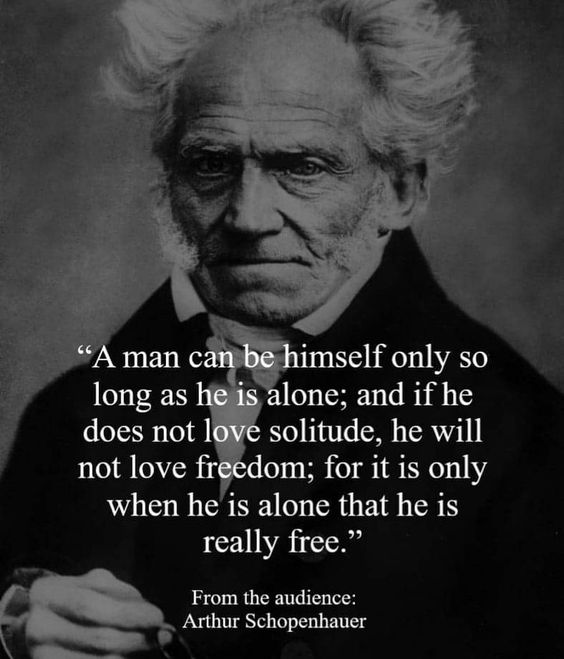
Back to Schopenhauer:

“Man can do what he wants, but man can’t want what he wants.” It was Arthur Schopenhauer who wrote: “Man does at all times only what he wills, and yet he does this necessarily." the philosopher’s shirt

In regard to morality, different things are justified by different people. But if all of their justifications are rooted in the only possible reality, how are they all not basically interchangeable as justifications?

Should we run this by the bears?

In any event, I’m still willing to acknowledge I am not understanding Harris correctly. And all I can do is – click – bump into someone able to explain him better.

Free will & Moral responsibility
AQA Ethics

Back to that again. Back to those who insist that, first and foremost, what counts here is how we define free will, determinism and compatibilism. As though when we do get around to definitions, free will “somehow” kicks in. Define moral responsibility into existence?

“Mary, you were never able not to abort your unborn baby…but given how I define compatibilism, you are still morally responsible.”

Back again to that, as well: “internal causes”.

As long as no one puts a gun to Mary’s head, commanding her to “abort the baby or die”, she’s still “somehow” “responsible” for doing so. Her “intentions, personality, desires, knowledge, beliefs” etc, kick in making her liable for the baby’s demise.

Of course, even here some argue that when another puts a gun to her head commanding her to abort the baby, they too do so only because in the only possible reality they were never able not to.

Why Sam Harris is confused about free will
Dan Jones

Deep responsibilitty?

Okay, in regard to Mary aborting her unborn baby, how would a philosopher go about differentiating deep from shallow responsibility?

Yep, that’s where some hard determinists take this. On the other hand, how many of them will acknowledge in turn that their brains compel them to take it there?

Okay, so how is what Dennett accepts and believes here not as well an inherent manifestation of the only possible reality?

How is this…

“…compatibilists argue that determinism is compatible with free will and moral responsibility, and so we can meaningfully talk about culpability, guilt, blame, praise and other features of moral judgements…”

…applicable to Mary aborting her unborn baby?

Let’s face it – click – many refuse to accept the possibility of a world where everything they think and feel and say and do, they were never able not to. Why? Because they would then be unable to pat themselves on the back for all of their accomplishments. Likewise, some might embrace hard determinism because then they could argue that they are not really responsible for all of the things they failed to accomplish. Their lives are in the toilet but it’s “beyond their control”.