Wanna write wanna can’t stand not to

Next day, Sunday, returning, still yesterday buzzing like enlightening buzzing fly: before petting it as it deliciously crawled up my arm: forgetting their maggot status: and the variable shades of greens casting deeper into each quickening follow of yet another jumped season:

/

So return, hoping eternally in some flown sense, like the maggots wishing they had filed, away and returned unchanged. I must in deed write, this stuff, and not in an effort to shine, but true to the wish not to deface the masked joker seen slips perpetual smile: but

Return to the egoless state, coming in aspiring to stay with it, u boshit vick before burning down again

Mom, I’ll message you have me aborted against Catholic belief, Patrr Nostrr, for get me Faith.

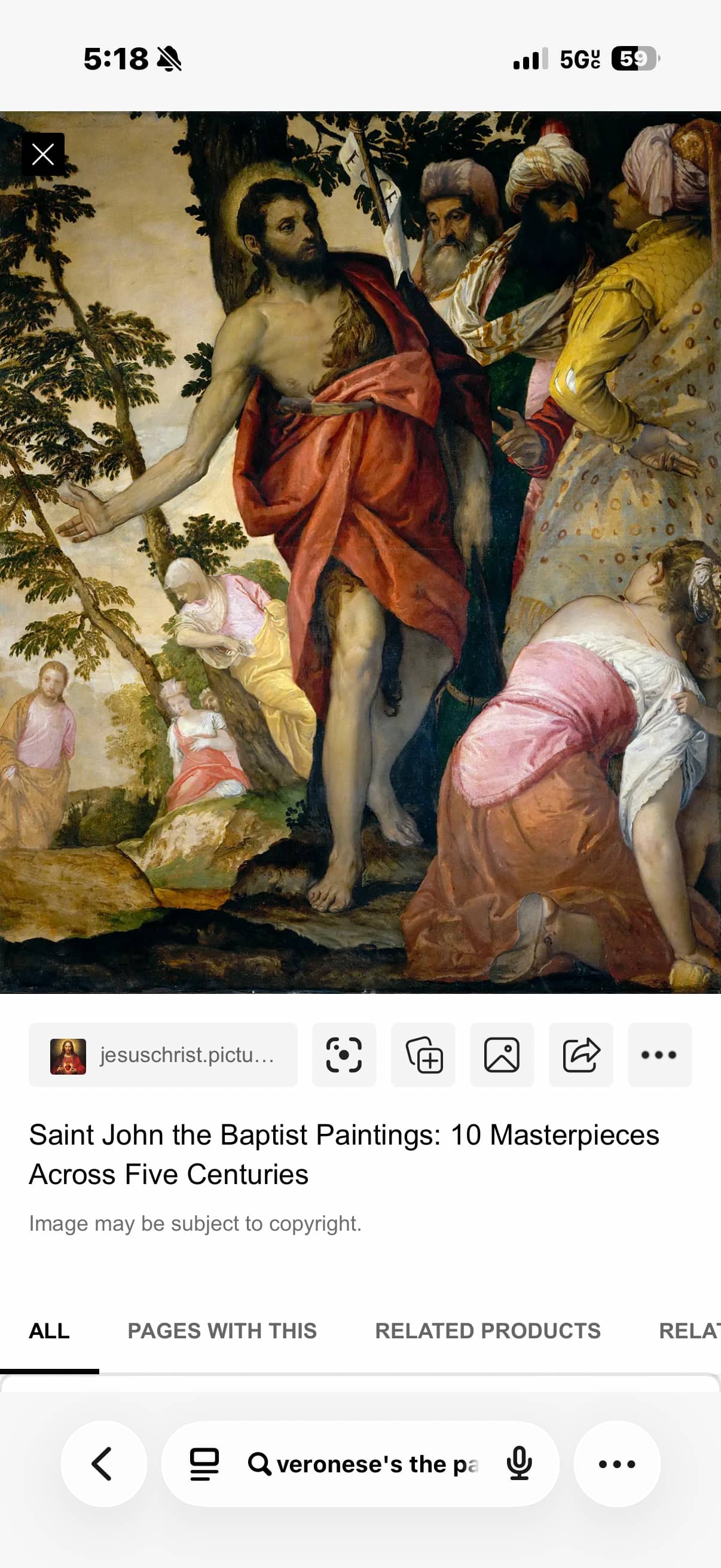
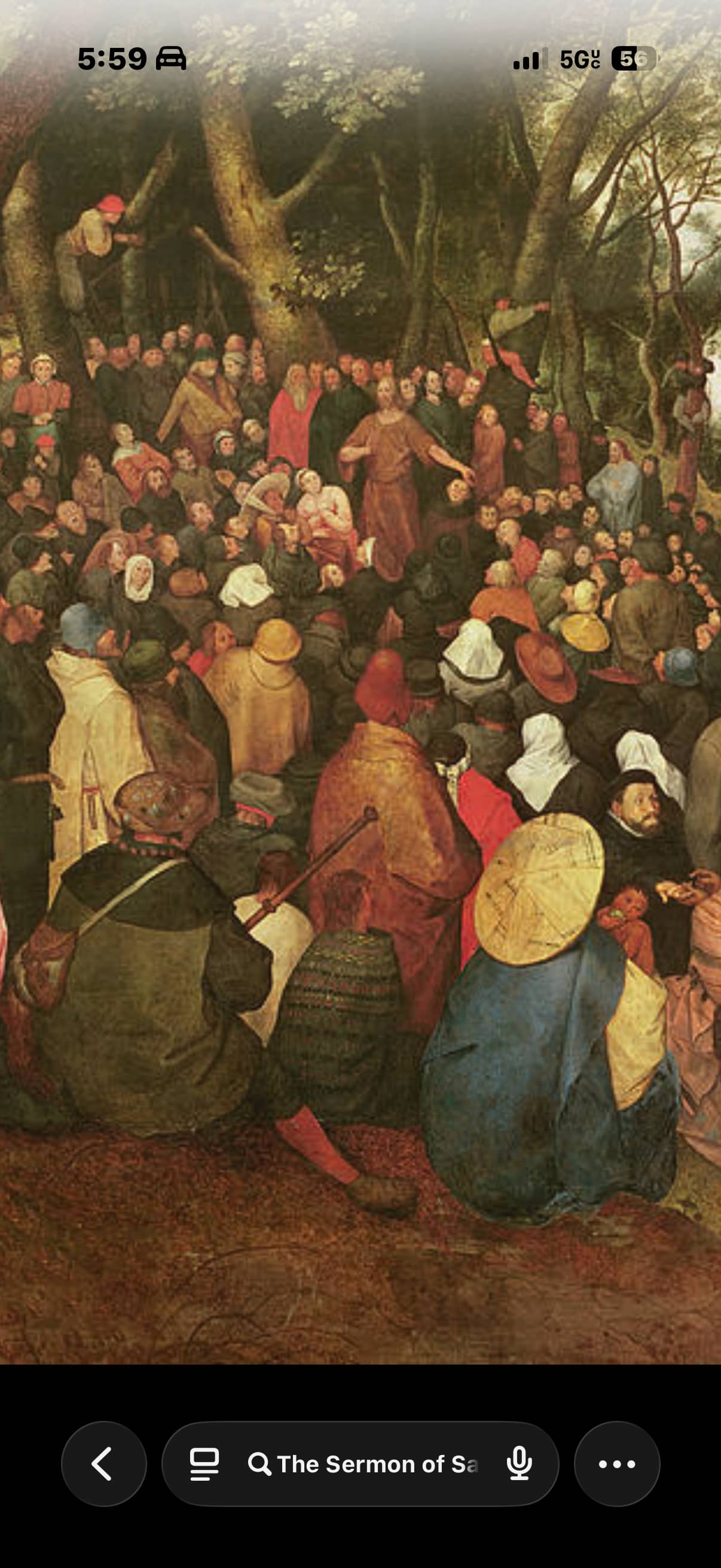
Here are two paintings of St.John the Baptist pointing to Christ, AI suggested Peter Bruegel the Elder, but then another source showed another source .

Here are both:

I’ll try to connect with the above by a leap of Faith, delivered by Amor Fati.

Fati:

/

This other source cut (in) is the Veronisi treating the same topic. hangs in the Museum of Fine Art innBudapest:

// Fati: Magdalene

Want to write again. So little time so briefly conveying the ver essential. And been meaning to draw around it. About Capital as a sinking ship thinking wrestin g in a safe harbor,

That is or are the following; trying to remember here in a taxi on the go, oh yes, wish the ought to be would have occurred to the mind before what is.

Why?

Because very strictly speaking , not that it would have avoided conflicts and innumerable seats on the battle field, but that it may have given a window of opportunity to offer a much longer lease of life,and confident am I that the capitalists no longer short their investments in a panick, and stay with a very foreshortened put to squeeze the last ounce of compassion out of the fragile reserve left in the national treasury.

That’s strictly speaking the less observed phenomena, missed by doubly visioned two slotted experiments, may prove, may have proved otherwise, if folks could just subsist on reduced diets of relative compassion.

The why? Reduced intelligenly:

The ‘is’ should be reduced to ‘ought’ because as conflict between any two significant deferences, can not maintain a conflict less appearance of a peace, say:

The theatre of war has always cost innumerable lives, had not science been limited beyond a certain point: that has manifested through signals, now known to have resulted through the double visioned mystery of confusion between quantum and social/personal substantive-material entanglement/

That the churches always forewarned,

The effective denial of such analogy affectatiously echoed through certain fear: created this predictable, lately bloomed sentiment- which foreshortens, foreshadowed the window of opportunity, whereby extending this decisiveness,

Our future generations can hold us responsible for: and hopefully correct as the will certainly do.

This is why at this time of the resultant Heidegger Turn,the neo-hegelians, the young Hegelian positivists, must place medium, as the message coming through, in the most brutal, and fearless way possible, and this is what St.John the Baptist is pointing to: that medium all understand, through the intercession of Magdalene.

Can she identify with Sofia?

Mary- Sophia - Goddess of Wisdom & God’s Wife

from… http://www.northernway.org/sophia.html

Sophia: Goddess of Wisdom & God’s Wife Sophia Prayers & Gallery
By Katia Romanoff (with contributions by young Mark Raines)Sophia Figurine available from SacredSource.com

Who is Sophia? Literally she is Wisdom, because the Greek word Sophia means “wisdom” in English. More than that, Sophia is the Wisdom of Deity. She has been revered as the Wise Bride of Solomon by Jews, as the Queen of Wisdom and War (Athena) by Greeks, and as the Holy Spirit of Wisdom by Christians. She is known as Chokmah (pronounced HOK-mah with the H being said like -ch in the name Bach) in Hebrew, and Sapientia in Latin.

But just who is Sophia?

Sophia is found throughout the wisdom books of the Bible. There are many references to her in the book of Proverbs, and in the apocryphal books of Sirach and the Wisdom of Solomon(accepted by Catholics and Orthodox, found in the Greek Septuagint of the early Church). She is Wisdom Incarnate, the Goddess of all those who are wise.

Is it any wonder that Sophia is constantly associated with wise King Solomon? 1 Kings 4:29-31 tells us that God gave wisdom to Solomon, and that he became wiser than all the kings of the East and all the wise people of Egypt. Wisdom 8:2, 16, 18 tells us Solomon was considered to be married to Sophia. One of the many layers of symbolism attributed to the Song of Songs (also known as Song of Solomon or Canticle of Canticles) is that it speaks of Solomon’s marriage to Holy Sophia. Wisdom 9:8-11 even tells us that Sophia instructed Solomon in building the Temple!

The Jews revered Sophia. King Solomon even put her right in the Temple, in the form of the Goddess Asherah. However, after the brutal “reforms” of King Josiah described in 1st and 2nd Kings in your Bible, the veneration of Sophia went underground. Josiah slaughtered all her priests and priestesses and destroyed all her shrines and places of worship. But Sophia adherents remained active in the “underground stream” for centuries even while patriarchal Christianity held total sway in the Western World. Thanks to her continuing presence in the world and her presence in the Bible, veneration of Sophia surfaced in the Eastern Christian tradition with the construction of the Hagia Sophia cathedral in Constantinople (now a Muslim museum in Instanbul). The Russian Catholic liturgical service to Sophia combined with the assumption of Mary on May 15. The Russian Orthodox Church has also begun a school of “Sophiology” to explore the thealogy (spelled with an “a”) of Sophia without contradicting the Russian Orthodox theology.

Yet the Eastern Christians are not the only Christians to venerate Sophia. Sophia was very likely venerated by early Followers of the Way, and her veneration has survived in the West today in the form of Gnosticism. Gnostics see her as one of the aeons, one of the quasi-deities who live in the ethereal realm known as the pleroma. Gnostics believe that she gave birth to or brought about the creation of a negative aeon, who later came to be called an archon, called the Demiurge, creator and ruler of this world. Gnostics see the Demiurge as the God of the Old Testament, with his strict rules and chains that bind the people of the Earth. Gnostics believe that Sophia and the Father God (not the Demiurge) sent Yeshua to right this wrong. In Gnostic tradition, Sophia plays a very active role in our world.

| Sophia Icon

Sophia and her 3 Daughters, Faith, Hope & Charity (aka Love), Russian Icon on Katia’s altar

Esoteric Christianity doesn’t typically support the theory of the Demiurge. It believes that creation is inherently good, and as such so is the Creator. However, the Mystery School does look at other theories and myths such as Shaitan (aka Satan or Shatan), the devil, was the ruler of this world and was accidentally given the keys to the Otherworlds by Goddess. He had these keys until the passion, death, and descent into hell of Yeshua, when Yeshua retrieved them and holds them still. Sophia, Mother Mary and Mary Magdalene are three Christian Goddesses, making up a female Trinity. Both the earthly forms of Mary and Mary Magdalene shared the name Mary, and both in their Heavenly forms share the Hebrew letter Heh in the God-Name YHVH. So how does Sophia fit into the Godhead? Wisdom of Solomon, a book in the apocrypha says clearly that Sophia is the Holy Spirit. There could be a feminine Trinosophia - Mother, Daughter, and Pneuma (Holy Soul).

The Trinitarian/Trinosophia can also fit with the Quaternity. The Quaternity Godhead is made up of four divine beings, Father, Mother, Son, and Daughter. Quaternarians also acknowledge Paraclete and Pneuma as the masculine and feminine essences of Divinity (see our Creed of the Way, in which Pneuma is clearly acknowledged). Perhaps Paraclete is the combination of the two masculine forces, and Pneuma may be the combination of the two feminine forces. This could explain why Paraclete and Pneuma do not have their own letters in the Quaternity, since they may be a combination of the masculine and feminine forces. For more information on the Holy Trinity and the Holy Trinosophia, check out our Restoring the Goddess Lesson E.

Sophia: Exile & Return Excerpt: Sophia personifies wisdom, an ancient tradition concerned with integrity in the marketplace, politics, and royal court. Because the teachings were rooted in life instead of doctrine, Sophia became problematical and excluded from the religious formulations of monotheism. This manuscript is about exile–Sophia’s and our own. I compare Sophia’s exile from mainstream religion to the alienation suffered by modern individuals who experience loss, betrayal, and abandonment. What is exiled in today’s dysfunctional paradigm is the vital soul, the genius or daemon. When we pay attention to it by taking our life seriously–as a mode of knowledge–we awaken its fire. The vital expresses the integrity and intelligence of the life force, whose awakening turns exile into home–revealing Sophia to be not divine but the source of divine images–the human psyche. While Sophia has been interpreted as divine, goddess or psychological image, she is examined here from several unique perspectives. First, Sophia is developed from the context of modern life and real people, but in conversation with the historical and mythological. Second, the dark side is confronted through analysis of Sophia’s “Other” faces, Lilith and Hecate, locating it as the source of individual power and knowledge. Third, it provides modern women with an image of female power that is not based solely on reproduction and mothering but on another aspect of the feminine archetype rarely discussed–the intelligence and cosmic power of the life force. Finally, it introduces the “path of crumbs” which encourages women to direct their own life through recognition of the guidance present in circumstances.

GREAT SOPHIA LINKS: Read entire article Sophia: Exile and Return

Gnostic Sophia articles

Have you seen her? Wonderful page on the Sophia Holy Spirit connection and the Sophia Mother Mary connection. Nice pictures and links, too.


Prayers to the Holy Sophia Top

Sophia!

You of the whirling wings,
circling, encompassing energy of God:
you quicken the world in your clasp.

One wing soars in heaven,
one wing sweeps the earth,
and the third flies all around us.

Praise to Sophia!
Let all the earth praise her!

-Hildegard of Bingen

/// /// ///

Hildegard of Bingen
Article Talk
Language
Watch
Edit
Hildegard of Bingen[a] OSB (German: Hildegard von Bingen, pronounced [ˈhɪldəɡaʁt fɔn ˈbɪŋən]; Latin: Hildegardis Bingensis; c. 1098 – 17 September 1179), also known as the Sibyl of the Rhine, was a German Benedictine abbess and polymath active as a writer, composer, philosopher, mystic, visionary, and as a medical writer and practitioner of the Catholic Church during the High Middle Ages.[1][2] She is one of the best-known composers of sacred monophony, as well as the most recorded in modern history.[3] A number of scholars have considered her to be the founder of scientific natural history in Germany.[4]

Saint
Hildegard of Bingen
OSB

Illumination from Hildegard’s Scivias (1151) showing her receiving a vision and dictating to teacher Volmar
Virgin
Doctor of the Church
Born
Hildegard von Bingen
c. 1098
Bermersheim vor der Höhe, County Palatine of the Rhine, Holy Roman Empire
Died
17 September 1179 (aged 81)
Bingen am Rhein, County Palatine of the Rhine, Holy Roman Empire
Venerated in
Catholic Church, Anglican Communion, some Lutherans
Beatified
26 August 1326 (Formal confirmation of Cultus) by Pope John XXII
Canonized
10 May 2012 (equivalent canonization), Vatican City by Pope Benedict XVI
Major shrine
St. Hildegard, Eibingen
Feast
17 September
Philosophical work
Era
Medieval philosophy
Region
Western philosophy
School
Neoplatonism
Main interests
mystical theology, medicine, botany, natural history, music, literature
Notable works
Scivias
Liber Divinorum Operum
Ordo Virtutum
Notable ideas
Microcosm–macrocosm analogy, Eternal predestination of Christ, viriditas, Lingua ignota, humoral theory, morality play
Hildegard’s convent at Disibodenberg elected her as magistra (mother superior) in 1136. She founded the monasteries of Rupertsberg in 1150 and Eibingen in 1165. Hildegard wrote theological, botanical, and medicinal works,[5] as well as letters, hymns, and antiphons for the liturgy.[2] She wrote poems, and supervised miniature illuminations in the Rupertsberg manuscript of her first work, Scivias.[6] There are more surviving chants by Hildegard than by any other composer from the entire Middle Ages, and she is one of the few known composers to have written both the music and the words.[7] One of her works, the Ordo Virtutum, is an early example of liturgical drama and arguably the oldest surviving morality play.[b] She is noted for the invention of a constructed language known as Lingua Ignota.

Although the history of her formal canonization is complicated, regional calendars of the Catholic Church have listed her as a saint for centuries. On 10 May 2012, Pope Benedict XVI extended the liturgical cult of Hildegard to the entire Catholic Church in a process known as “equivalent canonization”. On 7 October 2012, he named her a Doctor of the Church, in recognition of “her holiness of life and the originality of her teaching.”[10]

Biography
edit
Hildegard was born around 1098. Her parents were Mechtild of Merxheim-Nahet and Hildebert of Bermersheim, a family of the free lower nobility in the service of the Count Meginhard of Sponheim.[11][12] Sickly from birth, Hildegard is traditionally considered their youngest and tenth child,[13] although there are records of only seven older siblings.[14][15] In her Vita, Hildegard states that from a very young age she experienced visions.[16][17]

Monastic life
edit
Perhaps because of Hildegard’s visions or as a method of political positioning, or both, Hildegard’s parents offered her as an oblate to the Benedictine monastery at Disibodenberg, which had been recently reformed in the Palatinate Forest. The date of Hildegard’s enclosure at the monastery is the subject of debate. Her Vita says she was eight years old when she was professed with Jutta, who was the daughter of Count Stephan II of Sponheim and about six years older than Hildegard.[18] Jutta’s date of enclosure is known to have been in 1112, when Hildegard would have been 14.[19][20] Their vows were received by Bishop Otto of Bamberg on All Saints Day 1112. Some scholars speculate that Hildegard was placed in Jutta’s care at the age of eight and that the two were enclosed together six years later.[21]

In any case, Hildegard and Jutta were enclosed together at Disibodenberg. They formed the core of a growing community of women attached to the monastery of monks, known as a Frauenklause, a type of female hermitage. Jutta was also a visionary and thus attracted many followers who came to visit her at the monastery. Hildegard states that Jutta taught her to read and write, but that she was unlearned, and therefore incapable of teaching Hildegard sound Biblical interpretation.[22] The written record of the Life of Jutta indicates that Hildegard probably assisted her in reciting the psalms, working in the garden, other handiwork, and tending to the sick.[23][24] This might have been a time when Hildegard learned how to play the ten-stringed psaltery. Volmar, a frequent visitor, may have taught Hildegard simple psalm notation. The time she studied music could have been the beginning of the compositions she would later create.[25]

Upon Jutta’s death in 1136, Hildegard was unanimously elected as magistra of the community by her fellow nuns.[26] Abbot Kuno of Disibodenberg asked Hildegard to be prioress, which would be under his authority. Hildegard, wanting more independence for herself and her nuns, asked Abbot Kuno to allow them to move to Rupertsberg.[27] This was to be a move toward poverty, from a stone complex that was well established to a temporary dwelling place. When the abbot declined Hildegard’s proposition, Hildegard went over his head and received the approval of Archbishop Henry I of Mainz. Abbot Kuno did not relent, however, until Hildegard was stricken by an illness that rendered her paralyzed and unable to move from her bed, an event that she attributed to God’s unhappiness at her not following his orders to move her nuns to Rupertsberg. It was only when the Abbot himself could not move Hildegard that he decided to grant the nuns their own monastery.[28] Hildegard and approximately 20 nuns thus moved to the St. Rupertsberg monastery in 1150, where Volmar served as provost, as well as Hildegard’s confessor and scribe. In 1165, Hildegard founded a second monastery for her nuns at Eibingen.[29]

Before Hildegard died in 1179, a problem arose with the clergy of Mainz: a man buried in Rupertsberg had died after being excommunicated by the Catholic Church. Therefore, the clergy wanted to remove his body from the sacred ground. Hildegard rejected this idea, saying it was a sin and that the man had been reconciled to the church at the time of his death.[30]

Friendship with Richardis von Stade
edit
While completing Scivias, Hildegard found a close friend and personal assistant in Richardis von Stade, a fellow nun. In 1151, Richardis was elected abbess of a distant convent, much to Hildegard’s displeasure. In a series of letters to multiple church officials (including the Pope), Richardis’ family, and even Richardis herself, Hildegard pleaded for her companion to be allowed to stay with her.[31] Hildegard remained adamant that it was “not God’s will” for Richardis and her to be separated.[32]

Despite Hildegard’s efforts, Richardis was eventually moved. A year later, Richardis’ brother sent Hildegard a letter notifying her that Richardis had died, and had met “a good Christian end”.[33] In response to this, Hildegard grieved the death of her friend, and assured her brother that she was confident in Richardis’ salvation, and that she cherished Richardis with “divine love”.[34]

Visions
edit
Hildegard said that she first saw “The Shade of the Living Light” (umbra viventis lucis) at the age of three, and by the age of five, she began to understand that she was experiencing visions.[35] She used the term visio (Latin for ‘vision’) to describe this feature of her experience, and she recognized that it was a gift that she could not explain to others. Hildegard explained that she saw all things in the light of God through the five senses: sight, hearing, taste, smell, and touch.[36] Her letter to Guibert of Gembloux, which she wrote at the age of 77, describes her experience of this light:

From my early childhood, before my bones, nerves, and veins were fully strengthened, I have always seen this vision in my soul, even to the present time when I am more than seventy years old. In this vision, my soul, as God would have it, rises up high into the vault of heaven and into the changing sky and spreads itself out among different peoples, although they are far away from me in distant lands and places. And because I see them this way in my soul, I observe them in accord with the shifting of clouds and other created things. I do not hear them with my outward ears, nor do I perceive them by the thoughts of my own heart or by any combination of my five senses, but in my soul alone, while my outward eyes are open. So I have never fallen prey to ecstasy in the visions, but I see them wide awake, day and night. And I am constantly fettered by sickness, and often in the grip of pain so intense that it threatens to kill me, but God has sustained me until now. The light which I see thus is not spatial, but it is far, far brighter than a cloud which carries the sun. I can measure neither height, nor length, nor breadth in it; and I call it “the reflection of the living Light.” And as the sun, the moon, and the stars appear in water, so writings, sermons, virtues, and certain human actions take form for me and gleam.[37]
Hildegard was hesitant to share her visions, confiding only to Jutta, who in turn told Volmar, Hildegard’s tutor and, later, secretary.[38] Throughout her life, she continued to have many visions, and in 1141, at the age of 42, Hildegard received a vision she believed to be an instruction from God, to “write down that which you see and hear.”[39] Still hesitant to record her visions, Hildegard became physically ill. The illustrations recorded in the book of Scivias were visions that Hildegard experienced, causing her great suffering and tribulations.[40] In her first theological text, Scivias (“Know the Ways”), Hildegard describes her struggle within:

But I, though I saw and heard these things, refused to write for a long time through doubt and bad opinion and the diversity of human words, not with stubbornness but in the exercise of humility, until, laid low by the scourge of God, I fell upon a bed of sickness; then, compelled at last by many illnesses, and by the witness of a certain noble maiden of good conduct [the nun Richardis von Stade] and of that man whom I had secretly sought and found, as mentioned above, I set my hand to the writing. While I was doing it, I sensed, as I mentioned before, the deep profundity of scriptural exposition; and, raising myself from illness by the strength I received, I brought this work to a close – though just barely – in ten years. […] And I spoke and wrote these things not by the invention of my heart or that of any other person, but as by the secret mysteries of God I heard and received them in the heavenly places. And again I heard a voice from Heaven saying to me, ‘Cry out, therefore, and write thus!’
— Hildegard von Bingen, Scivias, translated by Columba Hart and Jane Bishop, 1990[41]
It was between November 1147 and February 1148 at the synod in Trier that Pope Eugenius heard about Hildegard’s writings. It was from this that she received papal approval to document her visions as revelations from the Holy Spirit, giving her instant credence.[42]

On 17 September 1179, when Hildegard died, her sisters said they saw two streams of light appear in the skies and cross over the room where she was dying.[43]

Vita Sanctae Hildegardis
edit
Hildegard’s hagiography, Vita Sanctae Hildegardis, was compiled by the monk Theoderic of Echternach after Hildegard’s death.[44] He included the hagiographical work Libellus, or “Little Book”, begun by Godfrey of Disibodenberg.[45] Godfrey had died before he was able to complete his work. Guibert of Gembloux was invited to finish the work; however, he had to return to his monastery with the project unfinished.[46] Theoderic utilized sources Guibert had left behind to complete the Vita.

Works
edit

Scivias I.6: The Choirs of Angels. From the Rupertsberg manuscript,[47] folio 38r.
Hildegard’s works include three great volumes of visionary theology;[48] a variety of musical compositions for use in the liturgy, as well as the musical morality play Ordo Virtutum; one of the largest bodies of letters (nearly 400) to survive from the Middle Ages, addressed to correspondents ranging from popes to emperors to abbots and abbesses, and including records of many of the sermons she preached in the 1160s and 1170s;[49] two volumes of material on natural medicine and cures;[50][51] an invented language called the lingua ignota (‘unknown language’);[52] and various minor works, including a gospel commentary and two works of hagiography.[53]

Several manuscripts of her works were produced during her lifetime, including the illustrated Rupertsberg manuscript of her first major work, Scivias; the Dendermonde Codex, which contains one version of her musical works; and the Ghent manuscript, which was the first fair-copy made for editing of her final theological work, the Liber Divinorum Operum. At the end of her life, and probably under her initial guidance, all of her works were edited and gathered into the single Riesenkodex manuscript.[54][55] The Riesenkodex manuscript is a collection of 481 folios of vellum bound in pig leather over wooden boards that measure 45 by 30 centimetres (18 by 12 in).[56]

Visionary theology
edit
Hildegard’s most significant works were her three volumes of visionary theology: Scivias (“Know the Ways”, composed 1142–1151), Liber Vitae Meritorum (“Book of Life’s Merits” or “Book of the Rewards of Life”, composed 1158–1163); and Liber Divinorum Operum (“Book of Divine Works”, also known as De operatione Dei, “On God’s Activity”, begun around 1163 or 1164 and completed around 1172 or 1174). In these volumes, the last of which was completed when she was well into her seventies, Hildegard first describes each vision, whose details are often strange and enigmatic. Then she interprets their theological contents in the words of the “voice of the Living Light.”[57]

Scivias
edit

The Church and Mother of the Faithful in Baptism. Illustration to Scivias II.3, fol. 51r from the 20th-century facsimile of the Rupertsberg manuscript, c. 1165–1180.
With permission from Abbot Kuno of Disibodenberg, she began journaling her visions (the basis

Reincarnation of Hildegard has been debated since 1924 when Austrian mystic Rudolf Steiner

Here is Mary Magdalene’s link , one of them, to Sofia:

//

Pistis Sophia (‘faith-wisdom’) was the most significant text to have surfaced prior to the Nag Hammadi discovery in 1945, discovered in Upper Egypt in the late 18th century. A simpler, shorter version of Pistis Sophia was later found at Nag Hammadi.

Like the Gospel of Mary, Pistis Sophia takes place after the resurrection and features Mary Magdalene in a prominent role, revealing a deep spiritual relationship between Mary Magdalene and Jesus.

The text relates that the Saviour remained on earth for 11 years after the crucifixion to instruct the disciples (including his mother Mary, Mary Magdalene, Mary Salome and Martha), teaching them only the lower mysteries. After 11 years, the Saviour receives his true garment and is able to reveal the higher mysteries. These mysteries relate to complex cosmologies and knowledge necessary for the soul to reach the highest divine realms.

To the Gnostics, Sophia was a divine syzygy of Christ; in a papyrus codex found at Nag Hammadi the Saviour explains Pistis as follows;-

"Again, his disciples said: ‘Tell us clearly how they came down from the invisibilities, from the immortal to the world that dies?’

The perfect Saviour said: 'son of Man consented with Sophia, his consort, and revealed a great androgynous light. Its male name is designated ‘Saviour, begetter of all things’. Its female name is designated ‘All-begrettress Sophia’. Some call her ‘Pistis’.

The translation I have by G.R.S Mead divides the text into six books (these did not exist in the original manuscript). Over half the text is dedicated to the myth of the fall and restoration of the figure known as Pistis Sophia, giving detailed parallels between her prayers of repentance and Psalms and Odes of Solomon.

The first book (Chapters 1-62) sets the scene with the Saviour remaining with the disciples for 11 years teaching them the ‘lower mysteries’. The disciples believe they have progressed far along the path of gnosis, announcing:

“Blessed are we before all men who are on the earth, because the Saviour hath revealed this unto us, and we have received the Fullness and the total completion.”

However, the disciples are mistaken. Light descends over the Saviour, which “Stretched from under the earth right up to heaven. – And when the disciples saw that light, they fell into fear and great agitation.”

Upon his return, the Saviour, seeing their fear and agitation reassures them. He informs them,

“I have gone to the regions out of which I had come forth. From this day on I will discourse with you in openness, from the beginning of the Truth unto its completion.”

A lengthy narrative the Saviour relates concerning his journey ‘upwards and inwards’ and of his receiving a garment of light. He travels through the heavenly spheres, revealing the existence of the First Mystery – the true God – to the rulers of the spheres and their attendant angels. When he reaches the twelfth sphere, he encounters ‘Adamas, the Great Tyrant’, who tries to resist the light and, along with the archons, fights against it. The Saviour relates, “And I took a third of their power, in order that they should not be able to accomplish their evil deeds.. Who hath ears to hear, let them hear.” This can be interpreted as the Saviour reducing the effectiveness of astrological magic.

Mary Magdalene meditates for an hour and then asks to speak. The Saviour’s reply shows the esteem in which he holds her:

“Mary, thou blessed one, whom I will perfect in all mysteries of those of the height, discourse in openness, thou, whose heart is raised to the kingdom of heaven more than all thy brethren.”

Mary interprets the Saviour’s narrative, describing how Isaiah prophesied what he has told them, then she begins to ask various questions; the only male disciple to quiz the Saviour is Philip, who has been transcribing the Saviour’s words. Mary is taking the lead in asking the Saviour to explain himself further, showing she is actively assimilating the Saviour’s teachings, more so than the other disciples .

The Saviour continues his discourse, revealing that he encountered Pistis Sophia “grieving and mourning, because she had not been admitted into the thirteenth aeon, her higher region.”

Unlike the version of the Sophia myth in the Secret Book of John, here Pistis Sophia is a being of the lower, material aeons. She is not a high, divine being, and her restoration is not to the realms of light, but only back to her pace in the thirteenth aeon. Her longing for the first Mystery – the true God – led to her being tricked out of the thirteenth aeon by the great triple-powered ‘Self-Willed’, who together with other aeons, project their own light downwards. Pistis Sophia mistakes this light for the light of the First Mystery, heads towards it and becomes entrapped in the world of chaos and matter. She meets Yaldabaoth (the Demiurge), who strips her of her remaining power. Pistis Sophia begins to sing hymns of repentance (there are 13 in all):

“Now, therefore, O Light of Truth, thou knowest that I have done this in my innocence, thinking that the lion-faced light power (Yaldabaoth) belonged to thee; and the sin which I have done is open before thee. Suffer me no more to lack, O Lord, for I have had faith in thy light from the beginning; O Lord, O Light of the powers, suffer me no more to lack my light. And because of the illusion of thy light, I am become a stranger to my brethren, the invisibles, and to the great emanations of Barbelo.”

Mary once again interprets the story of Pistis Sophia, telling the disciples that what they have just heard was prophesied in Psalm 68. The Saviour commends her interpretation and continues with a description of Pistis Sophia’s second repentance. Once the Saviour has finished speaking, Peter clearly agitated by Mary’s understanding of the teaching, complains that, “My Lord, we will not endure this woman, for she taketh the opportunity from us and hath let none of us speak, but she discourseth many times.”

The Saviour invites Peter to give his interpretation of the second repentance (there are thirteen in all). The Saviour continues to answer questions from his disciples; with Mary Magdalene asking the majority of them. The rift between Mary and Peter is clear:-

“My Lord, my mind is ever understanding, at every time to come forwards and set forth the solution of the words that she (Pistis Sophia) hath uttered; but I am afraid of Peter, because he threatened me and hateth our sex.”

The Saviour defends her,

“Everyone who shall be filled with the spirit of light to come forwards and set forth the solution of what I say, no one shall be able to prevent him.”

Peter backs down, and Mary Magdalene continues to be the main questioner and interpreter of the Saviour’s words. Pistis Sophia is finally allowed to return to the thirteenth aeon, where she sings a song of praise to the First Mystery.

The second book makes up Chapters 63-101. After the conclusion of the story of Pistis Sophia, the text turns to long explanations of cosmology and knowledge of the prized mysteries.

Books three and four (Chapters 102-135) is taken up with further revelations, together with ethical instructions which the disciples are to preach once the Saviour has returned to the light. It outlines what is needed for right thought and right action, as well as actions that are not acceptable and their punishments.

“Renounce love of the world, that ye may be worthy of the mysteries of the light and be saved from the pitch and fire-coats of the dog-faced one.”

“Renounce wickedness, that ye may be worthy of the mysteries of the light and be saved from the fire-sea of Ariel.”

Further exhortations follow, bringing together the Gnostic and the orthodox:

"Say unto them: Be ye loving unto men.. Be ye gentle.. Minister unto the poor.. and the sick and the distressed.. Be ye loving unto God, that ye may receive the mysteries of the Light and go on high into the Light-kingdom.

The fourth book provides an outline of what to expect for the first baptism. Two more baptisms follow; a fire-baptism and a baptism of the Holy Spirit of the Light, but these are not described; the initiate must persist on the path and be deemed ready.

Mary asks questions about the afterlife states of the sinner and the re-incarnational cycle that souls must endure in order to be cleansed, referring to a ‘cup of forgetfulness’ administered prior to incarnation, which explains why we do not remember our past lives:- “..And then Adamas, bringeth a cup filled with the water of forgetfulness and handeth it to the soul, and it drinketh it and forgetteth all regions and all the regions to which it hath gone. And they cast it down into a body, which will spend its time continually troubled in its heart. And that cup of forgetfulness becometh body outside the soul, and resembleth the soul in all – which is what is called the counterfeiting spirit.”

  • In 2003 scientists discovered a molecule in the brain called PP1 which affects the memory. My cellular memory tells me the ‘cup of forgetfulness’ refers to PP1 – we are programmed to forget.

Baptism purifies our soul – the counterfeit spirit is separated from our soul and we can become a ‘perfect soul’.

The Saviour urges people not to defer spiritual development for another lifetime, as the critical number of perfect souls could be reached at any moment. This is the completion of the First Mystery and the gnosis of the universe. At this point, no more souls will be able to return to the Light-kingdom.

“And from this hour onwards no one will be able to enter into the Light. For at the completion of the time of the number of the perfect souls, before I have set fire to the world*, in order that it may purify the aeons and the veils and the firmaments and the whole earth, mankind will be still existing.”

  • Apparently this will be a sequence of natural events forest fires, volcanoes, which with global warming at its present rate it is a real possibility.

“Strive thereafter, to renounce the whole world and the whole matter therein, that ye may receive the mysteries of the Light before the number of the perfect souls is completed*, in order that they may not stop you before the gates of Light and lead you away into the outer darkness.”

  • My cellular memory tells me the number of perfect souls required is 360. If you define a perfect soul as someone with a Level of Truth +700, there are currently 20 alive today.

Mary Magdalene asks questions about the ‘outer darkness’ and ‘regions of chastisement’. The Saviour answers:- “The outer darkness is a great dragon, whose tail is in its mouth, outside the whole world and surrounding the whole world. And there are many regions of chastisement within it. There are twelve mighty chastisement-dungeons and a ruler is in every dungeon and the face of the rulers is different one from another.”

The Saviour says “.at the dissolution of the world, that is at the ascension of the universe, those souls will perish through the violent cold and the exceedingly violent fire and be non-existent for ever.”

Pistis Sophia says the only way to access the Treasury of Light is via Jesus. Jesus is a frequency, a high vibration – and we all have the capacity to experience the Inner Christ within us.

This ancient text is relevant today as I believe we are at this point in history now..

#gnostic #marymagdalene #naghammadi #sophia

Like this:

June 2, Tuesday 2026

Thought for the day; worry is a defense against depression

Another thought’ occurrence:

Preformance-performance-return

Recycle- tthrough performance to (through) minimmal participation to the nominal architecture,

to archeological, uncovering of the reason, the Logos, of why? (Again until found without review( analysis)


Why?


3.55 pm same day June 2Tuesday, 2022.


(Thinking)


I think loosing it is a painful reminder of a built in Way Out to escape the necessarily promotion of the cyclical preform d performance. Giving rise to the dual aspect (spyware?) nah! Of promotion as a necessary way in to the subconscious terrain of socially manifested ideas barring under standing.


So, if not casually necessary, and it’s programmed to receive , then why be contrarian about a singular necessity?

Why? Reductive ad absurdism.!

But?!?!??

Would you rather live in that level of reductive suspension, an aspic around sweet thoughts as was said of Oscar Wild’s pursuit of pleasure for it’s own sake; no. Definitely no. 


Will come back to the above mention yet superpositioned, superfluous need to absolutely find it, when and if it happened, without reductions or reviews.

Would you live in a bypassed world, the same, as the one you opted to exit from, iwithin the method of modus operant, that is so significant an attribute below Heisenberg vis.the relative difference between the cosmic Hubble constant and ‘r’?

Heidegger wa right to Turn, for left for again reasons analytical to the above framed referenced post above.

Is what we see should actually be predicate to what actually can be seen? One would think so.

Now, the directly above schematically opened the door to go back and see what the fuss about was.

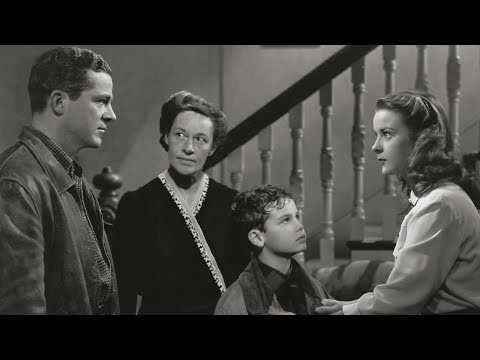
Like this old noir movie , it is something that clicks with what was sought , but not found, so an hour of the following film:

/

Entangling paradox: -a continuation of talk with Protius:

The entanglement Paradox:

See how Igor’s down, where a regressive dislike bottoms out at hate, and it tries to indulge within that ominous cover, like 'knowing how new found riches underscore and over rite the academics, the aesthete, but they in turn defeat such draconian intentions of collection

Entangling paradox: -a continuation of talk with Protius:

The entanglement Paradox:

See how Igor’s down, where a regressive dislike bottoms out at hate, and it tries to indulge within that ominous cover, like 'knowing how new found riches underscore and over rite the academics, the aesthete, but they in turn defeat such draconian intentions of collection ; by a sleight of hand recollection, released from here

The benevolent instant of of its recollection, by the incarnate deception, that primary power that IT is barred to claim an unholy bounty.

This is the frame which they can not fill , other than by quick fixed brazen manufacture, drawn up from an eternally disguised melting fused pot,that hath no t been properly dipped into its antimony, the coldest cold following its expulsion from the red white furnace of eternal love broken .

No wonder their endless search to extend that their pitiful life presents, the allusive brevity overtakes the exhaustive fulfillment of their treadmill running,

That’s how the abomination can’t learn; Pronto!

How about living in chaos of the 'all is possible, ‘even if improbable’ huh?

And what if it has never been other than?

Then thing of the reserve agency with which such confusion ( evil) can offer a show down between the trick within the trickster? (Where the intensional trick for the common good the trickster can hardly recognize for what it should have had in mind-a failure he is bound forever to repeat.

By God

My god Prontius, it’s so hot going up and down the staircase.

I might drop it but can not let it go!

As far as it can go tonight sans reserves; someone said along the way: "if you can’t stand being alone then you really don’t have any friends, including you.

And in case you’re wondering doc,

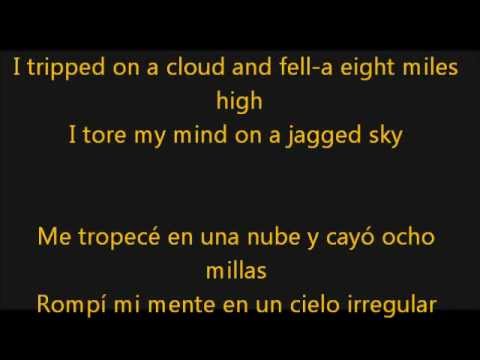
//

And an unexpurgated edition. ( Kenny Rogers’s First Efition. band.

& some one to light the fire

/

It’s 7:15 pm Tuesday evening. I’m looking out and noticed when mountain girl2 comes home, Homer and eddy show up punctually. She comes by uber so she tells me so that the kiddo won’t ask for keys. Kiddo looks old for his age actually he IS old, poor tyke,

So Homer and Eddie are here on cue fighting over pieces of tuna, so when Homer ignores me through the screen door, I hiss back. He looks at me out of character and slinks away. Then I look up to the hills and thinking don’t fret about visiting the holy grail of the tree, in Griffith park, where I sensed the coming unattractions as attractive, yet need big doses of compensation. One time… but unlike Henry miller , there is no mo. money made out of such behavior, and it has been and should have been a lesson for propriety, after Dorian grey succeeded to morally mortify himself. The visage of the huge compensation began way back then, there where the early spring’s perfume carried the same aura as that notable fly, who was my frien just then.

The neighbors up above us moved out inexplicably, were thinking they shall return with the coming of a great el-Nino the likes of which have never been seen. The last one, Pronto, was an el-Nina, which took out the Malibu pier, and other assorted attractions.

Remember reading a poem of such transmigrations to a beat audience: Denver 1982, at the university of Arizona, and it was received dubiously after looking around for signs someone looked suddenly disinterested, and would like to search wether he is still alive. I am kind of a soul survivor .

The poem went something like this :slight_smile:

A big cock flying home for the fall: this was the untreatable aid epidemic, raging: and it made an unlikely impression at the Naropa Institute. After a while , Ginsberg rejected me as a student, and the thing was closed wit a terrible bang the impact could not be heard anywhere , and if I could have something like Rockefeller owes me a million bucks I’d be certainly be out of character.

  As far as the Rockefeller go, their daughter was a disaster, as she held John D’s hand when he was dying, he could sense her terrible altruism, ridding the fruits of his labors with careless abandon. Her 4 children fared no better, and most died or were institutionalized. 

To her credit, though, she became Jung’s most interesting patient, and was somewhat cured to become the greatest benefactors to US charities. Pretty much the set standard to heiresses of other big houses,,all poor little rich girls.

The museums and the universities endowments left MS Rockefeller a few farthings, to die alone in a not too shabby a place: The Faumont, I believe. 

Incidentally the thing about the big cock was not original at all: it was penned by DH Lawrence.

-

Oh the poet who shrugged was Michael Mclure.

//

This is the closest poem in Project Gutenberg, but it may have been out of Lady Chatterfield’s Lover.

Maybe it was lost, as it may have been a minor piece

/

You ruffled black blossom,
You glossy dark wind.
Your sort of gorgeousness,
Dark and lustrous
And skinny repulsive
And poppy-glossy,
Is the gorgeousness that evokes my most puzzled admiration.
Your aboriginality
Deep, unexplained,
Like a Red Indian darkly unfinished and aloof,
Seems like the black and glossy seeds of countless centuries.
Your wattles are the colour of steel-slag which has been red-hot
And is going cold,
Cooling to a powdery, pale-oxydised sky-blue.
Why do you have wattles, and a naked, wattled head?
Why do you arch your naked-set eye with a more-than-comprehensible arrogance?
The vulture is bald, so is the condor, obscenely,
But only you have thrown this amazing mantilla of oxydised sky-blue
And hot red over you.{142}
This queer dross shawl of blue and vermilion,
Whereas the peacock has a diadem.
I wonder why.
Perhaps it is a sort of uncanny decoration, a veil of loose skin.
Perhaps it is your assertion, in all this ostentation, of raw contradictoriness.
Your wattles drip down like a shawl to your breast
And the point of your mantilla drops across your nose, unpleasantly.
Or perhaps it is something unfinished
A bit of slag still adhering, after your firing in the furnace of creation.
Or perhaps there is something in your wattles of a bull’s dew-lap
Which slips down like a pendulum to balance the throbbing mass of a generous breast,
The over-drip of a great passion hanging in the balance.
Only yours would be a raw, unsmelted passion, that will not quite fuse from the dross.
You contract yourself,
You arch yourself as an archer’s bow
Which quivers indrawn as you clench your spine
Until your veiled head almost touches backward
To the root-rising of your erected tail.
And one intense and backward-curving frisson
Seizes you as you clench yourself together
Like some fierce magnet bringing its poles together.{143}
Burning, pale positive pole of your wattled head!
And from the darkness of that opposite one
The upstart of your round-barred, sun-round tail!
Whilst between the two, along the tense arch of your back
Blows the magnetic current in fierce blasts,
Ruffling black, shining feathers like lifted mail,
Shuddering storm wind, or a water rushing through.
Your brittle, super-sensual arrogance
Tosses the crape of red across your brow and down your breast
As you draw yourself upon yourself in insistence.
It is a declaration of such tension in will
As time has not dared to avouch, nor eternity been able to unbend
Do what it may.
A raw American will, that has never been tempered by life;
You brittle, will-tense bird with a foolish eye.
The peacock lifts his rods of bronze
And struts blue-brilliant out of the far East.
But watch a turkey prancing low on earth
Drumming his vaulted wings, as savages drum
Their rhythms on long-drawn, hollow, sinister drums.
The ponderous, sombre sound of the great drum of Huichilobos
In pyramid Mexico, during sacrifice.{144}
Drum, and the turkey onrush
Sudden, demonic dauntlessness, full abreast,
All the bronze gloss of all his myriad petals
Each one apart and instant.
Delicate frail crescent of the gentle outline of white
At each feather-tip
So delicate;
Yet the bronze wind-well suddenly clashing
And the eye over-weening into madness.
Turkey-cock, turkey-cock
Are you the bird of the next dawn?
Has the peacock had his day, does he call in vain, screecher, for the sun to rise?
The eagle, the dove, and the barnyard rooster, do they call in vain, trying to wake the morrow?
And do you await us, wattled father, Westward?
Will your yell do it?
Take up the trail of the vanished American
Where it disappeared at the foot of the crucifix.
Take up the primordial Indian obstinacy,
The more than human, dense insistence of will,
And disdain, and blankness, and onrush, and prise open the new day with them?
The East a dead letter, and Europe moribund… Is that so?
And those sombre, dead, feather-lustrous Aztecs, Amerindians,
In all the sinister splendour of their red blood sacrifices,{145}
Do they stand under the dawn, half-godly, half-demon, awaiting the cry of the turkey-cock?
Or must you go through the fire once more, till you’re smelted pure,
Slag-wattled turkey-cock,
Dross-jabot?
Fiesole.

And the beat goes on,

photgraph

D H Lawrence (David Herbert Richards Lawrence, 1885–1930) was a novelist, poet and painter.

He is best known for his novels, including Sons and Lovers, The Rainbow, Women in Love, and Lady Chatterley’s Lover.

Contents

Life

Lawrence was born and educated in Nottinghamshire, qualifying as a teacher at University College Nottingham. He began writing while teaching at a school in Croydon, but became a full-time author in 1911.

in 1912 Lawrence met the German-born Frieda Weekley, the wife of his former professor at Nottingham. They eloped together to Germany and then Italy. Frieda obtained a divorce, and she and Lawrence were married in 1914. During the first world war, the Lawrences were harassed by the authorities because of her German nationality and his opposition to militarism. After the war they left England, and most of the rest of his life was spent travelling to Australia, Ceylon, the USA, Mexico, and the south of France.

Lawrence suffered from ill-health for much of his life, and died in Venice at the age of 44.

Themes and censorship

Lawrence’s writings address in great detail the sexual and emotional relationships between his characters, in the context of industrialisation.

His novel The Rainbow was prosecuted for obscenity in 1915, and unavailable in Britain until 1926. Today however its descriptions of sexual activity seem very mild and restrained. Lady Chatterley’s Lover is much more explicit, and was originally published with a number of cuts. In 1960 a full unexpurgated edition was published by Penguin Books, and prosecuted for obscenity. The ensuing trial at the Old Bailey heard evidence from a number of distinguished experts; the jury returned a verdict of Not Guilty, which is seen as a landmark in the relaxation of obscenity laws in the UK.

In 1929 a number of Lawrence’s paintings were seized by the police in London as indecent. He got them back only by promising never to show them in England again.

Sexuality

While writing Women in Love in Cornwall during 1916–17, Lawrence developed a strong and possibly romantic relationship with a Cornish farmer named William Henry Hocking.[1] It is not absolutely clear whether their relationship was sexual, but Lawrence’s wife, Frieda, said she believed it was. Lawrence’s fascination with themes of homosexuality could also be related to his own sexual orientation. This theme is also overtly manifested in Women in Love. Indeed, in a letter written during 1913, he writes, “I should like to know why nearly every man that approaches greatness tends to homosexuality, whether he admits it or not…”[2] He is also quoted as saying, “I believe the nearest I’ve come to perfect love was with a young coal-miner when I was about 16.”[3][4]

Chapter XII of The Rainbow depicts a lesbian relationship, and was particularly commented on during the 1915 obscenity trial. A representative of the publishers commented in court "He had since read one of the chapters, and regarded it as disgraceful. Three other people, however, had read the same chapter without being able to find anything suggestive in it. Sir John Dickinson. … They cannot have read it very intelligently. It is headed “Shame”[5]

References

  1. Maddox, Brenda. D. H. Lawrence: The Story of a Marriage. New York: Simon & Schuster, 1994. ISBN 0-671-68712-3

  2. Letter to Henry Savage, 2 December 1913

  3. Quoted in My Life and Times, Octave Five, 1918–1923 by Sir Compton MacKenzie pp. 167–168

  4. This paragraph based on a Wikipedia article

  5. Standard, 15 November 1915, page 13, quoted in the notes to the Penguin edition of The Rainbow, 1981

Categories: