LampAndNightingale
(6 Points>6 Lines>6 Triangles, Between Nile & Euphrates)
121
@Bob@felix_dakat
We can agree on one thing: there is atheist and theist logic, these are the only 2 fundamental branches l can think of. So, the theist will use theist logic and thus reason that way (that of an infinite reality). The atheist will use their reasoning (that of a finite universe). So you will always argue against theism because it is indeed wrong to you. So too the Theist, will always argue against atheism. But l just wish you’d see:
You’re really pushing atheism in the guise of Yahwist revisionism
You’ve been circumvented by me rebuttals, hahaha!
Peace! I’m not returning to this thead. I’m too busy.
The preservation of monotheism in its Judeo-Christian and Islamic form is a deeply ingrained theological concern, particularly in Islam and certain strands of Judaism and Christianity. Many Muslim scholars and believers uphold the idea that monotheism (Tawḥīd in Islam) was always pure and unaltered, rejecting the notion that it evolved from an earlier form of Yahwism influenced by polytheism or syncretism. This perspective sees Abraham (Ibrahim) as the original monotheist, with later developments being either corruptions (from the Islamic view) or refinements (from certain Jewish and Christian perspectives).
However, from a historical-religious perspective, Yahwism appears to have undergone transformations before reaching its monotheistic form. The insistence on monotheism as an eternal, unchanging truth is often rooted in theological commitments rather than historical-critical scholarship. The tension lies between:
Theological Essentialism – The belief that monotheism was divinely revealed in a pure form from the beginning, later obscured by human error or distortion (a dominant Islamic view, also found in some strands of Judaism and Christianity).
Historical Development – The view that religious beliefs, including monotheism, evolved in response to cultural exchanges, political changes, and intellectual movements (the approach of biblical scholarship and the history of religions).
Why Some Muslims Reject This Narrative
The Concept of Tawḥīd (Absolute Monotheism): Islam maintains that all prophets, from Adam to Muhammad, taught pure monotheism. The idea that Yahweh was once part of a pantheon conflicts with this.
Rejection of Evolutionary Models of Religion: Many Muslim scholars reject the idea that religion evolves from animism → polytheism → monotheism. Instead, they argue that monotheism was the original divine revelation and deviations into polytheism were later corruptions.
The Abrahamic Narrative: Islam emphasizes Ibrahim as a hanif (pure monotheist) who rejected idol worship before Judaism or Christianity even existed. Yahwism as a “developing” religion contradicts this model.
Biblical Corruptions (Taḥrīf): In Islamic theology, Jews and Christians are seen as having received true monotheistic revelations but later altering their scriptures (Taḥrīf). The idea that Yahwism gradually became monotheistic is seen as an outsider’s scholarly imposition rather than an internal truth.
The Struggle Over Historical Yahwism
Since monotheism is a theological cornerstone, many religious scholars in Islam (and some in Christianity and Judaism) resist acknowledging its historical evolution. The issue isn’t simply academic; it has theological consequences:
If monotheism developed, it means it wasn’t always absolute or revealed in a final form.
If Yahweh was originally worshipped alongside other gods (as archaeology suggests), it challenges the idea of a pure, eternal monotheism from the time of Abraham.
If Axial Age influences shaped later Judaism, then the Qur’anic claim that Islam restores the original Abrahamic faith becomes part of this same historical process rather than an independent revelation.
Therefore the debate over Yahwism reflects a deeper conflict between faith-based narratives and historical inquiry. Many Muslim scholars contest the evolutionary model because it contradicts the idea of an unbroken chain of pure monotheism. Meanwhile, historical-critical scholars argue that religions change over time, including Yahwism’s transformation into monotheism. Whether one accepts or rejects this depends on whether they prioritise theological doctrines or historical analysis.
I deny that I have ever accused you of being indoctrinated though if Islam is your childhood faith as mine was Christianity you were probably inculcated in it before you reached the age of reason as I was Christianity.
Confirmation bias has been shown to be a widespread phenomena. Perhaps we can combat that tendency by steel manning each others argument instead of dismissing them out of hand. The negative bias against Islam in Evangelical Christian culture is strong. I am aware that Islam provides a genuine path to nondual awareness as does Christianity. I pray for discernment to separate the eternal from the temporal like wheat from the chaff.
As a religion that emerged in the same geographical region as the religion of Yahweh and that sees itself in continuity with it, Islam cannot but have genuine insights to offer to the topic. So, let’s continuing exploring this topic in a spirit of collaboration rather than as adversaries, shall we?
Here we have a critical/historical scholarly reading of the relationship between El and Yahweh in the Hebrew Bible for consideration:
“The original god of Israel was El. This reconstruction may be inferred from two pieces of information. First, the name of Israel is not a Yahwistic name with the divine element of Yahweh, but an El name, with the element, *ʾēl. This fact would suggest that El was the original chief god of the group named Israel. 41 Second, Genesis 49: 24-25 presents a series of El epithets separate from the mention of Yahweh in verse 18 (discussed in section 3 below). Yet early on, Yahweh is understood as Israel’s god in distinction to El. Deuteronomy 32: 8-9 casts Yahweh in the role of one of the sons of El, here called ʿelyôn: 42 When the Most High (ʿelyôn) gave to the nations their inheritance, when he separated humanity, he fixed the boundaries of the peoples according to the number of divine beings. 43 For Yahweh’s portion is his people, Jacob his allotted heritage.”
“The priestly theological treatment of Israel’s early religious history in Exodus 6: 2-3 identifies the old god El Shadday with Yahweh. In this passage Yahweh appears to Moses: “And God said to Moses, ‘I am Yahweh. I appeared to Abraham, to Isaac, and to Jacob, as El Shadday, but by my name Yahweh I did not make myself known to them.’” This passage reflects the fact that Yahweh was unknown to the patriarchs. Rather, they worshiped the Canaan-ite god, El. Inscriptional texts from Deir ʿAlla, a site north of Jericho across the Jordan River, attest to the epithet shadday. In these inscriptions the shadday epithet is not applied to the great god, El.“
Mark Smith, “The Early History of God: Yahweh and the Other Deities in Ancient Israel.
Yahweh is the “I AM THAT I AM” said to be revealed to Moses in the vision of the burning bush. From my point of view, this is a symbolic representation of the one ultimate ,self-existing, self-illuminating, all conscious being at the core of all religion worthy of the name. However, to see how Yahweh’s identity is worked out in history, we must each critically analyze the evidence with the light we have.
Some scholars argue for an early Israelite monotheism. Albright speaks of a Mosaic age of monotheism deriving from the Sinai experience. H. Gottlieb, M. Smith, B. Lang, and P. K. McCarter note the role of the monarchy in the development of monotheism. Morton Smith, followed by Lang, stresses the importance of the development of the “Yahweh-only party” in the ninth century and afterward. Lang especially emphasizes the “prophetic minority” that provided initial support for this religious posture in the northern kingdom before its fall and later in the southern kingdom. Many commentators attach great importance to the Exile as the formative period for the emergence of Israelite monotheism. Israel’s position in a foreign land threatened the validity of its religious heritage and the centrality of Yahweh; the Exile changed the circumstances of national life and therefore altered the definition of Yahweh’s centrality.” (Ibid, pg 357)
Greek philosophy significantly influenced the development of monotheism by introducing the concept of a single, rational, and transcendent deity through thinkers like Plato and Aristotle, who discussed the idea of a “prime mover” or first cause, paving the way for later monotheistic religions to conceptualize a single, all-powerful God beyond the anthropomorphic characteristics of traditional polytheistic gods; this is particularly evident in later philosophical schools like Stoicism, which emphasized a universal, unifying divine force within the cosmos.
Key points about the influence of Greek philosophy on monotheism:
Concept of a single, rational deity:
Greek philosophers, especially later thinkers, began to question the traditional polytheistic mythology and move towards the idea of a single, supreme being governing the universe, laying the groundwork for monotheistic concepts.
Emphasis on reason and logic:
Greek philosophy’s focus on rational inquiry and logical reasoning contributed to the development of a more philosophical and intellectual approach to understanding the divine, moving away from purely mythological interpretations.
The “Unmoved Mover”:
Aristotle’s concept of the “Unmoved Mover,” a first cause that sets the universe in motion without being moved itself, is often seen as a precursor to the idea of a single, transcendent God.
Stoicism and the “Logos”:
Stoic philosophers like Zeno and Cleanthes emphasized the concept of a universal “Logos” or reason permeating the universe, which can be interpreted as a divine principle connecting all things.
Important to note: While Greek philosophy influenced the development of monotheism, it is crucial to understand that monotheistic religions like Judaism, Christianity, and Islam developed their own distinct theological concepts and narratives separate from Greek philosophy. In particular, the Greek translation of the Hebrew Bible, known as the Septuagint, facilitated the integration of these Greek philosophical ideas into Jewish thought
You only have to read the list of his publications to understand that he would speak of monotheism in that way.
Yes, scholars like Morton Smith, Bernhard Lang, and P. Kyle McCarter highlight the political and social dynamics behind the shift toward monotheism, particularly the role of the monarchy and prophetic movements in consolidating Yahweh worship. Their arguments suggest that Israelite monotheism did not emerge in a vacuum but was shaped by internal political forces, external pressures, and ideological conflicts.
Morton Smith and Bernhard Lang emphasize the political struggle between polytheistic Yahwism and a strict “Yahweh-only” movement that sought to eradicate worship of other deities, including Asherah and Baal. This “Yahweh-only” party gained prominence in the 9th and 8th centuries BCE, led by figures like Elijah, Elisha, Hosea, and later Isaiah and Jeremiah.
Prophets in the Northern Kingdom, such as Hosea, opposed Baal worship and called for Yahweh’s exclusive devotion. After the Assyrian destruction of Israel in 722 BCE, their message spread to the South. In Judah, figures like Isaiah and later Jeremiah carried forward this prophetic Yahwism, opposing foreign influences and syncretism.
But I think that it is undeniable that the Exile was the Crucible of Monotheism. Many scholars (e.g., Mark S. Smith, John Day) argue that monotheism fully solidified during the Babylonian Exile (6th century BCE) after the destruction of the Temple in 586 BCE and the deportation of elites forced theological reflection: If Yahweh was the only god, why had he allowed his people to be conquered?
This led to a reworking of theology, seen in Deutero-Isaiah (Isaiah 40–55), which proclaims Yahweh as the sole universal God (“I am Yahweh, and there is no other,” Isaiah 45:5-7). But the Babylonian exile also exposed the Judean elites to Zoroastrian and Mesopotamian ideas, which may have influenced their concept of divine justice and the cosmic role of Yahweh.
But this only confirms that the transition from Yahwism to strict monotheism was not a single event, but a gradual political and ideological shift influenced by Monarchical policies (centralization, temple-building, Josianic reforms) and Prophetic movements advocating Yahweh’s exclusivity.
Above alle, theological developments during and after the Exile, influenced by foreign ideas and the crisis of displacement. So, it remains true that Israelite monotheism was not an immediate divine revelation but an evolving historical process, shaped by political necessity, religious reformers, and external pressures.
This video is based on a book in which Nissim Amzallag, Ben Gurion University of the Negev, Bible Archaeology and the Ancient Near East, Post-Doc “offers new perspectives on the birth of ancient Israel by combining recent archaeological discoveries with a new approach to ancient Yahwism. He investigates the renewal of the copper industry in the Early Iron Age Levant and its influence on the rise of new nations, and also explores the recently identified metallurgical context of ancient Yahwism in the Bible. By merging these two branches of evidence, Amzallag proposes that the roots of YHWH are found in a powerful deity who sponsored the emancipation movement that freed Israel from the Amorite/Egyptian hegemony. Amzallag identifies the early Israelite religion as an attempt to transform the esoteric traditions of Levantine metalworkers into the public worship of YHWH. These unusual origins provide insight into many of the unique aspects of Israelite theology that ultimately spurred the evolution towards monotheism. His volume also casts new light on the mysterious smelting-god, the figure around which many Bronze Age religions revolved.”(Amazon)
In a study published in Time and Mind based on the work of researchers from the University of Edinburgh, experts write that markings at Göbekli Tepe in southern Turkey, a temple-like archaeological complex filled with intricately carved symbols, indicate the makings of a solar calendar that tracks days, seasons, and years.
This video is about a new book entitled “Yahwism to Judaism: What Really Happened? (332–175 BCE)” which supports the proposition of this thread that non-monotheistic Yahwism preceded Judaism which originated in the Hellenistic period after the Alexandrian conquest of the middle east.
Derek Lambert of the MythVision Podcast discusses the overlooked era between Yahwism and Judaism with insights from Yonatan Adler’s groundbreaking book, “Between Yahwism and Judaism: Judean Cult and Culture during the Early Hellenistic Period (332–175 BCE).”
There is little or no direct archaeological or historical evidence to support the biblical account of Exodus in the way it’s depicted in the Hebrew Bible. Egyptian records from the relevant period which typically documented events meticulously even down to detailed inventories of items along the borders contain no mentions of a large scale and enslavement of Israelites plagues or mass departure of Israelite slaves. Despite extensive surveys and excavations in the Sinai Peninsula, no archaeological evidence has been found to support the presence of a large population wandering there for 40 years.
The walls of Jericho mentioned in the biblical account were destroyed long before the proposed time of the exodus and the Israelite conquest of Canaan.On the contrary, the archaeological evidence suggests that the material culture of early Israel in the central highlands of Palestine, was as essentially Canaanite, implying an indigenous development rather than a mass arrival from Egypt.
The biblical account includes anachronisms, like the mention of cities that did not exist during the supposed time of the exodus suggesting the story was written much later, possibly during the post-exilic period to provide a unifying origin narrative for the Jewish people.
In sum, the lack of archaeological and historical evidence supporting the exodus as described in the biblical narrative, has led many scholars to conclude that it is likely a foundational myth rather than an historical account.
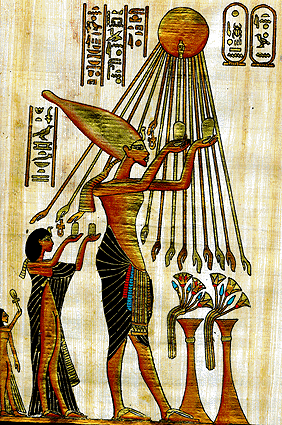
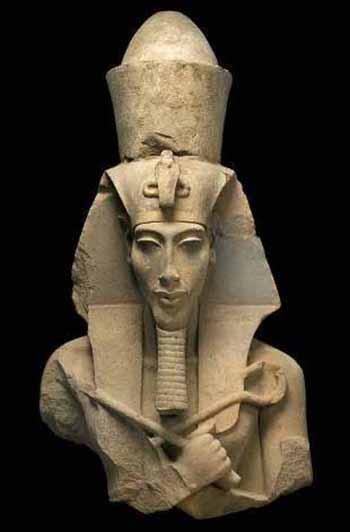
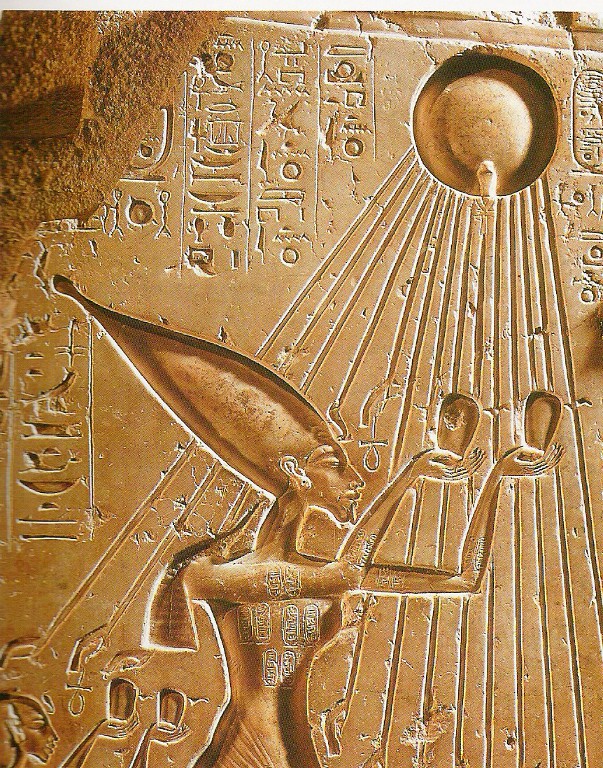
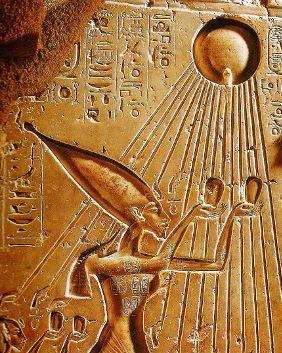
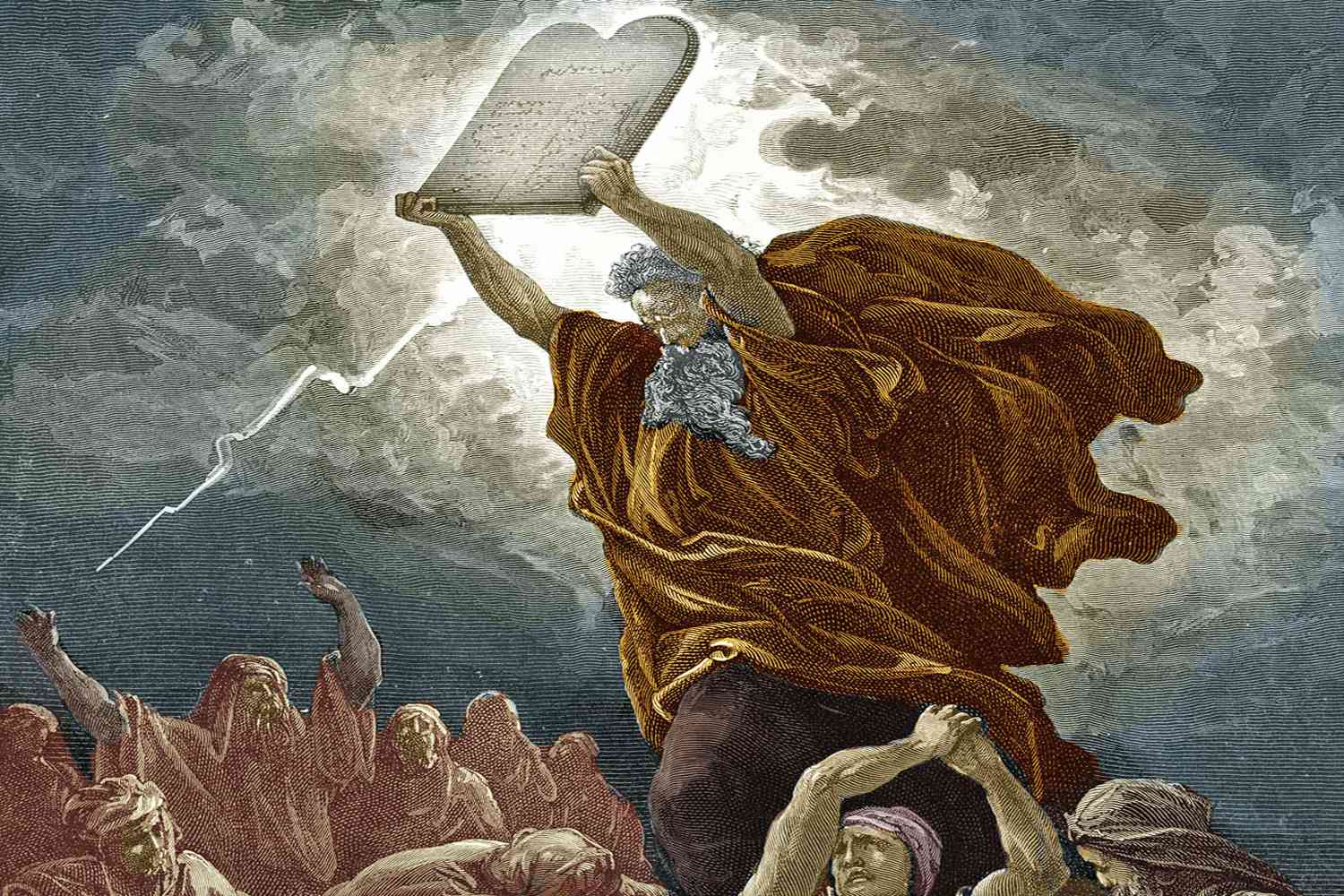
Sigmund Freud famously speculated that Moses was an Egyptian priest of the god Aten, or that he and Akhenaten were one and the same person — a view also held by Ahmed Osman and some subsequent writers. These theories are largely based on the chronological proximity of Akhenaten and Moses, as well as some conceptual similarities surrounding monotheism.
However, most historians and archaeologists reject the idea of a direct connection between Atenism and the development of Israelite monotheism. While Atenism focused on one god, it continued to allow for the divine status of the pharaoh and was not truly ethical or universal. There is no concrete evidence linking Moses to Akhenaten, nor strong evidence that Atenism directly influenced the Hebrew conception of Yahweh. The majority view, and one that Felix also propagated, is that the Israelite god Yahweh originated as one of many deities worshipped in Canaan and the surrounding regions and gradually became the sole God of Israel through religious development.
There is strong evidence of Babylonian (and later Persian/Zoroastrian) influence on Judaism, particularly during and after the Babylonian exile. During this period, some Mesopotamian myths and practices were adopted, changes were made to Hebrew script, synagogue and scribal traditions emerged, the Torah was redacted, and a shift towards monotheism occurred. The Babylonian exile is widely regarded by scholars as a transformative period for Jewish religious identity, far more so than any speculative Egyptian monotheistic influence.
Although Egypt features prominently in the Hebrew Bible (e.g. in the Exodus narrative), the scholarly consensus is that core Israelite religious ideas primarily developed in the broader context of the Ancient Near East, rather than directly from Egyptian religious innovation. Although Egyptian loanwords and cultural motifs are present, neither direct theological borrowing nor the idea that Moses was Akhenaten is supported by archaeological or textual evidence from Egypt or Israel.
The historicity of Moses himself is debated, with many scholars considering him to be legendary or a composite figure. Most reject the idea that he can be directly identified with any known Egyptian personage, including Akhenaten.
The ancient Israelites also worshipped the God El like the ancient Egyptians which was the precursor for Yahweh.
For Atenism the city of El Amarna was the seat of the Akhenaten kingdom. If we read the old testament Moses is seen carrying a scepter everywhere and of course the royal scepter was a symbol of Pharoah power.
The close proximity of ancient Egypt and ancient Israel cannot be ignored especially with a Pharoah forced into exile by his own people.
The Jewish ‘Invisible’ God that you’re not supposed to say His/Her/Xer Name is like an amalgamation of all the foreign gods they’ve come across, picked and chose what to insert into their own creation. I don’t think Jews are even really Monotheistic. I believe Monotheism is mostly an imposition of the Catholic Church to convert the European peasants and peons into Christianity and Christ-worship.
Then later Islam picked up Monotheism under Muhammad, in an attempt to make Prophet Muhammad into their own Arabian pseudo-Christian Deity, except the bloody warlord variant with multiple wives and child-wives.
Based on archaeology, I think that’s unlikely. But I think that the authors of the Hebrew Bible during the Hellenistic period looked back and saw a connection between the god of the Hebrews and a god of ancient Egypt and wrote the complicated origin story on that basis. Expert analysis of the text has shown evidence of a syncretistic merger of multiple regional gods into personality of the Hebrew god on the way to the conception of the one God of the universe of monotheism.
Right but the Torah was probably written as late as the third century BCE by Jews writing in Alexandria, Egypt, looking back and making that putative connection to an ancient tradition.
Catholics aren’t strict monotheists either. Remember, they have a Trinity and they have angels flying around and they have Saints who they can pray to. Angels and saints are just gods by other names. The hierarchical chain of being of Catholicism is essentially a pantheon. Islam has angels but as far as I’m aware, they don’t pray to Saints. So they’re perhaps a step closer to pure monotheism, but they don’t achieve it either.
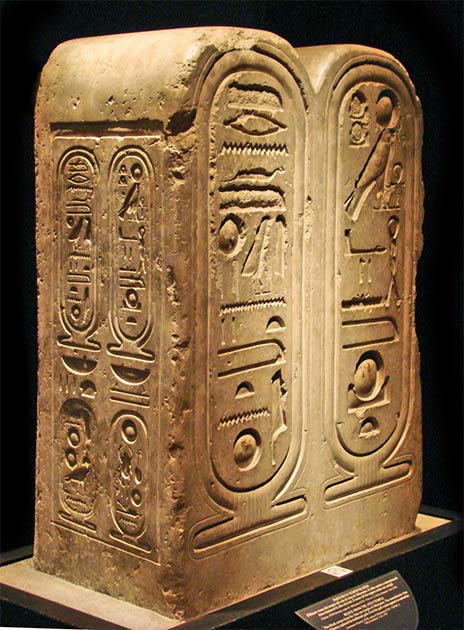
“I shall not ignore this oath which I am making for the Aten, my father, continually forever; but it shall remain upon a stone tablet at the southeastern border of Akhet-Aten … It shall not be obliterated.”

 )
)