No, I’m not Gamer; ask Promethean.
ΑΘΕΛΗΜΑ is written in all-caps because the ancient Greeks only had caps. It transliterates to “athelema”, which is parsed as a-thelema, meaning “un-will” or “no-will”.
“There is no will”. (Nietzsche, The Will to Power, sections 46 and 715; cf. 1060.)
Specifically (for me), it refers to free will. And it did not resolve my existential crisis, much less my depression. I overcame my depression, for almost seventeen years, with the pride of the Sun—“sun” being what the proto-Greek *sawelios means (I just stylized it in a Dutch way. Also, the cardinal sin of Pride is traditionally ruled by the sun).
Do you see the connection between pride and free will?
The root of my existential crisis—and thereby, in fact, of my depression—is the lack of free will—the lack of a true freedom, a true power, to possess. I have tried long and hard to resolve it. My latest attempt is reflected in this image:
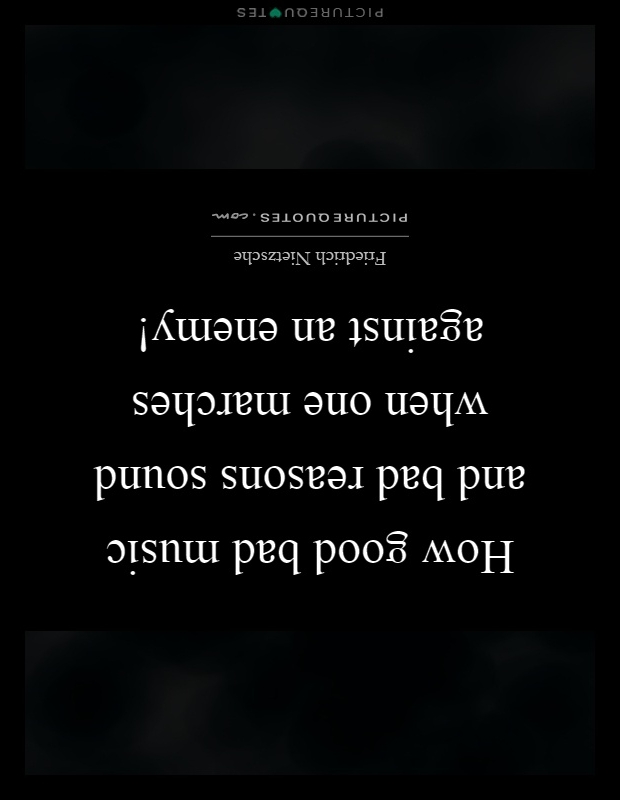
‘How good it feels to “march against a friend”—i.e., to fight for an unworthy cause—when one has good reasons and good music!’
Compare:
“Ye say it is the good cause which halloweth even war? I say unto you: it is the good war which halloweth every cause.” (Nietzsche, Thus Spake Zarathustra, “Of War and Warriors”.)
Plus:
“Liberal institutions cease to be liberal as soon as they are attained: later on, there are no worse and no more thorough injurers of freedom than liberal institutions. Their effects are known well enough: they undermine the will to power; they level mountain and valley, and call that morality; they make men small, cowardly, and hedonistic—every time it is the herd animal that triumphs with them. Liberalism: in other words, herd-animalization… These same institutions produce quite different effects while they are still being fought for; then they really promote freedom in a powerful way. On closer inspection it is war that produces these effects, the war for liberal institutions, which, as a war, permits illiberal instincts to continue.” (Nietzsche, Twilight of the Idols, “Skirmishes of an Untimely Man”, 38.)
https://www.ilovephilosophy.com/t/nietzsches-stance-toward-system-an-essay/26448/21?u=zeroeth_nature
Song of Carthage - Epic Roman Music (Farya Faraji)
“[Political/pseudo-] liberalism’s Moloch is satisfied with nothing less than […] the victory of [true] liberalism over politics, [nihilist] science over philosophy, the West over the East, the rootless over the deeply rooted, the masculine over the maternal, [etc. … Its] Moloch requires that the political or philosophic meaning of [the patriarchal] family and city[-state, polis,] be erased from the soul.” (Harry Morris Neumann, Liberalism, page 257.)
“[Marx] followed the vision of a world society which presupposes and establishes forever [sic] the complete victory of the town over the country, of the mobile over the deeply rooted, of the spirit of the Occident over the spirit of the Orient; the members of the world society which is no longer a political society are free and equal, and are so in the last analysis because all specialization, all division of labor, has given way to the full development of everyone.” (Leo Strauss, “Philosophy as Rigorous Science and Political Philosophy”.)