His language seems robotic repetitive and dehumanized, but I haven’t witnessed him lying.
This is a major influence on my thinking:
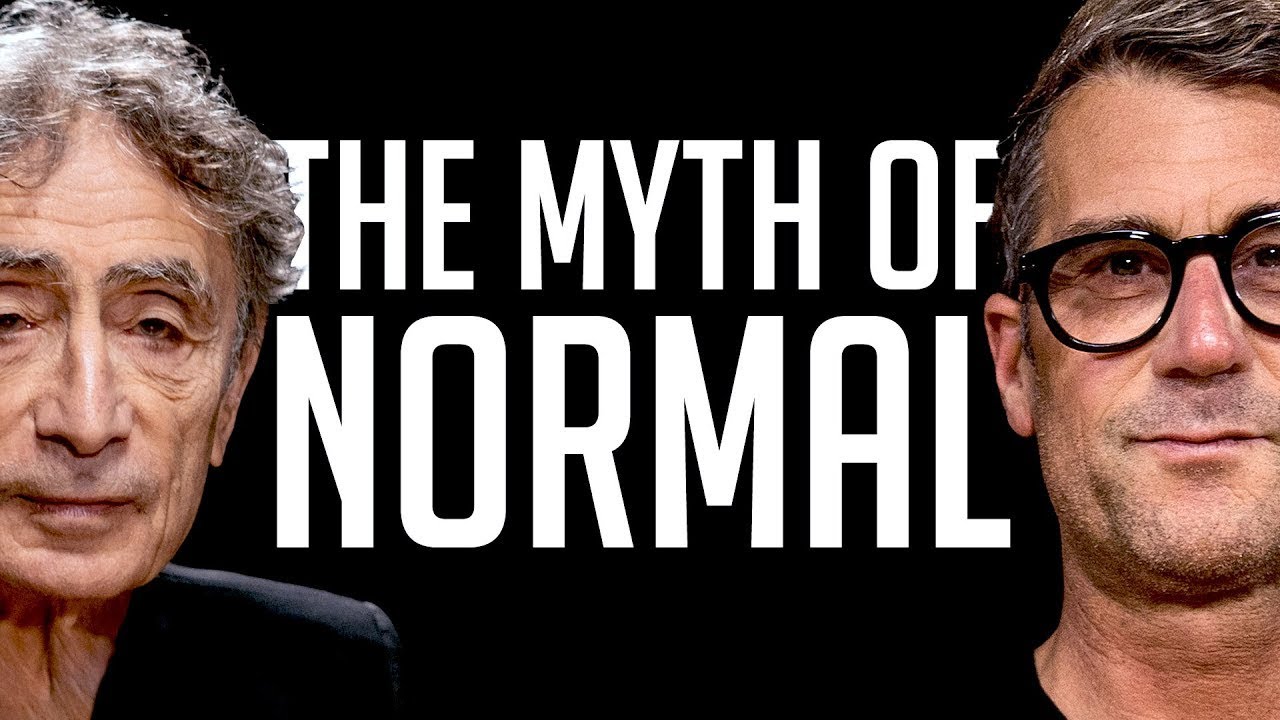
.
Really!?
If it weren’t the case, why would I say it?I have only seen him reiterate his theory over and over again. What are his lies?
.
If you can’t see it, should I say?
I haven’t read everything he’s written. Is it relevant to this thread? If not, why even bring it up?
The intersection between trauma and sensitivity is an interesting question that goes back at least to Freud. The highly sensitive person may be relatively creative and empathic but also suffer and react more emotionally. Mate experienced this himself. His therapeutic approach is informed by his personal experience.
1 Like
No kicking, no stairs…but still an abusive jerk. @Bob she won the lawsuit.
∃x = Logic(Existence)
Tangible >< Intangable
Logical Nihilism: This view questions whether any logic exists, arguing that there are no universal logical truths and that exceptions exist for even basic laws like identity A=Acap A equals cap A
𝐴=𝐴
These two have been locked in constant struggle and conflict with each-other since the creation of idealism. In Metaphysical Logistics mind claimed to form what is known to us to be absolute and formidably “Mind-Only”; as the Yogācāra school of thought believed was subjective experiences. Abstract theories to existence with no true basis in reality. All including until mid 16th century: representing medieval Latin metaphysica (neuter plural), based on the Greek ‘ta meta ta phusika’ ‘the things after the Physics’, referring to the sequence of Aristotle’s works: the title came to denote the branch of study treated in the books, later interpreted as meaning ‘the science of things transcending what is physical or natural’. These philosophies were then interpreted by Hegel and Marx (New Realists). Although I don’t entirely agree with everything they proposed. A hefty sum of what was theorized still comes to mind as some of the most prolific philosophies ever accommodated.
Ontological Idealism: Reality itself is non-physical, immaterial, or experiential at its core.
Epistemological Idealism: holds that all knowledge is based on mental structures, not on “things in themselves”. Whether a mind-independent reality is accepted or not, all that we have knowledge of are mental phenomena.
Long ago our ancestors were taught very soundly that they get to choose the philosophies they wish to pronounce. Yet at the same time we took concepts and made them more understandable and easier to conceive. “I think, therefore I am.” Descartes provided clear annotation of this belief that everything is as exists which is subjected by the mind itself which does indeed exist in ‘being’. Certainty we were assured this would end it. Yet as Descartes put it, “is”. To observe without knowing would be a mind of the reality itself. This would then take reality and make it consciousness. So in turn making Mind-Reality. A lot comes from doubting and sense of observation. If there were no reality and we just sat in the dark all day we’d never know there was a day outside our reality. There are conceptual methods to knowing self, you could use but I’m working in a time frame.
A couple True facets of wisdom I can lend to bring myself to speak of are those of Kant and of Nietzsche.
-
Multiplicity of Drives: The self is not a unitary “I,” but a “multiplicity of subjects” or a struggle between conflicting drives and desires.
-
The Self as a Task: The self is not a given entity but a task—a work of art that must be constructed and mastered.
-
Self-Overcoming: Individuals must fight against their own limitations, prejudices, and the mediocrity of the herd to reach higher, more potent modes of existence.
-
Internal Conflicts: A strong self is one that can manage and utilize internal, contradictory psychological drives (like master/slave moralities) to create a coherent individual.
- Logic as Self-Cognition: Kant defines logic not just as a set of rules, but as the “self-cognition” of the understanding and reason. It represents the mind understanding its own functioning.
- Moral Self: In the moral realm, the self is a rational agent (person) that gives itself the moral law (the Categorical Imperative). The self has dignity and must be treated as an end in itself, never merely as a means.
- Empirical vs. Transcendental Self: Kant distinguishes between the empirical self (our changing, psychological sense of ourselves) and the transcendental self (the necessary unity of consciousness).
- Appearance vs. Thing-in-Itself: While we can know the self as it appears to us (empirical self), we cannot fully know the “thing-in-itself” (the soul or transcendental ego) through theoretical reason alone, although it is necessary for practical, moral reason.
There’s a lot to unravel here and im tired so i’ll get back to you on this subject later. But I’ll be sure to give feedback.