So… why you quote me out of context???
Perhaps it is the before that the after comes to shorten the imperceptible gap as time goes on,
after a variable duration, the past and the present are no longer temporarily significant.
(as per)
Ah, but does before truly precede after, or do they fold into an ever-present now? The gap is an illusion—time does not pass so much as it refracts, memory and anticipation merging into a singular moment.
Duration is distortion, past and future mere echoes shifting in perception. To name the before is to summon the after, collapsing time into its own paradox.
OR
You could actually try to think about what you are saying for once?
No , Or, but it’s probably either, ?!?.
In that event, refraction and reflection are almost near simultaneity , but that only maybe the near absolute superior being can put His nihil obstat on.
Let us pray.
For Pope Francis.
Oh yes, of course! Because when discussing the physics of light, naturally, we must invoke divine approval. I’m sure the “near absolute superior being” has a special department dedicated to granting nihil obstats on refraction events. And let us absolutely not forget to pray—because what better way to resolve scientific discussions than with divine intervention?
He claims to have to hotline to God, so why would my prayer makes a difference.
Here’s my question… The Pope is living on blood transfusions ATM. So why is he so scared to meet his maker when god seems to keen to take him right now?
And is it not enough that the RCC has been bleeding its flock for money for 2000 years, now they are literally bleeding them to keep this guy going.?
Not sure he’s afraid maybe he is more concerned with the universal preoccupation that the splintering forms of Christianity could detract from the original constructed plateau could inspire people in furtherance of their belief;,that could reduce their anxiety about the purpose of existence.
In fact, that route does lead to Saint Enselm’s irrefutable problem: reformation rather then proformation?
Bit late for that !!!
Removed for lack of substance and clarity.
- nothing to do with the thread
- word Salad that not even you understand. SO
- Let’s take a closer look. Ah yes, a masterclass in pseudo-profound word salad. Let’s break this down, shall we?
So, “Hope abideth charity of believing he’ll make it”—ah, the old trick of throwing biblical-sounding words together to feign depth. Who is “he,” and what exactly is “charity of believing”? Are we donating our belief now?
Then we have, “in either case, it will never be a known”—brilliantly vague. What is “it”? What are these mysterious “cases”? Nothing like ambiguity masquerading as profundity.
“The important thing is not fear it’s self”—aside from the grammatical offense (it’s itself, not it’s self), this feels like a half-baked FDR reference, stripped of clarity and impact. But wait—“but what form that object will bring along with it”—oh good, now “fear” is an object that carries luggage. Delightful.
Then we get to the real pièce de résistance: “would it be more of a singular thought, or more a participation with universally brought forward tenacity.” Ah yes, the classic dilemma—shall we opt for an isolated brainwave, or a grand cosmic team effort of tenacity? Because apparently, those are our only two choices in this deep philosophical quandary.
And finally: “Either case meet at the medium, for for such gifts only a supernatural Being can deliver.” Right, when in doubt, throw in a vague appeal to the divine. “Meet at the medium”? What medium? The astral plane? A seedy fortune teller’s parlor? And naturally, only a supernatural Being can “deliver” these nebulous “gifts.” How convenient.
Overall, a stunning display of words that sound important but mean absolutely nothing. 10/10 for mystique, 0/10 for coherence.
Removed

()()
Happy end

()()()
To Ishthus:
Naturally they didn’t tell this guy about Sigfried, and not the idyll, either
)(

See even cats can.- without a CATSCAN
1 Like
He’s asking for it: better give in?
)(. )(. )(
?
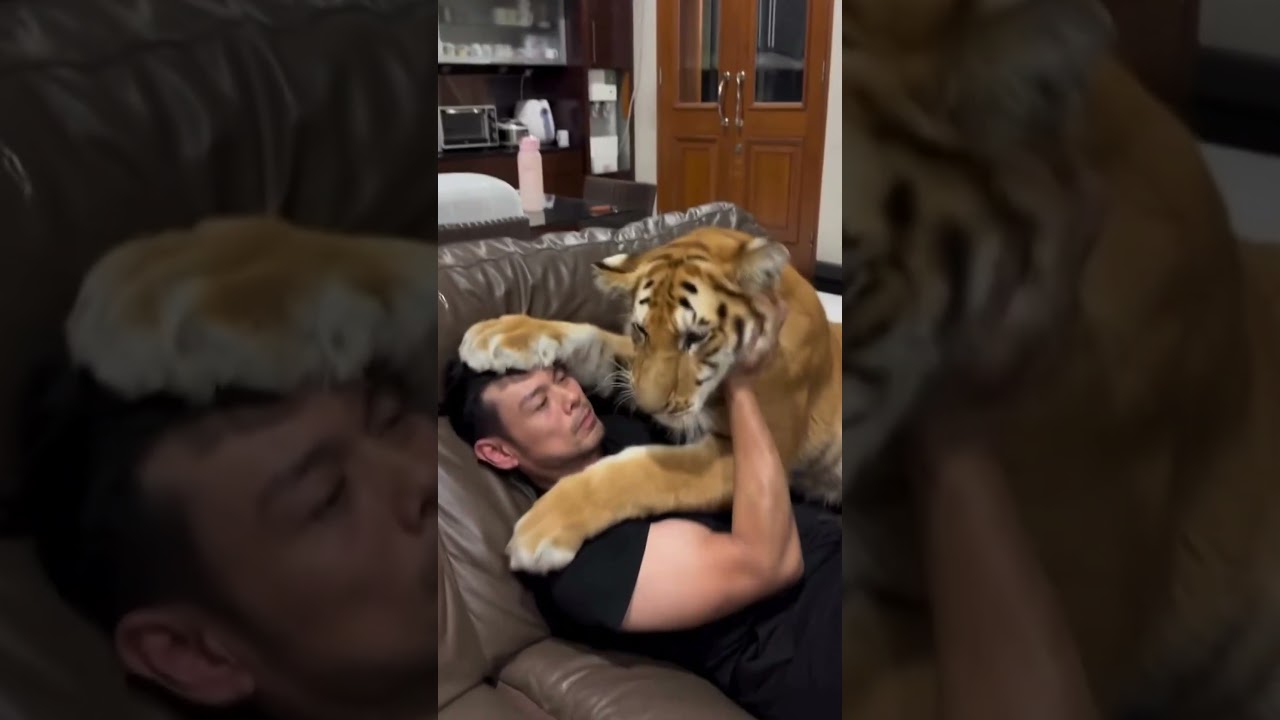
Don’t complain:

)(
See doge. hackle brave

1 Like
If you mean phenomenally?
Yes my dogs can think phenomenally.
They are remarkable in the way they remember which toy means certain things to them, they know which one to retrieve when asked to. They know when you brush your hair, put on your sneakers, jacket, this means walking outdoors. The dog being given it’s daily tablet needs protection from the giver and the fox terrier barks non stop until I walk away. I could name many more instances, but these initially come to come mind.
Such phenomenal skills in my dogs. Especially Tuppence! the fox terrier.

I asked perplexityAI Can Dogs Think Phenomenally? This is the answer:
Phenomenal thinking refers to having subjective, conscious experiences—what philosophers call “phenomenal consciousness” or “qualia.” This is the sense of what it is like to be an experiencing subject.
Evidence for Phenomenal Experience in Dogs
- Many animal cognition experts and neuroscientists argue that dogs do have conscious experiences. Brain scans (such as fMRI studies) show that dogs’ brains have similar structures and activity patterns to humans, particularly in regions associated with emotion and social bonding37.
- Dogs display behaviors that suggest feelings such as joy, anxiety, depression, empathy, and attachment. For example, dogs can grieve, respond to their owners’ moods, and even experience depression-like symptoms56.
- Dogs can form long-term emotional associations and recognize people or animals after years apart, indicating a rich internal life7.
- Some philosophers and scientists argue that if dogs have minds at all, they must have some degree of phenomenal consciousness, experiencing the world subjectively46.
Limits of Canine Cognition
- While dogs clearly have emotions and subjective experiences, there is debate about the extent of their self-awareness and higher-order thinking. For example, most evidence suggests dogs lack a fully developed “theory of mind”—the ability to attribute mental states to others18.
- Metacognition (thinking about one’s own thinking) is considered rare in animals and is mostly observed in primates, with only limited and inconclusive evidence in other species8.
- Dogs are highly social and can solve problems, infer meanings, and even learn words by exclusion, but their cognitive abilities are generally compared to those of a young child or toddler51.
Summary Table: Canine Phenomenal Thinking
| Aspect | Evidence in Dogs | Notes |
|---|---|---|
| Emotions | Yes | Joy, anxiety, empathy, depression56 |
| Subjective Experience | Yes (widely accepted) | Brain scans, behavior, emotional bonds346 |
| Theory of Mind | Limited/Controversial | Some social inference, but not full ToM18 |
| Metacognition | Weak or absent | Largely seen in primates, not well-supported in dogs8 |
| Problem Solving | Yes | Social and individual problem-solving5 |
Conclusion
Dogs are widely believed by scientists and philosophers to have phenomenal consciousness—they experience the world subjectively, feel emotions, and have mental lives. However, their ability to reflect on their own thoughts or attribute mental states to others is likely limited compared to humans and some primates468.
This is bullhonky. Cats and dogs can both do this. That’s why people have emotional support animals — because they can do that. Some better than others, yes, but you can say that about a lot of different things. For example, some humans have horrible bedside manner, and shouldn’t even be trusted with their mothers, because they’re just gonna verbally assault them the whole time and exploit them.
The full sentence was:
Reflection and attribution are not the emotional support you mean. Rather, it tends to be an immediate reaction to emotions, which the animal learns to discern over time.
What data do you have to support that assumption?
Hero dog saves injured owner stranded in a canyon.
It seems like it’s “Hero Dog Week” here on OrvisNews.com, as these stories keep popping up. This one is almost six years old, but it’s worth retelling. It’s the amazing story of an adventure racer, Danelle Ballengee, who finds herself injured and stranded in a remote Utah canyon. Her only companion is her dog, Taz, who manages to find the people searching for Ballengee and lead them to her:
That’s when Marshall and the rest of the search party see Taz. In a seemingly conscious effort, the dog eludes their attempts to capture him for just long enough that the humans catch on: This must be Ballengee’s dog. He’s our best clue right now. Let him run.
Initially, Taz leads them away from the trailhead, back toward town. Weird, the rescuers think. But they follow. And Taz sees them. Shortly thereafter he turns around, “like once he knew he had attracted enough attention, it was time to go back into the canyon,” rescue group member Rex Tanner says. The dog darts through the assembled search party and out toward the canyons. Marshall radios ahead to his two Rangers: “Whatever you do, don’t try to catch the dog. Follow it.”
Dogs like children expand their intelligence on what they have been exposed to and taught.
This is the assumption I meant. What data supports this is a learned rather than immediate discernment?
Note you are referring to emotions as mental states.