“when one sees anything as beautiful, one does so because it reminds one of the rise of one’s type"
“will prefer other stunted birds of their species over non-stunted ones? And do you think this is modesty on their part?”
Great eye! And do you know why the average-to-ugly guy finds the average-to-ugly girl naturally attractive? Because she’s unable to feel better than him (due to her own ugliness), and therefore, he wouldn’t ever be rejected by her on those most insulting grounds.
It couldn’t be modesty that leads him here. It’s pure ego. He protects himself from any protest his mate may have by taking a mate who has no right to protest (being ugly and mediocre, herself).
The myth “we seek mates that are better than us; the instinct to improve through careful selection” is just that for the average man/woman. A myth. The average seeks a mate that will merely accept him and be happy with that.
Only the exceptional get to select and even know what ‘improvement’ means for the species type. A superior male will take a female as a tool to reproduce himself (and for recreation, play) and give her direction toward those ends. The mediocre man will hope simply to be chosen by someone at all. These guys account for the vast majority of starter-home buying mini emperors that want to rule over a little family and tell people what to do. The middle working class king of the hill sunday morning drinking espresso on the porch in a goofy bathrobe admiring his creation. And not five feet away on every side of his castle is somebody else’s yard line. Houses so close together, you could reach out the windows and shake hands with each other. This is a joke, and these guys are clowns. Not for what they are but for how ‘boss’ they think they are for what they have done and what they have. The standard cookie-cutter chad package. They pack em in those subdivisions like lemmings. There are no ubermench or unique ones here, Saully.
This “big ego” of the small is precisely what I meant by ‘modesty’! But do you really think birds have that? I think the stunted and the non-stunted birds, though they be of the same species, are different types, in the Nietzschean sense of the word. In fact, the more “unstunted” a bird is, the less well it would do growing up in a small cage—so it would not represent the rise of the stunted bird’s type, but rather its decline. And as for human people, such males as you describe really are the kings of their castles, their cages (though they’re really ruled by their “queens”, of course): they thrive in that environment…
“The criminal type[!] is the type of the strong human being under unfavorable circumstances: a strong human being made sick. He lacks the wilderness, a somehow freer and more dangerous environment and form of existence, where everything that is weapons and armor in the instinct of the strong human being has its rightful place. […] It is society, our tame, mediocre, emasculated society, in which a natural human being, who comes from the mountains or from the adventures of the sea, necessarily degenerates into a criminal. Or almost necessarily; for there are cases in which such a man proves stronger than society: the Corsican, Napoleon, is the most famous case.” (TI “Skirmishes” 45, unknown trans.)
That is exactly right, sir, and i remember when i first saw that aphorism in my early twenties. It was the most badass thing i ever read. Whatever heinous shit i desired to do, i knew Fritz would be like “this is what happens when a superior soul - Prom - is forced to live among prats like you” to the sheriff when he arrests me.
Fritz was like a father to me, man. Gave me more wisdom than the old man could ever dream of givin’ me. When what’s his name gave me the portable nietzsche i knew i would be one of Nietzsche’s bitches for life.
I no longer see a reason to distinguish ‘feeling of freedom’ from ‘freedom’ in such contexts. That relates to how I do not distinguish the concept of causation from consistent correlation (in the sense Hume makes the separation, correctly observing that causation as something else than consistent correlation doesn’t exist). Obviously causation can not be itself a mechanism or process, that would make it subservient to itself, and produce an infinitely regress.
Not sue if you see the relation between freedom and causation in this sense. Both are simply terms for certain relations, when taken too literally, separately, they make no sense. A will should be free from what to be free? Ultimately, from itself. It’s nonsense. But the term freedom still has its meaning, even though that meaning, like most meaning, is far from absolutely logical.
Then there are more important things than absolute logic! Freedom, for example. (Joke intended)
Again, to what N says about hatred, yes -
to last part of this quote, no - I think sickly, asymmetrical, gnomish people consider healthy, symmetrical, Greek-god-shaped people to be beautiful, and don’t consider themselves beautiful. Even though, when indoctrinated by Wokeism, they might convince themselves of a duty to do so.
Zizek has a great sense of humor. Have you read any of his books? Ive started several and finished one, The Fragile Absolute. I thought it was pretty good then, tried to reread it later, was a bit disappointed. But he deserves to be called a philosopher even just because of the quality of his jokes.
To this: an over man will still value a beautiful doe (had to look that up, what an ugly word, compared to hinde) of a woman. Again, I firmly disagree with Nietzsche’s conception of standards being formed entirely within types, to reflect that type. I think that health, strength, vigor, is pretty close to being objective (even though yes, there are exceptions, but they confirm the rule, certainly don’t occur frequently enough to negate it, and what is truly sickly, a leper for example, is never considered healthy), and I see these qualities as a condition for beauty.
So where the interpretations of beauty do vary, physiological degeneracy falls without the set of these interpretations.
(I was once running along a river, passed a somewhat fat, not very healthy looking woman, and she called out ‘Ik voel me mismaakt’.)
Out of shame, and stronger: the pain of not being non-stunted. Being reminded constantly of their stuntedness, of other peoples greater fortune, is a greater pain than to be among other stunted ones.
An observation in the context of Christianity: I think that of the seven deadly sins, envy is the worst (note that I do not necessarily subscribe to the Christian judgment of these qualities/actions as evils, just using this as illustration) , in that it is the only one that is wholly negative, and acting on envy, destroying that which is beautiful simply because the destroyer is not, I think is probably what Jesus meant with the sin against the Holy Spirit, the only unforgivable sin. He speaks of it after he talks about having to constrain a strong man in order to be able to spoil his house.
Of course, but there is still the beauty along with the questionableness.
Beauty, for the pedestrian I wrote of before, was evil. An offense. Yet that objectableness didn’t make her beautiful in her own eyes. On the contrary, it made her even more certain of her own ugliness, lack of grace in motion, etc.
Now, agreeable, that is something else. One ugly person may find another ugly persons appearance most agreeable, because of the lack of tension, pain that comes with it.
I’m not sure if I fully understand your use of dissimulation here. Can you explain further?
In any case, like with causation before, I consider beauty and what is beheld as beautiful to not be essentially different thing; since think that what is beheld as beauty is quite objectively determined by the being that is beheld, rather than by the beholder. Even though beauty is in the eye of the beholder, the beholder is determined by the same standards as that which he beholds.
That presupposes that such fossils will be found, of course. But I believe in the basic idea of evolution and thus that there have been in between forms, but, following the raw logic, there would have to be a continuum of living in-between-forms between all species. There could not be distinctly separate species. There would not be separation between species if not for certain factors that haven’t been explicated, one of which I think must be the selection of the greatest valuing, which relates to standards that are somehow objective, not purely type-relative.
Again, this has never been developed beyond an intuition.
I agree that health reminds of health.
Indeed, wisdom is not in its place here. It can even mean the opposite of what I implied.
I thinfk that comes down to the same. They are objectively inferior, and can thus bear much less self-knowledge.
After this incident, will the sheep continue to run with the goats?
I don’t think this is a question of ego in the fully formed human sense, but of something related. I think that complicated animals have simple forms of what we call ego. Not bugs, probably not reptiles, but birds and mammals, I think so. Apes certainly do. Where is the border? Maybe with warm blood, having to uphold something, but thats purely speculation.
Yes. To be free (in the absolute sense) would mean to be a self-cause and a first cause; whereas to be unfree is to be a link in a chain of causation.
Yes. In fact, I think the value of logic derives from freedom… Take what Nietzsche says of Spinoza, for example:
“Spinoza reached such an affirmative position in so far as every moment has a logical necessity, and with his basic instinct, which was logical, he felt a sense of triumph that the world should be constituted that way.” (WtP 55, Kaufmann ed.)
How could he feel a sense of triumph? Only, I think, by identifying with what he called “the first and only free cause of the essence of all things and also of their existence” (Ethics, Proposition XXXIII, Note 2). In other words, even Spinoza ultimately did not value logic, but the feeling of powerful, i.e. free, will to power…
Yeah, but a leper is not a type. Leprosy is a disease, and not even a hereditary one.
Leprosy (metal track by Death)
Also, the question is if a woman could even be an overman, if an overman is a human being who conceives reality as it is:
“Does the basic will of the mind belong more to femaleness whereas the opposing will belongs more to maleness? The basic will of the mind seems to transcend gender. But could the opposing will belong to some few males whose task is the pursuit of the woman truth? If so, then the final theme of this chapter, the warfare between the sexes, expresses in the natural divisions of gender the two inclinations of mind, the basic will of the mind to create and sustain artful surfaces and the renegade will to penetrate to true depths. Nietzsche’s position with respect to the sexes would then be ontological and epistemological in its roots; the cosmetic or female arts contrast with and are inevitably at war with the willful penetration of surfaces by manly intellect.” (Lampert, Nietzsche’s Task, page 233, on BGE chapter 7.)
Anecdotal evidence!
Yeah, I don’t think that’s the reason, among birds and caprines at least. More on this below.
Well, that depends on one’s response to one’s envy. One can try to drag the envied down to one’s own level, or to emulate them and rise to(ward) theirs. In Lampert’s interpretation (Nietzsche’s Teaching), Zarathustra tries very hard to get his disciples to envy him and give the latter response…
In writing of ‘a superficial symmetry which suggests a deeper one which is not actually there’, I realized this might be considered a form of dissimulation (though not necessarily a conscious form, of course; rather in the way Nietzsche says plants are already masters of cunning (WtP 544)). But then, I realized dissimulation itself is costly, too, and thereby already a potential fitness indicator. If the false cleanerfish did not put all that effort into looking like a—oh wait, it wasn’t a false cleanerfish after all:
“On Australia’s Great Barrier Reef, a bluestriped fangblenny changes its colours to deceive and launch an attack, […W]hilst some animals use mimicking to put off predators, to hide or to hunt, there are some animals that use it for a rather more sinister purpose. A fangblenny on Australia’s Great Barrier Reef uses deception to get close to its victim. It has learned to exploit the trusty relationship between the blue striped blenny[?] and the cleaner fish as the first get their parasites picked off by smaller fish that feed on what they remove. Mimicking the colours of a cleaner fish, the fangblenny uses razor-sharp teeth not to remove parasites but to take a bite out of its target.”
If the bluestriped fangblenny did not put all that effort into looking like a bluestreaked cleaner wrasse—temporarily—, the bigger fish it sought to “clean” would just swim away, outrunning it, or aggressively defend itself. So the metamorphosis is less exhausting or risky than the alternative, but it’s still quite costly.
Well, some of them, at least (if he even sees beauty in it).
Or that they have already been found, which they have. But yeah, there’s always a relative leap, of course (unless the evolutionary benefit is in a difference of a single quantum or particle, which is extremely unlikely).
Living? Why?
Isn’t the whole idea that the intermediary form between two forms may go extinct while the other two keep differentiating over many generations?
Haha, yes… But it must also be recognizable as such, which surely will tend to be more the case the more closely the species or type is related to ours.
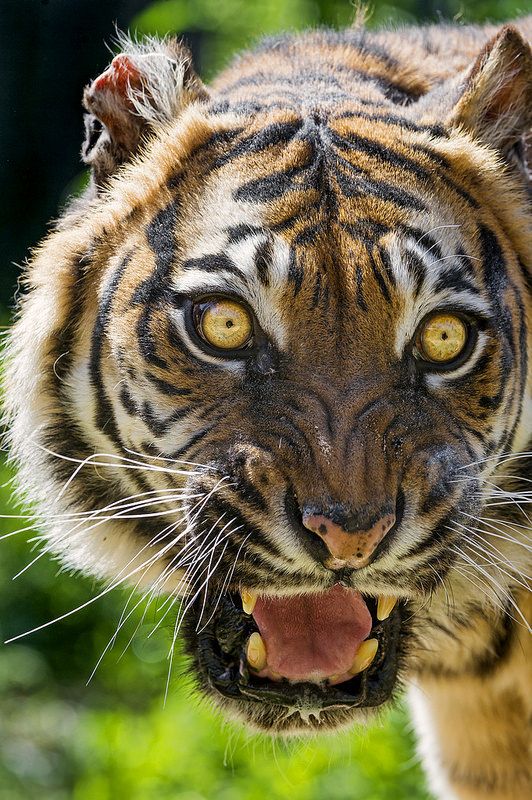
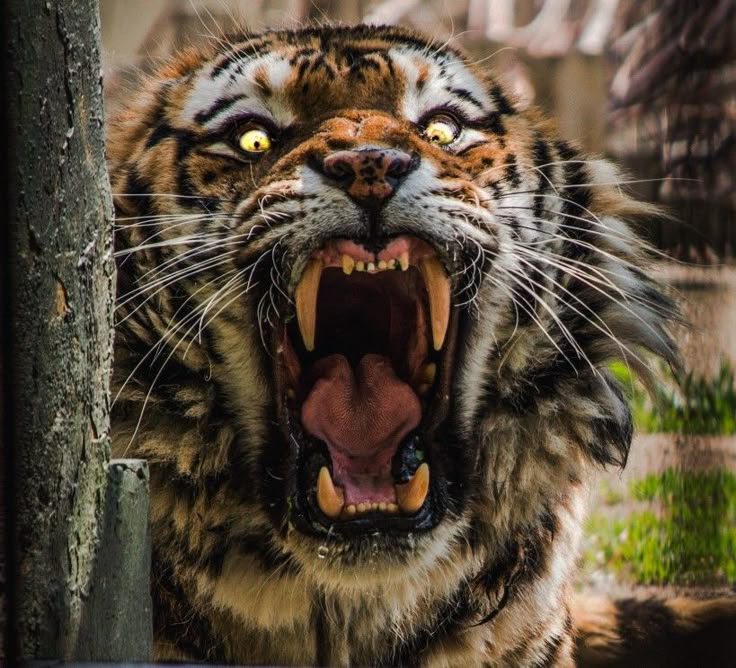
I suppose you got me there, with the whole “conceiving reality as it is”/“conceiving one’s type”/“being reality itself” thing… But I think the same, if to a different extent, goes for your (big) cats:
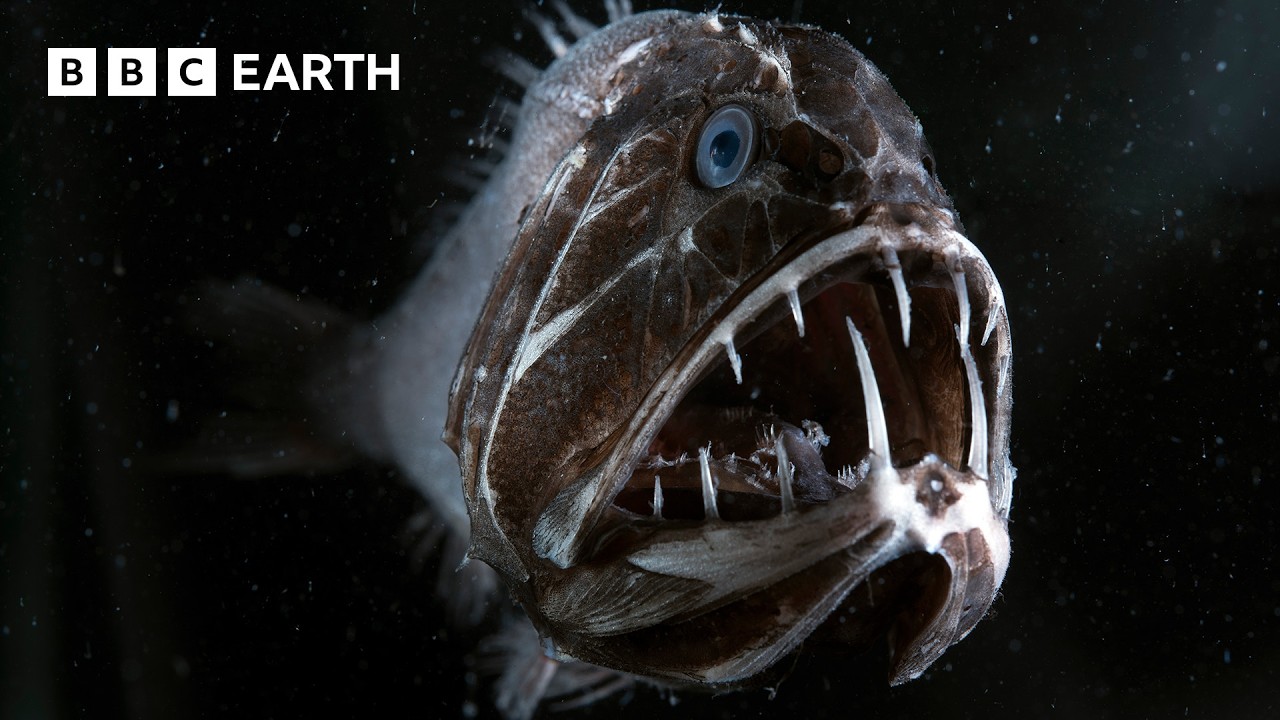
Discovering the Strange and Unusual Creatures of the Deep Ocean | BBC Earth
That is one ugly fuckin fish. You reckon that fish’s moms was like “my beautiful baby boy!” when that ugly-ass fish was born? Fuuuuck no. More like, “i ain’t that baby’s moms! I’ont know who is, but it ain’t me.”
Did you only look at the thumbnail? Even so, I disagree. For one thing, I think (big) cats can be equally “ugly”—not just when they’re old, sick(ly) or dying, mind you, but when they snarl and hiss at others etc.; and conversely, I see much beauty in the “ugliness” of this fish.
“Beauty is terror. Whatever we call beautiful, we quiver before it.”
(Henry, in The Secret History by Donna Tartt.)
“Everything of power is a sight to behold.”
(Bill Boethius, my paraphrase from heart.)
“[T]he beautiful is nothing
But the beginning of the terrifying, which we can still just bear,
And we admire it so because it serenely disdains
To destroy us. Each and every angel is terrifying.”
(Rainer Maria Rilke, Duino Elegies, first elegy, verse 4-7, my trans.)
“I suppose this only confirms the subjectivity of beauty”
Remember, yes and no. No, because ‘ugly’ is an objective appearance in nature when something observes the decline of its type. We already established that. So, a group of Xs will ALL make the judgment ‘ugly’ when they see a decline. Example: obesity is objectively ugly, and anyone who tells you they don’t think it’s ugly is lying. Here, the decline of man in general is seen, and there is nothing subjective felt about the repulsion, the caution, the the wanting to distance oneself from this thing.
But we are dealing with sets, so there’s subjectivity here, too. Take Y and Z, each share the objective judgment ‘ugly’ with N when they see a fatty. But there are things about N that Z thinks are ugly, and things about Z that Y thinks are ugly. These sets divide almost infinitely because of the cultural diversity of the animal man, and a whole world of illusory aesthetic qualities emerges. For instance greasers think socs(socials) are culturally ugly and vice versa. But these cultures don’t exist. They’re all just individuals who, while sharing the opinion that obesity is objectively ugly, have disagreements about such things as attitude, privilege, duty, all of which are dubious concepts and don’t even really exist. Conceptual spooks, as it were. Ugly and beautiful here are fleeting subjective contingencies. This is why i trust only my instincts and my nose.
About them scary-ass tigers. It’s bro’s teeth that are subliminally fucking you up. Those whitening toothpaste commercials have developed an intolerance for perfectly white teeth, and any time you see them, your instinct tells you “damn brush your teeth scary-ass tiger.”
Yeah, there’s no way you can’t think that fear, that warning, isn’t pure savage beauty. Bro a fuckin tiger could be takin a shit and he’s still the most magnificent creature in his whole hood. I don’t know what you’re on about.
Calling fear ugly is a relatively impolite judgment against all of the animal kingdom, too. Fear is when we are most alone, most tormented, most uncertain, and this deserves nothing but admiration and respect. In the war of all against all, there will be entire types superior to others who will cower in their presence. But this is a natural order, and anyone’s fear is… the strength of their survival mechanism, call it. A scared creature ‘goes to work’ and is most engaged with trying to stay alive. How can that not be beautiful?!
Now, a muhfucka may look ugly when he afraid, but that don’t mean he is ugly. He was probably already kinda ugly, and being afraid just made him uglier.
But then how to explain the fatty fetish people have. I think it’s masochism hidden phenomenologically in the psyche. Delight in one’s own perversion and destruction. The imagined alpha-defiance of everything. Your boy de Sade went this far over the falls. These people are like, “Oh really? Watch this. I’m gonna eat a handful of shit. Fuck you and everything under the sun.”
But does that make it objective, or only intersubjective? At most we could say it’s an objective fact that, to subjects of type X, this and this is ugly. (Note though that the whole “type” thing is already a simplification: thus we could paraphrase Stirner as saying “I am my own type” (and not just “species”).)
Well, Merriam-Webster defines “obese” simply as “having excessive body fat”.
But fat reserves are not excessive (or the excess that they are is itself not excessive). So again it depends on the environment. What’s obese on the Riviera may not be obese in Siberia.
Well, N defined fear as the feeling of a lack of power. So if every thing of power is a sight to behold, every thing of fear is surely unsightly.
No. Being those things deserves none of these things. What “matters” is our response to those things.
‘Only freedom confers dignity—or, as Nietzsche implies later, labour in the service of freedom […]
But how is the genius (i.e., in this context, the Apollinian genius) free? Free from the (semi-)Schopenhauerian ‘will’? The answer is: “Only apparently; not actually” […]
The—Apollinian—genius is the beautiful world of the primordial will; his artistic creations are the supreme pleasure-goal of that will. The primordial will, the Primordial One Itself, then, is successfully deluded by such genius. And if even the Primordial One is deluded, what relevant distinction can there then be left between this delusion and the truth? For this reason, the seeming freedom of the Apollinian genius confers actual dignity on all who work in his service.’
Don’t be hasty. Part of being powerful involves knowing when and how to be afraid, and the judgments ‘weak’ and ‘strong’ have to include a consideration of the animal’s whole project. You can’t call an animal weak that has just demonstrated an intelligence to recognize a danger and the skill to avoid it. The whole project, Saully. Survival of the illest.
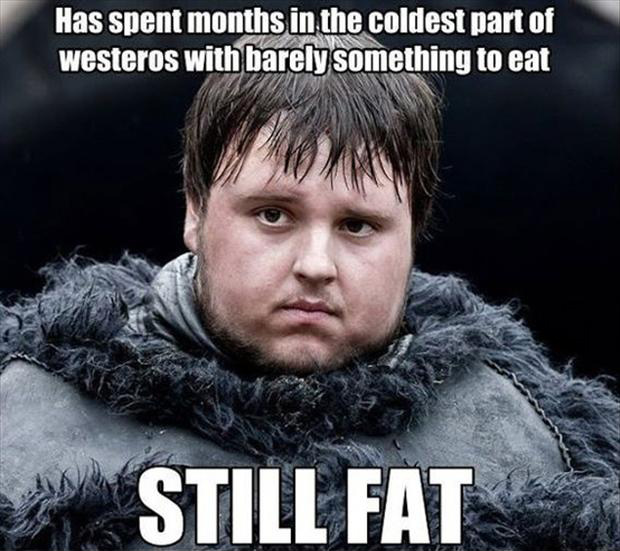
Seriously, imagine calling Ceasar weak, powerless, and ugly when he instinctually shrieks like a leetle gurl at a big-ass poisonous snake behind the trash cans when he’s wheeling them to the curb one morning. That’s not a weakness, man… that’s power. That means all his systems are working right, and he’s healthy and alive and Roman on a sunny Tuesday morning in Italy.
And I would never imply such a thing about N’s mustache. That was algebraic notation not a german philosopher’s initial.
In section 684 of The Will to Power, Nietzsche says:
“The richest and most complex forms—for the expression “higher type” means no more than this—perish more easily […]
Among men too, the higher types, the lucky strokes of existence, perish most easily as fortunes change. They are exposed to every kind of decadence: they are extreme, and that almost means decadents.
The brief spell of beauty, of genius, of Caesar, is sui generis [“one of a kind”]: such things are not inherited. The type is hereditary; a type is nothing extreme, no ‘lucky stroke’—” [Kaufmann ed.]
Now my question is this. First Nietzsche says the higher type is a lucky stroke, is something extreme. Then he says a type is nothing extreme, no lucky stroke. So the higher type is not a type?
The expression “higher type” means “richest and most complex forms”. But the richness and complexity (the “higherness”) is not inherited?
I missed the esoteric meaning of the smiley face, yes.
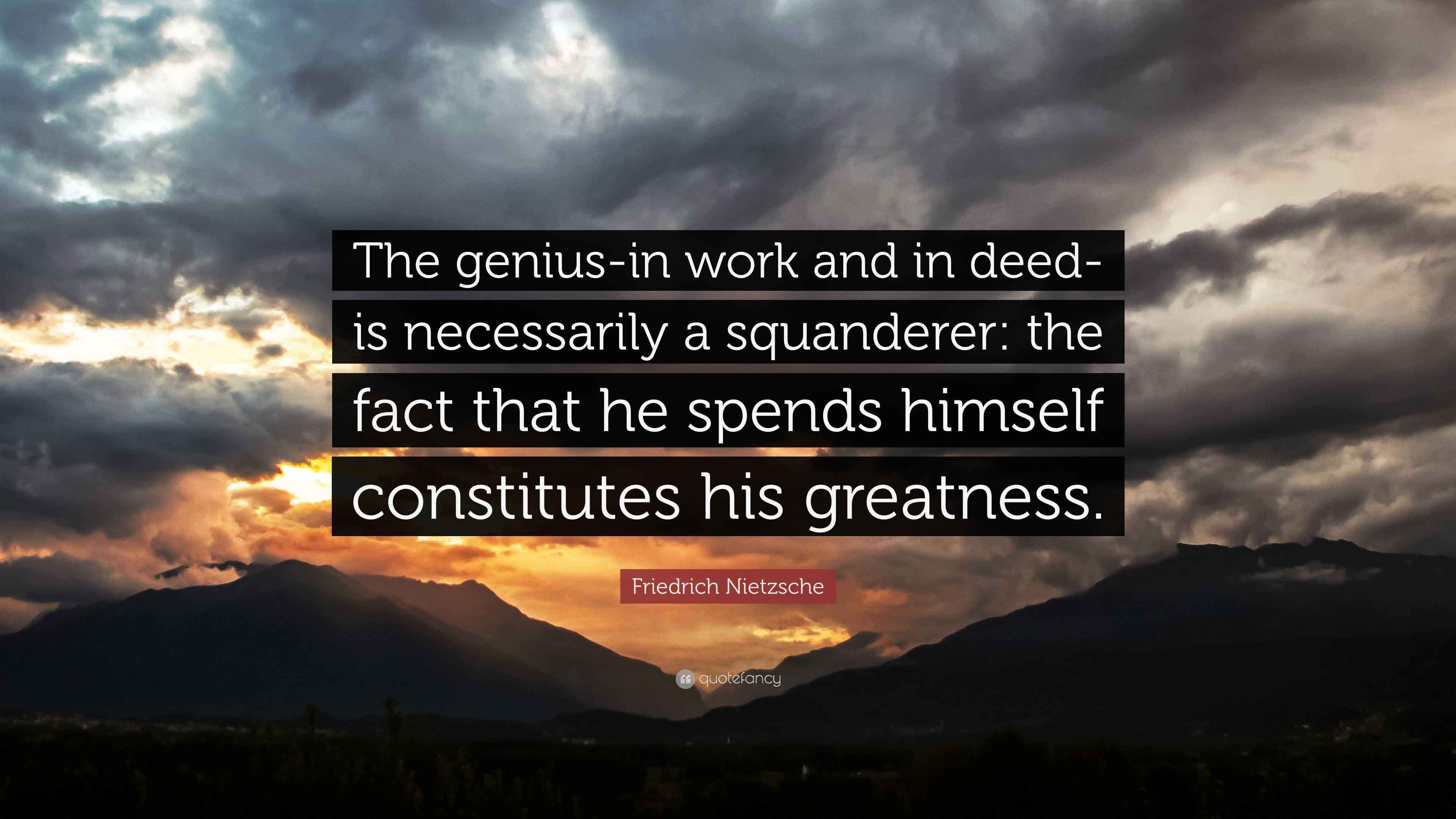
About that Fritz quote with the squandering. It contains an infinite regress of squandering in order to be the great genius. For, if one wanted to be the greatest genius possible one would have had to squander oneself immediately and completely, since, if the amount of squandering determines the degree of great genius, the greatest genius would have to… squander himself the moment he realizes he exists in order to attain it. And then poof, he’s gone, having been completely squandered.
Then one does not squander TO become a genius. I see. I thought the implication that one ought to try to squander to become greater genius was there.
The quote looked more like a life-hack than a mere truism. Like he was sayin’ “go for it!” Maybe it was the huge magnificent sky behind it that got me all excited.
That is still not absolutely free, as self-cause is still a cause. And what caused one to cause oneself? To be absolutely free in this sense would be to have no cause.
But like I said I dont distinguish much between freedom and the feeling of freedom. (Related to power/feeling of power)
Yes. In his terms, he valued logic as a means to increase in perfection.
“Pleasure is the transition of a man from a lesser to a greater perfection.”
Logic is a means to power/truth (whatever it is, illusion. or not, truth holds power), but in being such a strong means it is loveable.
Speculative… and what does ‘type’ mean in that case? I think my point stands.
Beauty and strength and health in oganisms are related, I agree with that much. I don’t think beauty is just a reminder. But if I think a car is beautiful, is that because it reminds me of the rise of my type? If I think a melody is beautiful, does the same apply?
“Again, to what N says about hatred, yes -
to last part of this quote, no - I think sickly, asymmetrical, gnomish people consider healthy, symmetrical, Greek-god-shaped people to be beautiful, and don’t consider themselves beautiful.”
Do you disagree with this?
Yes, that was my point.
What of the point about the doe?
(Im repeating some parts youve left alone because theyre meaningful to my criticism of N’s perspective on beauty)
I think N also says that the profound loves masks.
I agree that it is feminine to want to wear an agreeable mask (not female per se) - but not convinced woman is less capable of seeing through masks… knowledge of the function and nature of masks may help her recognize truth. But I don’t claim any position here.
Why not? I think they very well might. For birds. Ive seen much self awareness in some, like crows. Less so city pigeons.
It would be interesting to see if stunted city pigeons seek out other stunted ones as well. I would guess not.
Was the same phenomenon you noted observed for caprines?
Thats what I said: "acting on envy, destroying that which is beautiful simply because the destroyer is not, I think is probably what Jesus meant […]."
It is not clear to me how the examples of dissimulation you give ties into being beheld as beautiful. Do you mean dsissimulation of being ugly?
Not sure what you mean. I was not arguing that what is beheld as ugly is actually beautiful. Juat arguing that it isn’t wholly subjective, but a matter of health and such objextive factors, and that health isn’t relative to a type.
I know as much as that some in between forms somewhere between some species have been found.
I mean that I don’t underatand why apes aren’t continuing to evolve in the direction of humans, or other forms, for example.
In general for a species to evolve into another, many 1000s of generations of very numerous poopulatons of in between forms would have to exist to spawn enough functional mutations to result in the next functional species. Because the vast majority of mutations are disfunctional (cancers, etc), and the vast majority non hereditary (even though susceptibility to them is in some cases) and massive quantities of functional mutations are required to go from one species to another.
So in terms of logisitics, theres still plenty unresolved about it.
Tempted to grant this but Im not sure. I think ill health has definite general symptoms. Especially if we can compare it with healthy speciments.
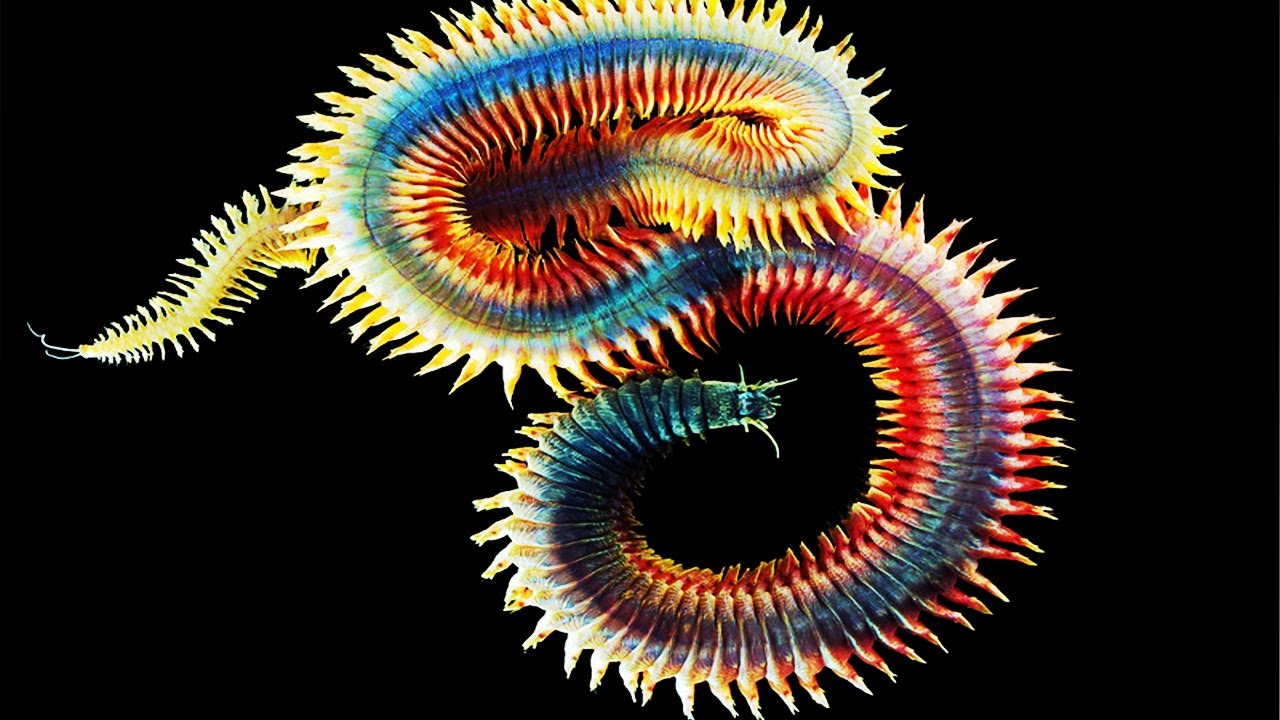
And yes tigers seem anxious, and less beautiful than say, Puma… and there is ugliness in a creature living in fear, on the other hand it is easy to find a few unfortunate snapshots of a tiger, but hard to find a picture of a beautiful worm. Also, much of cats beauty is in their movement.
I disagree with this reasoning; I think a self-cause would be an infinite regress. What would cause a self-cause to cause itself would be itself. And thereby, it would be able to freely choose whether to cause or not to cause at all.
I suppose my speculation still supposed a single direction to the rise of types. Your man in a bikini would then be more evolutionarily fit than mine. But if even mine can be healthy, it might be the other way round: yours might see the rise of his type reflected in mine, because to be so fat and hairy yet still be healthy could be a fitness indicator (cf. the “handicap principle”).
Yes, exactly that! Look:
“[W]hatever reminds us in the least of degeneration causes in us the judgment of ‘ugly.’ Every suggestion of exhaustion, of heaviness, of age, of weariness; every kind of lack of freedom, such as cramps, such as paralysis; and above all, the smell, the color, the form of dissolution, of decomposition—even in the ultimate attenuation into a symbol—all evoke the same reaction, the value judgment, ‘ugly.’ A hatred is aroused—but whom does man hate then? There is no doubt: the decline of his type. Here he hates out of the deepest instinct of the species; in this hatred there is a shudder, caution, depth, farsightedness—it is the deepest hatred there is. It is because of this that art is deep.” (TI Skirmishes 20 end, unknown translator(s).)
The converse goes for the judgment of “beautiful”.
Yes, I don’t think it has to be true. Only insofar as the latter remind the former of the rise of their type do the former consider the latter beautiful; and only insofar as the former themselves are in decline do they find themselves ugly.
Was it? My point was that a leper is by definition not healthy, so he can never be a reflection of health. But I suppose that was still relatively short-sighted. Appearances can be deceiving, and, moreover, a leper can still be relatively healthy in respects other than his leprosy.
The doe(-eyed) woman is more or less an example of the converse, so my answer’s already implied by what I said about the leper. Nor did I leave that example alone:
If a woman couldn’t conceive reality as it is, an overman would have to value non-overmen among women, for example doe(-eyed) ones.
Like Plato’s Achilles, yes:
“To be an ace deceiver one really must know what the world is like—otherwise one might inadvertently tell the truth (think of the unwitting revelations of Hippias).”
But it’s not a problem for woman if it’s inadvertently true that she’s agreeable! (i.e., even where her mask does not cover her face, so to say.) Moreover, Nietzsche adds the following parenthesis to his thoughts on woman:
(—Given the tremendous subtlety of woman’s instinct, modesty remains by no means conscious hypocrisy: she divines that it is precisely an actual naive modesty that most seduces a man and impels him to overestimate her. Therefore woman is naive—from the subtlety of her instinct, which advises her of the utility of innocence. A deliberate closing of one’s eyes to oneself— Wherever dissembling produces a stronger effect when it is unconscious, it becomes unconscious.)" (WtP 806 end, Kaufmann ed.)
Not that I know of, but I think it might well be. And not for the reason you mention, but because they simply divine they have greater evolutionary fitness among other stunted exemplars. Humans, too, by the way.
Yes, but that’s only one way of acting on one’s envy.
Note that what I said about dissimulation (dissembling) was originally my second-guessing myself within what was already only a parenthesis. For I was reminded of these things I quoted and wrote June 23-24:
“Women’s breasts and buttocks did not evolve because hominid men happened to develop some arbitrary fixation on hemispheres as Platonic ideals of beauty. They evolved as reliable indicators of youth, health, fertility, symmetry, and adequate fat reserves. […] Now we favor conspicuously handmade spoons, with charming asymmetries, irregular finishes, and crude ornamentation, which would have shamed an 18th-century silversmith’s apprentice.” (Geoffrey Miller, The Mating Mind. How Sexual Choice Shaped the Evolution of Human Nature, pages 264 and 302.)
‘I did indeed find the inclusion of symmetry a bit odd, as that is itself a fitness indicator, so here it would be an indicator of an indicator…’
::
Anyway, the point of my second-guessing was that dissimulation of any kind, whether of beauty, ugliness, or innocuousness/usefulness, is not without cost itself (though it’s usually less costly than what it pretends to be).
I meant that the beholder need only be determined by some—or even just one—of the same standards as that which he beholds, and even this only if he sees beauty in what he beholds.
Indeed: some in-between forms somewhere between some species. And although more may well be found, still that’s all that can ever be found. It’s an exception when something is preserved through all that time and force of nature.
They are, and have always been… The “apes” of today (within quote marks because humans are still apes, primates) are not the same as the ones from which humans evolved.
Not really, since evolution has the time and the numbers on its side.
General, yes; definite, no. In some environments, something may be healthy which would be unhealthy in other environments.
Cats and humans are much more closely related to each other than either are to worms, of course. Also, cats are predators, whereas, say, lambs are not:
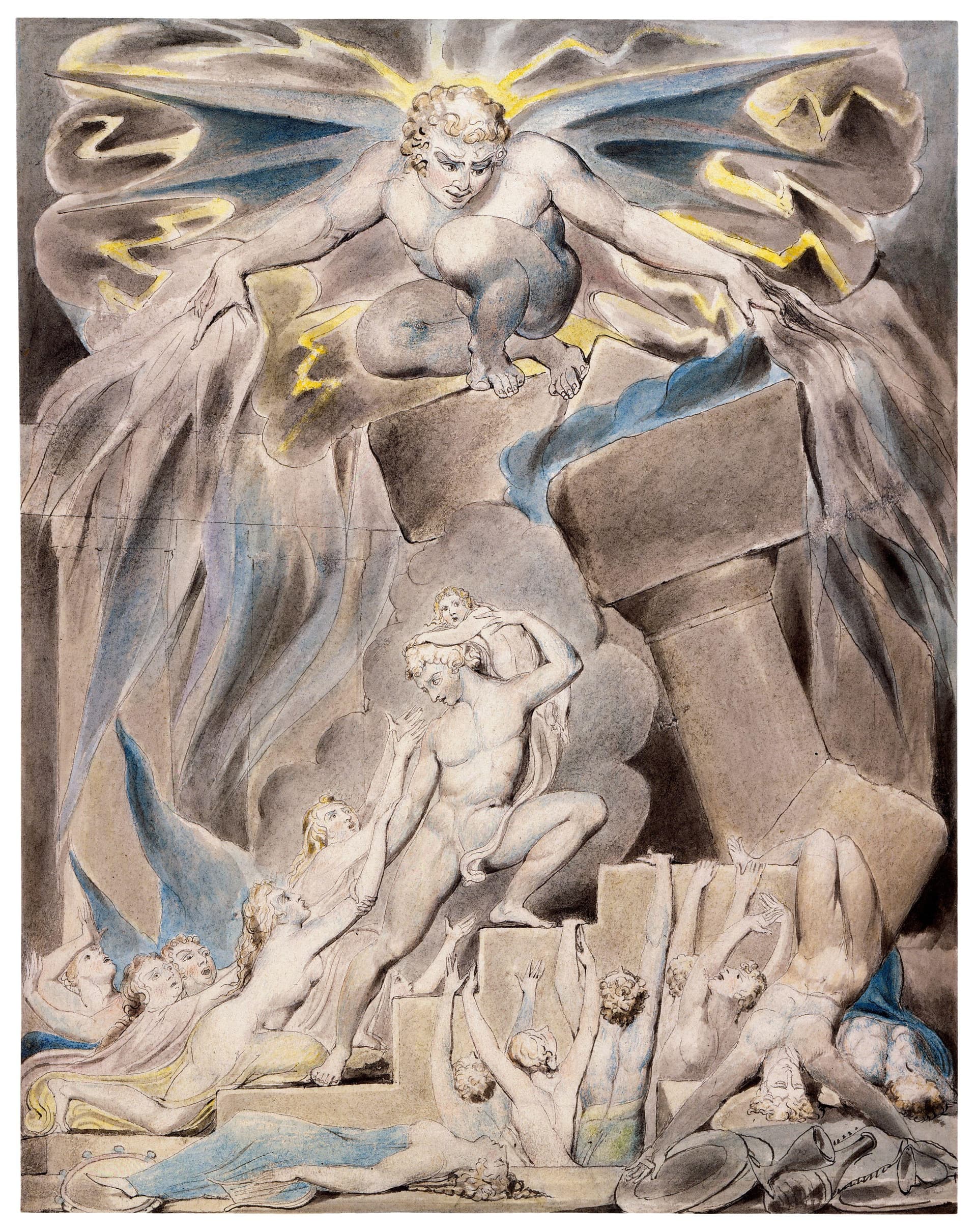
"When the stars threw down their spears
And water’d heaven with their tears:
Did he smile his work to see?
Did he who made the Lamb make thee?
“Tyger Tyger burning bright,
In the forests of the night:
What immortal hand or eye,
Dare frame thy fearful symmetry?”
 But do you really think birds have that? I think the stunted and the non-stunted birds, though they be of the same species, are different types, in the Nietzschean sense of the word. In fact, the more “unstunted” a bird is, the less well it would do growing up in a small cage—so it would not represent the rise of the stunted bird’s type, but rather its decline. And as for human people, such males as you describe really are the kings of their castles, their cages (though they’re really ruled by their “queens”, of course): they thrive in that environment…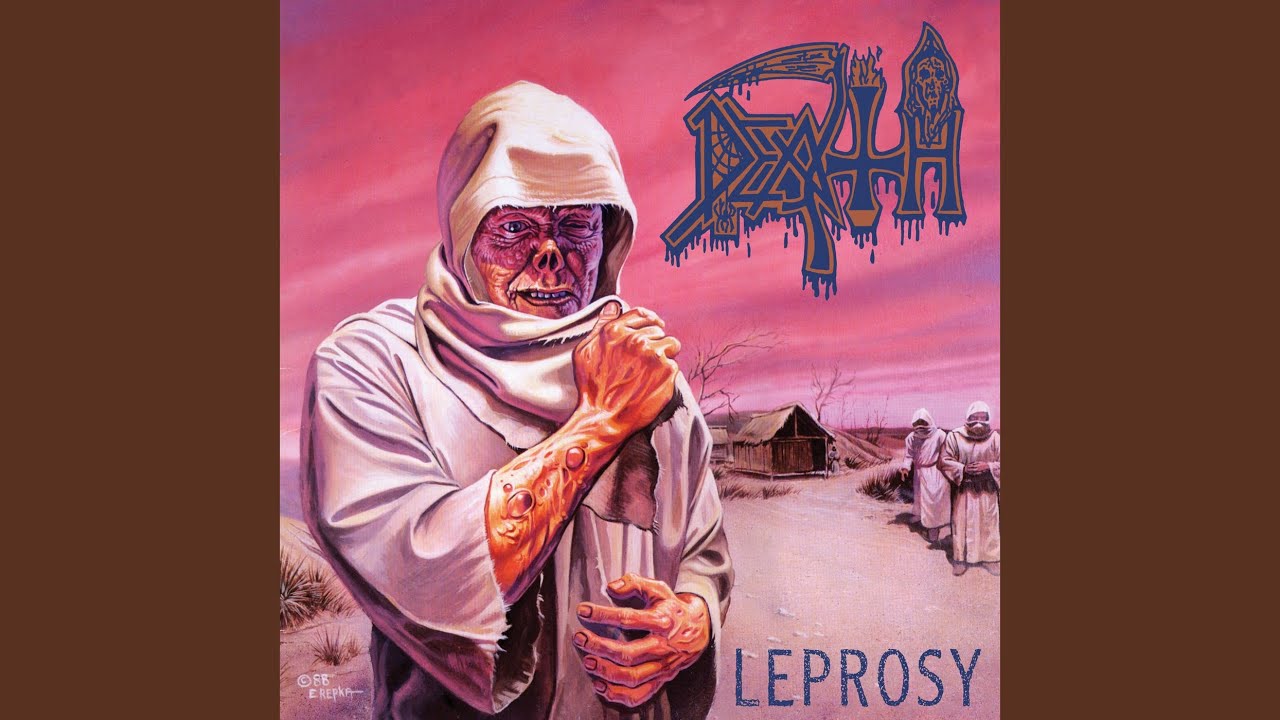




 For I was reminded of these things I quoted and wrote June 23-24: