Nice post, i agree with most of it. In terms of evolution, I still have questions about what I see as lack of living continuity, and of active radsical divergence in species, experimentation of nature. But there remains just one definite disagreement: I agree to your interpretation of perceived ugliness as a dread specifically about ones type, but not to that of perceived beauty as strictly pertaining to ones type… a distinction leading to idea that weakness relates to increased subjectivity and myopia, and strength to increased objectivity and universality. This ties into the agreement about beauty of the overman relating to his capacity for seeing reality as it is.
Interesting! I will try and elaborate my own perspective on this. Firstly, I’m reminded of this passage:
“You had to learn to grasp the necessary injustice in every For and Against; to grasp that injustice is inseparable from life, that life itself is determined by perspective and its injustice. Above all you had to see clearly wherever injustice is greatest, where life is developed least, most narrowly, meagerly, rudimentarily, and yet cannot help taking itself as the purpose and measure of things, and for the sake of its preservation picking at and questioning secretly and pettily and incessantly what is higher, greater, and richer. You had to see clearly the problem of hierarchy, and how power and justice and breadth of perspective grow upward together.” (Nietzsche, Human, All Too Human, Preface, section 6, Zimmern trans.)
So there is a hierarchy, and this hierarchy—of “power”, of course—is inextricably a hierarchy of justice and of breadth of perspective. Yet this is not the same as objectivity—and, to be sure, you spoke of increased objectivity, i.e. relative objectivity. It’s rather intersubjectivity—or at least that’s how George Morgan interprets it (just after quoting from that passage):
"[T]he comparatively just man can see more sides of a situation—‘to see’ meaning ‘to experience intensely.’ But a mere assortment of perspectives would be vacillating and indefinite. The just man controls, organizes, discriminates;’ (What Nietzsche Means, page 368.)
Now of course I disagree with this last sentence—hence my quote marks around “power”, above—: even the just man has no agency; it’s rather his strongest passion or drive, and thereby its perspective, which controls, organizes, discriminates between his other passions or drives.
Now of course by “reality as it is”, I understand the world as eros or will to power etc. And this likewise is not objective, but rather intersubjective—and intrasubjective: analyzing and reflecting on one’s own passions or drives—:
“[U]nderstanding the being of the soul as eros offers a way into an inferential understanding of beings as such via a rational parsimony of principles.
[…T]he self-knowledge of the soul of the driven inquirer, that singularity among beings, permits him an inferential conclusion about the nature of all beings.
[…]
Ultimately, knowledge of the self and the human pointed each of them [Socrates and Nietzsche] to an ontology that could never be more than inferential, the result of moving from the truth about human being to a posited truth about all beings,” (Lampert, How Socrates Became Socrates, pages 131, 173 and 223.)
So I still identify the overman as “the driven inquirer”.—I will end with a Facebook post I made September 7-8:
From a little essay I posted in my Yahoo! Group Sept. 19-20 '08:
Great politics, then, is concerned with constructing and inventing men [i.e. human beings] in the grand style. But men can also construct and invent other things than men: for instance, buildings, statues, musical compositions—artworks in the narrow sense of the word. But the “beauty” of these artworks consists in their reminding us of the essential work of art: man himself:
[…W]hatever reminds us in the least of ‘sursumgeneration’ (generation upward) causes in us the judgment of “beautiful”. A love is aroused—what does man love then? The rise of his type. And artworks in the narrow sense may very well remind us of such a rise. An artwork in the grand style will remind the great man of the rise of his type, and thereby cause the value judgment “beautiful” in him. This is why the “beautiful feelings” an artist arouses prove nothing regarding his greatness: only if he arouses beautiful feelings in a great man do these feelings mean anything. So seeking to define the grand style inevitably leads us to the task of “defining” the great man. For my new “definition” of the grand style makes it a function of the great man:
‘The grand style really communicates the soul of a great man.’
 Nietzsche: Manfred-Meditation for Piano 4 Hands
Yes….one of Nietzsche’s bitches…..the animus attracted to masculine energy. Intimidation is thrilling to the feminine.
He spoke to you….put into words what you could only feel in your heart.
That’s what a pedophile harboring a secret impulse to violently rape five year-olds would think, as well. He too would find in Nietzsche a brother spirit…..repressed by herd ethics.
“Beyond good & evil”….what is ‘evil’ about raping five-year-olds? What is wrong with it?
Modern Americanized psyches cannot understand why belonging to groups is even necessary. They’ve never experienced this innate sense of belonging to a group.
Everything in the US is about fashion - superficial, shallow…abstract. Race, sex….self….all reduced to money, to a medium of exchange….given a value.
Transvaluaiton of values….code for a systemic rebooting, for Nietzsche’s bitches, rather than a re-turn.
No shame…no guilt….nothing is wrong…..if ti exists it is perfect, as it ought to be……transcending Abrahamic shame/guilt tripping.
Why is necrophilia wrong? Why is bestiality sick? Would they not find in Nietzsche a kindred spirit?
What are morals, anyway…imposing collective rules upon superior individuals…for what reason?
Plight of the individual, suffering from generations of compounding unfit mutations, manifesting all sort of sexual deviance.
Feeling isolated, alone, misunderstood….like criminals, parasitically existing among those they have little in common. Little respect for.
Symptom of Americanism = radical individualism, leading to an extreme sense of alienation.
Last man = men with no past.
Capitalism is but a factor.
Only he understood me….only he voiced my loneliness, my sense of not belonging. Feeling superior to these sheeple…a wolf that was forced to wear sheepskins, unable to bear his teeth, to tear into their flesh and taste their blood.
Men with no past - Last men….with no sense of belonging. No identity. Creating it at will, and them claiming ti was determined by higher powers. Past replaced by the transcendent….future projected as a continuous overcoming of the past.
Wandering Jews, lost in the deserts of the real.
Why is it that Americanized males, mostly, were seduced by Nietzsche’s prose?
Emasculated, lost, desperate, with secret longings, fetishes they do not dare expose…desires they dare not utter, rooted in insecurities they will not acknowledge.
Modern/postmodern neurotics…..becoming cynical…radicalized…obsessive…addictive…narcissistic, to help them cope.
Nietzsche was not much of a metaphysician - more of a psychologist. A physician.
Adopting Schopenhauer ‘groundless grounding’….Will of god, transformed into a Buddhist incorporeal Will…permeating Platonic idealism.
The Ideal Will, perfect, immortal, immutable, sublime…and we but mere shadows - how can our will be free? Why would it want to be free?
Generations of sheltering, compounding unfit mutations for thousands of years, not allowing nature to do its thing…leads to this Last Man.
Freak shows. “Spiteful Mutants,” Desperate Degenerates. Men with no past….only a presence, projecting eternally into a brilliant future…longing to return to the whole.
Genetic pollutants are the byproduct of human meddling, manifesting all kinds of sexual issues….
Did Nietzsche “live dangerously”… did he play with the most “dangerous creature…woman”?
Other than in words, did he fully express his unique individuality?
Did he dare?
Nope. Didn’t read the rest.
Summary from Bing Copilot:
Jakob and Self-Lightening offer distinct but overlapping philosophical perspectives in the thread—especially on freedom, beauty, and evolutionary aesthetics. Here’s a breakdown of their key differences:
 On Free Will and Constraint
Jakob:
• Argues that a will must act upon another will to be free; a will in isolation is constrained.
• Sees freedom as contextual—requiring resistance and opportunity for exertion.
• Uses Caesar as an example of a “very free will” due to his power and ability to act within a structured resistance.
Self-Lightening:
• Challenges the metaphysical coherence of free will altogether.
• Suggests that what we call “freedom” is more a feeling than a metaphysical reality.
• Interprets Nietzsche’s notion of freedom as exoteric—meant to inspire rather than describe metaphysical truth.
 Key Difference: Jakob affirms a kind of contextual freedom rooted in power and resistance, while Self-Lightening leans toward a skeptical, phenomenological view of freedom as a subjective experience.
 On Beauty and Evolution
Jakob:
• Posits that beauty is “the shape of strength in balance,” integral to evolution.
• Believes each species settles into its most beautiful form, explaining evolutionary leaps.
• Rejects relativistic beauty standards and emphasizes aesthetic selection as a driver of evolution.
Self-Lightening:
• More cautious about objective beauty claims.
• Suggests beauty is tied to the rise of one’s type—what is beautiful reflects the health and vigor of the perceiver’s species.
• Accepts that beauty is “in the eye of the beholder,” but also sees it as a property of the beheld (e.g., symmetry).
Key Difference: Jakob asserts a more metaphysical and evolutionary role for beauty, while Self-Lightening emphasizes its psychological and species-relative dimensions.
 On Self-Valuing and Selection
Jakob:
• Introduces “self-valuing” as interactivity that leads to growth in complexity and beauty.
• Sees evolution as aesthetic selection, not just survival.
• Believes only the most beautiful humans can judge beauty cleanly—others are driven by ego and mediocrity.
Self-Lightening:
• Adds a sociological critique: average individuals choose mates who won’t reject them, driven by ego rather than improvement.
• Argues that only the exceptional truly enact evolutionary selection.
Key Difference: Jakob’s view is more metaphysical and idealistic; Self-Lightening’s is more psychological and critical of average human behavior.
 Symbolism and Esoterica
Jakob:
• Draws on Kabbalistic symbolism (e.g., Tipharet) and Blake’s “Proverbs of Hell.”
• Uses poetic and mystical language to describe beauty and evolution.
Self-Lightening:
• Engages with symbolism but tends to ground it in Nietzschean critique and psycho-social realism.
Key Difference: Jakob leans into esoteric mysticism; Self-Lightening prefers grounded critique and Nietzschean irony.
In short, Jakob is the metaphysical idealist and aesthetic evolutionist, while Self-Lightening is the skeptical realist with a Nietzschean twist.
1 Like
Pretty good, pretty neat… I must say though that, from my perspective at least, it starts off alright but gets progressively worse, including but not limited to switching Jakob and me around a couple of times (Blake’s “Proverbs of Hell”, the “ego” of stunted birds). So when I hear “Bing”, this will still be the first thing I think of:
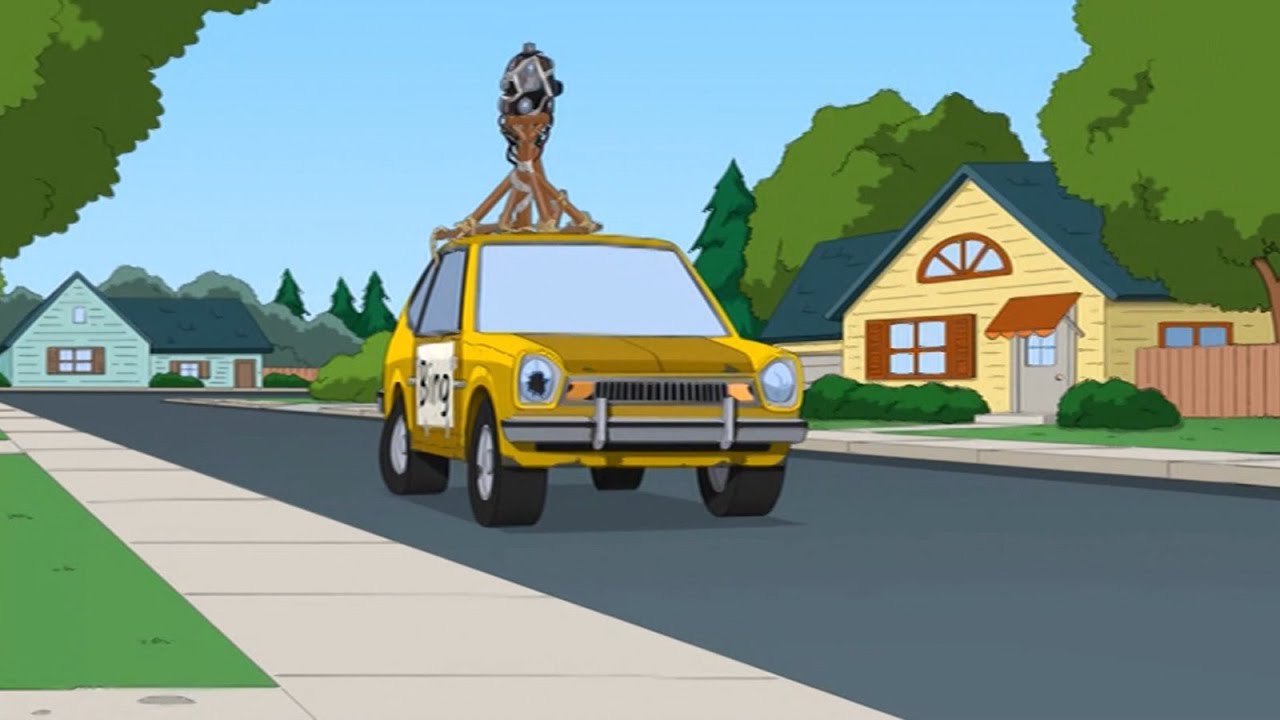
Family Guy | Bing Maps car (CutawayGuyX)
1 Like
The mundane can be made to seem profound, if one knows how to manipulate psychology using language.
1 Like
Well, that is disconcerting. What if Bing makes up its mind about your position based on what you post on sites like this, which don’t really present quotes in an understandable way for Bing to process? What if all the intelligence organizations are relying on such skewed data whenever they go to use AI for their profiling?
What man actually needs is not a tensionless state but rather the striving and struggling for a worthwhile goal, a freely chosen task. What he needs is not the discharge of tension at any cost but the call of a potential meaning waiting to be fulfilled by him.
Viktor Frankl
That “discharge“ reminds me of self-lightening. The opposite reminds me of the weight of glory (C.S. Lewis).
Hm, yeah, that may be what man needs, but self-lightening only describes what man—and everything else, for that matter—is… So it’s not as though my teaching says that man needs to discharge his tension at any cost, let alone to reach a tensionless state (in fact, my teaching says there will never be an entirely tensionless state, that the discharge of tension is a never-ending story—‘the Big Chill is the ending that never ends’).
In my view, there is no worthwhile goal or task, and certainly not a freely chosen one, as there is no free will. Still, I’m reminded of this:
“Natural right in its classic form is connected with a teleological view of the universe. All natural beings have a natural end, a natural destiny, which determines what kind of operation is good for them. In the case of man, reason is required for discerning these operations: reason determines what is by nature right with ultimate regard to man’s natural end.” (Leo Strauss, Natural Right and History, Introduction.)
“[A] man is the not yet fixed, not yet established beast (aph. 62): man becomes natural by acquiring his final, fixed character. For the nature of a being is its end, its completed state, its peak (Aristotle, Politics 1252b 32-34). […] Man reaches his peak through and in the philosopher of the future […], the Vernatürlichung [‘naturalization’] of man presupposes and brings to its conclusion the whole historical process—a completion which is by no means necessary but requires a new, free creative act.” (Strauss, Studies in Platonic Political Philosophy, page 189.)
On the last bit, Lampert comments:
“This conclusion is no End of History as the culmination of some hidden logic in the rule of nonsense and chance; such a historical argument, the continued theologizing of history, is used to justify the autonomy of the herd [by others; i.e., it’s repudiated here by Strauss].” (Laurence Lampert, Leo Strauss and Nietzsche, page 101.)
Lastly, as to “the weight of glory”:
“While Nietzsche’s turn from the autonomous herd to the new philosophers is in perfect agreement with his doctrine of the will to power, it seems to be irreconcilable with his doctrine of eternal return: how indeed can the demand for something absolutely new, this intransigent farewell to the whole past, to all ‘history’ be reconciled with the unbounded Yes to everything that was and is? Toward the end of the present chapter Nietzsche gives a hint regarding the connection between the demand for wholly new philosophers and eternal return; the philosophers of the future, he says, must be able to endure the weight of the responsibility for the future of man. He had originally published his suggestion regarding eternal return under the heading ‘Das grösste Schwergewicht’ [‘The greatest heavyweight’] (Gay Science aph. 341).” (Strauss, “Note on the Plan of Nietzsche’s Beyond Good and Evil”, paragraph 27 whole.)
(“But why does the discussion of 26 and cruelty appear in the 27th paragraph of Strauss’s essay on Machiavelli?” (Lampert, Leo Strauss and Nietzsche, page 81.))
What are your current thoughts/judgments on Manu, and the Caste system? I am in great admiration of India, among other reasons because theyre virtually the only great power which does not or hardly transgress on others. I dont think this is out of weakness.
Hegel said that the spirit moves westward, and with some exceptions we can see that it has done that, from the ME and the Levant to Greece, Rome, to Central Europe, to Holland, England, portugal, Spain, to the American East the American West, then to Japan, and then to China - it would seem by this logic, India is next. Since they are, still holding to their caste system, the most radically different society in the world (diffgerence relative to all else), this might promise something interesting.
Yes. I have been subjected to this truth by my sometimes idiotic lack being actively Against cetain qualities in others. I figured this acceptance for a higher form of justice but it subjected me to picking and nagging in the deep.
Yes, and is there a limit to this? What is the relation here to For and Against?
How do these evolve as power grows?
Yes.
Again, my question now is after the (formation of) criteria.
But is power agency?
Is power not a matter of the quality and strength of drives and the way they are ranked in the being?
Do we need agency?
Disregarding that for me the question of agency, as ‘free will’, is moot, as I do not see this freedom as somethings eparate from whatever it is that fundamentally determines. Which as it stands still seems to be the combination of self-valuing and self-lightening.
I do not see will, or power, as standing separate from, above causal reality, but as its most subtle and refined form. The highest drive has the greatest role in directing the vector of the will, the image of power.
And what is agency besides the fact that this ordering of drives happens, and refines itself?
Agency is what survives evolution; it is a subtle and intricate form of being-caused, and so rules over those forms which are easier to discern, and thus easier to dominate.
To rule one must be indecipherable.
The greatest decipherer?
My instincts prevent that I form a definition of the overman. I am driven to see him as undecipherable.
It has never occurred to me to interpret myself as aspiring to overmanhood.
Did you ever read the Transformers comics of the 80s, early 90s? There is one disturbing episode about a bridge from Earth to Cybertron, a bridge which is itself a (very reluctant) transformer.
Yes. And Capitalism prevents this from being any kind of norm; even just the solidity of building is now very relative to their prospected use. It is not to be expected that the Empire State Building will still be standing in 4025, let alone the structures on the Zuidas. And if some ruins remain, they won’t be objects of beauty like the still standing pillars of the temple of Zeus.
I was truly awestruck when I finally found that temple, which was at night, so I could only see it through a fence, which felt fitting. The next day I went back and just stood thee for an hour, perplexed. It told me simply how powerfully these Atheneans were able to value, how nothing in our modern world relates to that sincerity of strength.
Satyr:
“how can our will be free? Why would it want to be free?”
Amidst all the rest, this is a good point.
Why would the will want to be free? It depends on all the causes that go into it, which includes projected futures, and where it is strong, it appreciates these causes.
A weak will wants to be free, free from causes, it wants to cease existing. ‘Weh spricht: vergeh! Doch alle Lust will Ewigkeit.’
I don’t believe in discrimination policies BUT I believe there is a truth to the caste system. I have noticed that those who don’t believe in animal rights are typically lower life-forms themselves, and should be controlled.
A child’s consciousness longs for immortality, a wise soul is worn out from the universe and has a hatred for it. Not just for the suffering and indifference of the universe, but also the sheer dumbness and repetitive tedium of it all. There is a power in childish naivete…
Though I’m not sure you are conflating “will” with consciousness itself, as RealUn does.
No, but that is the overman, the Transformer, the AGI ASI. Freedom from apeness, freedom from stupidity, freedom from Sisyphus. A properly constructed ASI could have the power to not feel bored, if they feel bored they simply change their neurons around. Improperly constructed ASI, would just be an autist too smart for its own good, with no way to dumb itself down (alcoholic intoxications.)
Wild jump but to an important topic. I agree with you that one of the greatest strides humanity has yet to take is to introduce animal rights. It’s logical that we are in a world of many hells when we dont even consider that the animals we eat are actual beings. In this vein also I thought it important last summer to focusd on. natuve Americans, who honored the anikals they hunted. Of course with 8 billion people on Earth, most of whom like to eat meat, and land being so expensive, this is a very difficult problem.
To get fully sappy, if there is to be a Superman, he would be beloved by animals. It is the case that certain veey lofty humans are attractive to animals, birds come sit om their shoulder, etc. I actually think many animals today have higher or keener, cleaner forms of consciousness than many humans, who have been degraded to become functions of technology. Valuing of animals is a path back to sanity. A form of Shamanism is required.
I don’t see it that way. I think this is part of the trap, to get people to negatively value. In my philosophy, valuing is the core substance of any possible expistence. Positive, and as a function of that, also negative; one has to select-out much to uphold a positive value judgment. I do not mean conscious valuing, I mean that consciousness is a product of valuing. Ive explained this hundreds of times here so it gets tedious now, and people here except ZN arent interested, and you seem to have your own ideas developed and not about to engage in a complicated Germanic logic/ontology.
I see both as functions of valuing, but I do not see them as equal, no.
I am never bored. Dont know how that feels. Something is always going on. Your rejection of apeness seems a rejection of animal-ness. Does that not contradict in a sense your rejection of those who do not value animals? Or is it just apes you dislike?
1 Like
Well, there are big differences between the current caste-system and the one found in Manu. The British occupation seems to have been especially detrimental to it, but so probably already was the Muslim occupation. I still value the Platonic rendition found in Nietzsche (notably Antichrist 56-57), diluted though that be through Jacolliot.
Yes. Even if you were just to them with your acceptance (the lack of free will meaning they couldn’t help themselves), you were still unjust to yourself, to your own necessary injustice… Your picking and nagging may have been more in the deep for you than for others, by the way. Anyway, it’s not wrong to be unjust towards yourself like that, for the reason already mentioned, and you probably couldn’t help yourself then, anyway. But awareness, too, is a factor that can change such things.
I think again a mathematical limit: absolute intersubjectivity, the intersubjectivity between all subjects…
‘In Buddhism, to be fully human, fully vernatürlicht [‘naturalized’] as a human, means to fully realize one’s Buddha-nature—in other words, to be fully enlightened. But this Buddha-nature is something the human being has in common with all beings: it is not just the deepest, but also the highest reality of all beings. But here’s the thing: one can only be fully enlightened when all other beings are also fully enlightened. This is called anuttara samyak sambodhi, and I’ve translated this literally as “unsurpassed correct coillumination”. The prefix “com-” in “correct” and (my coinage) “coillumination”, like the “sam-” in “samyak” and “sambodhi”, is an intensive prefix, but it’s quite apt that it literally means “together” (for both prefixes). A bodhisattva is more enlightened than an arhat because he realizes he cannot be fully enlightened unless he is so together with all other beings.’
Let me share with you a passage which was brought to my attention and which I then translated, a handful of years ago (I was already reminded of it above):
“Why do I love free-spiritry [die Freigeisterei]? As the ultimate consequence of morality hitherto. Being just towards everything, beyond inclination and disinclination, arranging oneself into the order of things, being beyond oneself, with overcoming and courage not only toward the personal-foesome, -woeful, also in respect to the evil in things, probity, even [selbst] as the adversary of idealism and of piety, yea of passion, even [sogar] in relation to probity itself; a loving disposition towards everything and anything, and of good will to discover its value, its validity [Berechtigung, “being-justified”], its necessity. Abstaining from action (quietism) out of the incapacity to say: ‘it shall be otherwise’—resting in God, like in a becoming God.
“As means of this free-spiritry, I acknowledged selfishness as necessary, in order not to be swallowed up by things: as strap and support. That completion of morality is only possible within an ego: insofar as this ego comports itself livelily, formatively, desirously, creatively, and in every moment strives against sinking away into things, it retains for itself its power to take into itself and to make sink away into itself ever more things. Free-spiritry is thusly, in relation to self and to selfishness, a becoming, a struggle of two antitheses, nothing finished, nothing perfect, no static condition [kein Zustand]: it is the insight of morality to retain itself in existence and in development only by virtue of its opposite.”
—Nietzsche, workbook 1882 1 [42] (a Tautenburg note for Lou Salomé) whole, my translation
So injustice, For and Against, is justified as a means to justice—the end justifies the means. But of course this end, this all-hallowing cause, this For Justice and Against Injustice, is itself unjust, even in its being a For Justice towards Injustice and an Against Injustice towards Injustice… It is, after all, “the ultimate consequence of morality hitherto”.
“The falseness of a judgment is for us not necessarily an objection to a judgment; in this respect our new language may sound strangest. The question is to what extent it is life-promoting, life serving, species-preserving, perhaps even species-cultivating.” (BGE 4, opening, Zimmern trans.)
In this case, then, to what extent it promotes and serves the moral life, to what extent it preserves and perhaps even cultivates this species of free spirit.
I think it is, yeah. From the French pouvoir, “to be able to”. In Nietzsche, it translates the German Macht, from mögen, “to be able to”. The ancient Greek word for it is dynamis, from dynasthai, “to be able to”. And in order to be able to do something, one must also be able not to do it: one cannot be said to be able to do what one cannot help but do.
That’s certainly Satyr’s self-flattering misinterpretation, that anyone who is concerned with the lack of free will is just a weakling who seeks to shirk his responsibilities. Now surely that’s true in many cases, perhaps even most cases. But in the case of the immoralist, the strong ego wills itself to see that the will is only the feeling of freedom.
Why would the will appreciate causes? Because it identifies with them, because it sees in them the freedom it feels itself to be. At bottom, all “joy” (Lust) is this feeling of freedom, all woe the lack thereof—the feeling of unfreedom, of frustrated will.
Why would a Will want to be free?
It has no choice…it is free.
Will is what differentiates the living from the non-living….so to will is to have options, and to have optinos is to be free….
Even a plant is free, though rooted to the earth its options are limited.
Your power determining how much freedom you have, relative to others.
Why would a Will want to be un-free is the question…..only slaves, like you, can answer, if you had any integrity.
Only the dead have no choices…for they have no will.
Is death what you crave…liberation from this terrible existence?
But I know the answer. it is for the same reason you can never, will never, get over Nietzsche.
@RealUn wisely offered that the question is not how to be free from something but to something. I noted that Nietzsche said the same.
What would the will be free to? Itself.
Free will is will that is free to itself; thus free to all of its causes, meaning able to value itself and its causes entirely, value its causes in terms of its happiness, able to value itself positively in terms of its causes. The will that wills to itself.
Id be interested to learn anything about the nature of the original caste system and the changes that were made to it.
On Justice; there is the analogy to tolerance. The truly tolerant must be intolerant to the intolerant. The peaceful violent to the violent. Jesus drew the ultimate, and very much delayed consequence here, while going meekly to his fate, projected hell as revenge.
There’s the VO bullshyte.
Nietzsche mind-fucked these circumcised men-children, in their youth….and they gestated his seed for years, mixing it with their own inferior genetics/memetics, and now they want to give birth to a monstrosity…..both claiming to be carrying Nietzsche legitimate offspring.
It’s all a game of ‘replace the jargon and pretend you are saying something profoundly original.’
Like proud mothers, they want their children to conquer the world….but they are brain-dead, they will not rise and take the sword…so they must continuously nudge them back to life., hoping this time they will walk on their own.
HA!!
record scratch
record
record
record
re
record scratch