I’m wondering if anybody knows the meaning of this symbol.
I think it might be the Anqa Bird (Gryphon, Griffin, Phoenix, the Simurgh in Persian) as per an Islamic manuscript shown below:
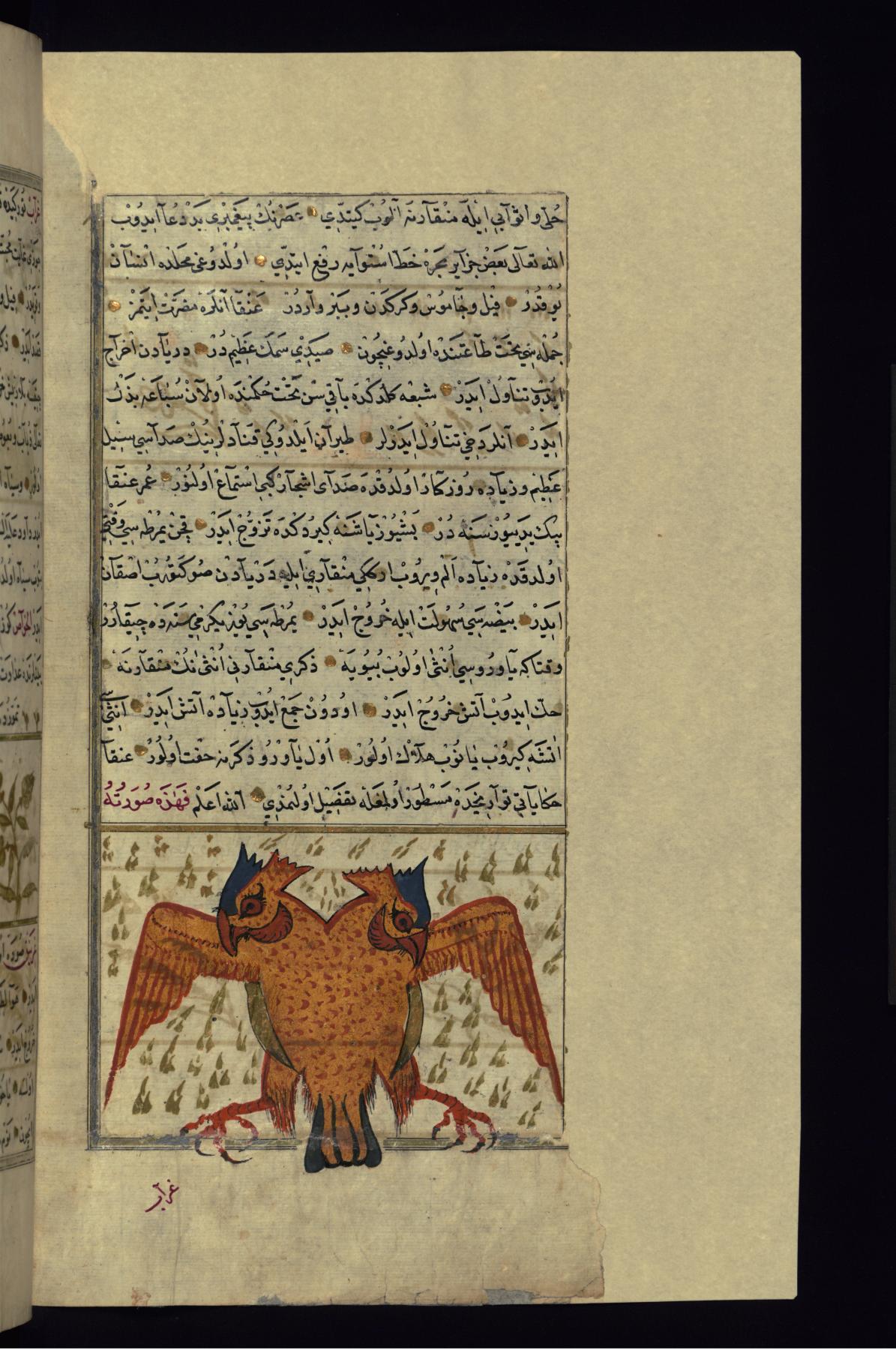
… but there are way older depictions too. However, these too may also be the Anqa Bird. Even if it is the Anqa Bird l’m wondering why it is depicted with two heads, as far as l know the Gryphon is a lion with an eagle’s head?
Culled from Wikipedia with minor detail added by myself:
BRONZE & IRON AGE
Many-headed mythological beasts and bird creatures frequently appear in the Bronze Age and Iron Age pictorial legacy of the Ancient Near East, especially in Mesopotamia:
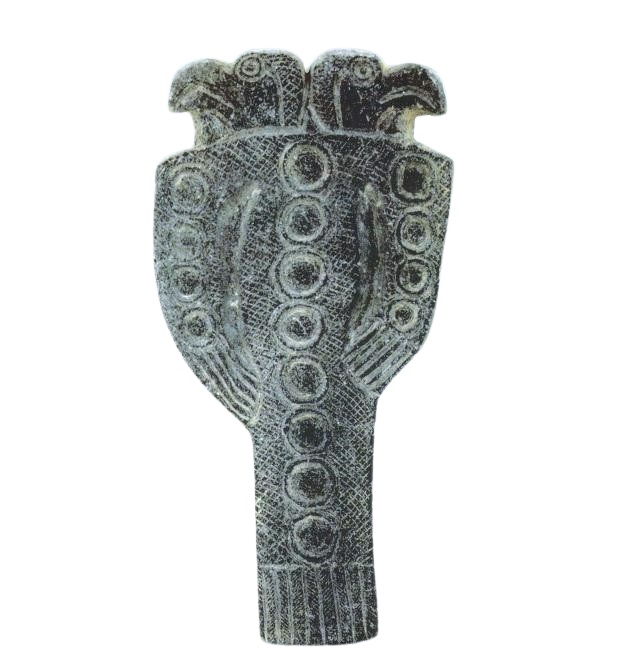
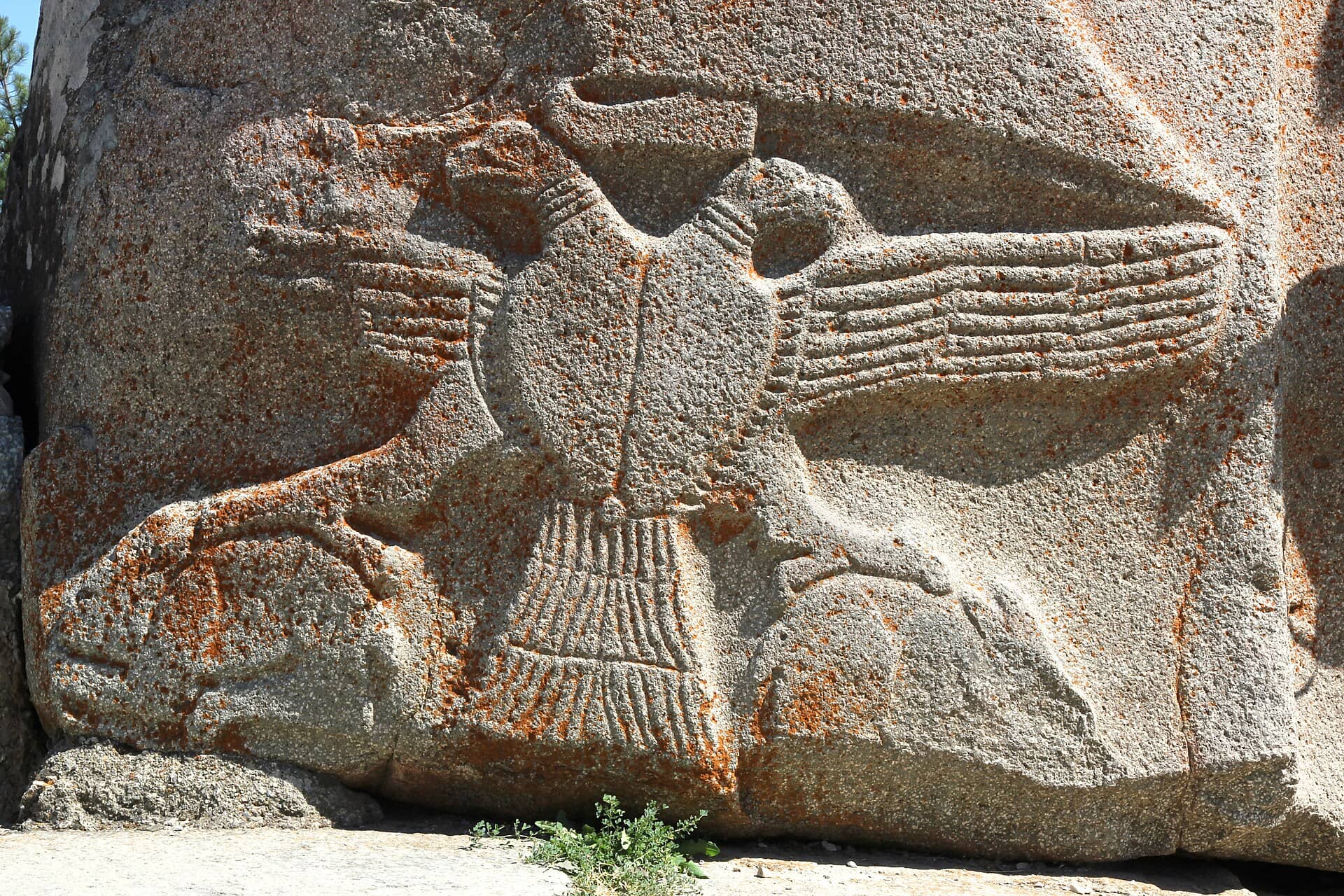
They were later adopted by the Hittites. Use of the double-headed eagle in Hittite imagery has been interpreted as “royal insignia”. A monumental Hittite relief of a double-headed eagle grasping two hares is found at the eastern pier of the Sphinx Gate at Alaca Hüyük:
In Mycenaean Greece, double-headed eagles appear on Mycenaean pottery.
Bactria–Margiana Archaeological Complex
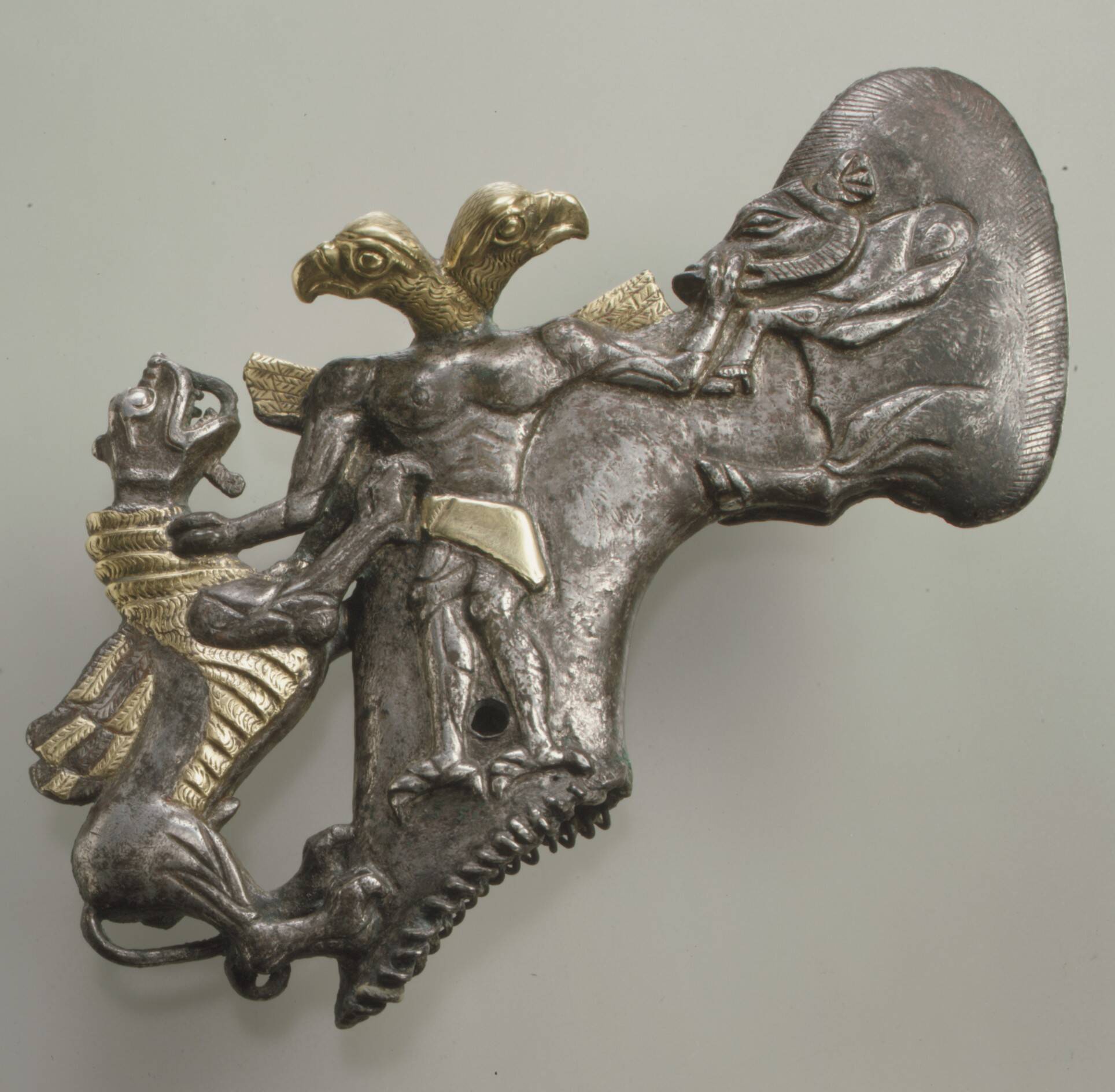
One of the earliest known depictions of a double-headed eagle appears on a ceremonial shaft-hole axe head from the Bactria–Margiana Archaeological Complex (BMAC), dated to the late 3rd and early 2nd millennium BCE - see below:
MIDDLE AGES
After the Bronze Age collapse, there is a gap of more than two millennia before the re-appearance of the double-headed eagle motif.
The earliest occurrence in the context of the Byzantine Empire appears to be on a silk brocade dated to the 10th century, which was, however, likely manufactured in Islamic Spain; similarly early examples, from the 10th or 11th century, are from Bulgaria[ and from France.
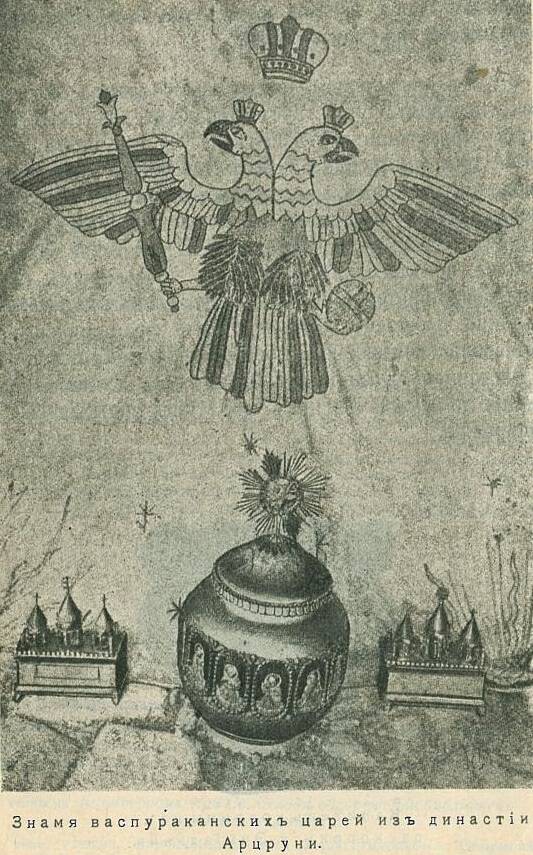
The double-headed eagle device was used in the flag of the Armenian Kingdom of Vaspurakan (r. 908–1021) - see below:
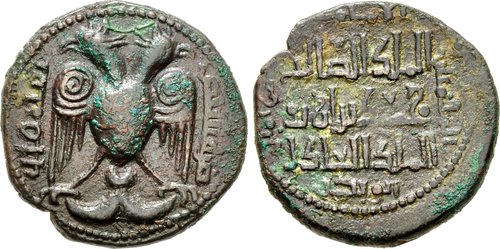
It was also minted on an Abbasid coin c. 1213-1214 CE:
Adoption in the Byzantine Empire
The early Byzantine Empire continued to use the (single-headed) imperial eagle motif:
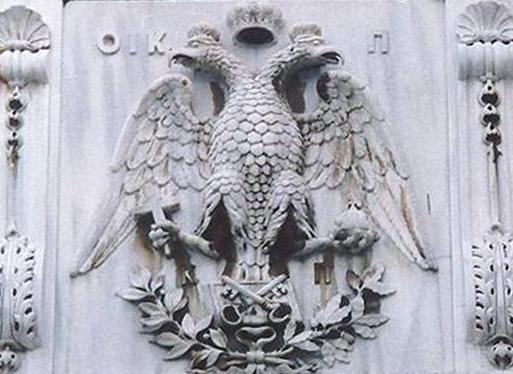
The double-headed eagle appears only in the medieval period, by about the 10th century in Byzantine art, but as an imperial emblem only much later, during the final century of the Palaiologos dynasty. In Western European sources, it appears as a Byzantine state emblem since at least the 15th century.
Adoption in the Turkic and Muslim world
The double-headed eagle motif was adopted in the Seljuk Sultanate of Rûm and the Turkish beyliks of medieval Anatolia in the early 13th century.
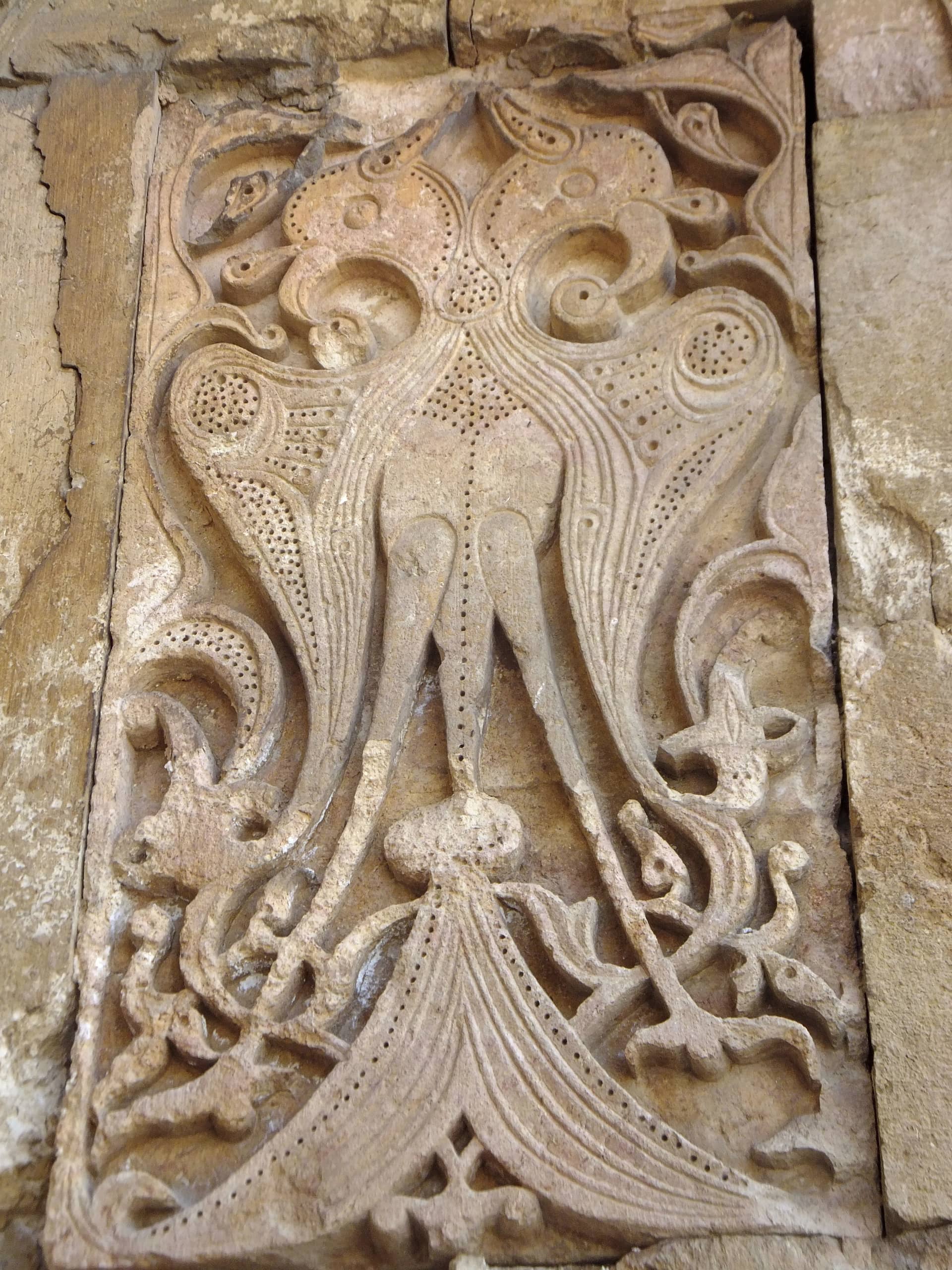
A royal association of the motif is suggested by its appearance on the keystone of an arch of the citadel built at Konya (Ikonion) under Kayqubad I (r. 1220–1237) - see below:

Adoption in Christian Europe
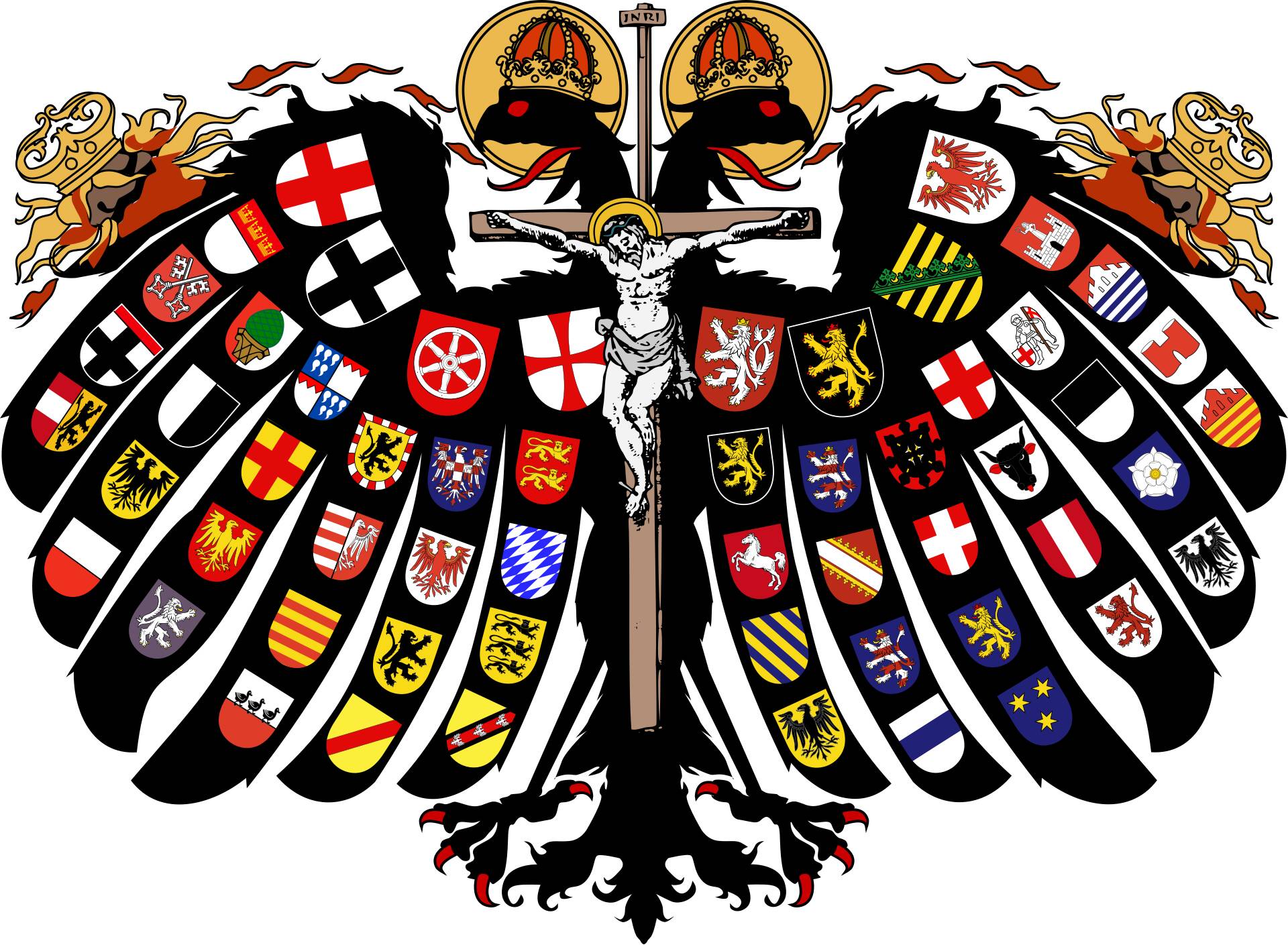
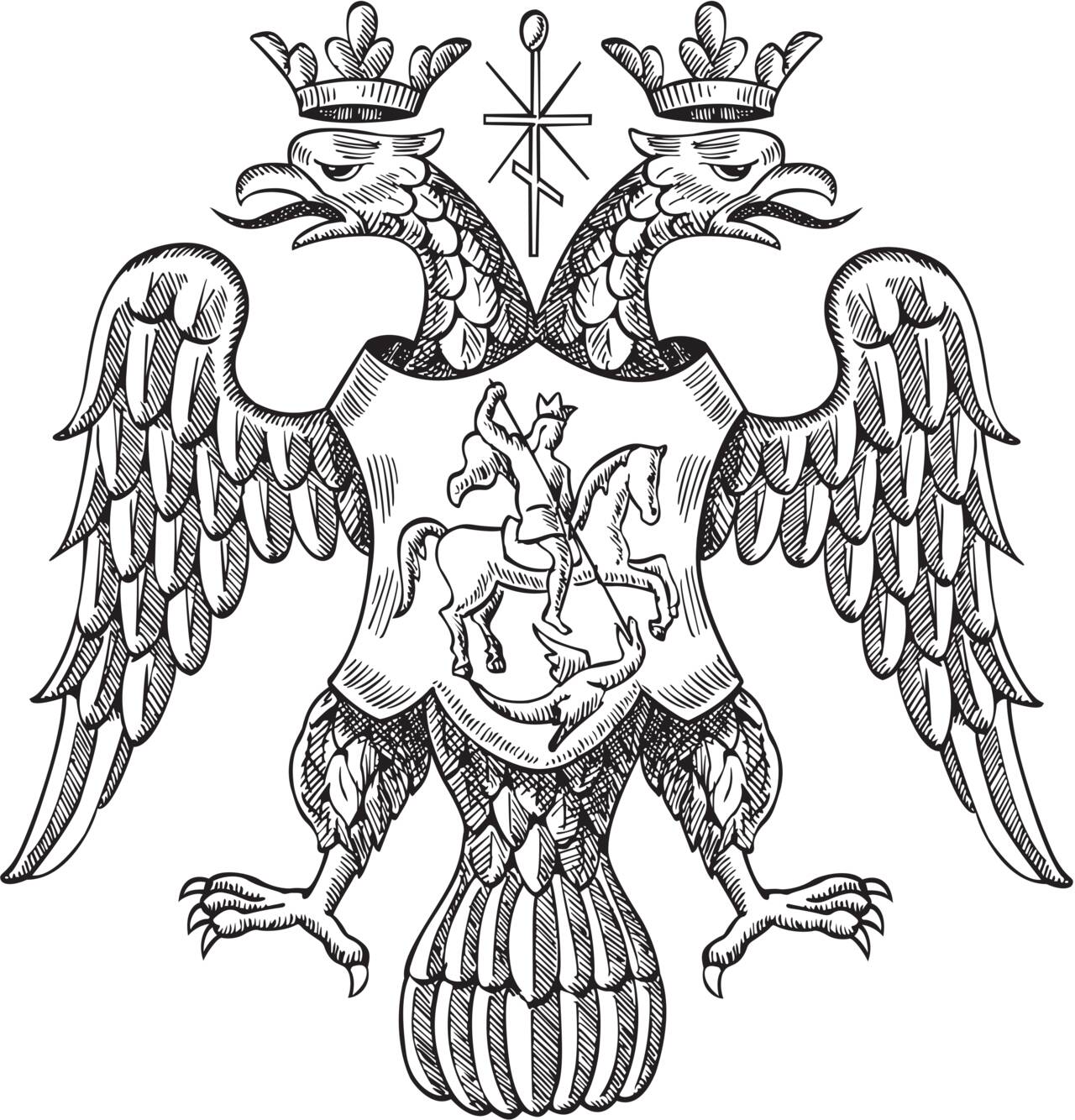
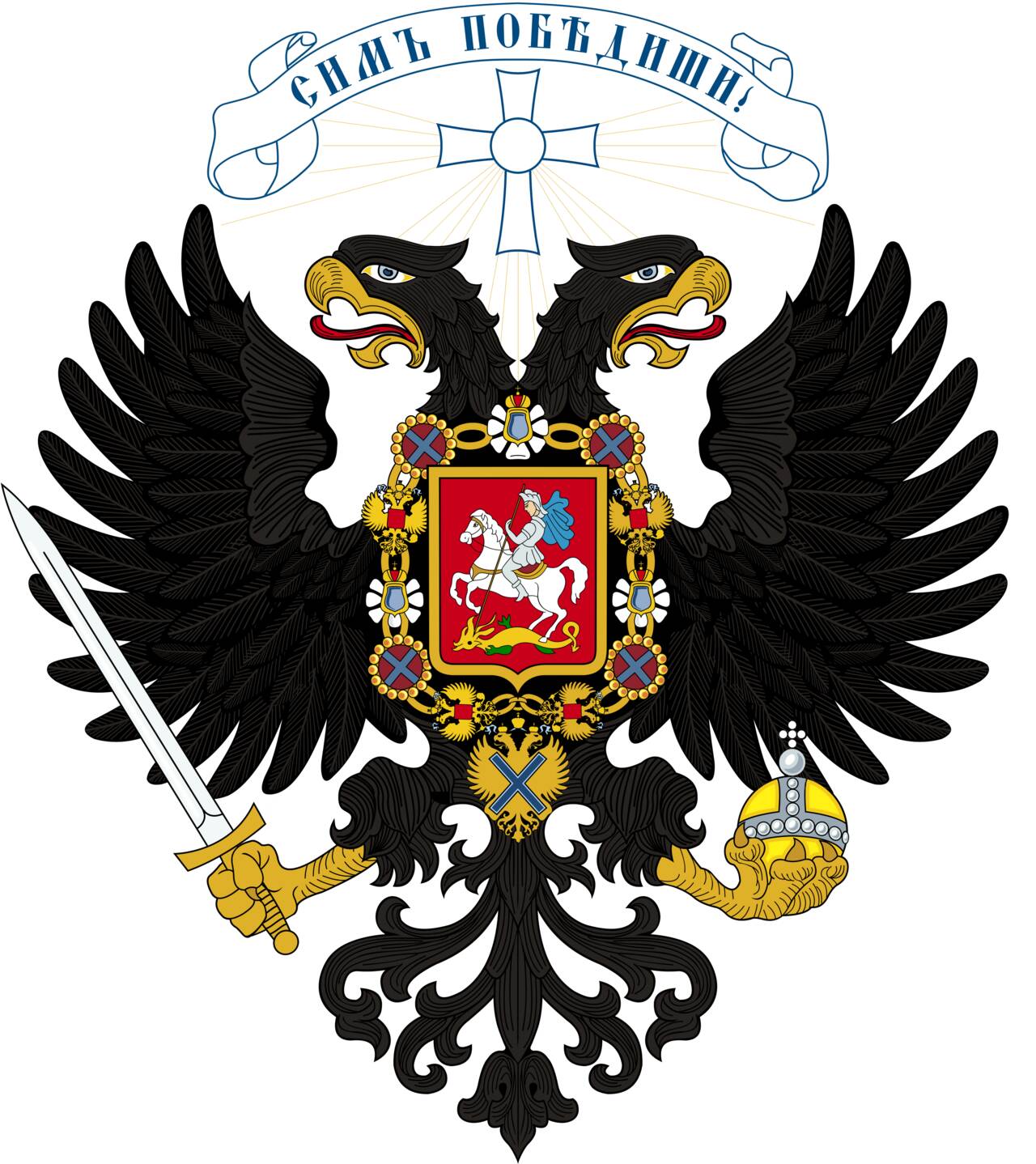
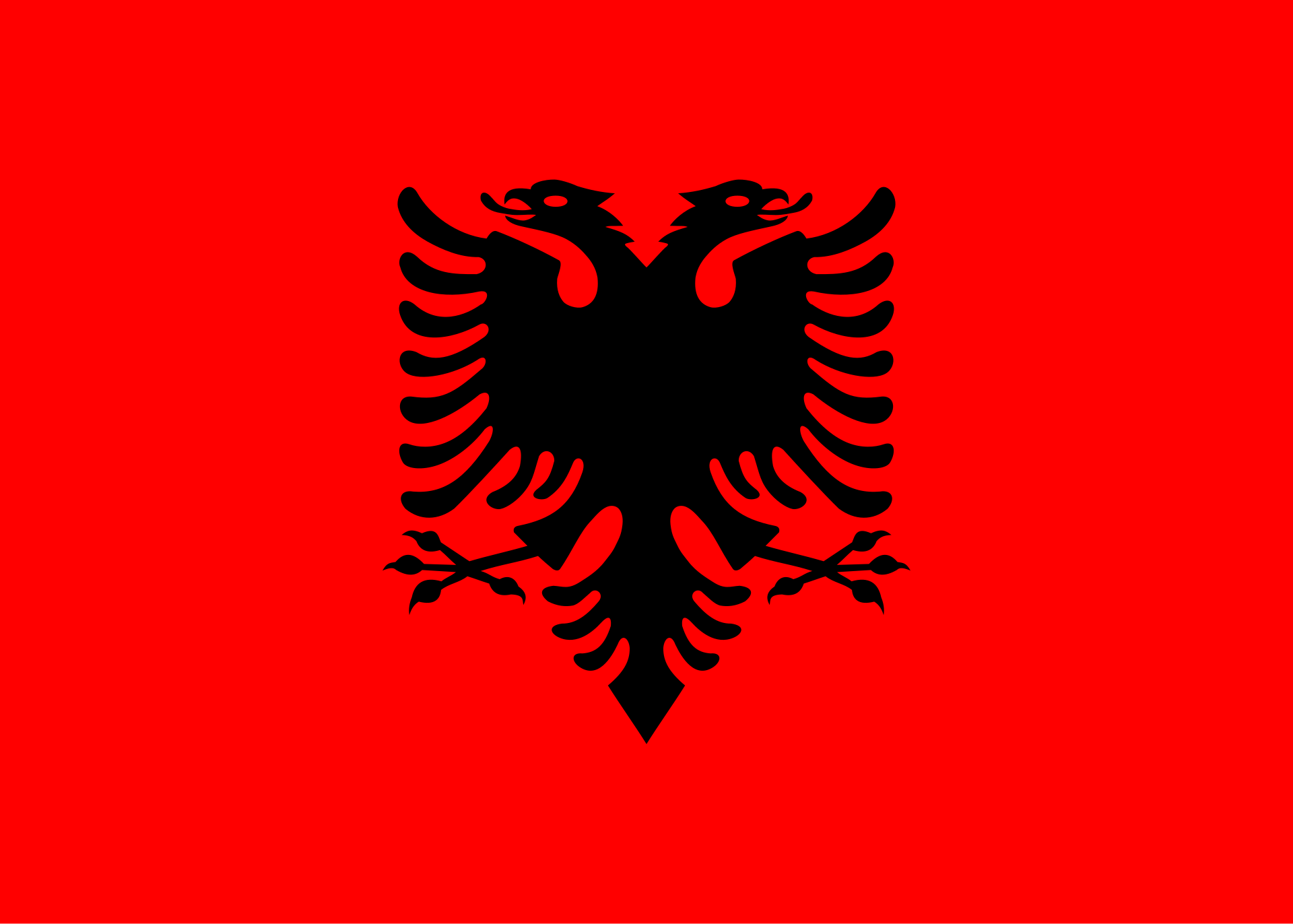
Adoption of the double-headed eagle in Serbia, Albania, Russia and in the Holy Roman Empire begins still in the medieval period, possibly as early as the 12th century, but widespread use begins after the fall of Constantinople, in the late 15th century. See below for examples, the filenames should be self-explanatory:
In India:
It is seen to be the emblem of the Indian Kingdom of Mysore, 1529-1542 CE:
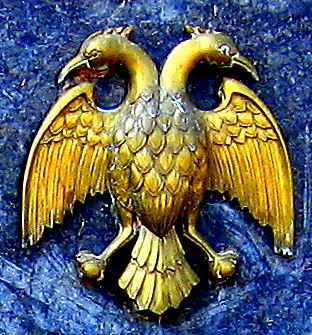
In Modernity:
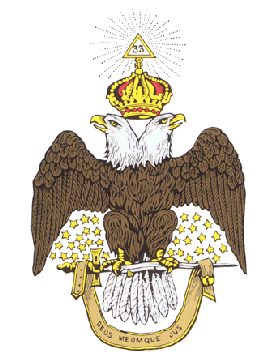
Today the symbol is everywhere.
It has become the symbol of the Scotch Rite of Freemasonry:
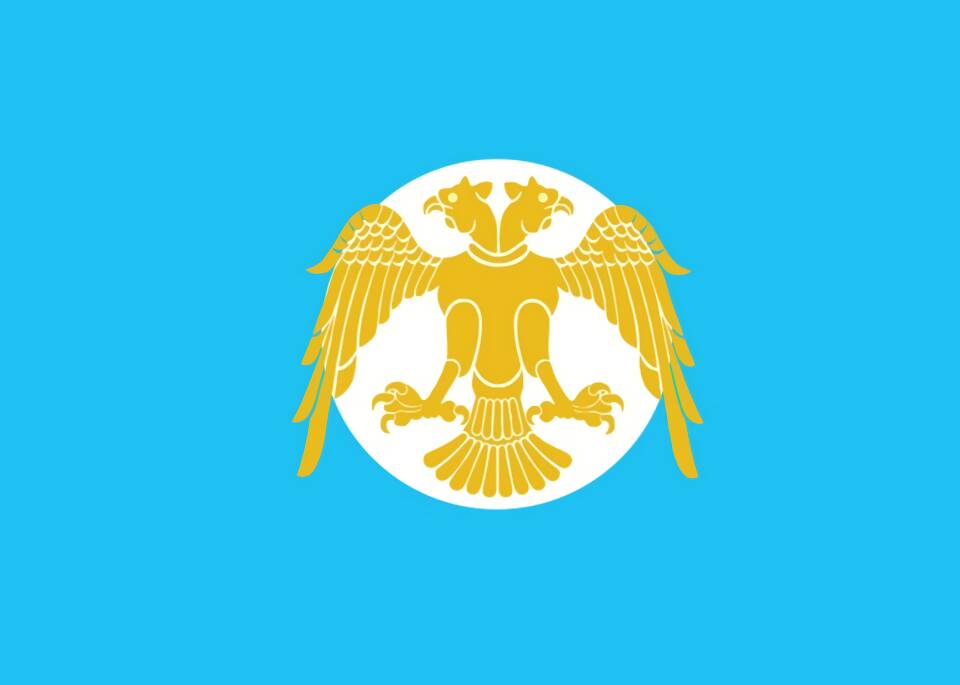
It has also been adopted as the official banner of Syria’s Turkmen:
POST-SCRIPT: THREE-HEADED EAGLE
A three-headed eagle is mentioned in the apocryphal Latin Ezra, featuring in a dream by the high priest Ezra. In a Chechen fairy tale, a three-headed eagle figures as a monstrous adversary to be killed by the hero.
Öksökö (Өксөку) is the name of an eagle with either two or three heads in Yakut and Dolgan folklore (these are tribes of the far north, in central Siberia).