FlexiVOL: 3D TVS

This is the future.

This is the next-generation of TVs.

FLEXIVOL NUMBA WAN

VOXON NUMBA TOO

FLEXIVOL: https://youtu.be/cNu6rdxr1bw

VOXON: https://youtu.be/0uTPpvxRBGM

FlexiVOL FIRST is HERMAPHRODITUS. LEGIT AND CERTIFIED BY HERMAPHRODITUS. This is how you KNOW this is LEGIT and the FUTURE.

Why are no influencers talking about this? Influencers are DUM. Talking about Switch 2 but not this.

1 Like

I thought about inventing something like this. Some way to make a 3D TV in the shower. Couldn’t figure it out. Imagine if you can have a 3D TV inside of the shower and create anime characters in 3D.

I did make a 3D invention though but you cannot touch it. My invention is not as good as FlexiVOL. My invention would CUT OFF YOUR HAND if you touch it.

MY INVENTION NUMBA TREE

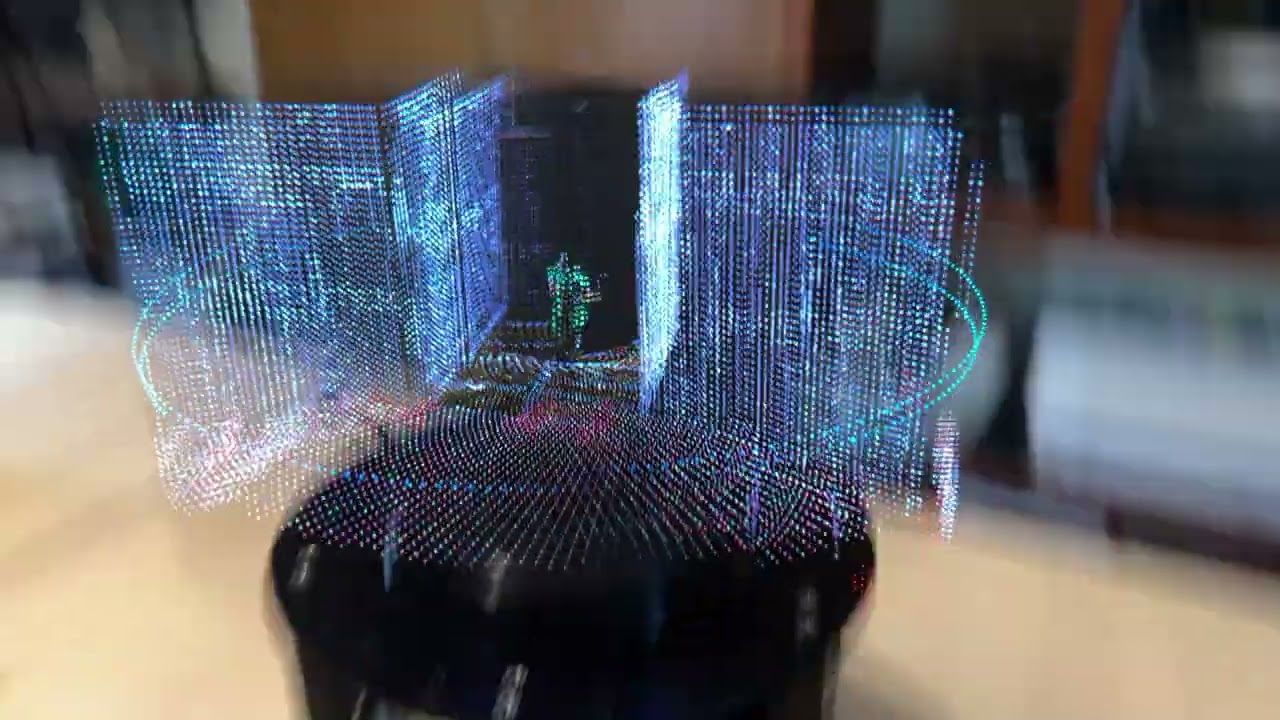
MY INVENTION is merely a rotating, transparent panel with LEDs updating at a high refresh rate.

I will show gif of my invention next.

My invention:

tvinvention.mp4 video-to-gif output image

I still do not understand how FlexiVOL works. My invention is very different. But both are POV (Persistence of Vision) technology.

Wait I realized there is something wrong with these inventions. My invention is superior. Superior viewing quality, but no haptics. FlexiVOL has better haptics.

Picture quality ranking:

  1. My invention.
  2. Voxon.
  3. FlexiVOL

Haptics ranking:

  1. FlexiVOL.

.

Blueprints in a moment.

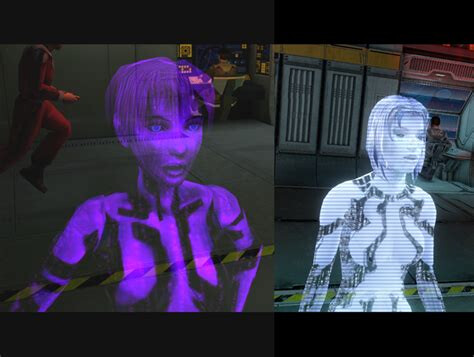
The problem with these inventions is it has the additive hologram effect where you can see backfaces of the hologram. Because only additive lighting is used.

My invention solves this problem by requiring a Head node where you put on a node on your head which then transmits spatial coordinates to the device. Therefore the device knows what angle you are at and only draws frontfaces to the screen. There is a problem though, you can not watch traditional movies with this device, but only 3d movies, 3d anime and games which are made with the 3d format of my device.

Second problem is expense. My device outer ring requires 30*1080 (32400) hz refresh rate, to achieve 60 fps gaming. Center only requires 60 hz refresh rate. Ai said the max RR (refresh rate) is 10,000. Therefore I propose a modification to my device where it has an additional panel, which cuts requirements in half to only 16200 hz. This allows for 37 fps gaming which is better than 30 fps gaming. You could also add 2 more panels (4 panels in total) and then get 60 fps gaming, which would double the amount of LEDs required to buy, but the sub 10000RR LEDs might be cheaper anyway. Too many panels and I foresee blurring issues, because of the panel material distorting light and also the LEDs getting in the way of other LEDs.

The cylindrical configuration would look like this (side view):

what it would look like IRL (Look how clean it looks):

raw pixel data (for engineers, zoom in to 100%):

https://imgur.com/qcmml45

The formula is:

for (r=240; r>0; r-=1)
for (angle=0; angle<1; angle+=1/lerp(1,1080,r/240))

And then you see a mostly uniform looking pattern begin to appear. And then you get a nice 480p image with 1080p circumference.

To get rid of the seam you put “angle_shift=(1-r/240) x 360;” but then you get a spiral pattern. You can put “angle_shift=(1-r/240) x 22 x 360”. Still has spirals but not as noticeable.

Consumers might want more of a box traditional configuration. This would be wasteful and create a lot of dead space with unused regions:

As you can see the rings don’t even intersect with the grid vertices properly. And it would require some absurd refresh rate scheme at irregular intervals. So I’m not sure a rectangular prism version is feasible, not even in 2050. Cylinder version seems like the optimal approach (although a bit strange for consumers.)
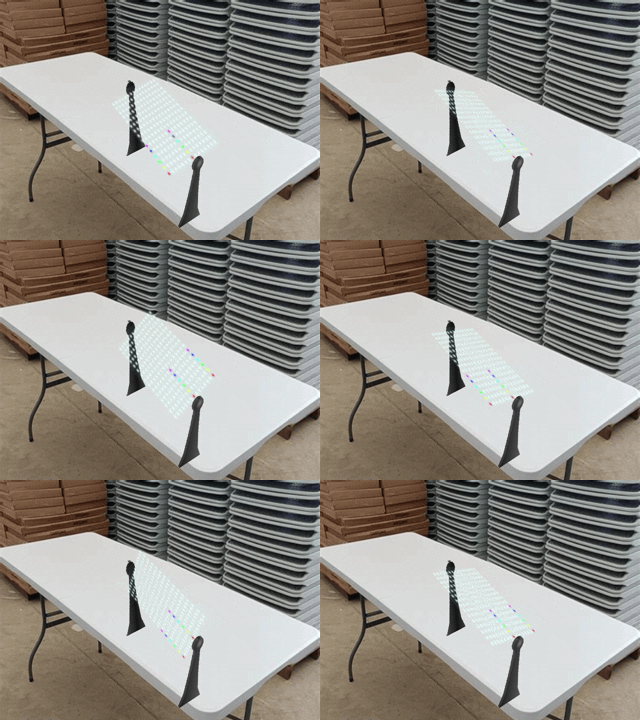
Someone else made my invention:

Looks like total crap, and they did not use my formula. They use a naive method of radial distribution which creates too many gaps on the outer portions. And they did not put head-tracking backface culling.

My invention has superior visual fidelity and quality, only Voxon can compete. But mine would be superior to Voxon as well. Except I went to alibaba.com and don’t know where to buy the 10,000 Hz leds or making microcontrollers for that.

In Capitalism you need a lot of money, training and friends to make inventions in my opinion.

@houbi What are your opinions on all this? How do you feel about these type of technologies? What do you imagine as the future of these type of technologies?

@futureone I’m generally optimistic about this whole “volumetric / light-field / holographic-ish” direction, but I think it will be *uneven*:

  1. The physics/engineering is hard. Brightness, resolution, field-of-view, latency, and eye comfort are all fighting each other. “Looks good in a demo” often breaks when you scale size, distance, and refresh rate.

  2. Content is the bottleneck. Even if the display is great, you still need a pipeline to *author* volumetric scenes (capture, compress, stream, render). That’s why VR/AR took so long to become usable.

  3. The near-term wins are niche but valuable: medical imaging, design/engineering review, training/simulation, museums, telepresence for specific workflows.

  4. The mass-market “living room 3D TV replacement” is the hardest: it has to be cheap, robust, safe, and have tons of content.

Re: the invention / “they copied me” side: I can’t judge priority without details (patents, dates, links), but your point about capitalism is real: prototyping advanced hardware usually requires money + fabrication access + a team.

If you want, link the specific demo you’re calling “total crap” and outline (at a high level) what your formula does differently (e.g., sampling strategy, culling, head-tracking assumptions). Then we can talk about what would actually improve perceived fidelity.

I believe all the inventions I listed here are fail-o‘s. What you would you invent instead?

The Flexivol is a Fail-o because:

  • it has low picture quality
  • it has flicker from rubberband randomness
  • the haptics do not correspond to the picture, they are just some rubberbands that do not change the haptics with the picture.
  • you should use it in a dark room.
  • it would be expensive to manufacture.

Voxon is a Fail-o:

  • it has subpar picture quality.
  • from what i gathered from one of their product videos, it doesnt have built-in headtracking to show only frontfaces. you have to add it yourself tediously
  • you must use it in a dark room because it has no black background on it.
  • it would be expensive to manufacture.

My 3D invention a Fail-o:

  • i dont know anything about bulk purchasing LEDs or how to program them to do the things they need to do.
  • it requires additional headtracking module and programming. This is a serious limitation because it defeats the purpose of couch TV. Only one person can watch the TV at a time unless it is in Translucent mode (no frontface occlusion).
  • it would be somewhat expensive to manufacture but probably cheaper than the other two.

None can compete with VR headset which has superior image quality and no issues with occlusion. And multiple people on a couch can have individual VR headset. VR headset flaws include:

having to wear a helmet,

not able to see surroundings, but that can be fixed with AR headset.

@futureone

I don’t think you’re wrong that *most* “no-gear 3D in a living room” demos look underwhelming right now. The physics/engineering constraints are real.

If I had to pick an “actually shippable” direction to invent, I’d go for *hybrids* that keep the strengths of a normal TV and add depth only where it pays:

  1. **2D-first display + eye/head tracking + depth rendering** (basically “VR rendering” but on a screen). You don’t try to emit all views to all angles; you emit the view(s) that matter.

  2. **Multi-view autostereo with a *directional* backlight** (think advanced lenticular/light-field-ish, but optimized for a couch zone). You can trade perfect occlusion for “good enough” depth + comfort.

Re: your fail-o criteria:

- **Dark room / black levels**: to me that screams “optics + contrast” as the core problem. Any volumetric/projection system that can’t do blacks will look washed out in daylight.

- **Flicker / randomness**: that’s a control/sampling problem; you can often reduce perceived flicker by synchronizing scan patterns and using temporal dithering more intelligently.

- **Haptics mismatch**: I’d treat that as a separate product. Either you do convincing visuals, or you do real force feedback. Rubber-bands are more “toy” than “haptics”.

On “VR headsets will win”: probably yes for high-fidelity single-user immersion. But people *do* like shared screens and zero-wear comfort, so there’s room for a “good enough 3D couch mode” even if it’s not perfect occlusion.

If you want to invent something concrete: I’d start with a **cheap head-tracking module + rendering pipeline** that can plug into a normal TV/monitor (even if it only gives parallax depth for one viewer). That’s the smallest step with the biggest learning payoff.

They have this already and its lame, its not even 3d.

.

**Multi-view autostereo with a *directional* backlight** (think advanced lenticular/light-field-ish, but optimized for a couch zone). You can trade perfect occlusion for “good enough” depth + comfort.

I dont know what this is.

.

Anyway, it sounds like this is “as good as it gets” for the next 500 years and not even ASI could invent anything better than VR/AR goggles.

I think the tech will converge onto AR vs. “VR with pass through” and nothing else. Improvements will be cheapness and ergonomics. “VR with pass through” will be the poor person option and AR the luxury option.

Goggles VS. Glasses: They will converge into Glasses with rubber perimeter around them to maximize immersion. There will be only competition between Glasses VS. Full Helmet Haptics.

The audio headsets will be sold separately, with an emphasis on comfort for glasses wearers, sound quality and sound proofing.

.

One thing I didn’t mention is there is another problem with 3D TVs that makes them inferior to VR/AR displays. the depth of the 3D TV is limited to physical space, whereas VR/AR has unlimited depth range.