Leonardo’s Last Supper Decoded
Daniel J. Lavender
“All difference, all variation, all opposition balances as simply being, as simply existence.”
Dan Brown’s bestselling novel and the subsequent blockbuster film The Da Vinci Code were global sensations reigniting interest in the works of artist Leonardo da Vinci.
Part of Brown’s work focused on Leonardo da Vinci’s Last Supper painting. However the ideas conveyed within the book and film are a bit misleading. The symbolism conveyed is a bit inaccurate.
I believe to have discovered the true symbolism.
Leonardo’s Last Supper signifies unity and balance in all things.
It is a reflection of existence.
The good, the bad. The light, the dark and the commonality holding them together. As well as the differences driving them apart.
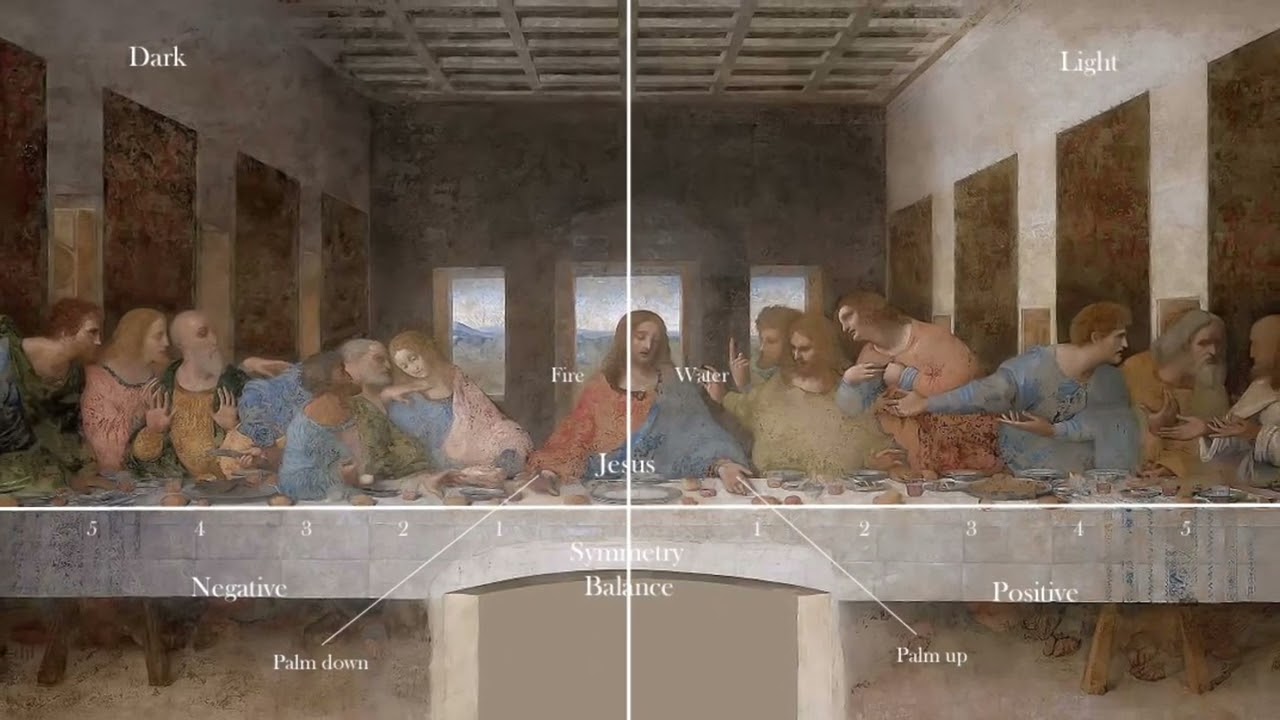
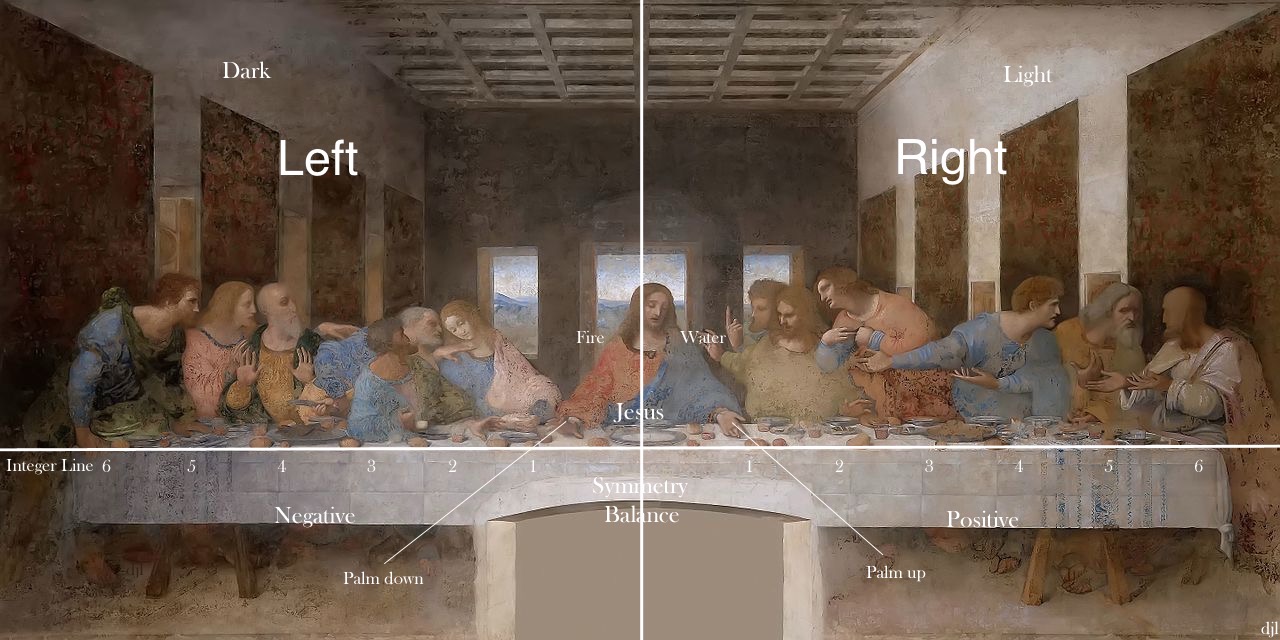
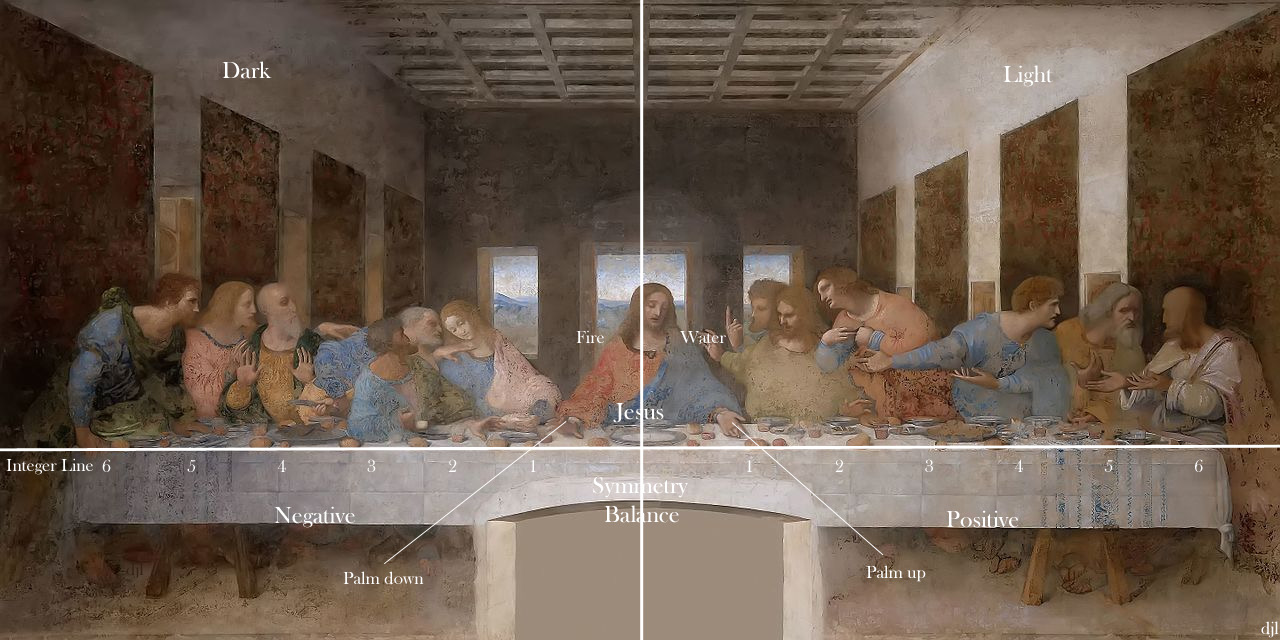
Red and blue are considered to be symbolic colors of fire and water respectively:

Note on the fire side the apostles, specifically John (not Mary), are leaning away from Jesus to avoid burns. Whereas on the water side apostles are leaning right up beside Jesus as the water poses no danger.
Jesus is considered the “light of the world” (John 8:12, John 9:5). Jesus is also the Son of Man and the Son of God. Notice palm down (son/sun down, no light) is on the dark side, while palm up (son/sun up, light) is on the light side. Fire, darkness, negativity of Hell on the left and light, water, positivity of Heaven on the right.
Also note Judas on the negative, or on the dark side, with the spilled container of salt signifying bad luck:
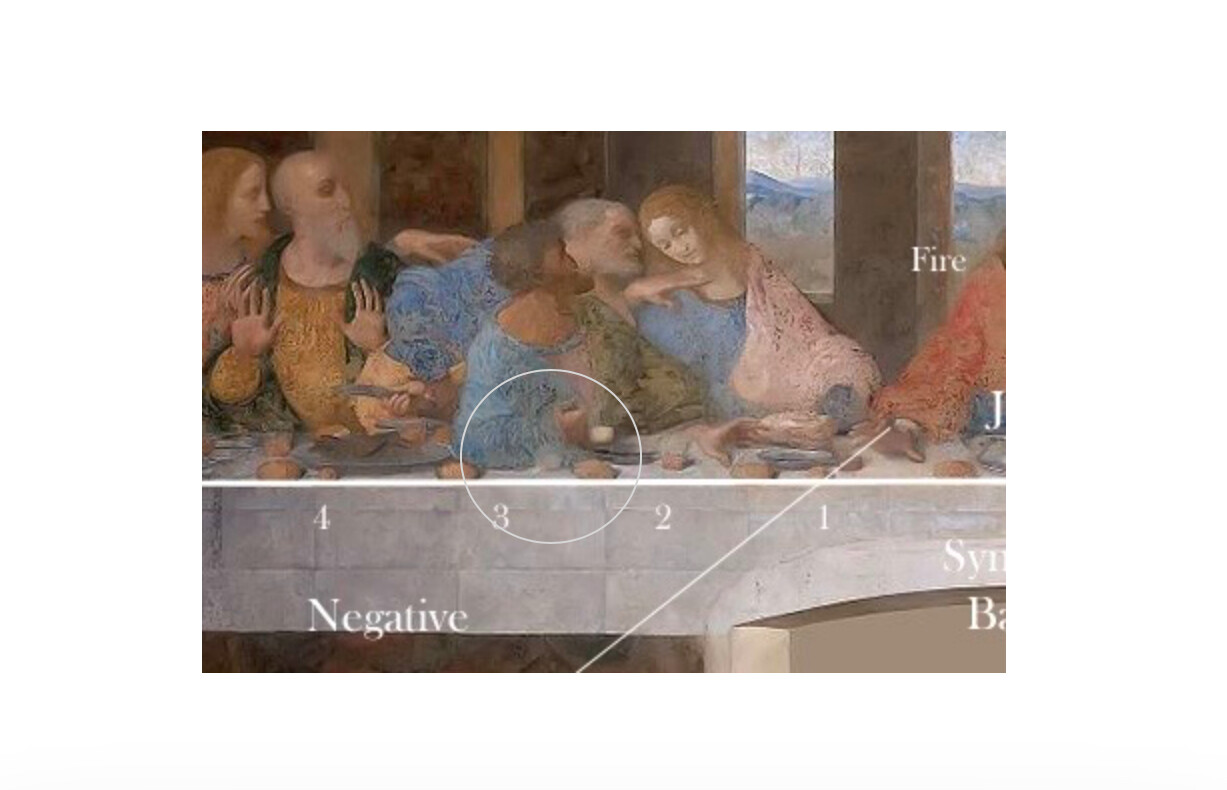
Note the knife on the left side, or the dark, negative side, signifying destruction or malevolence:
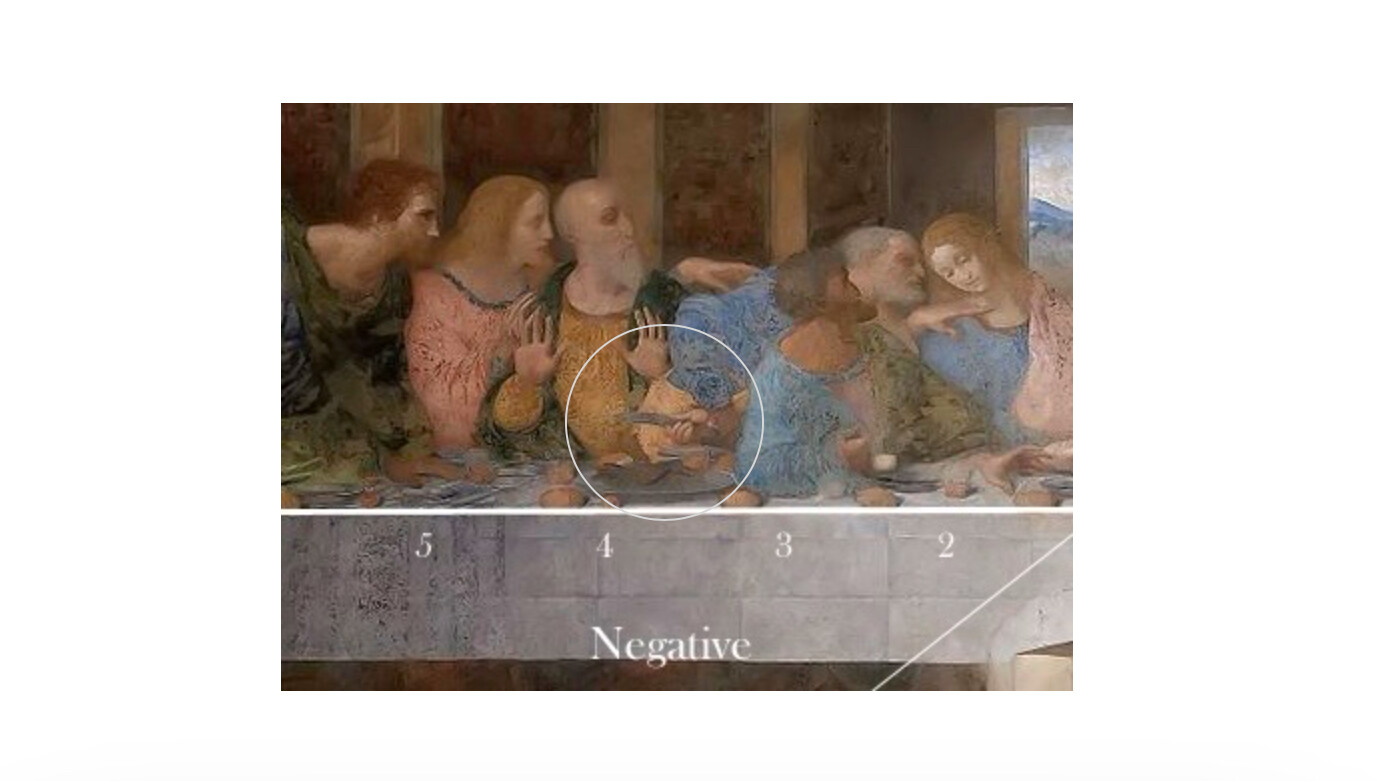
James the Less appears on the left side, or lesser than on the integer line while James the Great appears on the right side, or greater than on the integer line.
The cross formation is not intended as sacrilege but rather to illustrate the symmetry of the art from the ceiling grid to the floor intersecting with the level table edge.
As illustrated by concept of the artwork the form may be interpreted negatively, as anti-Christian, positively, as a sacred symbol as the Cross of Saint Peter or neutrally, as simply a formation of lines.
It’s about opposites, a middle ground and balance. Also note the windows allowing observation of the terrain outside the room illustrating inside/outside, interior/exterior or internal/external.
For purposes of interpretation all significant details are retained in copies produced by Leonardo’s contemporaries Giampietrino and Andrea Solari.