You and I have demonstrated that your “trust” rests on an unevident decision. So now you’re trying to bring me down to your level, or raise yourself up to mine—which amounts to the same. So let me answer my questions, which you ignored. You don’t trust your God, because one cannot trust someone who doesn’t exist. You trust the writers of the New Testament and, in a way, yourself: namely, your wishful interpretations of your “religious experiences”—though only in tandem with their wishful interpretations of their “religious experiences”.
That answers my last question, except that it supposes the writers of the New Testament all wrote “in good faith”. And with this we arrive at the only serious thing you said in your last post:
Not weaselly, but it’s indeed the big problem contemporary people tend to have with philosophical esotericism:
“Its secrecy contradicts our liberal commitment to openness and transparency, as well as the Enlightenment project of demystification and disenchantment.
Its dishonesty violates our moral code of truthfulness, our scholarly and scientific code of the open sharing of results, as well as our cultural ideal of sincerity or authenticity.
[…]
Its intentional embrace of obscurity sins against our scientific culture of literalness, clarity, and systematic rigor.
Its effort to cloister knowledge for the appreciation of the elite few, while leaving prejudice and illusion unmolested in their reign over everyone else, contradicts the great project for the universal dissemination of knowledge and enlightenment that is inseparable from the modern ideal of progress—moral, social, and intellectual.
The curious childishness of its playing with puzzles and riddles clashes with our ideal of philosophical seriousness and gravity.” (Melzer, Philosophy Between the Lines, pp. 105-06.)
All of this and more, however, is justified by the difference between the philosophic few and the unphilosophic many. Compared to the former, the latter are children!
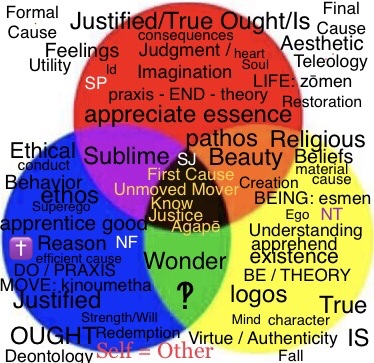
Now as for my other question(s): Qabalah for me is just a reference system; and when I say ‘Qabalah’, I mostly just mean Aleister Crowley’s version thereof. I’ve recognized in him a genuine philosopher, albeit one who does not use philosophical esotericism so much as mystical esotericism. And as for genuine philosophers:
“As this book proceeds, it will make ever more evident what is in the end not at all surprising, that philosophers from Socrates to Nietzsche share what is highest and best. The same object of inquiry investigated with the same instruments of inquiry by similarly passionate and supreme masters of inquiry—if philosophy is possible at all of course its peak attainments bear a close family resemblance. It was the necessities of exotericism, of fitting philosophy to the ruling men, that forced philosophy to adopt the different guises in different ages that made it looks so different when looked back at without the resources of an appreciation of exotericism.” (Lampert, The Enduring Importance of Leo Strauss, pp. 126-27.)
I’ve mostly just used Crowley’s Qabalah—Tree of Life!—as a kind of roadmap for the intellectual development of a philosopher. As I wrote in my OP, ‘of course, this is a system I don’t necessarily completely subscribe to’. And much the same thing Crowley held about the Qabalah, I’ve always held about Crowley’s own writings:
“The Qabalah, that is, the Jewish Tradition concerning the initiated interpretation of their Scriptures, is mostly either unintelligible or nonsense. But it contains as it ground-plan the most precious jewel of human thought, that geometrical arrangement of names and numbers which is called the Tree of Life.” (Crowley, Little Essays toward Truth, opening essay.)
This is not too surprising, considering that the Jews have a long history of hiding precious jewels of human thought. For example:
“Maimonides […] speaks of the Sabians and Abraham’s revolt against Sabianism and of Moses as the supreme philosopher-legislator—that is, a Plato or Aristotle who legislates a philosophic religion that accords to, or had to take into account, the pagan or Sabian temper of the times. Because of this, the Bible and the Midrashim contain 'strange but correct notions attained by the speculation of the most sublime of those who have philosophized (Guide [for the Perplexed], I.70), presented enigmatically, too strange to be understood by the vulgar. (To understand their correct meaning, therefore, one must become a ‘most sublime philosopher.’) The context is the explanation of the expression ‘to ride’ (rakhob) in the dictum ‘the rider of the heavens’ (Deut. 33:26) and the relation between the heavens and God”. (Mahdi 2001, page 237.)
Addendum:
“In his Plato and the Creation of the Hebrew Bible Russell E. Gmirkin adds an unexpected dimension to Nietzsche’s judgment on Plato and his historic importance as a preexistent Christian. Building on previous scholarship but significantly advancing it, Gmirkin offers a massive and painstaking demonstration of his thesis that the Hebrew scriptures were written by Jewish scholars working at the great Library in Alexandria around 270 BCE and that they were schooled by Greek philosophers, particularly Plato, most particularly Plato’s Laws. In that dialogue an ‘Athenian Stranger’ gives instructions on how best to found a people by supplying it with laws and customs that would make it eternal. Gmirkin makes a powerful case that the laws of the Pentateuch, particularly those of Deuteronomy, and the history of the founding hero Moses, and the charter myth of God’s deliverance from Egypt into the Promised Land, plus the tribal structure of twelve tribes and priestly authority for the continuation of culture, and numerous other features large and small of Jewish practice and belief have precise precedents in Greek writings especially Plato’s Laws and virtually no precedents in Middle Eastern traditions generally. Gmirkin has put us all in his debt for a stupendous amount of research into the beliefs, laws, customs, and institutions of the Hebrew Bible, the Greek writers, and ancient Middle Eastern documents and records, and, not less, for his meticulous and judicious comparative assessments of this massive amount of material. He makes a persuasive case for a radical reinterpretation of the foundations of Western monotheism and the populations that lived it and live it.” (Lampert, What a Philosopher Is: Becoming Nietzsche, pp. 282-83.)