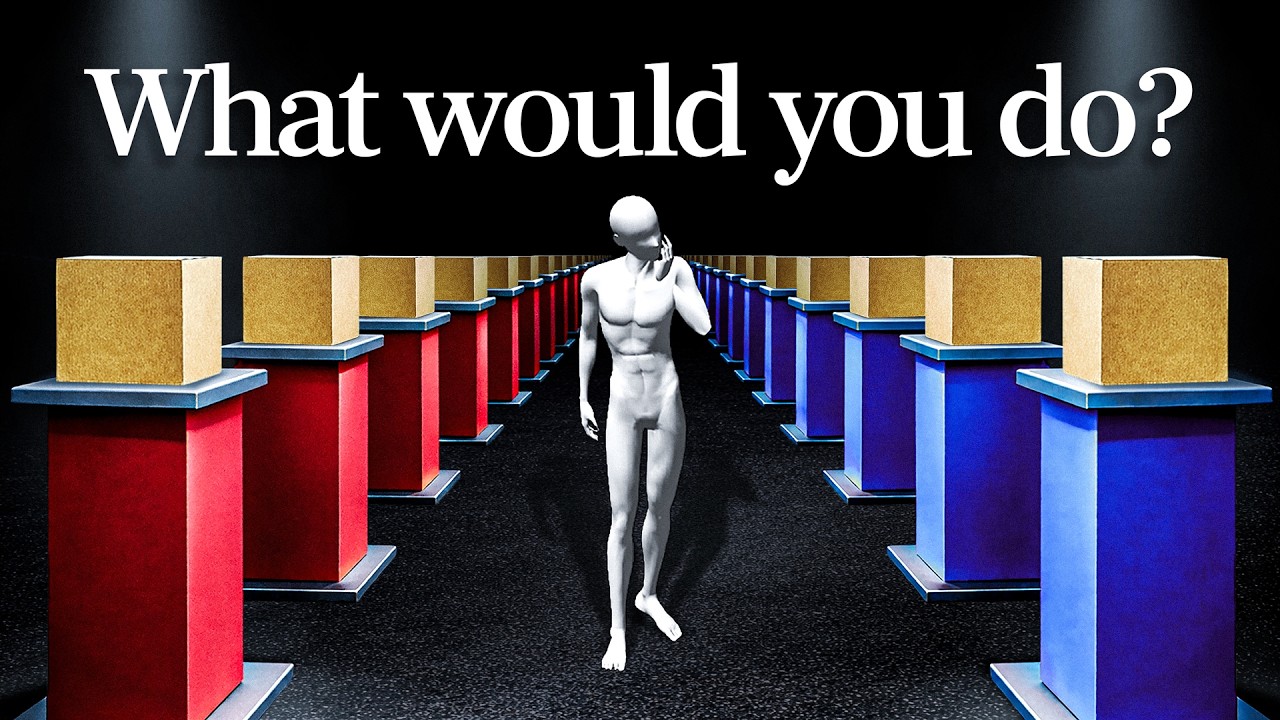
There’s a new youtube video by Veritasium that’s introducing loads of people to this problem in decision theory:
This topic has been discussed before on the forum, but perhaps it’s time for a new discussion.
You face two boxes:
Box A is transparent and contains £1,000.
Box B is opaque and contains either £1,000,000 or nothing.
You must choose either:
- Take only Box B, or
- Take both boxes A and B.
You are told that before you arrived, a highly reliable predictor examined the situation and predicted what you would choose. You know and accept that he’s highly reliable, near perfect even.
- If the predictor predicted that you would take only Box B, it placed £1,000,000 in Box B.
- If the predictor predicted that you would take both boxes, it left Box B empty.
The prediction has already been made and the boxes have already been filled (or not filled).
The predictor’s accuracy is extremely high—correct in almost every previous case.
So do you take one box or two?
- I take One Box
- I take Both Boxes
0
voters