I do honestly try to give up, but then there is no end to ‘them’ stopping me in that effort, they do exist in a different form and demonic as they are, we are asked to forgive them and seek deliverance for them, ps.
To know them is to live them, they have incredibility on their side and that is something,
See , confessions slide off the tongue,when familiarity crosses familial participation in the magic of atonement, , why and how did I manage to develop three flies of conscious separation that have been flat as a tire worn by so much roads covered, ? I feel as though I was meant to live for this momeny
I feel , as though: but before such a distraction would not be in vain, especially leaving her Macaw, toward Japan, and Mount Malibu, where miracles, other than the ones happened, in order to point out that, I got to the three flies, in order to effect a cause,
Let me describe it:
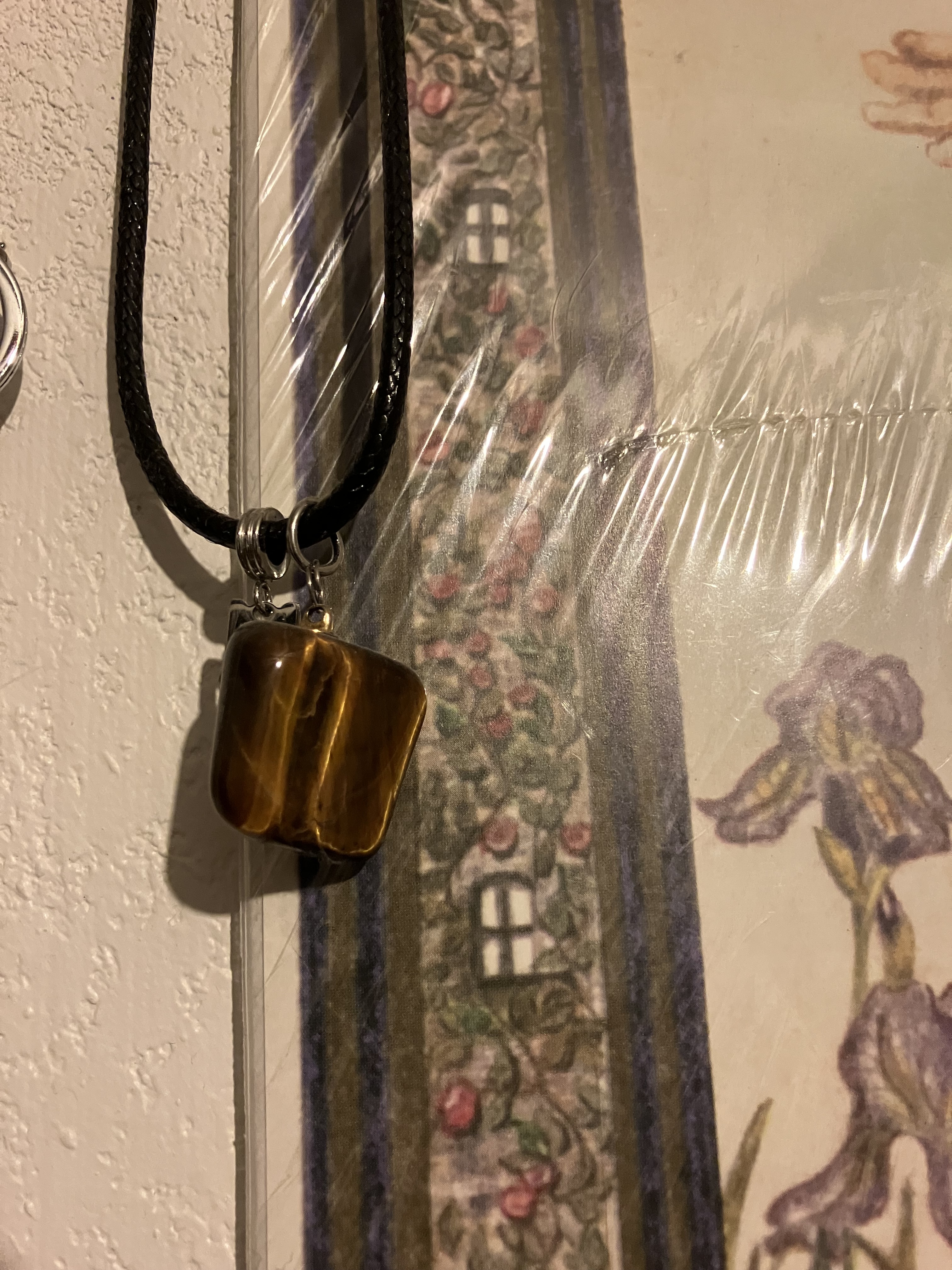
Mine day after I walked the streets of Los Angeles, looking for another job for the day, I saw a piece of paper on a dirty road, and found a hidden treasure there, but it was not for real it was an open stock for a hundred shares of something like anyone could cash, but other than that the same day I found a good job with benefits that secured my existence for the rest of my life, and none of it was merely coincidental, felt drawn like to the tiger’s eye I’m convinced to be my friend.
That is, the rest is the reason for my dream, a dream of correlating 3 streams, while alternatively the press toward a new reintegration.
That one reinforces the other, and coils around each other almost in unity, then break apart at times ; Carrie’s the moral of the temptation, the deliverance and it’s extemporaluzation to the major theme; that is the object of rationalizing the forgiveness for the destruction of Hiroshima and Nagasaki. The little boy and the fat man.
But before the tea ceremony in Hiroshima, will seek guidance from Nichiren, who is obliged to believe in the game of recommendation as a moral dilemma for sensitive souls.
That I could live on, sober like while this all narrative sounds anything but, can be described best, as ( and I already alluded to it) as the miniturizatiin of points of reference, framed in almosiindescribable gaping fields of missing pieces, of what really went down internally, while the whole world waits, as to what’s next?
Before going on let me paste a piece that came in, for scanning or dismissing:
)()()()(
content following this page was uploaded by Vangelis Athanassopoulos on 09 May 2016. The user has requested enhancement of the downloaded file.
Journal of AESTHETICS & CULTURE Vol. 4, 2012
Why do vampires avoid mirrors? Reflections on
specularity in the visual arts
Vangelis Athanassopoulos*
Department of Visual Arts, Panthe ́on-Sorbonne University, Paris, France
Abstract
This article is an attempt to organize the general axes of a research on mirror image in the visual arts, addressing the concept of specularity and its problematic status in Western aesthetics. The argument is that, paradoxically, despite the central role of reflection in the theory of representation, specularity is constantly repressed as false and dangerous. Hence the historical duplicity of the mirror in its relation to art: on the one hand it consolidates the Western system of representation while on the other it deconstructs the very principles upon which this system is erected. Literary theory and psychoanalysis enable us to focus on the ways which, in the founding myths of representation such as the ones of Narcissus and Medusa, vision, discourse and identity are articulated around reflection, relating a physical phenomenon with the mental processes defining self- consciousness. In the field of visual arts, this articulation is operated through the opposition between two different conceptions of the image, ‘‘painting-as-window’’ and ‘‘painting-as-mirror’’. Locating this opposition in Svetlana Alpers’ reading of Las Meninas and Louis Marin’s approach of the Brunelleschian optical box, we point out the discontinuity which comes to the fore in the latter’s description of the reflexive/reflecting apparatus and which constitutes the blind spot of the classical system of representation. In contemporary art, specularity returns as a tautological figure, ‘‘zero degree’’ representation establishing a closed circuit in which the gaze is sent back to itself like Joseph Kosuth’s self-referent linguistic proposi- tions. But in the same time it problematizes the process of self-reference, opening it to similar specular apparatuses which destabilize tautological circularity. Works by Dan Graham, Robert Smithson and other artists demonstrate that mirror, which in the classical system guarantees the subjugation of the gaze to the eye, can on the contrary be used in order to emancipate the former from the latter, displacing the relation between the art work and the viewer.
Vangelis Athanassopoulos, Ph.D. in Aesthetics, is an Associate Professor of Philosophy of Art at the Department of Visual Arts of the University Paris I Panthe ́on- Sorbonne in Paris, France. He is a member of the LETA (Labora- tory of Theoretical and Applied Aesthetics, University Paris I), the AICA (International Association of
Art Critics), and co-editor of Proteus, an online French journal on aesthetics (www.revue-proteus.com). He has published two books on postmodernism and advertising (La publicite ́ dans l’art contemporain, 2 t., Paris: L’Harmat- tan, 2009) as well as several articles on modern and contemporary art. His research fields include visual semiology, philosophy of language and critical theory.
Keywords: reflecting surfaces; visual apparatuses; theory of representation; reflexivity; projection; self- identification; myth of Medusa
*Correspondence to: Vangelis Athanassopoulos, Department of Visual Arts, Panthe ́on-Sorbonne University, Paris, France. Email: onoda.h@gmail.com
#2012 V. Athanassopoulos. This is an Open Access article distributed under the terms of the Creative Commons Attribution-Noncommercial 3.0 Unported License (Deed - Attribution-NonCommercial 3.0 Unported - Creative Commons), permitting all non-commercial use, distribution, and reproduction in any medium, provided the original work is properly cited.
Citation: Journal of Aesthetics & Culture, Vol. 4, 2012 DOI: 10.3402/jac.v4i0.10203
1 (page number not for citation purpose)
V. Athanassopoulos
To see one’s own sight means visible blindness1
Iconographic matter, visual instrument at the service of the painter or the photographer, emblem of vanity in classical art or phenomenological object of spectator displacement in contemporary art, the mirror is intimately related to our concep- tion of representation. The present article is an attempt to organize the general axes of a research on mirror image in the visual arts, outlining the semantic, phenomenological as well as dis- cursive implications of specularity in Western aesthetics.
A great deal of research has addressed this issue from different points of viewoptical, cog- nitive, historical, anthropological, phenomeno- logical, psychoanalytic and othersproviding an important bibliography which it would be too long to develop here.
For a general account of the mirror image in the classical system of representation, the reader is referred to Gombrich, Damisch and Schwarz.2 For a historical approach, one can consult Melchior-Bonnet,3 and for a psychoanalytical one, Mulvey.4 As for mirror and photography, the classical reference is Rudisill.5 The reader particularly interested in photography is also referred to Owens.6
The purpose of this article is not to establish a historiography of reflection but rather to raise a certain number of questions which cross over the epistemological fields covered by the avai- lable literature on mirror and visual perception. This requirement of interdisciplinarity is hardly something new in contemporary aesthetics; but in our case it is closely related with the very object of analysis, the ambivalent nature of which invites to reconsider the methodological instru- ments through which we tend to grasp it. For, in spite of the diversity of approaches, specular image seems to be constantly subordinated through art history to a theory of representation that regards it as an emblem of mimesis, as opposed to language.
In ‘‘Mirror and Map: Theories of Pictorial Representation’’ mirror designates less a particu- lar category of visual signs than a principle that cognitively distinguishes mimetic organisation of visual data from rational articulation of space. Significantly, it is photography that is convened to convey the ‘‘mirror effect’’ of representation.7
2
(page number not for citation purpose)
And yet it is precisely the cognitive status of reflection that seems to defy analytical thought and philosophical understanding of visual phenomena. Gombrich’s article opens with an account of a stroll in Vienna, where, as a child, he had to make a choice between a left and a right turn in order to go either to the Museum of Natural History or to the Museum of Art History, two identical buildings facing each other across the Maria-Theresien-Platz.
In the 13th chapter of his Prolegomena to Any Future Metaphysics, Kant attempts to demon- strate that space is not a property of the objects in themselves but the external form of our ‘‘sensuous intuitions’’ 8. Now, what is interesting, is that, in order to ground his argument, Kant has recourse to the examples of mirror and incon- gruent features like the left and the right hand. In doing so, he states the impossibility of pure conceptualisation of specular inversion. Incon- gruitythat is, enantiomorphism, mirror reflec- tionparadoxically appears to mark the limits of consciousness, something that resists philosophi- cal understanding; or, in other words, the usual metaphor according to which we transpose reflex- ivity from vision to consciousness seems to be rather problematic. It is this unstable relationship between consciousness, language and image that this article wishes to question.
The main argument is that from the Renaissance to the digital era, the concept of representation in Western art can be regarded as a dialectical construction combining two opposite approaches of the image: as a window and as a mirror. A double-faced Ianus divided between the transpar- ency/transcendence of the icon and the fascination with/delusion of the eidolon. On the one hand the painting, which, even when exclusively focused on its own pictorial conditions, let us look ‘‘through’’ it, at a metaphysical or immanent ‘‘elsewhere’’. On the other hand the reflection which, strictly speaking, is not capable of representing anything at all, because:
Not only can it not be properly called an image (since it is a virtual image, and there- fore not a material expression) but even granted the existence of the image it must be admitted that it does not stand for some- thing else; on the contrary it stands in front of something else, it exists not instead of but because of the presence of that something;
when that something disappears the pseudo- image in the mirror disappears too.9
Since the Antiquity, this ambiguous status of mirror image is closely related with the problem of representation. In The Republic, Plato’s account of the painter as ‘‘the man with the mirror’’ assimilates mimetic representation with specular reflection only to establish the superficial and illusory character of all images.10 Nevertheless, despite Plato’s mistrust of images, Classical anti- quity provides us with at least two founding myths of representation which are both tales of reflec- tions: Narcissus and Medusa.
Indeed, during the Renaissance the platonic repressed comes to the surface but this time being inverted, that is, used as an argument for and not against image-making. Recuperating in Ovid11 the myth of Narcissus, Leon Battista Alberti refers to the latter as the founder of painting, associating the narrative with a reflexivity which is the one of the liberal arts, the noble arts of the spirit, rather than with a skin-deep attach- ment to the appearance of things. At the begin- ning of Book II of On Painting, Alberti writes, ‘‘Consequently I used to tell my friends that the inventor of painting, according to the poets, was Narcissus, who had turned into a flower; for, as painting is the flower of all the arts so the tale of Narcissus fits our purpose perfectly. What is painting but the act of embracing by means of art the surface of the pool?’’12
Baskins points out that Alberti does not actually recount a ‘‘tale’’ of Narcissus, but allegorizes the account instead:
Alberti conflates two aspects of Narcissus’ transformation; the flower and the reflection in the pool both seem to signify the mimetic surface of painting. ( . . .) The canonical interpretation of the Narcissus trope in Alberti takes the reflection of the pool to be analogous to the imitation of surface appear- ance, stripped of narrative components and concentrating on the physical property of water to reflect an image in the real world, Narcissus’ reflection corroborates our under- standing of the naturalistic, illusionistic goals of early Renaissance painting.13
It is also Ovid who establishes the link between Narcissus and Medusa.14 As noted by Camille Dumoulie ́, the association of the two myths also occurs in Desportes’ Amours d’Hyppolite (1573) and Gautier’s Jettatura (1857), underlining the
similarity of the victimization process being at work: since the individual is considered to have been the victim of his own reflection, the victimi- zer is absolved from all blame. The specular image is hence associated with the narrative of an originating crime, a suicide in fact, which gives birth to representation as an image of deaththe death of its own referent. Capable as it is to immobilize all who came within its purview, Medusa’s gaze was endowed with the power of creating figures. By killing her, Perseus has stolen this power for himself. The appropriation of the gaze is the principal theme of the myth which, in Ovid’s account, begins with the theft of an eye.15 The use of the shield as a mirror stresses the split-secondphotography’s instant de ́cisifin which Medusa had been immediately turned into stone. The mirror inverts the relation between subject and object, transforming power into weakness and vice versa. Perseus inserts Medusa into a closed system where the seer is identified to the seen.16
According to Freud, decapitation refers to the
fear of castration, associated with the act of seeing,
the visual shock caused by the lack of mother’s
phallus which constitutes the decisive moment
of fetishism. Medusa’s hair, most commonly
depicted as snakes, would be in that sense
substitutes of the penis, the absence of which is
the origin of the horrorand desire. The multi-
plication of the phallic symbol hence signifies
the fear generated by the visualization of its
loss, making Medusa’s head a fetish, a displaced
representation of female genitalia.17 Beyond the
Freudian interpretation, Owens pointed out
the correspondences between the myth’s central
episode and Lacanian psychoanalysis, recognizing
in the instantaneous identification of the act
of seeing with its own sight ‘‘the duality, the
specularity, the symmetry and immediacy that
characterize Lacan’s Imaginary order’’.18 The
psychoanalytical perspective is important here
insofar as it places the specular image in the
heart of the structuring of the subject, crossing
the philosophicalHegelianapproach of self-
19
lost in the play of the reflection’’.20
3 (page number not for citation purpose)
Why do vampires avoid mirrors?
‘‘Lacan defines the essence of the imaginary as a dual relationship, a reduplication in the mirror, an immediate opposition between consciousness and its other in which each term becomes its opposite and is
consciousness as identification.
V. Athanassopoulos
According to Lacan, during the mirror phase, which occurs between the ages of 6 and 8 months, self-awareness emerges through the identification with specular reflection. However, by recognizing that projection as his own, the child also imagines it to be more complete, more cohesive and hence, superior to himself. The very image that guaran- tees the coherence of the subject thus cleaves its identity in two, into self and objectified other. The identification with the mirror image creates the self as an imaginary construction, placing it in a relation of dependency to an external order, that of language, which unifies and divides it at the same time. Identity thus appears to be derived only ‘‘by identifying with others’ percep- tions of it’’.21 Like in the myth of Medusa, the relation between subject and object is inverted. Vision, according to Lacan, reverses the logical order of speech: first, a terminal moment of arrest and only then, an initial act of seeing.22 The subject is both cause and effect of the image, the result of a split that precedes the constitution of the ego. This split provides the matrix for further identifications which, regarded as repeti- tions of the first division, give the child access to language. Therefore, the mirror experience refers to a pre-semiotic stage in which the subject ‘‘rehearses’’ the semiotic division between signifier and signified by dividing itself in two in order to get unified. Its self-consciousness depends upon an alienating image projecting it outside itself as an ideal ego, which, reincorporated as an ego ideal, gives rise to the future identifications with others.23
The significance of the mirror phase in the process of self-identification underscores the para- dox that its pre-semantic indexicality constitutes at the same time the necessary condition of meaning itself. If the specular image is a kind of zero degree representation, a tautology marking the limits of discursivity, it is precisely because it represents the threshold of language, the entrance to the arbitrary world of signs, words and images. On The Amphora of Eleusis, c. 650 B.C. (Archaeological Museum of Eleusis, Greece), the painter associates the myth of Medusa, which decorates one side of the vase, to another allegory of ruse and blindness, painted on the opposite side: the story of Ulysses and Polyphemus.
In the corresponding episode of Homer’s Odys- sey (Book 9), Polyphemus asks Ulysses: ‘‘What is
4
(page number not for citation purpose)
your name?’’ And the response is: ‘‘My friends call me Nobody’’. Given that the blinding of Polyphemus comes at the end as the result of Ulysses’ ruse, blindness is associated here with the impossibility of naming, that is, the lack of proper noun. In other words, who can not name, is blind. For the proper noun is the equivalent for specular reflection in the field of language. In that sense mirror refers to language in its primary, poetical function of naming. It is a figure (of discourse) that is, an image, an imaginary construction, which, although secondary, reflects the very conditions that make meaning possible. Non-sign, the mirror image falls outside the process of signification; but at the same time it appears to be a primary indexical apparatus which enables the access to the world of substitutes*the world of art. If ‘‘the contesting of personal identity’’, ‘‘the loss of the proper name is the adventure which is repeated throughout all Alice’s adventures’’24 it is because losing one’s own name means being incapable of recognizing one’s self in the looking glass, wondering ‘‘in the illusory Babels of language, [where] an artist might advance specifically to get lost’’.25 Mirror image thus appears to be at the centre of a dense net of relationships between the eye, the subject and the language, inside which representation is negotiated. Now, what can be the implications of all that in the field of visual arts?
In her article ‘‘Interpretation without Represen- tation, or, The Viewing of Las Meninas’’,26 Alpers argues that Velasquez’s painting combines two modes of visual representation ‘‘each of which constitutes the relationship between the viewer and the picturing of the world differently’’. In order to demonstrate the specific pictorial tradi- tions out of which Las Meninas was fabricated, the author takes up the classical opposition between the Italian model, exemplified by Alber- tian perspective, and the Northern one, meticu- lously descriptive. In the first case ‘‘the artist presumes himself to stand with the viewer before the pictured world’’, that is, both outside and prior to it. In the second case, on the other hand, the world yields images of itself ‘‘without the intervention of a human maker’’ and is thus considered as ‘‘existing prior to the artist- viewer’’. Not only Alpers’ iconological distinction accounts for the polarity between ‘‘painting-as- window’’ and ‘‘painting-as-mirror’’ but, as Owens
remarked, it also corresponds to the linguistic one between discursive and historical (or narra- tive) statements, introduced by Benveniste.27 In front of the ‘‘painting-as-window’’ the artist claims ‘‘I see the world’’ whereas ‘‘painting-as- mirror’’ shows the world ‘‘as it is seen’’. In the first case, the picture presupposes the presence of an artist/viewer before it, whereas in the second case it seems to ignore him, favouring impersonality: ‘‘Nobody is speaking [or watching, may we add] here. Events seem to narrate themselves’’.28
According to Louis Marin, the coexistence of the two opposite modes constitutes the foundation of the classical system of representation. In the Renaissance, the function of mirror is to present and confirm the structural equivalencethe iden- tificationof the point of view with the vanishing point, as demonstrated by Brunelleschi’s optical box. In the latter:
This equation, which is also a subjugation of the gaze and the eye, is the means by which the eye-subject is constituted. Yet the equation is only made evident in the effects produced by a mirror placed before the painting; the viewer looks at the painting in the mirror through (per-spectiva) the sup- port, and his eye thus receives from the mirror (pro-spectiva) the projection of objects represented on the surface of the canvas: the reflection of what the painting ‘represents’.29
The image is both a window and a mirror:
The representational screen is a window through which the viewer contemplates the scene represented in the painting as though he were seeing a scene in the real world. It is important to keep in mind that insofar as this screen is a plane, a surface, and a material support, it is also the reflexive/ reflecting apparatus on which real objects are drawn and painted.30
More precisely, in Brunelleschi’s apparatus the viewer stands behind the picture, looking through it.31 Now, when he moves to the other side to experience it directly, as one usually looks at a painting, the mirror disappears although it is conserved as an integral part of the work’s conception and conditions of visibility. One can say that it is ‘‘repressed’’ in a certain way. On the one hand, the use of the reflecting surface confirms what Marin calls the ‘‘subjugation of the gaze and the eye’’, that is, the process of identification which gives birth to the subject of perception. But, on the other hand, the physical shifting of the viewer and the subsequent repres- sion of the mirror insert a discontinuity into the system. In other words, if one normally can’t look at a painting otherwise but standing before it, to conceive the representational screen as a reflexive/reflecting apparatus, as Marin does, is to suppose that the glass pane that intervenes between the cornea and the world reflects on its front side what is reflected on its back side. The problem encountered here is one of positioning, inside space as well as inside language, a problem which, once related to the apparatus used by Perseus to kill Medusa, seems to point at the blind spot of the classical system of representa- tion, the very (interstitial) place of birth of the Symbolic.
In the reflexive/reflecting apparatus, the slash inscribes in the compound noun the tiny slit between the two sides of the same two- dimensional surface, the ‘‘inframince’’ gap* imperceptible because integral part of the optical apparatus*between a hole ‘‘small as a lentil’’ and another, conical, ‘‘like the crown of a woman’s straw hat’’. The interval between the reflexive and the reflecting, their discontinuity, is what suspends the transparency of the window in favour of the image’s material and historical dimension. But the particularity of that dimension is precisely its specular composition, which makes it both opaque and transparent. Contrary to the paradigm of window, the one of mirror confirms the opaqueness of the picture plane. However their relation is one of complementarity rather than of strict opposition. This is why the mirror and its repression finally consolidate the perspec- tive system’s denegation of the picture plane and legitimate, in a metonymical way, its claim to transparency. The mirror is the opposite of the
5 (page number not for citation purpose)
The visual and structural mechanisms of classical system thus require the simultaneous affirmation and negation of the representational apparatus, that is, the combination of the sup- port’s opacity with the opposite principle of transparency.
What is interesting here, is the way Marin synthesizes the materiality, specularity and trans- parency of the picture plane, addressing the paradox of the painting as one-way window by another one, that of a strange two-way mirror.
the
Why do vampires avoid mirrors?
V. Athanassopoulos
window not only because it does not allow us to see through it, but also because it reverses what is in front and what is behind.
The surrealist artist Rene ́ Magritte displayed particular sensibility to that problem. Works like The Human Condition, 1933, The Key to the Fields, 1936, or Euclidean Walks, 1955, can be interpreted as attempts to challenge the classical contract between mirror and window, casting doubt on the transparency of representation. But it is Reproduction Prohibited, 1937, that operates the complete inversion of the Brunelleschian apparatus, anticipating subsequent developments in the second half of the 20th century, related with mechanical and reproducible images (photo- graphy, film and video).
Not only the mise en abyme reflexively sends back to the spectator the very conditions of his own viewing of the painting, but, as far as these conditions are determined by the frame (the one of the glass inside the painting as well as the one of the painting itself), they tend to assimilate the pictorial and the specular surface. Nevertheless, by inverting the front and the back side of Edward James’ reflection, Magritte disrupts the illusory continuity of the system spectator/paint- ing/mirror and establishes the independency of painting towards reality by separating the input and the output of Brunelleschi’s box.
One can remark that this separation, as well as the discontinuity and repetitiveness which result from it, are not characteristic of painting, but of photography and film.32 But, what is even more interesting, is the way that language and repre- sentation are negotiated in front of that eerie mirror.
For, unlike Edward James, the book on the mantelpiece (a French translation of Edgar Allan Poe’s The Narrative of Arthur Gordon Pym of Nantucket), is reflected correctly in the glass, that is, the letters on the front cover are inverted as normal. Now, what is characteristic of words as visual forms (rather than as linguistic units) is that, seen in a glass, they appear as if they were seen from behind. Magritte’s life-long experimentation with words as both verbal signs and plastic elements corroborates this argument, along with the most common experience of one trying to read letters written on a show window from inside the store. Or, in other words, in the case of Reproduction Prohibited, mirror inversion
6
(page number not for citation purpose)
suggests a displacement of the point of view (and therefore of the beholder’s physical stand- point) which, in a way, sends the Brunelleschian ideal spectator back to his position behind the painting. The crossing of two different axes of inversion, left / right and back / front, reminds him that he is always looking at a reflection, even when the mirror is missing. Thus, following a contamination (or, rather, an exchange) between the iconic and the verbal that is common in Magritte’s work, words are formally treated like images whereas mimetic representation is treated like a linguistic sign; and as such, Edward James’ reflection is seen from behind.
There are of course two-way mirrors, the kind used in some interrogation rooms or in Dan Graham’s Cinema, 1981. This project, which today exists only as an architectural model, was initially meant to be integrated into the ground floor of a corner building, in which on the side facing the street a slightly curved projection screen made of two-way mirrored glass is inserted.
In the case of two-way mirrors, the glass looks from the one side as a window, from the other as a mirror, hence the impossibility to determine its nature (transparent or opaque) in a neutral and objective way, that is, independently of the viewer’s place. In contrast, in Marin’s reflexive/ reflecting apparatus it obviously is both (window and mirror, transparent and opaque) at the same time, that is, from the same side. The act of naming works as an index marking the place of the enunciation/representation’s subject. For the suspect, the glass is a mirror hiding the interrogator while for the latter it is an one-way window allowing him to see without being seen. However, there is not a ‘‘reflective’’ and a ‘‘transparent’’ side. The difference in perception depends on the relative luminosity of the respec- tive sides.33
In Graham’s project the passer-by on the street can see the film, but reversed, and, depending on whether or not a film sequence is very bright, can look through the projection wall at the cinema audience.
In contrast, the side walls of two-way mirror glass do not allow the passer-by to see inside during a film screening, since the streets are normally more strongly lit than the interior of a cinema is by the film projection, sothattheglassfac ̧adebecomesamirror
from the outside. Before and after each film screening, however, the movie audience inside can be seen as it disperses or assem- bles anew. For the film spectator inside the cinema, the situation is reversed. During the film screening, the spectator not only sees the normal film image on the projection screen, but can also obtain a weak impression of life on the street and the architectonic surroundings outside the cinema through the two-way mirror glass on the sides. Before and after the screening, the spectator sees himself and the other cinemagoers in the reflecting screen, and knows, at the same time, that these mirrors are transparent from the outside.34
It is since the 1970s that Dan Graham investi- gates on the phenomenological particularities of mirror, its rooting in ‘‘here and now’’, combining it with a different register of specularity, that of the moving image. By crossing the two registers, his performances and installations focus on the temporal aspects of the process of specular identi- fication. Pieces like Cinema, but also Present continuous pasts or Opposing mirrors and video monitors on time delay, 1974, create a decentred viewer, completely assimilated by the work and yet constantly displaced in time and space.