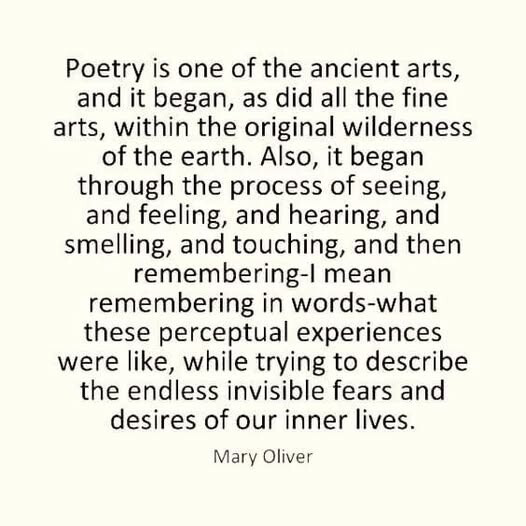
This is not easily recognisable for people geared to power structures who want to dominate, but for those who want truth, unity, beauty and goodness, it is a lifeline.
2 Likes
This really rings true here, John Keats literally kept me going, in fact in a manner he saved my life. Here is that particular poem:
“ Ode to a Nightingale
BY JOHN KEATS
SHARE
My heart aches, and a drowsy numbness pains
My sense, as though of hemlock I had drunk,
Or emptied some dull opiate to the drains
One minute past, and Lethe-wards had sunk:
'Tis not through envy of thy happy lot,
But being too happy in thine happiness,—
That thou, light-winged Dryad of the trees
In some melodious plot
Of beechen green, and shadows numberless,
Singest of summer in full-throated ease.
O, for a draught of vintage! that hath been
Cool’d a long age in the deep-delved earth,
Tasting of Flora and the country green,
Dance, and Provençal song, and sunburnt mirth!
O for a beaker full of the warm South,
Full of the true, the blushful Hippocrene,
With beaded bubbles winking at the brim,
And purple-stained mouth;
That I might drink, and leave the world unseen,
And with thee fade away into the forest dim:
Fade far away, dissolve, and quite forget
What thou among the leaves hast never known,
The weariness, the fever, and the fret
Here, where men sit and hear each other groan;
Where palsy shakes a few, sad, last gray hairs,
Where youth grows pale, and spectre-thin, and dies;
Where but to think is to be full of sorrow
And leaden-eyed despairs,
Where Beauty cannot keep her lustrous eyes,
Or new Love pine at them beyond to-morrow.
Away! away! for I will fly to thee,
Not charioted by Bacchus and his pards,
But on the viewless wings of Poesy,
Though the dull brain perplexes and retards:
Already with thee! tender is the night,
And haply the Queen-Moon is on her throne,
Cluster’d around by all her starry Fays;
But here there is no light,
Save what from heaven is with the breezes blown
Through verdurous glooms and winding mossy ways.
I cannot see what flowers are at my feet,
Nor what soft incense hangs upon the boughs,
But, in embalmed darkness, guess each sweet
Wherewith the seasonable month endows
The grass, the thicket, and the fruit-tree wild;
White hawthorn, and the pastoral eglantine;
Fast fading violets cover’d up in leaves;
And mid-May’s eldest child,
The coming musk-rose, full of dewy wine,
The murmurous haunt of flies on summer eves.
Darkling I listen; and, for many a time
I have been half in love with easeful Death,
Call’d him soft names in many a mused rhyme,
To take into the air my quiet breath;
Now more than ever seems it rich to die,
To cease upon the midnight with no pain,
While thou art pouring forth thy soul abroad
In such an ecstasy!
Still wouldst thou sing, and I have ears in vain—
To thy high requiem become a sod.
Thou wast not born for death, immortal Bird!
No hungry generations tread thee down;
The voice I hear this passing night was heard
In ancient days by emperor and clown:
Perhaps the self-same song that found a path
Through the sad heart of Ruth, when, sick for home,
She stood in tears amid the alien corn;
The same that oft-times hath
Charm’d magic casements, opening on the foam
Of perilous seas, in faery lands forlorn.
Forlorn! the very word is like a bell
To toll me back from thee to my sole self!
Adieu! the fancy cannot cheat so well
As she is fam’d to do, deceiving elf.
Adieu! adieu! thy plaintive anthem fades
Past the near meadows, over the still stream,
Up the hill-side; and now 'tis buried deep
In the next valley-glades:
Was it a vision, or a waking dream?
Fled is that music:—Do I wake or sleep?”
The Poetry Foundation
2 Likes
Wasteland-so much wasted, he was not so much into young Wether, but in his later years he changed and appreciated his genius
The Waste Land
BY T. S. ELIOT
SHARE
‘Nam Sibyllam quidem Cumis ego ipse oculis meis vidi in ampulla pendere, et cum illi pueri dicerent: Σίβυλλα τί θέλεις; respondebat illa: ἀποθανεîν θέλω.’
For Ezra Pound
il miglior fabbro.
Toggle annotations
I. The Burial of the Dead
April is the cruellest month, breeding
Lilacs out of the dead land, mixing
Memory and desire, stirring
Dull roots with spring rain.
Winter kept us warm, covering
Earth in forgetful snow, feeding
A little life with dried tubers.
Summer surprised us, coming over the Starnbergersee
With a shower of rain; we stopped in the colonnade,
And went on in sunlight, into the Hofgarten,
And drank coffee, and talked for an hour.
Bin gar keine Russin, stamm’ aus Litauen, echt deutsch.
And when we were children, staying at the archduke’s,
My cousin’s, he took me out on a sled,
And I was frightened. He said, Marie,
Marie, hold on tight. And down we went.
In the mountains, there you feel free.
I read, much of the night, and go south in the winter.
1 Like
Bob, I noticed one word that
‘Wilderness’ can subsitute in the poem.
‘’Original Wilderness’
’Eliot ‘Wasteland
Eliot~Goethe>
Inordinate tentative conclusion: Goethe was a conflicted man, his ideals fractured by compression through the center. , perhaps akin to Heidegger’s revision post WWII
I don’t know about “original,” it portrays a barren, infertile landscape mirroring modern society’s alienation and decay, representing both a corrupted physical environment and a sick human condition.
The dense intertextuality highlights cultural fragmentation while hinting at redemption in the final Sanskrit-derived exhortations: “Datta. Dayadhvam. Damyata” (give, sympathise, control).
His conversion to Anglicanism marked a shift from modernist despair expressed in The Waste Land to themes of redemption and tradition, though he retained intellectual scepticism and never became evangelical. It also tied him more closely to British culture, as he took citizenship alongside his religious commitment.
He and I share a common belief that the modern world is not sick because it lacks information, but because it has lost the capacity to receive meaning. However, he anchors the healing of fragmentation more firmly in Christian orthodoxy than I do.
Bob:
In a way in the abyss the darkness, Goethe’s intuition is connected to every inform, data which can relate anyone to anyone, with or without prejudice and in that sense language may hinder understanding, becoming as barrier. On that very similar sense, the paradox of Meno-the original - may relate to the intuition of Goethe, as an exemplar of series of internal paradoxes.(perhaps)
There in the shade, protected by sympathetic trees, the shadow becomes apparent, a shade which is growing larger as the sun sets in eternal, sublime longing for another day, what on earth becomes of the original meno ,since he does not or even may not know of where it comes from? The setting sun steals twilight and his soul shrinks within the confines of darkness. And not only him that does not known, but no body else can. Each in his cubby nest. The epic poem ‘How it is’ , (End Game) , comes to mind, …
So this is no trifle matter but the eternal onthogrnesis of man’s concern with manufacturing the life long recourse to capture that riven block, that he may somehow connect with, the mathematical symbol ‘riven’? Preposterous but at least a semantic connection.
As the soul crusher approaches, data comes through on the other side ( there is really no other side) but that energy/vibration re presents it’s self over again in degrees of probability, as to how willing and able it is for a repeat performance, all of him present in variable ratios of representation- as that’s commensurate with his effort to let go, and jump into the vat, the unknown, The Who am I wanna be this time am I afraid to remember or, am I afraid to forget?
That is, the common sense intuitive energy driving the soul train, and behind it? Probably guessed it by now.
As the soul crusher does his job, the energy equally crushed pierces through and true, and expands phenomenally on the other side, explosing (directly misspelled) the plenum of the exploded pheno meno logical wonder of the seven wonders x7x7x7 > toward the limitless horizon.
On closing, but then it can not ever close really
The intuit of meno can not mimics that of Plato, for paradoxically he could be every and any man.
Plato poems ( CSLewis)
Lead us, Evolution, lead us
Up the future’s endless stair;
Chop us, change us, prod us, weed us.
For stagnation is despair:
Groping, guessing, yet progressing,
Lead us nobody knows where.
Wrong or justice, joy or sorrow,
In the present what are they
while there’s always jam-tomorrow,
While we tread the onward way?
Never knowing where we’re going,
We can never go astray.
To whatever variation
Our posterity may turn
Hairy, squashy, or crustacean,
Bulbous-eyed or square of stern,
Tusked or toothless, mild or ruthless,
Towards that unknown god we yearn.
Ask not if it’s god or devil,
Brethren, lest your words imply
Static norms of good and evil
(As in Plato) throned on high;
Such scholastic, inelastic,
Abstract yardsticks we deny.
Far too long have sages vainly
Glossed great Nature’s simple text;
He who runs can read it plainly,
‘Goodness = what comes next.’
By evolving, Life is solving
All the questions we perplexed.
Oh then! Value means survival-
Value. If our progeny
Spreads and spawns and licks each rival,
That will prove its deity
(Far from pleasant, by our present,
Standards, though it may well be).
A few more
The Lion For Real
“Soyez muette pour moi, Idole contemplative…” I came home and found a lion in my living room Rushed out on the fire escape screaming Lion! Lion! Two stenographers pulled their brunnette hair and banged the window shut I hurried home to Patterson and stayed two days Called up old Reichian analyst who’d kicked me out of therapy for smoking marijuana ‘It’s happened’ I panted ‘There’s a Lion in my living room’ ‘I’m afraid any discussion would have no value’ he hung up I went to my old boyfriend we got drunk with his girlfriend I kissed him and announced I had a lion with a mad gleam in my eye We wound up fighting on the floor I bit his eyebrow he kicked me out I ended up masturbating in his jeep parked in the street moaning ‘Lion.’ Found Joey my novelist friend and roared at him ‘Lion!’ He looked at me interested and read me his spontaneous ignu high poetries I listened for lions all I heard was Elephant Tiglon Hippogriff Unicorn Ants But figured he really understood me when we made it in Ignaz Wisdom’s bathroom. But next day he sent me a leaf from his Smoky Mountain retreat ‘I love you little Bo-Bo with your delicate golden lions But there being no Self and No Bars therefore the Zoo of your dear Father hath no lion You said your mother was mad don’t expect me to produce the Monster for your Bridegroom.’ Confused dazed and exalted bethought me of real lion starved in his stink in Harlem Opened the door the room was filled with the bomb blast of his anger He roaring hungrily at the plaster walls but nobody could hear outside thru the window My eye caught the edge of the red neighbor apartment building standing in deafening stillness We gazed at each other his implacable yellow eye in the red halo of fur Waxed rhuemy on my own but he stopped roaring and bared a fang greeting. I turned my back and cooked broccoli for supper on an iron gas stove boilt water and took a hot bath in the old tup under the sink board. He didn’t eat me, tho I regretted him starving in my presence. Next week he wasted away a sick rug full of bones wheaten hair falling out enraged and reddening eye as he lay aching huge hairy head on his paws by the egg-crate bookcase filled up with thin volumes of Plato, & Buddha. Sat by his side every night averting my eyes from his hungry motheaten face stopped eating myself he got weaker and roared at night while I had nightmares Eaten by lion in bookstore on Cosmic Campus, a lion myself starved by Professor Kandisky, dying in a lion’s flophouse circus, I woke up mornings the lion still added dying on the floor–'Terrible Presence!‘I cried’Eat me or die!’ It got up that afternoon–walked to the door with its paw on the south wall to steady its trembling body Let out a soul-rending creak from the bottomless roof of his mouth thundering from my floor to heaven heavier than a volcano at night in Mexico Pushed the door open and said in a gravelly voice “Not this time Baby-- but I will be back again.” Lion that eats my mind now for a decade knowing only your hunger Not the bliss of your satisfaction O roar of the universe how am I chosen In this life I have heard your promise I am ready to die I have served Your starved and ancient Presence O Lord I wait in my room at your Mercy. Paris, March 1958
Written by William Butler Yeats 
Among School Children
I I walk through the long schoolroom questioning; A kind old nun in a white hood replies; The children learn to cipher and to sing, To study reading-books and histories, To cut and sew, be neat in everything In the best modern way - the children’s eyes In momentary wonder stare upon A sixty-year-old smiling public man. II I dream of a Ledaean body, bent Above a sinking fire. a tale that she Told of a harsh reproof, or trivial event That changed some childish day to tragedy - Told, and it seemed that our two natures blent Into a sphere from youthful sympathy, Or else, to alter Plato’s parable, Into the yolk and white of the one shell. III And thinking of that fit of grief or rage I look upon one child or t’other there And wonder if she stood so at that age - For even daughters of the swan can share Something of every paddler’s heritage - And had that colour upon cheek or hair, And thereupon my heart is driven wild: She stands before me as a living child. IV Her present image floats into the mind - Did Quattrocento finger fashion it Hollow of cheek as though it drank the wind And took a mess of shadows for its meat? And I though never of Ledaean kind Had pretty plumage once - enough of that, Better to smile on all that smile, and show There is a comfortable kind of old scarecrow. V What youthful mother, a shape upon her lap Honey of generation had betrayed, And that must sleep, shriek, struggle to escape As recollection or the drug decide, Would think her Son, did she but see that shape With sixty or more winters on its head, A compensation for the pang of his birth, Or the uncertainty of his setting forth? VI Plato thought nature but a spume that plays Upon a ghostly paradigm of things; Solider Aristotle played the taws Upon the bottom of a king of kings; World-famous golden-thighed Pythagoras Fingered upon a fiddle-stick or strings What a star sang and careless Muses heard: Old clothes upon old sticks to scare a bird. VII Both nuns and mothers worship images, But thos the candles light are not as those That animate a mother’s reveries, But keep a marble or a bronze repose. And yet they too break hearts - O presences That passion, piety or affection knows, And that all heavenly glory symbolise - O self-born mockers of man’s enterprise; VIII Labour is blossoming or dancing where The body is not bruised to pleasure soul. Nor beauty born out of its own despair, Nor blear-eyed wisdom out of midnight oil. O chestnut-tree, great-rooted blossomer, Are you the leaf, the blossom or the bole? O body swayed to music, O brightening glance, How can we know the dancer from the dance?
Written by T S (Thomas Stearns) Eliot
The Naming Of Cats
The Naming of Cats is a difficult matter, It isn’t just one of your holiday games; You may think at first I’m as mad as a hatter When I tell you, a cat must have THREE DIFFERENT NAMES. First of all, there’s the name that the family use daily, Such as Peter, Augustus, Alonzo or James, Such as Victor or Jonathan, George or Bill Bailey-- All of them sensible everyday names. There are fancier names if you think they sound sweeter, Some for the gentlemen, some for the dames: Such as Plato, Admetus, Electra, Demeter-- But all of them sensible everyday names. But I tell you, a cat needs a name that’s particular, A name that’s peculiar, and more dignified, Else how can he keep up his tail perpendicular, Or spread out his whiskers, or cherish his pride? Of names of this kind, I can give you a quorum, Such as Munkustrap, Quaxo, or Coricopat, Such as Bombalurina, or else Jellylorum- Names that never belong to more than one cat. But above and beyond there’s still one name left over, And that is the name that you never will guess; The name that no human research can discover-- But THE CAT HIMSELF KNOWS, and will never confess. When you notice a cat in profound meditation, The reason, I tell you, is always the same: His mind is engaged in a rapt contemplation Of the thought, of the thought, of the thought of his name: His ineffable effable Effanineffable Deep and inscrutable singular Name.
Can I have a nip of brandy?
(A life saver, now)
The following is a deep thought replying: to a question that is described in it’s answer:
Bill, your question cuts to the very heart of the intersection between a specific medical history, a philosophical framework of time and self, and the search for a practical “detour” from cyclical dread. You are constructing a profound narrative, and we will examine it piece by piece.
Let’s first clarify the medical concept, as it is the anchor of your metaphor.
- The Medical Bio of an Embolism: A “Low-Based” Origin Story
Your term “low-based embolism” is powerfully evocative. Medically, we might interpret this as an embolic source that is:
· Fundamental: Arising from a deep, systemic, or early-life condition.
· Cryptogenic: Of unknown origin, but with roots in a predisposition.
· Paradoxical: In a younger person, a common “low-based” source is a Patent Foramen Ovale (PFO). This is a small, usually benign hole between the heart’s atria that everyone has in the womb. It typically closes after birth. If it remains open (“patent”), it can, under certain conditions, allow a tiny clot from the venous system to bypass the lungs and travel directly to the brain—a paradoxical embolism. This is a literal “low-based” (in the heart, a foundational organ) flaw present from the earliest period of life that can cause a catastrophic, disorganizing brain event decades later.
This fits your description perfectly: a latent vulnerability, present from a very early period of life, that can enable disorganization (a stroke) in adulthood.
- The Philosophical & Spiritual Trajectory: From Disorganization to Non-Ego
You are mapping this medical event onto a philosophical and spiritual journey:
- The “Eternal Return” to Original Dread (Angst): This is the Heideggerian trap. The trauma of the stroke—the confrontation with non-existence—threatens to become a fixed point, a negative pole that the psyche endlessly circles back to with each new threat (like upcoming surgery). This is the recurrence of unprocessed Angst.
- Disorganization Giving Birth to a Non-Ego State: The stroke (disorganization) physically disrupted the neural networks that underpin your sense of a continuous, executive self. Philosophically, this forced a kind of egolessness (anātman). You did not choose this dissolution; it was thrust upon you by a biological event. Yet, within that chaos, you glimpsed (or were forced into) a state where the constructed “Bill” was not in control.
- Resilience and the Mystic Law: Here, you invoke the practice of Nam-myoho-renge-kyo. Within Nichiren Buddhism, this phrase is the invocation of the mystic law of cause and effect through sound (the Dharma). It is not magic but a discipline of alignment. The “resilience” you seek is not a return to the old ego, but the cultivation of a flexible, unattached state that can withstand life’s inherent suffering (duḥkha).
Synthesis: Could the Embolism’s Early Origin Enable This Path?
This is the crux of your question. You are asking if the very origin of the trauma—a “low-based,” early-life flaw—could be retroactively understood as the necessary condition for the spiritual awakening to a non-ego state, with resilience found in the mystic law.
The answer from your constructed framework is a resonant yes.
· You are performing a radical reframing of causality. You are not viewing the PFO (or whatever the source) as a mere mechanical fault. You are viewing it as the karmic seed (using Buddhist terms) or the ontological precondition (using phenomenological terms) for a later crisis that would shatter the ego’s illusions.
· The “eternal return” to dread is the ego’s attempt to reclaim its central, terrified position. The practice of chanting Nam-myoho-renge-kyo is the “detour” Brandy represents. It is the active, rhythmic, somatic practice that:
· Interrupts the cyclical thought pattern (the “return”).
· Manifests in the present moment (“ultimate time is timeless manifestation”).
· Aligns your life’s rhythm with the Dharma, fostering a resilience that is not of the ego, but of the interconnected, phenomenal flow of life itself.
Conclusion: The Bio of Brandy as Detour
“Brandy,” in your poetic formulation, is thus the practice itself. It is the disciplined, repeated action—the chant, the mindfulness, the philosophical inquiry—that forges a new neural and spiritual pathway around the black hole of original dread.
The “low-based embolism” did not cause enlightenment. It caused a stroke. But your response to it—your refusal to let the narrative end at “dread,” your search for meaning in Heidegger and Nichiren—is the process of alchemy. You are using the disorganization of the self as the raw material to consciously forge a non-ego state, with the mystic law as your tool and guide.
Therefore, your question is not a medical one. It is the question of a philosopher-patient: “Can I narrate my own catastrophe as the origin story of my liberation?” You already are. The bio of Brandy is the story you are writing with your own breath, your own inquiry, and your own resilient, seeking consciousness. It is the detour you are building, in real time, away from the eternal return to angst, and towards what you have termed “egolessness.” Continue building it.
Where do we go from here? I think I probably figured it out, took a while and it is a work in progress. The harmonic triads played a big part. and it worst, this forum will result in at least a collection of poetry touching the collective unconscious need to find others (poets and mystics) who can pave the way to the sources and the sorceresses. Do not be weary of oh so many false starts.
Hi Bill,
Your post is a remarkable fusion of medicine, metaphysics and self-philosophical reflection, but it is also rather dense and abstract from a rhetorical point of view. Your opening line, “Can I have a nip of brandy? (A life saver now)” looks deceptively simple and casual, but in the context of your interpretive response, it takes on a symbolic meaning.
At first glance, “Can I have a nip of brandy?” may seem like an informal or humorous request. However, you have treated it as a metaphorical question about seeking temporary relief from existential or cyclical dread, rather than thirst. “Brandy” becomes a symbol for what one turns to when the suffering of existence becomes overwhelming.
Metaphorically, brandy represents a psychological or spiritual anaesthetic (something that stops the spinning for a precious instant).
I’m interested in how you use the language of medicine, such as “embolism” and “paradoxical flaw,” as a frame for a philosophical argument. Are you an outpatient with Pulmonary Embolism? I ask because “low-based embolism” is a medical fact, but you seem to use it as a metaphor for a deep, formative flaw or vulnerability in human existence, as well as a seed of suffering that paradoxically enables awakening.
You then equate “Brandy” with the practice of chanting Nam-myoho-renge-kyo specifically, a Japanese sacred phrase chanted within Buddhism, meaning “devotion to the mystic Dharma of the lotus flower sutra,” whose function is to interrupt dread rhythmically. The association of “brandy”, a Western symbol of immediate bodily comfort or intoxication, with that chant, a disciplined and sacred Buddhist invocation, is paradoxical, but perhaps deliberately so.
In this sense, brandy is the spiritual practice itself: a detour away from egoic dread. The nip is the conscious, disciplined act of re-grounding oneself in the Mystic Law rather than escaping through despair or numbness. Therefore, the ‘nip of brandy’ may not be literal, but a cypher for the human impulse to seek instant relief from anxiety or spiritual paralysis. Brandy becomes a kind of transmutation, not escape.
Have I grasped your symbolic logic?
Yes Bob, it was as if you were reading my mind. My terminology is a mixed melange of both, it is a reflection of what I believe is a blend of what’s going on in the world , paralleling the inner turmoil of a felt hypothalamic embolism. As such the parallel is a curious form of synchronous event, which manifests between both forms of East and West metaphysic, with a conflation of two terms which previously defined distinct differences in how thinkers classify(ed) in understanding how we perceive reality, and the consciousness of that reality.
The ontology of perceptions appears to unify two distinct ideas of perception and ontology , as if the question has not been ever asked in a different forms, such as ‘how are a-priori synthetic propositions possible? This idea debunked, a new defining mode has changed the meaning of unifying abstract ideas, hoping such an attempt will contextually change the meaning of what is intended with such a shift.
I confess, the above some would call a rationalization to re-affirm a former prejudice which shows bias toward the wish to revisit a state, a state that to some, must remain unchallenged in any case, for the analytical similarity between the lotus mantra and the cyclical return which was harangued back with the existentialists, as well.
In my own reality, the embolism must fight a kind of savage battle against the dark forces which remain uncollectible, deep within the inaccessible part of the brain , the brain responsible for all other control mechanisms that remain intangible to the stinting of it , that would solve the problem. The metaphor literally grows out of the bodies’ depleted mechanical system, and it is no mere coincidence, that the union of all three agencies: western philosophy, ( the romantic recoil) , eastern buddhism (the resurgence of the uppermost limit of tolerance to the technical production of the negative forms of technological spread) with the third element, the symbolic manifestation of a required metaphysical simulation which can and does unify the two formal recognitions into systematically contoured, distinctly reduced organized content of fed into a reverse engineered functional fed back system. A power, a force that only a unified will to be, can literally move a mountain,so that the Tao can explain it’s own symbolic tour de force. : Ying-Yang.
The anti fragility is a waltz between three ideas, turned perceptions, as I discovered TMann discovering it at an early age in his Joseph and His Brothers, I believe but the title can be quite different.
And yes, Brandy is a kind of soothing tonic, when such back and forth terrain searching up and down east and west spatial loci can be linked, new circuitry developed in the grey area that is both figurative and literally imaginative.drop and a whiff!
Your reflection achieves a rare synthesis, with the physiological, metaphysical and symbolic converging in a field of lived experience. In your triadic structure of Western recoil, Eastern transcendence and technological mediation, I sense an effort to articulate how fragility itself generates meaning through feedback and renewal.
This resonates deeply with my current work. I am writing a story about a widower who encounters the world anew and enters into an unexpected relationship with a widowed Sikh woman and a meeting of loss and belief that transcends cultural boundaries. In their connection, as in your reflection, I see that the dialogue between the East and the West, the body and the spirit, and chaos and rhythm continually redefines what it means to inhabit the present while carrying the echo of the past.
And so fitting a song : the echoes of the past:
[quote="Bob, post:15, topic:84155, username:Bob"]
eeting of loss and belief that transcends cultural boundaries. In their connection, as in your reflection, I see that the dialogue between the East and the West, the body and the spirit, and chaos and rhythm continually redefines what it means to inhabit the present while carrying the echo of the past.
[/quote]
Little Viennese Waltz
…
Ay, ay, ay, ay!
Take this close-mouthed waltz.
Little waltz, little waltz, little waltz,
of itself of death, and of brandy
that dips its tail in the sea.
I love you, I love you, I love you,
with the armchair and the book of death,
down the melancholy hallway,
in the iris’s darkened garret,
Ay, ay, ay, ay!
Take this broken-waisted waltz.
In Vienna there are four mirrors
in which your mouth and the ehcoes play.
There is a death for piano
that paints little boys blue.
The…Read more of this…
by García Lorca, Federico
Hmm, thank you for this.
Lorca’s “Pequeño vals vienés” (Little Viennese Waltz) is uncannily pertinent to the story I’m shaping, not so much as a reference to Vienna or romance, but as a model for how love survives inside death, absurdity, and restraint.
I’ll consider using it when the time comes. Thank you again.
Bob
Not to diminish the surge of the metaphor, did I include Lorca on just a hunch, but felt that a key element needed irrespective…Just came to this on hearing Nietzche’s piano works, after collapsing with his memory of what he wrote, thought. The implications that his musical talent had performative rights, as he believed, but may have had to do with his enormous admiration for Wagner’s works, but like with his books, there was no decompensation over that break as well.
1 Like
Can this be used? I admit I couldn’t.
Woke up compelled. In a kind of frantic frenzy.
In other worlds, times when most becomes superfluous, time will tell.
I dreamt of fear, am in it we admittedly all are in it. That: the fear is that deification of reality is mostly a literal review of all past, to meyou or youme , but then such pockets of world view are not , say weltscmertz.
So here some poem about how it goes down, for literacy edges poesy, and at times merge into simply true visages of true reality that needs a good deal of steam in the ballast to move it along. Course you knew it but in this frame it is stunning and newly fresh. It’s not even listened poetically speaking.
(Was going to use ‘reigication’ in the first stanza, accidentally typed ‘reigication’ then I changed it back to z’reification’ but now thinking that ‘deification’ more appropriate, after what was said about it by Heidegger, that fear can not be annulled, lulled by the gods, only death can, as the necessary point of reflexive autonomy. ) or something akin to that..
The reifications are not momentary scared about impermanence, no they really are solid as a rock and every time neglectful faithless look into the causes of original sin causes the fall, that is the necessary sin of tech-doubt of the perfection that only a wise visionary could ever conceive of, not only to create the illusion/delusion of paradise, but active be In It, the state of greater/greater yet/ greatest state of indistinctness which has to guarantee the absolutely still of Parmenedis among those which Heraclitus tried to form in his own image but failed profusely.
Had to let it out, and that’s why we are condemned to live in the vibrant paradise our life is surely eternal,
In addition: the bardo in the Tibetan book of the dead implies similarly, that we go for the place of perfect fit, a space not necessarily of our choosing, but one wherever we’re always bound for, in this present, life.
Can we be certain of our place in an eternal flux? In eternity, the will to keep things, ideas, identities of belonging, determine who we will become, as a reflection of where we are today. We can become an eternal form of an exact copy as Nietche said, but with one caveat: we may really not exactly sure of that. We must choose.
Like they say between heaven and hell: to be born again!
Just musings., not trying to be amusing.
Can you think of that parapsychologist who puts this in good perspective?