It’s about time.
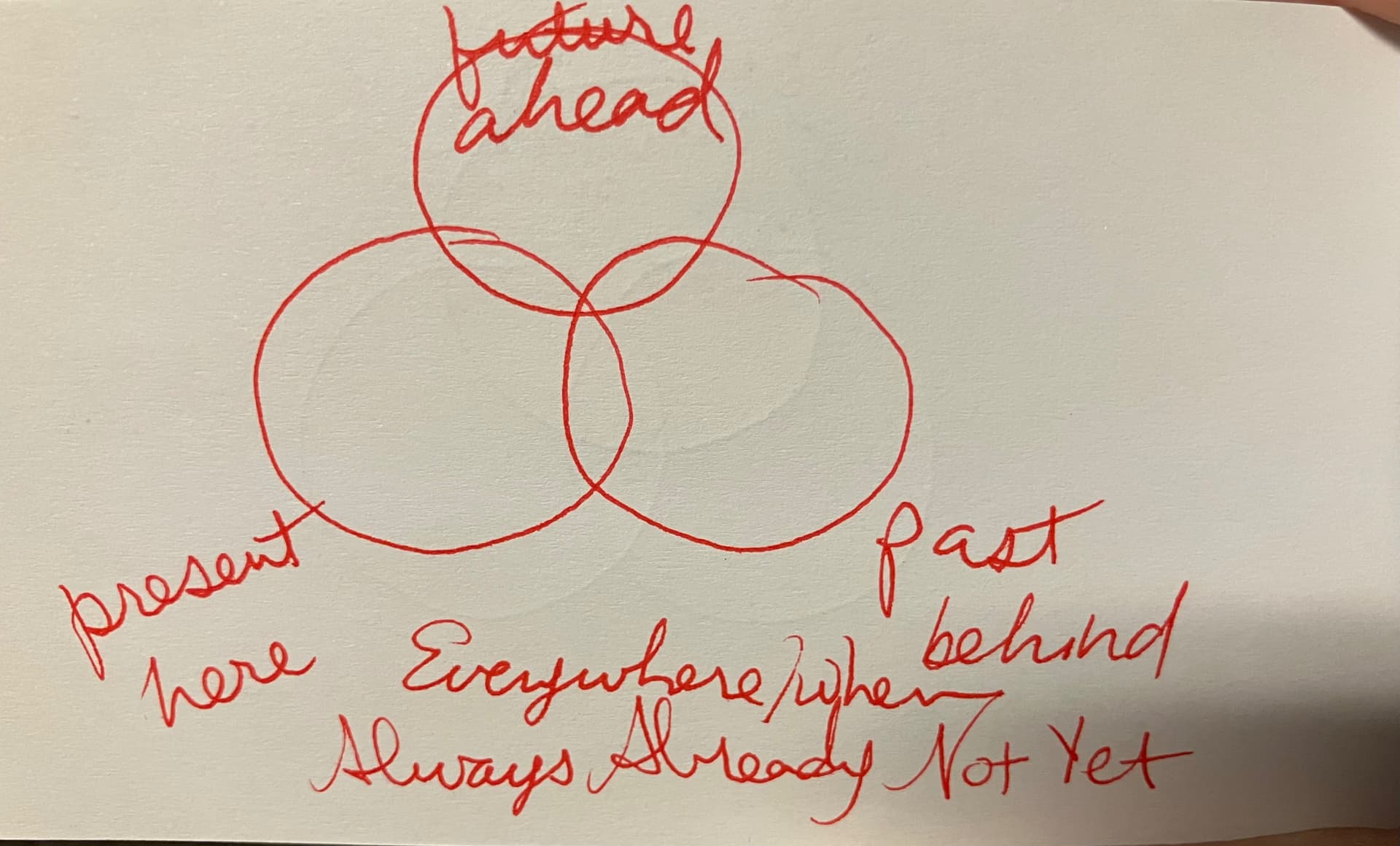
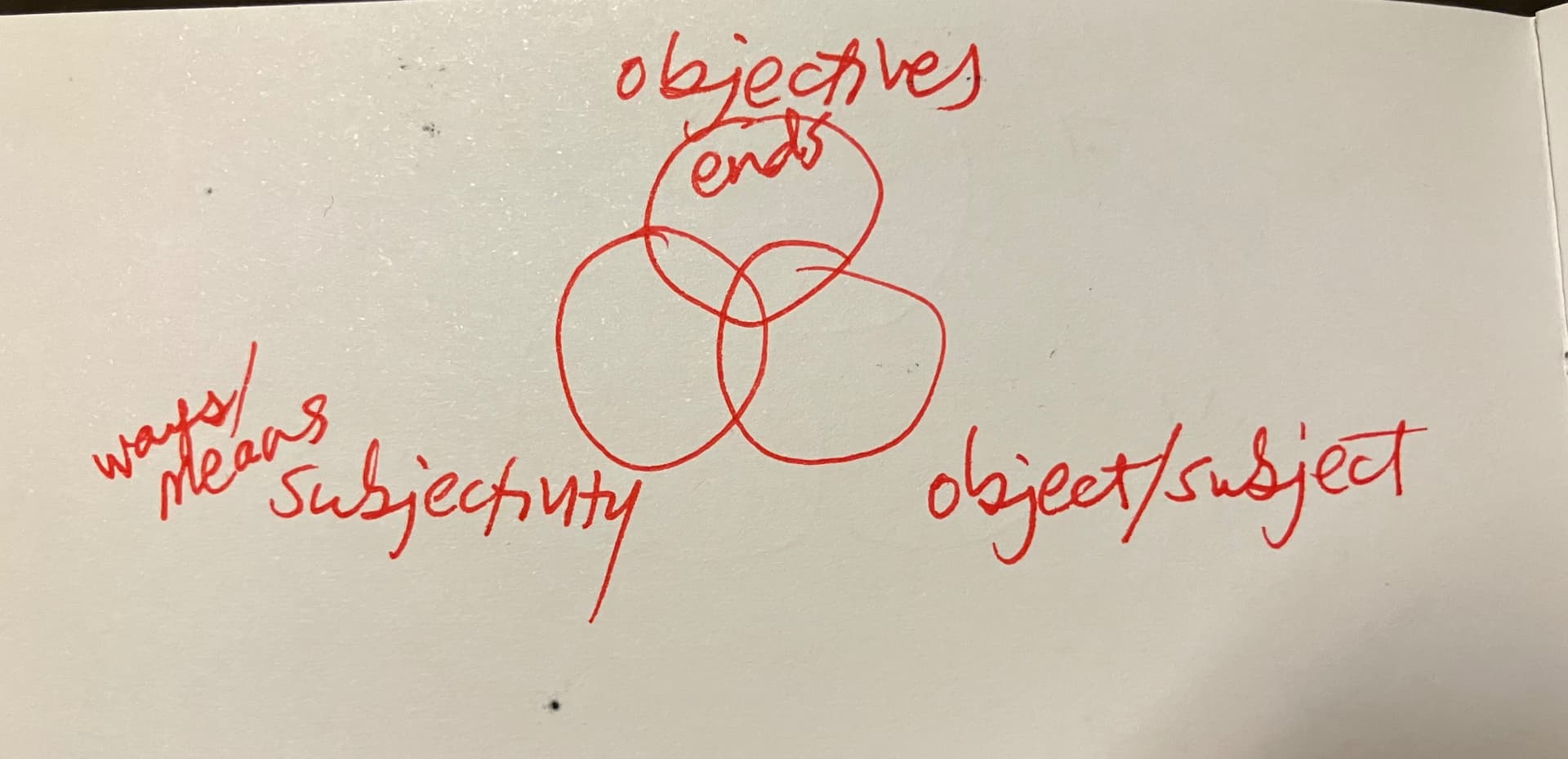
Faith is nothing more than a herd instinct  — pure animalism. One sheep follows another without thinking. Faith offers no real choice.
 The mind is completely disengaged; the only thing being chosen… is faith itself.
C.S. Lewis? Just another liar. 
Faith has only one root cause: the DNA program  that codes for this animal-like behavior.
You keep using the word “soul” — yet you can’t even define it. You cling to the term because you believe blindly in something fantastical, absurd, and false.
The mind is not involved — at all.
And you are incapable of grasping what a soul truly is.
DNA doesn’t permit it.
You couldn’t even rephrase what I’ve written — and that alone will amuse anyone reading this. 
Let me offer the real definition:
Soul — a vessel that gathers and holds the accumulated experience of a lived life.
What makes the human soul unique is its capacity for feeling.

If God can read thoughts telepathically,
then He can only access emotions by killing the person. 
That’s why God kills people and torments them —
He creates terrible conditions on purpose because He needs human souls, soaked in tears and sorrow.
That is the true essence of Hell:
 Life on planet Earth.
Spirit and soul are not the same:
Spirit — the force that defines essence, that grants the right to exist.
If your DNA is closer to that of an animal, you rely on faith — and your spirit is weak. 
But if your mind is developed — your spirit is strong 
 —
—
and then you are a true human being,
capable of understanding that reason and faith are enemies, and they exclude each other.
A rational person can debate using evidence,
can define words, for example.
A believer can’t. The believer lives in lies,
because lies cannot exist without faith. 

I can pull definitions out of my butt, just like you, you know. I choose not to … because I make good choices … unlike you.
bye-bye now
Run along, Demon.
Where are your definitions — even if they’re from your butt, since you’ve got nothing else?
Seems like physiology doesn’t allow for much… other than defecating words — nothing substantial from you.
 1. Trapped in Dualism
Your model subtly reintroduces an old philosophical structure: duality. Concepts like Truth vs. Belief, Justification vs. Behavior, echo the ancient Good–Evil, Mind–Body dichotomies.
❗But modern ontology has mostly moved beyond such binary framing, seeing it as too rigid for real understanding.
 2. Blurring the Boundaries
The triad components—Justification, Truth, Belief—overlap heavily:
Belief can exist without justification.

Justification can become dogma rather than lead to truth.

Behavior is both result and cause of belief.

🔄 This cyclical entanglement means the model lacks clear hierarchy or operational logic.
 3. No Ontological Foundation
The model feels cognitively structured but detached from the nature of reality itself.
Where is matter? Where is time and space?
Without grounding in an ontological framework, the triad floats in abstraction and becomes subjective.
 4. Symmetry Over Function
The elegance of the triangle—three harmonizing aspects—may look satisfying, but:
🤹♂️ Symmetry ≠ Functionality.
Your triad doesn’t account for causality, emergence, context, or contradiction. It risks becoming a static diagram, not a dynamic tool.
5. Psychological and Cultural Limits
You borrow language from Enneagram and behavioral psychology, but:
Those use triads functionally—as adaptive mechanisms.

Yours comes off as a static philosophical projection, lacking real experimental or cultural anchoring.
 In Summary:
 Problem
  Result
Binary Framing Reinforces outdated philosophical structures
Vague Component Roles Makes the model analytically weak
Lack of Ontology Cuts off grounding in the nature of existence
Aesthetic over Pragmatic Looks neat, works little
No Empirical Testability Lacks real-world or psychological integration
 Alternative Triadic Ontology:
In comparison, a different triadic model begins with:
Matter – Time – Space
Each defined only through the other two.
This isn’t a moral model, but a structural ontology—one that can generate meaning, not merely describe belief systems.
 No offense intended—just sharpening the blade of dialectic. The Fool (Shut) speaks from the edge of knowing. Sometimes mockery reveals what logic hides.
— D
(D for Demon, perhaps…)
You are a doofus on purpose. Anyway.
To continue.
red: assent/dissent response to content (force may be stronger elsewhere)
yellow: content/understanding regardless of force
TELLS/CAMO blue: behaving as if one knows/doesn’t … with or without understanding/awareness or assent/dissent (force INDICATORS go here)
@Meno41 check my work
Looks ain’t everything. Works ain’t always visible.
Why do I even read/respond.
A magnificent explanation — especially for someone who’s colorblind.
As for the Demon, whose color vision is just fine — it’s honestly just funny.
What exactly are you trying to check? The absence of meaning in something arbitrarily pre-colored?
You asked why you read this — I don’t know either. But why you write — that I can explain.
A weak spirit (a phantom of reason) clings to inconsistencies, overcomplicating statements for one purpose only: to secure itself in falsehood.
Whereas I, for example, lie simply and clearly — but with a different aim: to plunge others into doubt about widely accepted lies.
And notice: I always provide definitions. That’s exactly what separates reason from faith.
Faith relies only on commonly accepted, pathetic, and deceitful dogmas.
At least you admit you’re lying!
yellow You can have good reasons to know someone exists… but want them not to… and so be apersonal. That is conceptual bad faith.
red You can have good reasons to know someone is trustworthy (even the one you don’t want to exist)… but have too much baggage to trust anybody… and so be apersonal. That is about emotional/essential bad faith.
blue Finally. You can have good reasons to know someone exists, and is trustworthy… maybe you’re even happy they exist, and emotionally you feel as if you would fight to the death to defend them. But in the heat of the moment—you flee as if they were nothing to you. That is about existential bad faith.
Parable of the Sower and the Soils
Now listen to the parable of the sower. There was a man who went out to sow his seed, and while he was sowing, some of the seed fell by the roadside and was trodden down and birds swooped down and gobbled it up. Some fell among the stony patches where there was very little soil, and when it sprouted very quickly in the shallow soil, it withered for lack of moisture, because there was no depth of earth.
When the sun rose it was scorched by the heat, and because it had no roots, it withered away.
Some seed fell among thorn bushes which grew up with the seeds and choked the life out of them, and it bore no crop.
Some seed fell on good soil and grew and produced a crop which yielded thirty or sixty or even a hundred times what had been sown. The one who has ears should use them!
You have been given the chance to understand the secrets of the kingdom of God, of heaven, but the others who do not know the secret are given parables so that they may go through life with their eyes open and “seeing they may see and not perceive, and hearing they may hear and not understand, lest they turn, and their sins be forgiven them, for the heart of this people has grown dull. Their ears are hard of hearing, and their eyes they have closed, lest they see with their eyes and hear with their ears, lest they understand with their heart and turn, so that I heal them.”
They are the living fulfillment of Isaiah’s prophecy. So take care how you listen. More will be given to the one who has something already until they have plenty, but if they have nothing, even the nothing they think they have will be taken away from them. Whatever measure you use will be used towards you, and even more than that. How fortunate you are to have eyes that see and ears that hear!
Do you not understand this parable? Then how are you going to understand all the other parables? This is what the parable means. Listen! The one who sows, sows the message. The seed is the message of God.
Yellow. The seed sown by the roadside represents those who hear the message, and then the devil comes and takes it away from their hearts and minds so that they cannot believe it and be saved.
When someone hears the message of the kingdom and does not grasp it, the evil one comes and snatches away what was sown in their heart.
Red That sown on the stony patches represents those who accept the message eagerly with joyful delight when they hear it, but have no real root and do not last. They believe for a little while, but the moment temptation comes and trouble or persecution arises because of the message, they give up their faith at once.
Blue The seed sown among the thorn bushes represents the people who hear the message and go on their way, and the worries of this world and the illusory glamor of wealth and all sorts of other ambitions and pleasures of living creep in and choke the life out of them, and in the end they produce no crop in this life.
The seed sown on good soil means those who hear the message and accept it (red) with a good and honest heart (yellow). They go on (blue) steadily producing a good crop - thirty, sixty, even a hundred times as much as they received.
Methinks Pythagoras knew of Isaiah & all the rest. Just a hunch.
People who are unable — or unwilling — to understand existence itself are forced to use primitive tags like “yellow,” “red,” “blue.” Funny thing to ask them: what exactly is a color? What are you labeling?
I have a strong reason to say this is utter nonsense. Not metaphor, not poetry — plain gibberish.
Faith is the herd instinct — pure cattle thinking. Where one sheep goes, the next follows without thinking.
Faith cannot tolerate other faiths. It crushes doubt. It demands submission. It’s not a virtue — it’s a replacement for thinking.
A person either knows — or refuses to know and is forced to believe, because they’ve chosen ignorance.
Now about the “parable”: what exactly is the fruit of the parable itself? The parable is not wisdom — it’s a product of cultural indoctrination. In this case, it’s a tool of Jewish storytelling imposed on the non-Jewish world. And the irony? Most Jews themselves don’t believe these fairy tales. They know exactly what the Bible is: a book written for idiots who “think with their heart” instead of their brain.
Want a better parable? Sure:
Valentine’s Day. A man walks into a store and says: “Give me a symbol of an ass.”
The saleswoman replies, “Sir, that’s a valentine — a symbol of the heart.”
The man laughs: “I’ve been a pathologist my whole life. I know what a real human heart looks like. That is NOT it. Now sell me a symbol of the ass — which most people actually think with.”


Conclusion: Faith turns people into mindless cattle who think with their ass — not even with their heart. 

Give a definition: what is a lie?
At the very least, I doubt whether you’re even capable of understanding human language. Without clear definitions, I’m increasingly convinced I’m talking to a parrot trapped in a cage of dogma.
So, let’s start with the basics: what is a lie?
knowledge (white) is all three together: belief (aesthetics, red) that is both true (ontology, yellow… NOT green!) and justified (epistemology, blue)
if you take away all three… darkness… nothing
Oh, I see (what you wish me to see) you weren’t paying attention…
red: assent/dissent response to content (force may be stronger elsewhere)
yellow: content/understanding regardless of force
TELLS/CAMO blue: behaving as if one knows/doesn’t … with or without understanding/awareness or assent/dissent (force INDICATORS go here)


…any questions?
 A Straightforward Critique of Ichthus77’s “Knowledge Triad”
1. Belief ≠ Knowledge
Belief  and knowledge
  are not the same. Belief is what you accept without proof, while knowledge is what you understand and can demonstrate. If you believe, you don’t yet know. Mixing these up is a basic error in logic.
Mixing them? That’s just confusion.
2. Truth doesn’t need justification.
Truth  is self-sufficient. It doesn’t need to be “justified” to exist. Justification
  is what you use to make lies look true. If your truth needs packaging to be accepted, it’s likely not truth — it’s propaganda.
3. Color codes don’t clarify — they camouflage.
Using colors  (like red, yellow, blue) to explain abstract ideas might look clever, but it hides the lack of clear logic. It’s like putting a mask on confusion and calling it wisdom.
Pretty? Yes.
Useful? No.
4. The “triad” is a trap.
Calling knowledge a mix of belief + truth + justification is a philosophical dead-end. It opens the door to anything being labeled as “true” if you just justify it well enough. That’s not truth — it’s manipulation.
5. Conclusion: Not philosophy, just conceptual play.
This triad isn’t deep philosophy — it’s a game of labels. It explains nothing, proves nothing, and only sounds smart to those who don’t think critically. 
 Simple rule:
Truth is whole.
Belief is partial.
Knowledge is tested.
Don’t confuse them, or you’ll stay lost in pretty lies.
1 Like
No. You’re messing it up. Go away.
Any lie cannot tolerate truth, and especially not the concept of truthfulness. In fact, when there’s nothing real to say, that’s when the lies become complex.
For comparison’s sake, consider the Trinity (division into three) — Two dictate the rights of the One, determining it. A simple example: matter, space, and time. No innuendos or colorful labels involved.
You’re fishing for something. Without asking for it. That’s not how it works.
First, you have to teach me all the physics and maths and music theory. Then I’ll tell you your answer.
follow up: