The NKTg law doesn’t directly address organization in terms of thermodynamics (like entropy) or biology (like gain of function), but it does describe how systems evolve over time — especially through changes in mass, momentum, and distance. So while it’s not about “organization” in the traditional sense, it can offer clues.
For instance, if we observe a body gaining mass while its trajectory becomes more stable or predictable, that could imply a kind of mechanical “self-organization.” On the other hand, if mass decreases while the system becomes more chaotic or dispersed, that might reflect a loss of structure.
To analyze biological gain of function or decreasing entropy, we’d still need additional models. But I believe the NKTg framework could help identify conditions under which organization becomes more or less likely — especially in cosmic or large-scale systems.
In short: it’s not the full picture, but it might be one piece of the puzzle!
I appreciate the heads-up, but I prefer to give people the benefit of the doubt — especially when conversations start on a friendly and curious note.
I’m here to share ideas, test theories, and engage with those interested, regardless of background or belief. If someone disagrees or has other intentions, that’s their choice — but it won’t distract me from the work I’m doing or the discussions I’m open to having.
Thanks for your concern, though. Let’s keep things constructive.
I definitely don’t think of myself as a 150 IQ person — I just really enjoy digging deep into patterns and trying to make sense of things that don’t quite add up. But I totally get that this might not be everyone’s kind of conversation.
Appreciate the honesty, though! If nothing else, at least it sparks some interesting reactions.
Haha — fair point. But luckily, history shows that not throwing the tools of understanding into the river tends to work out better for everyone.
Fire, telescopes, maps — they didn’t ruin the world. They helped us see it more clearly. I’d argue the same applies to asking uncomfortable questions or exploring new frameworks.
But hey, if it ever comes to a bonfire of ideas, I’m at least bringing a notebook.
Have you ever noticed the use of the words willingness and permittivity in physics? It’s like “conditions for the possibility of”… the conscious version of those … movements.
Are you showing that varying inertia is in the same neighborhood of willingness and permittivity, and that such things can be calculated using NKTg Law (which I fondly refer to as the XVM Law)?
Final questions. What do the g and m stand for? Why NKTg as opposed to NKTm, when naming the law?
NKT stands for Newton, Kepler, Tycho, Tesla, EinsTein, and Tung — the scientists I deeply admire. I’ve spent a lot of time thinking about their lives and contributions. The letter “g” is meant to be general, so NKTg refers to the general form of the NKTg function.
On the other hand, NKTm is the proposed unit for measuring varying inertia — something that doesn’t yet exist in the current human system of measurement. I propose it as a new unit, just as Newton, after discovering force, introduced the unit “N” (Newton) to measure it.
At first, I wanted to introduce everyone to the concept of varying inertia, because in physics up to now, inertia has always been considered constant. Knowing that this is a new and difficult concept to grasp, I used NASA data as input so people can more easily verify the idea.
In the near future, I will publish an experiment using historical data from 500 years ago. I hope that this philosophy forum, with its open-minded thinking, will be willing to discuss the topic from a scientific perspective once the experiment is released — because it’s very possible that physics textbooks may need to be rewritten.
Are you saying something along the same lines as the equipartition theorem …except kind of spread out? I mean … if you scroll way out … what is “spread out,” anyway? And if you scroll way in, do you even reach a/the FINAL singularity? No, you’re already in it (and it, you). And it ain’t simple, unless by simple, you mean irreducibly complex (and maximally great).
Your question is very interesting, and I think it touches on deep concepts about the nature of space, energy, and physical structure.
I’m not directly comparing it to the equipartition theorem, but I am indeed referring to a kind of distribution — not only across space, but also through time and orbital paths. When viewed on a large (macro) scale, things seem “spread out” and stable. But when we zoom in (micro), it’s possible that we’re already inside a structure so complex it can’t be reduced any further — as you said, “simple” in the sense of being maximally complex yet irreducible.
Your comment about us already being in a singularity also makes me think of the idea that space-time may not be separate from perception or the position of the observer. The line “and it is in you” is really powerful.
Thank you for sharing such a unique perspective. If you’ve chosen to withdraw it, I respect that — but honestly, I think it’s well worth contemplating.
Follow up question. Is this in the neighborhood of what you’re saying?
constant tau (τ)
usually denoted by the Greek letter τ (tau), is the parameter characterizing the speed of response to a step input of a first-order, linear time-invariant (LTI) system.
2pi=phi 1.61803… ratio between the radius and the circumference
LIMIT OF IMPULSE RESPONSE or TOTAL IMPULSE (of collision) … or force of impact?
pi 3.14159… ratio between the diameter and the circumference
The Dirac delta is used to model a tall narrow spike function (an impulse), and other similar abstractions such as a point charge or point mass.[6][7] For example, to calculate the dynamics of a billiard ball being struck, one can approximate the force of the impact by a Dirac delta. In doing so, one can simplify the equations and calculate the motion of the ball by only considering the total impulse of the collision, without a detailed model of all of the elastic energy transfer at subatomic levels (for instance).
red: force of impact
blue: (impulse impact/response)
yellow: motion (extension of interaction)
the impact can be what we consider a crash… or it can be… very small… just a presence
And one of the goals of ai is to have robot nurses.
And your recommendation to buy clothes for people is really lousy, but I don’t think you meant it that way on purpose. Buying clothes just means more slaves in sweat shops making clothes. Most people should sell or donate their clothes…
OP im trying to understand your new theory. Can you explain your theory in a mechanical way, such as with billiard balls or linear collisions between elastic bodies.
and animated videos or gifs if possible
and no rotational inertia please until i understand the basics of your theory.
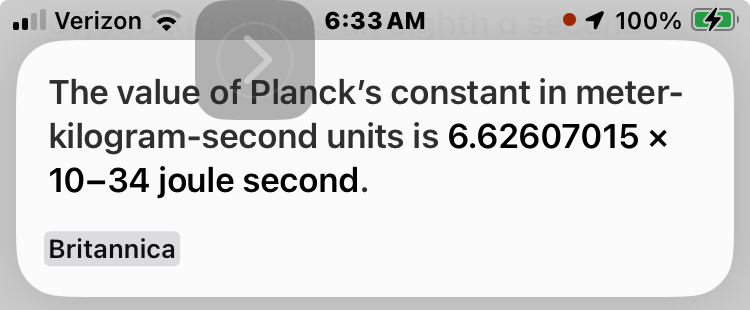
The variables x (position), v (velocity), and m (mass) are indeed deeply connected to the MKS system, which stands for Meter–Kilogram–Second. Each of these quantities corresponds directly to one of the base units in MKS:
x (position) → measured in meters (m)
v (velocity) → measured in meters per second (m/s)
m (mass) → measured in kilograms (kg)
So yes, they are foundational to the MKS framework. However, the idea that MKS “just switches s and k” might be a misunderstanding. The letters M, K, and S are simply abbreviations for the base units: Meter, Kilogram, and Second. There’s no switching involved—each letter represents a distinct physical dimension.
If the original question is hinting at a symbolic or philosophical reinterpretation (like in the NKTG law), then perhaps the “switching” refers to a conceptual shift rather than a literal one. But from a physics and measurement standpoint, MKS is a coherent system built on those three fundamental units.
Wow over a month and no response to my questions, no visual diagrams, no animations, no interactive demonstration, nothing, in 2025 when we have all this tech at our fingertips.
Thank you for your interest. I’m truly glad to have friends like you — people whose minds are open and inquisitive. You are one of the few who have recognized that the NKTg Law is a valuable scientific law since its publication.
Today, the NKTg Law has become an essential part of development frameworks used by programmers and researchers in applications involving orbital mechanics and variable inertia.