[The last feverish words of a desolate lover unfold as a love letter to the city of Buenos Aires]
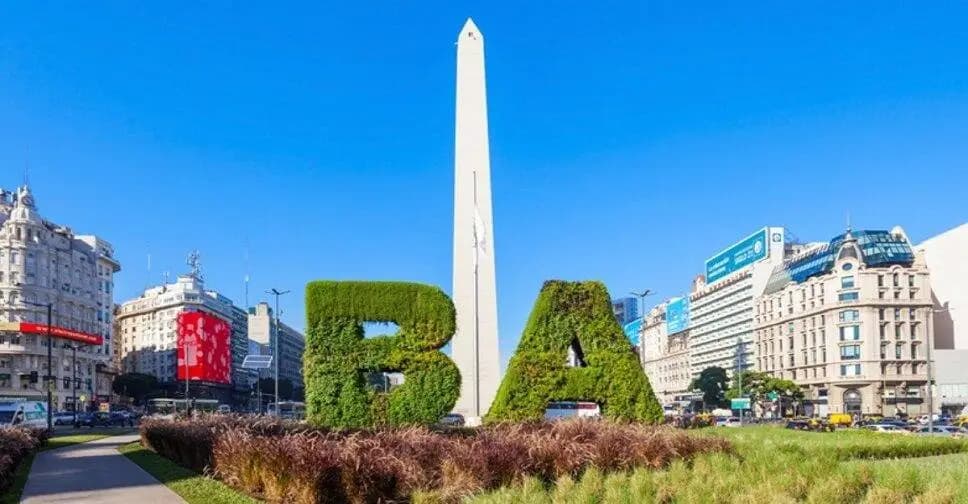
*“It’s raining now. As I write these words, these last words of mine, it’s raining. It’s not like any other rain. It’s like an inevitable accompaniment to my mood, my spirit, my soul about to succumb. As I sit here and listen to the rain fall, tapping on the window, I can only remember a day when we were here, you and I, Sara. It’s been so long. But I can still remember you sitting here, looking at me with your quasi-cruelly watchful eyes. I understand the enormity of the mistake I make in writing about you for others to read, for others to read things you would never want to share with them, my love. But I need to write this, I need to write these last words. The world needs to know you existed, and that miracles happen in this world. You were my miracle, my religious experience, my epiphany. You were my contact with a world I would never have entered without the strength of your passion for life. I would never want to tarnish the last promise I made to you. I said I would take care of everything for you, that I would never give up on maintaining your life’s work, keeping your gallery open, encouraging others like you to express themselves, to express their art. But life has become an unbearable burden for me, one that only gets worse as time passes and the memory of you becomes more fleeting. I don’t want to live in a world where I’ve forgotten you, Sara. I don’t want to let you go, as so many recommend. You were never someone to be left behind. If you were, I would never have gotten close to you, and I wouldn’t even be writing this now. No, I want to die with all the memories of what I knew with you vivid in my head. I refuse to forget anything, simply because nothing I experienced without you compares to our time together. It’s as if the rest of my life had been a draft compared to the beautiful page I wrote by your side. It’s as if everything fell into place, as if everything began to make sense because you appeared, like a beacon, like someone I had to meet for life to have any grace and meaning. I still remember the wreck of a man I was when I decided to flee Mendoza for Buenos Aires ten years ago. Leaving a calm and tranquil city like Mendoza, where my life as heir to one of the region’s largest wine producers was assured, for the gigantic and chaotic Buenos Aires, the bohemian city I’d always heard about but never even visited, was, above all, an attempt at escape. I wanted to get lost in Buenos Aires, to become just another anonymous person among the millions of anonymous people in the city. I was in the midst of one of my unexplained bouts of depression, and a radical change of scenery was the last alternative I had before committing suicide, because I already knew that my crises had no solution and were only getting worse. And why was I unhappy? What right did I have to be unhappy if I was born and raised as a privileged boy, always having everything I wanted in life? I never even knew what it was like to need money. But it happened somehow, maybe depression was written in my genes, maybe it was just my fate, but, suddenly, I no longer saw the fun in anything. Everything I did—my work, my hobbies, everyone I knew- my friends, my family, girls—nothing had the slightest bit of fun anymore. The only passion I had left was photography, but even that was becoming increasingly dull. I told myself I would never become a respectable photographer, that my photographs were complete crap. My family didn’t understand what was going on with me, and how could they understand what I myself didn’t understand? I didn’t want to become the neurotic son, always on his way to the psychiatrist, so the idea of running away seemed like the most obvious one. My family’s concerns couldn’t change the will of a 23-year-old who, despite everything, was his own boss and could do whatever he wanted. But moving to Buenos Aires was easy; experiencing the city was a different thing entirely. I had spent my life hearing about every corner of this city, how it epitomized the Argentine soul. I wasn’t prepared for such a vast difference between my, despite everything, beloved and peaceful Mendoza, with its rural climate and Andean landscape, and the cosmopolitan city of Buenos Aires, with its architecture that draws from the most diverse sources, its many monuments to the past, its bohemian tradition, its enormous devotion to its own culture, immortalized in every corner, its famous bars and “tango temples,” where our favorite musical rhythm is revered and passed on to new generations. Finding myself suddenly enveloped by the Buenos Aires atmosphere was like a cold shower. I had always heard that this city is unique in the world, and it is, this is not a mere poetic invention of Carlos Gardel or Jorge Luis Borges. This city has a way of sweeping you along with it in the frenetic whirlwind that is its daily and nightly life. Connecting with it, penetrating its core, has been one of the most invigorating experiences of my life. The first night I lost myself among the bars and ancient buildings of Avenida de Mayo, I realized that perhaps a mission for me was to capture the beauty of this city in my photography. And the first day I walked along Caminito, Gardel’s Caminito, I knew this for sure. Buenos Aires did something to my mind; it wasn’t that I was suddenly cured of my depression. But what happened was that losing myself in the fervor of this city made me react in a way I couldn’t have imagined. If my initial idea was to hide, which I couldn’t have done in Mendoza, where my family is known everywhere, with me being just another anonymous figure amidst the Buenos Aires crowds, it only took a while for me to acclimate to this atmosphere of passion for life that this city exudes. But despite my enthusiasm and my newfound passion for the city, which seemed to devour me whole, returning each night to the modest apartment I rented in Recoleta, I continued to feel incomprehensibly empty inside. The change of scenery, my decision to seriously study photography at the famous Escuela Nacional de Fotografía, my decision to temporarily work as a restorer—all of this helped me to find my feet, but I needed something more, something I couldn’t imagine. I never had my mother’s fanatical faith, but I also didn’t inherit my father’s skepticism. I’ve always preferred to sit on the fence about religious matters, even though my mother insisted I needed faith to live. For me, God existed as Someone I couldn’t have access to. I couldn’t simply surrender to religion blindly. I needed to find you. I needed to have found you that night, after that accidental bump in front of the Tres Monos bar. How did that happen? There was nothing special about me for you to notice, just another skinny white guy on the streets of Buenos Aires. You, however, were the perfect antithesis of all the women I’d met until then. It wasn’t your blond hair, your blue eyes, or your perfectly toned body. There was nothing about me that could have fascinated you, but you captivated me from the first moment I saw you. What did you say to me at that first moment? I don’t remember anything other than the noise around us, my apologizing for bumping into you, and somehow striking up a conversation, convincing you to sit with me. I’d had enough girls in my life to know everything I should say, but the fact is, I didn’t know what to say. Your words, spoken with the Buenos Aires accent I was already getting used to, made me understand that nothing banal or ordinary I said would make you believe I was different from any other guy who had ever approached you. I realized you were a woman like no other; you had something I’d never found in a woman before. Then, amidst the surprises and fascination this city had in store for me, I realized the only thing missing was you. I must have made a positive impression, because we exchanged phone numbers and arranged to meet the following Sunday in La Boca, where you would be exhibiting your works at the famous Museo Benito Quinquela Martín. I then discovered that you were a painter and visual artist. And not just any painter, but someone who, according to you, had the mission of portraying the soul of Buenos Aires through her paintings. What was my sensation when I realized I wanted to do the same thing, but through photography? I, who, again, have never been particularly religious, could only imagine an encounter orchestrated by God. I remember how I felt when I first gazed upon your paintings. The only word that comes to mind is epiphany. For your paintings, with their impressionist tones and the obvious influence of Renoir and a touch of Van Gogh—artists you introduced me to and made me admire—reflected the city around you exactly as I imagined it in my mind and wanted to portray it in my photographs. A place filled with an incomparable vital force, where every street, every building, every corner tells a story at once unique and interconnected with all the others. You reimagined Buenos Aires through your brushes, but what you did went beyond that, because what you managed to portray was something unusual, something hidden, something only a Borges could adequately express: the mystery of the Argentine soul. Oh, yes, and you introduced me to Borges too, someone I’d never had the patience to read before but who, according to you, was essential reading for any aspiring Argentine artist, for he was the most expansive artist of words ever. I still cherish the copy of ‘El Libro de Arena’ you gave me. I’ve read every page more times than I can remember, trying to find there the enchantment Borges evoked in you. I marveled at how you could penetrate the Borgesian world with such ease. But what didn’t you know, what didn’t you understand? You taught me to admire the legacy of Mercedes Sosa and her incredibly intense folk music, tied not only to her knowledge and passion for Argentina but to her intense life experiences. I’d already heard Sosa’s music just for the sake of it at my parents’ house, because my father idolized her. But listening to her with you, learning to interpret every nuance, every instrument, every story behind every song—you taught me that, Sara. Sosa’s expressive simplicity in a song as direct as ‘Gracias a la Vida’ was something that had completely escaped me until then. The way Sosa expresses the Argentine passion for life itself, with its pitfalls, its grandeurs and pettiness, is both poignant and invigorating. You taught me to appreciate that. And what about Gardel and tango? My vision was that of a young country boy with modern aspirations; that is, I liked rock, country, pop, Americanized music. To me, Gardel was the embodiment of kitsch. But you showed me that, more than understanding the essence of the Argentine man, romantic yet down-to-earth, Gardel was the singer of the soul of Buenos Aires. He sang in ‘porteño’, that is, in Spanish exactly as it is spoken in Buenos Aires. His seemingly simple songs actually reveal an entire story, an entire worldview, and listening to a ‘Mano a Mano’ with a more critical eye, we easily realize that he possessed a much greater wisdom about life than one would expect from a common man like him. And what about ‘Caminito’? Strolling through the place that inspired Gardel’s famous song, we realize where his fascination stemmed from. Gardel could only sing about intense feelings because he himself was intensely passionate about life. His untimely death made him a sacred idol in Argentina, which wasn’t even his home country. But Borges, Sosa, and Gardel, culturally significant as they are, didn’t have as much of an impact on me as getting to know León Ferrari in depth. The greatest passion of your life, Ferrari was not only the greatest Argentine visual artist, but also one of the most impactful and intense, entirely dedicated to portraying what he understood as the artist’s mission in life: to actively engage in the defense of his worldview. His works, both in sculpture and painting, reveal an extraordinary sensitivity. Ferrari, a Buenos Aires native at heart, born and dead in the city he loved, was opposed to all forms of war, discrimination, and violence, and his unique work was a portrayal of this. He was original and rebellious, unafraid to denounce the violence of Argentina’s military dictatorship, just as he was unafraid to denounce American militarism as something utterly vile and at odds with the very religion Americans claim to follow. And what fascinated you most was that he criticized both military and ecclesiastical authority over human lives. His controversial work, ‘La Civilización Occidental y Cristiana’, which depicts Jesus crucified on an American fighter plane, was the perfect symbol of this. Ferrari practically died defending men’s right to challenge religious blindness and intolerance. I know he was the one who taught you most about having such an open view of things. And curiously, the year he died, I met you. But these magnificent figures from Argentine history, as fascinating as they are, as much as they enrich our lives, do not and cannot have the same impact as real contact with the vibrant life in every corner of Buenos Aires. If Ferrari, Borges, and Sosa fueled your imagination and creativity, it was the intense force of the city itself that gave the final impulse to your creative drive, to your artistic vision. Strolling with you through the streets, squares, markets, bars, and historic buildings of Buenos Aires was an unforgettable experience in my life, without a doubt those moments when I felt the most alive. How many times have we strolled through Plaza de Mayo, where so many defining moments in the city’s history took place? In fact, you liked to remind me that because the city is flat and perfectly linear, it’s like a vast plaza open to the visitor’s delight. I simply let myself be carried along by you through the city’s history-filled streets, photographing everything I could, from the Obelisk, in the center of the wide and unparalleled Avenida 9 de Julio, to the Teatro Colón, with its impeccable and imposing architecture, the Palácio Barolo, and its famous architecture inspired by Dante’s ‘Comedy’, the Feria de San Telmo, with its antique stalls, and, of course, the city’s wonderful parks, such as the Bosques de Palermo, the Japanese Garden, Plaza Francia, and the Reserva Costanera Sur. You taught me to love porteño cuisine. Buenos Aires has bars and restaurants on every corner. How many times did we spend pleasant hours at Los Galgos, Tres Monos, Florería Atlántico, and Gran Bar Danzon? You and your friends were old regulars at these places. I had to be introduced to each of them. But every bar in Buenos Aires has a unique atmosphere, like every part of the city. It’s not just the chaotic fun and the quest for oblivion in alcohol that the typical bar represents. It’s a place to celebrate life. To celebrate the joy of living. And that was the thing you felt most indelibly and tried to convey to everyone around you: an inexhaustible joy of living. You also taught me to appreciate typical Buenos Aires cuisine, to value the love of food that Buenos Aires’ countless restaurants represent. But for you, choosing a place to eat an asado, a locro, a sorrentino, or a simple choripán was never about simply putting something in your mouth to satisfy your stomach. Eating, for you, was part of the process of nourishing your entire being. So we had to carefully select what to eat, when to eat, why to eat, and not simply feed ourselves haphazardly because what we eat, like what we drink, ends up defining us. Buenos Aires has always been a place to eat well. The influences of Italian, Spanish, and French cuisine are evident, but they blended so well with the Argentine spirit itself that they created something utterly unique, like this incomparable city. But your favorite places were undoubtedly the city’s museums, especially the Museo Moderno, with so many works by Argentine artists that few people know about, the MALBA, with its huge collection of works by Latin American artists, and of course the Museo Nacional de Bellas Artes, with works by some of your favorite artists, such as Van Gogh and Gauguin. Art was the medium through which you sought to portray and see reflected the Buenos Aires soul, but, above all, the medium through which your incomparable soul expressed itself. It wasn’t just a matter of choosing paints, colors, brushes, canvases, themes, or even the right time to be inspired. It was about channeling, through a painting, all that intense creative process that was going on inside you. You told me that you owed everything to living in Buenos Aires since you were a child. What motivated you to want to create was the love for life that pulsed in this city. And that you, in many ways, were a summary of it, with a father of Italian origin, a mother of Spanish origin, but also Portuguese, French, and even English ancestors. Just as the Argentine capital synthesized the union of influences from diverse peoples into one, but was nonetheless a unique people, with a unique identity, you represented this union of the most diverse tendencies that come together to form a unique and incomparable whole. But it was never a matter of simply painting anything; it was about having a technique and having something to say. In this process, you taught me how a painting with a simple image of flowers, like Van Gogh’s famous sunflowers, had to represent something more than just flowers. It was the representation of an entire moment in life. With its unrepeatable magic. This is how you taught me to become a better photographer, to carefully choose what to photograph, to say something through each photograph. We became ideal partners. Your painting inspired me to seek images that rivaled it. My photos served as inspiration for you to create other canvases. And a particularly inspiring shot I took of the Palácio Barolo became one of your best paintings. You named it after me. And that’s how our story unfolded, Sara. I not only had the privilege of meeting you and sharing so many moments with you, but I also became an artist alongside you, because of you, and watched you transform from a beginner to a famous artist in Buenos Aires, achieving your dream of opening a gallery to encourage both traditional and emerging artists, right in the heart of the city. I can’t describe your joy at seeing your greatest life goal realized. What I know is that your pleasure was no greater than mine, in being by your side. Perhaps I can avoid tarnishing your memory, or going against your will, by talking about how we made, or rather, interpreted, love. Of course, you made me feel pleasure like no other woman ever could. You made me realize the beauty underlying the seemingly mundane and prosaic act of being naked before a woman and giving her pleasure. Until I met you, my relationship with sex was based on undressing a woman, penetrating her, and orgasming as quickly as possible, with orgasm being the sole objective, and once achieved, it was as if the person next to me disappeared. You made me realize that the pleasure of the person next to me matters too. What’s more, you made me understand that the process of loving and being loved, surrendering yourself and feeling the other person surrender to you, involves much more than simply orgasm. I received a complete emotional education from you, much deeper because it was anchored in our real experiences, not mere fantasies. Now that everything is a memory, including that damned disease that appeared out of nowhere, a cancer so cruelly rare that it could not have been predicted or diagnosed beforehand, because your health was excellent, I’ve been trying to hold on to the meaning of your last words to me, Sara, the very last words I heard from your mouth: “Go on without me. I love you so much, but I need you to go on without me.” I swear, my love, I’ve spent the last three years clinging with all my might to the literal meaning of those words. I continued despite everything, despite this emptiness that nothing fills anymore. I kept your gallery open, I have been careful with each of your works. But it’s no longer possible for me, and I’m ashamed to think I’d be failing in your eyes. I can’t live anymore, so everything will end today, darkness will fall upon my spirit forever. But I wanted to leave, for whoever wants to read it, this testimony of how special you were, how much you loved this magical city, and how your soul almost merged with its own, seeing as your entire short existence on earth was almost like a reflection of Buenos Aires, an endless, and guiltless, toast to life. Thank you, my love.”*
This letter was found with the body of Pedro Alonso Hernandez and delivered to his family in Mendoza. No one in the family knew of his relationship with the artist Sara Borges. They didn’t know Pedro had become a famous photographer in Buenos Aires, either.
He was 33 years old.