To Have or To Be

I’m not an expert on Buddhism. That’s more likely to be Bob around here.

But from what I know and heard from some Buddhists I interacted with, the probable response to your question would be: learn to look through people, the ones you love and the ones you hate, and gain an understanding of why they are what they are and why they act like they do. Also: learn to separate what a man does from what he says or affirms to believe in. Try and see beyond people’s masks. The same way you use a front to dupe others into believing you are what you are not- just another conformist working class middle age American- they do the same. Society is a bal masqué, we’re always playing roles. Then if we hate people for playing a role we antagonize, we fail to see we’re doing the same, it’s a never ending cycle of misunderstanding. Buddhists tend to see everything as interconnected, but they don’t fight to establish this interconnectedness, as you want to do with communism- such would be forced interconnectedness. They see interconnectedness as a starting point to understand reality, something that is there regardless of your accepting it or not. The neolibs and neocons that you hate are necessary for you, they define you and the extent of your thinking. See that 99% of what you write here is a reaction against what you hate. Without your enemies you would have nothing to talk about. This is the meaning of interconnectedness: we depend on others willy-nilly, and we depend on them being what they are.

If you managed to see things like I do, you’d be above hatred, because I hate absolutely no one in life, I accept people as they are, and if I don’t like their attitude, as in the case of Satyr, I choose to ignore them and move on regardless of what they think. I don’t soil my mind with hatred or resentment. That doesn’t mean I’m wiser than you, that means maybe I understand the transient and precarious nature of things in this world better than you do.

@Maxx

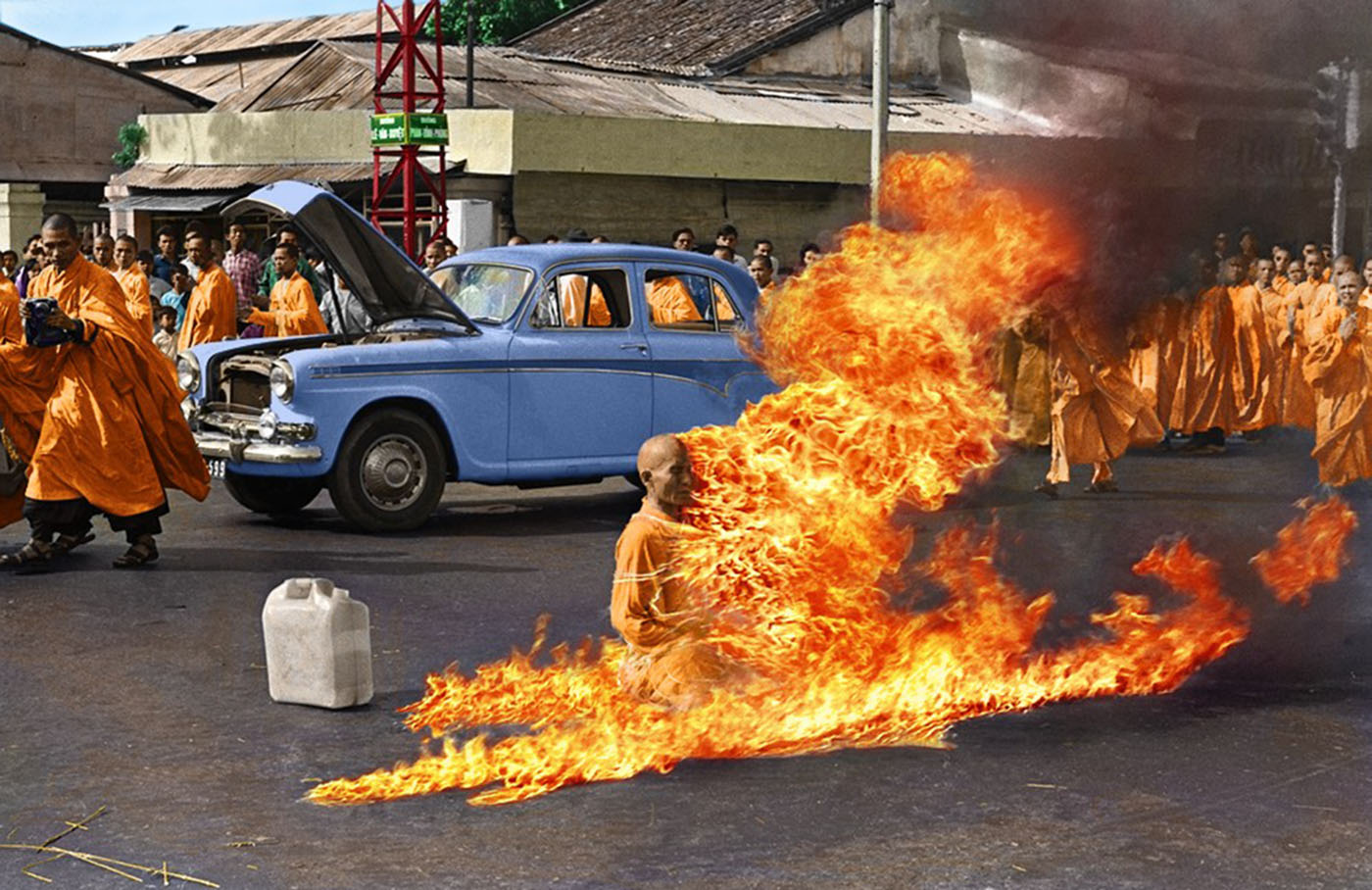
Explain communism in a variety of Asian nations where Buddhism is the dominant spiritual religion. No people on this earth like exploitation, tyranny, or enslavement, even Buddhists will fight against that where compassion is not always possible for your enemies who wish to do you constant harm. 100% pacifism in regards to everything in life is a very suicidal ideology, while saints might be willing to extinguish their own lives out of protests concerning higher principles to expect the same for the majority of people is ludicrous along with being very naive. :clown_face:

I may have skipped that chapter, but why did you become a Buddhist in the first place? :face_with_monocle:

1 Like

@Maxx

Because ultimately I do believe in the eightfold path of Buddhism in that all human beings deserve compassion in this world where we should seek the liberation of all human beings everywhere. A contention of mine is that while it is the ideal goal and a good one at that, such an ideal is not always possible under all circumstances, there are significant unique circumstances where that idealism doesn’t always work. Exceptions have to be made.

I of course also disagree on the proper recourse politically concerning government organization as you already well know.

:clown_face:

It’s interesting that you poke fun and dismiss Kropotkin’s globalism yet still see his ideal as desirable. That’s what PK is apparently trying to do. He’s much older than you or me and he’s seen a lot of things and he thinks that the best course of action would be to let go of traditionalistic sources of divisiviness, as nationality, skin color, sexuality, and religion, and concentrate on the common objectives of all human beings- the main of which is the maintenance of our collective Lebensraum. Humankind is not one monolithich mass of equal creatures, like a giant sized beehive, it’s a collection of many, countless different groups, each with its specific characteristics. To even stop to wonder of how much your neighbour, I mean your literal neighbour, the one who lives next door, is different from you in his mindset is staggering. It’s such a complex thing, this division between man and man, something connected to the uniqueness of each one’s mind, that one feels tempted to simply say- my neighbor is a [insert label here] and that’s that. The label may say something or may say absolutely nothing about your neighbor, the real deal, but is convenient for you- it spares you the trouble of, ever, stopping to think about your neighbor as a person. He becomes an abstraction. But he’s not an abstraction, as you yourself are not an abstraction, and that’s the most tragic thing, because he also tends to ‘abstractionalize’ you [I know this verb doesn’t exist], to treat you as that [insert label here] whom he may have to be forced to deal with it one or two times in the week. Bob is dead right about the meaninglessness of labels- think about your communist one. Is it something any other person would recognize as communism? Nope, it’s your definition of communism. It’s communism as your mind interprets it, a half realistic, half idealistic take on human society, your purported notion of how it could move forward, move beyond its current misery where most seem to be dissatisfied. But it’s not something that this society itself has created or demanded for itself- it’s an idea in your head. If you go to anyone, any flesh and blood one, and tell about your ideals, some may even empathize with you, but most I bet will dismiss it and say, well, what are you gonna do about it? Unless you can show you can do something about your ideal, it remains in the kingdom of abstraction- together with the Jewish kingdom on earth, which will never exist, but keeps motivating Jews to action regardless. The meaning of all that is very simple: there’s a discrepancy between our real life circumstances and our ideals that is hardly ever resolved. Even when we manage to realize one ideal in life- let’s say, I dreamed of having a house, now I have a house- the end result is never exactly the same we dreamed of, the reality of it is a different thing than what we have envisioned.

That’s why I choose to deal with idealisms almost cynically. I recognize what they are and what is their utility for one’s peace of mind. I understand why you [and Peter] need communist thinking. It’s your way to search for a connection, even if the everyday contact with your flesh and blood fellowmen is disappointing, you still need to think that one day, one sunny day, such relationship will not be tinged with mistrust, divisiviness, malaise. You need to believe that people can, theoretically, live peacefully and work productively, feeling satisfied with themselves and not exploited, or embittered towards their neighbors because those are more well-to-do than themselves or simply, like Bob and me, more equanimous and tolerant in relation to their expectations about others.

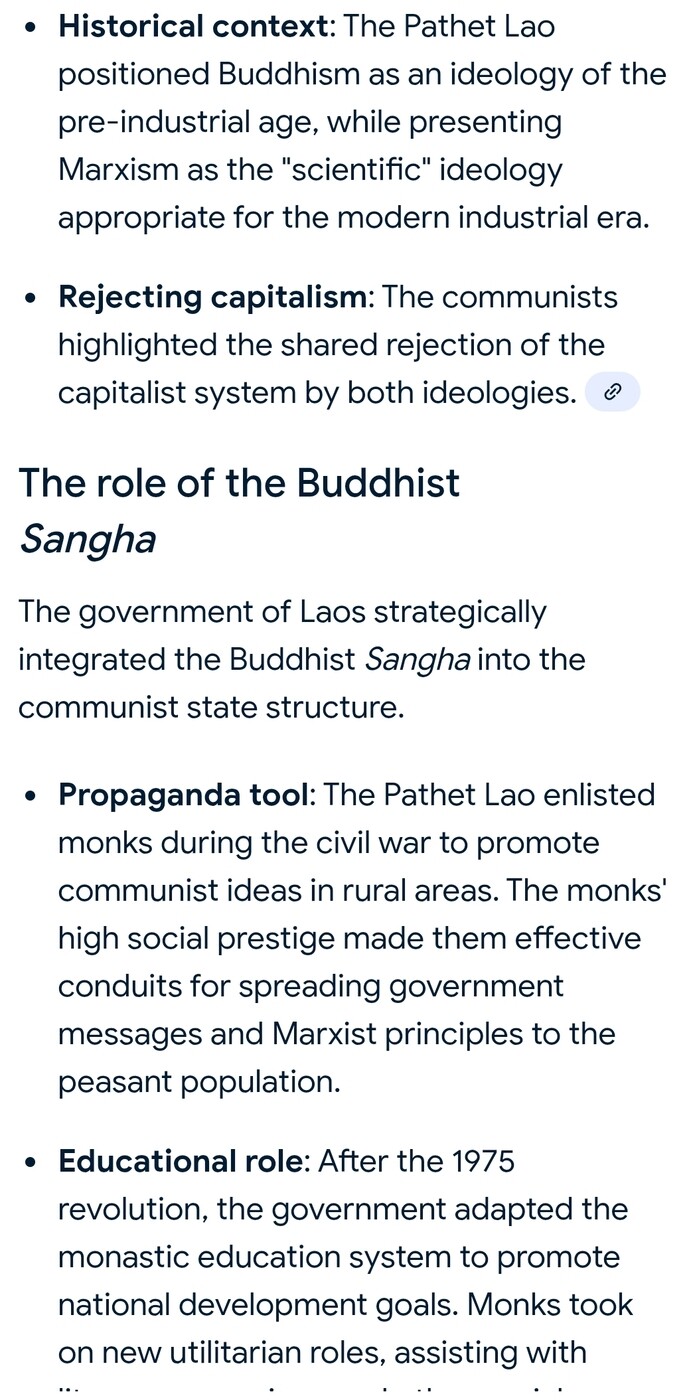
Southeast Asia was interesting in the early 1900s to the 1980s, you had Buddhists active in communist insurrections and then you had other Buddhists killing communists that were loyal monarchy enthusiasts.

There is a concept of a just war amongst Buddhist circles but everyone has different interpretations on that matter. Nobody can seem to agree what exactly that is outside of the context of self defense. :clown_face:

What do you think of the Chakravarti? :clown_face:

You might find this interesting regarding Buddhism and Marxism. Have fun reading. :clown_face:


Nonviolence and compassion is the highest guide or ideal, yes.

However, if somebody tries to burn your house down with you and your family inside it there is nothing in Buddhism that says you’re not allowed to defend yourself against aggressors. Absolute pacifism in Buddhism is nonexistent contrary to popular western perceptions. As far as humanity is concerned as a whole absolute pacifism is an extremely rare belief held by much of anyone. Very few people actually practice it. :clown_face:

Again, there are two different kinds of historical forms of communism opposed to each other, there is global communism (Trotskyism) and then there is national communism (Stalinism).

I am a national communist in that I view national identity, culture, traditions, languages, and aesthetics as important things worth preserving. I also am opposed to global government which I view as the worst kind of system especially on the account of the type of people who gravitate towards it. (Insane psychopaths who dream about ruling the entire planet for them to manage, exploit, and pillage everywhere.)

While I am a Marxist where I believe in building the best world possible of worker and human rights for all people along with eliminating poverty by protecting the poor, I am not a utopian, I understand that perfection is an impossible ideal to reach in destination. I am a realist who tries his best to reach realistic conclusions for everything.

You liberal ideologues in your ideal perfect social utopia think that by abolishing all tribal identities worldwide you’ll achieve your perfect global utopian ideal state of existence, I disagree with that premise entirely. I think it is built upon an extremely flawed premise entirely.

I have no problem with global cooperation, diplomacy, and extended friendship, but not with the expense of destroying nationalism everywhere.

:clown_face:

All politicians are liars, conmen, tyrants and warmongers. We must enter a post-political system, a post-political world of no politicians. Not of anarchy, but of truth. There is only one true truth. Division creates conflict.

This topic was automatically closed 30 days after the last reply. New replies are no longer allowed.