Nah.
I’ve no idea why you think the Democrats are to blame for the exact problem that is part and parcel of the RIght and their alliance wth Christian Nationalism.
Are you serious herewhen you say …?
Lessons from WWII and the dangers of unchecked nationalism seem forgotten, while both parties—especially Democrats—mask their complicity under unity rhetoric.
Then you say Musk offers a pragmatic but absurdist hope through technology, while Trump effectively invokes nostalgia for a better past.
Well Musk is OUT, and there never was a “better past”. Unless you think women are better tied to the kitchen sink, unable to own a credit card?
()
Let’s see if Musk is really out, only time will tell, the Dems are wooing him, and if he does go back, he may put a very different spin on this so called separation , That analogy of separation of bio-physical division, may link the divide of social and political and scientific ideas.
A lot depends on rebuilding faith universally in a chaotic world.and the emphasis on the Pope’s election may show the importance of healing the globe,
Deus ex machina may become both a literal means and a figurative one for this effort, A more subsistent higher intelligence promises to be self replicating.
Do you have any Evidence??
Musk is not the smartest kid on the block as his approach to all this leaves him in a most vulnerable positon.
He may find himself back in South Africa and broke.
or
this is a facade and they are all in this together, planning what comes next.
Elon felt that Trump and the Republican Congress ‘owed’ him after the successful Trump election, regarding the Leftist terrorist attacks and ‘cancelling’ of Tesla vehicles and sales. He likely presumed that legislation for mandate of Electric Vehicles would pass through the “Big Beautiful Bill”. And when it didn’t, he felt backstabbed by Trump.
Now he has no allies on the Left or Right, moving forward. Steve Bannon accused Elon of drug addiction. Drugs, combined with debilitating social autism, have put Elon Musk in a very, very precarious political ditch. He fucked himself.
Do you have any Evidence??
Admittedly, the evidence consists of a remark made by Bill Maher, a comedian turned political pundit, who suggested it. Return to the fold, whereupon Schumer responded that the Dems don’t want in lunatic within their midst.
But could they also be mistaken? Maybe they should read tea leaves or do the IChing
Oh the ‘eviden’ has come in sooner then expected , here it is!
Hot off the presses:
()
ump warns of ‘serious consequences’ if Elon Musk funds Democrats
By Rachel Wolf, last hr

Fox News
Follow
President Donald Trump warned on Saturday that there would be “serious consequences” for Elon Musk if he were to fund Democratic candidates. The president made the remark during a phone interview with NBC News.
“If he does, he’ll have to pay the consequences for that,” Trump told NBC News. However, according to the outlet, Trump did not detail what the consequences would be.
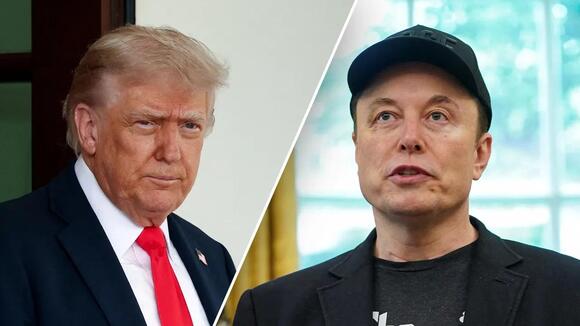
President Donald Trump said he was “disappointed” with Elon Musk after the billionaire criticized the Big Beautiful Bill. Reuters
The president also told the outlet that he has no interest in repairing his relationship with the Tesla founder and CEO. When asked if he thought his relationship with Musk was over, Trump reportedly told NBC News, “I would assume so, yeah.”
Trump also apparently has “no intention” of speaking with Musk — which is what he told Fox News Chief Political Anchor Bret Baier.
Trump and Musk have been engaged in a heated feud that has rapidly escalated in a matter of days. The spat began when Musk criticized the Trump-backed “Big Beautiful Bill” after his time with the administration ended.
Trump’s duplicity is creating a sentient confusion among a broad spectrum of political elite, none the less of those less then formidable week end wannabes,
He can not support power, absolutely and show the deep unity of even those malevolent precursors who live there as spies in the house of love.
Where this among the blessed can not pretend otherwise.
)()(
The Absolute and Intrinsic Authority of the Messiah

An outline for the sake of context is provided for the entire section. The focus passages are given larger print and a bit more extensive comment. TJN
Luke 4:31-44: Jesus, leaving Nazareth and going to Capernaum, begins the palpable demonstration that he fulfills the prophecies [cf. 7:21-23]
4:31, 32 – Authoritative teaching – It is interesting that the passage Jesus read in the synagogue in Nazarethcenters on proclamation. All that Jesus did in the way of miracles was to be subservient to his proclamation. So, when he left Nazareth for Capernaum [cf. Matthew 4:13], he taught in the synagogue on the Sabbath day and “his word possessed authority.” [See Matthew’s statement at the end of the Sermon on the Mount, “He taught as one that had authority.” (Matthew 7:29). Authoritative teaching was that which arose from his own intrinsic knowledge of eternal reality. He was not reflecting on the views that others had of divine revelation, but he was himself the source cognitively and the very embodiment of divine revelation. He was equal party to the decrees and provisions enunciated in the eternal covenant established by the triune God for the eternal manifestation of his own glory. [Ephesians 1:3, 4; John 17:1-5].
4:33-37: Authority over the oppressive force of demons.
-
33, 34 – The demon present in one of the attendees at the synagogue recognized that Jesus’ teaching could only be from one that dwelt in the presence of God and was an originator of the divine purpose for creation and redemption. This demon recognized both the element of authority and the detailed purity of original truth. Where had he heard such words and where had he experienced the laying forth of elemental purpose before? Why, he had heard it at the very throne of God as angels were beginning to hear their assignments of service to those that would be the heirs of salvation in the covenant dispositions and revelations given by the triune God to the created inhabitants of heaven! [Hebrews 1:13, 14] This demon had been led by Satan, Beelzebub, to resist that plan in the pre-mundane heavenly world and had been cast out as a result. Without his intent, the demon had become party to the appearance of the Son of God and now recognized the nearness of his final consignment to Hell when all his enemies would be put under the feet of this very one. Filled with shock, terror, and demonic anger, he exclaims in the assembly first his recognition of this one, “I know who you are” and includes in his shocked reaction three truths, all of which he hates: one, the mystery of the incarnation [“Jesus of Nazareth” Note the power of the words of Charles Wesley “Veiled in flesh the Godhead see, Hail th’incarnate ceity”], two, the nearness of his impending destruction “Have you come to destroy us?], and three, the uncreated originality of the holiness of this person [“the Holy one of God”]. [see also the words of the demon in verse 41]
-
35 – Jesus immediately shows that the demon, even prior to his final consignment to the abode of eternal and unspeakable torment, must be subject to his command and authority. Upon leaving the man, the demon’s exit showed that not only were the verbal capacities, and probably the rational also, of the man subject to his operations, but the strength of his body had been absorbed into the demon’s earthly movements so that on his departure his own strength could not sustain the possessed one and he fell to the ground, but unharmed.
-
36, 37 – This caused an immediate response from the rest of the crowd. They recognized both authority and power in Jesus confrontation with the demonic. This should have been sufficient evidence for them to accept what he said and to receive his message about the nature of the kingdom of God as necessarily built upon redemption. To this however, they turned a deaf ear and a blind eye. [cf with 7:36-50; also 10:17-20]
38-41 – Authority over all kinds of physical ailments
- Healing the mother-in-law of Simon Peter [Peter was married, his wife became a believer and accompanied him on his preaching journeys as an apostle 1 Corinthians 9:5] Simon [Peter] was evidently in the synagogue when these things occurred. Either he invited Jesus home to eat with him, or a la Zacchaeus, Jesus invited himself to prepare the way for Peter’s call as a disciple. Peter and his family appealed to Jesus to heal the mother-in-law. On this occasion, there was no touching, no application of a balm of any sort, but a mere rebuke of the fever. This is consistent with the theme of immediate authority that Luke is weaving into the narrative at this point.
Up the ante, the plot thickens,
The Middle East is heating up, and since the stage became an incredible montage of prophesy, intuition, real-politic, and signs of warning, nothing has more clearly called for a dramatic de-escalation of originally arrived world wide welt schmertz and angst, as that exhibited by the increasingly accelerating advents at presently at hand:
))))())))))))))))(
June 18, 2025 1:15 PM UTC
Iran’s Khamenei rejects Trump’s call for surrender as thousands flee Tehran
Summary
LATEST DEVELOPMENTS:
Khamenei rejects demand for surrender
Russia’s foreign ministry says world is “millimetres away from catastrophe”
Germany urges Iran to find a negotiated solution
Iran’s Supreme Leader Ayatollah Ali Khamenei rejected U.S. President Donald Trump’s demand for unconditional surrender on Wednesday, as Iranians jammed the highways out of Tehran fleeing from intensified Israeli airstrikes.
In a recorded speech played on television, his first appearance since Friday, Khamenei, 86, said the Americans “should know that any U.S. military intervention will undoubtedly be accompanied by irreparable damage.”
“Intelligent people who know Iran, the Iranian nation and its history will never speak to this nation in threatening language because the Iranian nation will not surrender,” he said.
Trump has veered from proposing a swift diplomatic end to the war to suggesting the United States might join it. In social media posts on Tuesday he mused about killing Khamenei, then demanded Iran’s “UNCONDITIONAL SURRENDER!”
A source familiar with internal discussions said Trump and his team were considering options which included joining Israel in strikes against Iranian nuclear sites.
Israel’s military said 50 Israeli jets had struck around 20 targets in Tehran overnight, including sites producing raw materials, components and manufacturing systems for missiles. The military told Iranians to leave parts of the capital for their safety while it struck targets.
Traffic was backed up on highways leading out of the city of 10 million people. Arezou, 31, told Reuters by phone that she had made it out to the nearby resort town of Lavasan.
“We will stay here as long as this war continues. My friend’s house in Tehran was attacked and her brother was injured. They are civilians,” she said. "Why are we paying the price for the regime’s decision to pursue a nuclear programme?”
In Israel, sirens rang out warning people of Iranian retaliatory missile strikes. At Ramat Gan city train station east of Tel Aviv people were lying on city-supplied mattresses lined along the floor, the odd camping chair and plastic water bottles strewn about.
“I feel scared, overwhelmed. Especially because I live in a densely populated area that Iran seems to be targeting and our city has very old buildings, without shelters and safe spaces,” said Tamar Weiss, clutching her four-month-old daughter.
Russia’s foreign ministry said the world was “millimetres away from catastrophe” due to daily strikes on Iran’s nuclear sites. Germany’s foreign minister appealed to Iran’s leaders to make credible assurances they were not seeking a nuclear weapon and show willingness to find a negotiated solution.
RAISING STAKES
The prospect that Trump could bring the United States into the war has raised the stakes since he abandoned a summit of the Group of Seven industrialised countries and met his security officials in Washington on Tuesday.
Iran had conveyed to Washington that it would retaliate strongly without restraint against the United States for any direct participation, its ambassador to the United Nations in Geneva, Ali Bahreini, said. He said he already saw the U.S. as “complicit in what Israel is doing”.
Iran has been exploring options for leverage, including veiled threats to hit the global oil market by restricting access to the Gulf through the Strait of Hormuz, the world’s most important shipping artery for oil. Tehran has in the past threatened to close the strait but has never followed through.
A former Iranian Economy Minister, Ehsan Khandouzi, said on X that Iran should start requiring permission for tankers transiting the strait, a move he said would be “decisive” but only if implemented quickly. Iran’s Oil Ministry and Foreign Ministry did not immediately respond to requests for comment.
BAN ON FILMING
Inside Iran, the biggest attacks since war with Iraq in the 1980s have wiped out an echelon of senior leadership.
Authorities are intent on preventing panic and shortages, and fewer images of destruction have been allowed to circulate than in the early days of the bombing, when state media showed pictures of explosions, fires and flattened apartments. A ban on filming by the public has been imposed.
The state has placed limits on how much fuel can be purchased. Oil Minister Mohsen Paknejad told state TV that restrictions were in place to prevent shortages, but there would be no problem supplying fuel to the public.
Iranian officials have reported at least 224 deaths in Israeli attacks, mostly civilians, though that toll has not been updated for days.
In Israel, Iran’s retaliatory strikes are the first time in decades of shadow war and proxy conflict that a significant number of missiles fired from Iran have penetrated defences, killing Israelis in their homes.
Since Friday, Iran has fired around 400 missiles at Israel, some 40 of which have pierced through air defences, killing 24 people, all of them civilians, according to Israeli authorities.
Explosions were heard over Tel Aviv on Wednesday. The military said two barrages of Iranian missiles were launched toward Israel in the first two hours of Wednesday morning.
Iranian news websites said Israel was attacking a university linked to Iran’s Revolutionary Guards in the country’s east, and the Khojir ballistic missile facility near Tehran, which was also targeted by Israeli airstrikes last October.
With Khamenei’s main military and security advisers killed by Israeli strikes, the leader’s inner circle has been narrowed, raising the risk that he could make strategic errors, according to five people familiar with his decision-making process.
During the Gaza war, Israel has dealt heavy blows to Iran’s regional allies Hamas and Hezbollah, limiting Iran’s ability to retaliate through strikes by its proxy fighters close to Israeli borders. Syrian leader Bashar al-Assad, propped up by Iran through 13 years of war, was toppled last year.
Trump’s social media posts - which have ranged from diplomatic offers to end the war to threats to join it - have created uncertainty over his intentions.
The U.S. has so far taken only indirect actions, including helping to shoot down missiles fired toward Israel. But Washington has important capabilities that Israel lacks, including massive bombs able to destroy Iran’s nuclear enrichment plant, built deep under a mountain at Fordow.
On Tuesday Trump wrote on Truth Social of Khamenei: “We know exactly where the so-called ‘Supreme Leader’ is hiding. We are not going to take him out (kill!), at least not for now … Our patience is wearing thin.”
Three minutes later Trump posted, “UNCONDITIONAL SURRENDER!”
Reporting by Reuters; Writing by Nia Williams, Lincoln Feast and Michael Georgy; Editing by Saad Sayeed and Peter Graff
Our Standards: The Thomson Reuters Trust Principles
Related Coverage
It should be noted that Israel launched its attacks with Iran while the US was actively negotiating a deal with Iran to discontinue its nuclear warhead capability. After Israel attacked Iran, the Iranians discontinued the talks claiming that Trump betrayed them. What is more likely is that Israel used the negotiations, which included a bilateral promise not to strike while the talks were conducted, as an opportunity to strike without telling the Trump administration what they were doing. In spite of this, Trump, seeing that Israel’s attacks on Iran are having success, has completely reversed himself and is jumping on the bandwagon—now calling for unconditional surrender. Trump has completely abandoned his campaign promises of negotiating peace deals and keeping the US out of wars which helped get him elected. He has no foreign policy to speak of. He has no plan. He is an opportunist with attention deficit and short term memory loss who starts projects only to lose interest when they fail and then move on to the next failure. Remember when he promised to build a wall that Mexico would pay for? What he succeeds in doing is grabbing headlines and keeping the world in crisis mode every news cycle as he lurches from failure to failure.
Granted and near to absolutely true. But, the question is imperative to ask, which is more likely a necessary course of action, is it the shorted recall of events, or the longer termed hardened core of vesting events in order
In the order that such enhanced memory could be reassessed without getting mired in all the inaccessible refractive appearances which conflate events which exhaust the mind.
The facts point to the assignment of a showcase of strength, rather than that of political narratives which are not necessarily parlayed by design, but retain the depth of the state of an all out fit organizational acumen of the armed forces.
Maybe such invariant projection of incomparable yet not noticed incomparably is, of an intended sleight of hand deceptive maneuver.
In light of the above and further developments yesterday, the more divisive aspects of the conflated conditions float around the social media, some originating from abroad, some internally generated from various sources,
These, some of which pork chopped , as if the serving only certain politically self advanced interests, some, in order to benefit the traces of some echoes of universally propagated new world order trends, some panicked by fearfully bypassing world court jurisdiction, inflating and reinforcing public fears to generate local pockets of fear- are pushing some more than mere probable executive action with increasing veracity.
))((((((()(((((((((((((()(((((((()
“Trump faces mounting pressure at home and abroad as he weighs options on Iran
The world is waiting for President Donald Trump’s decision on whether the U.S. will join Israel in military action to wipe out Tehran’s nuclear facilities.
As he weighs his options, Trump is being squeezed by different pressures from forces at home and abroad.
The president huddled with advisers in the Situation Room twice already this week, and was set to do so again on Thursday. He approved attack plans presented to him but was waiting to see if Iran would be willing to negotiate and hasn’t made a final decision, sources familiar with the matter told ABC News.
MORE: Trump vowed to be a ‘peacemaker’ but foreign conflicts only ramping up on his watch
Moving ahead with military action would be a departure from Trump’s “America First” campaign pledge to keep the U.S. out of foreign entanglements. The possibility he may do so has prompted a sharp rift in his Republican base of supporters.
Hawkish members of the GOP are pushing for Trump to take aggressive action rather than pursue diplomacy. Republican Sen. Lindsey Graham, during an interview on Fox News earlier this week, said the U.S. needs to “finish the job” with Iran.
Meanwhile, hugely popular MAGA media figures like Tucker Carlson and Steve Bannon who helped propel Trump’s movement in 2016 and in 2024 are calling for restraint.
A poll out on Wednesday from Fox News found voters split on the issues Trump is facing. A majority of registered voters surveyed believe Israel’s strikes on Iran’s nuclear program would result in more danger. But a majority also believes Iran poses a national security threat to the U.S.
Trump, in response to the disagreement among his base, says his supporters are “more in love” with him than ever.
Democrats in Congress are raising their own concerns over Trump’s war power authority. Sen Tim Kaine, a Virginia Democrat, moved to limit Trump’s powers by introducing a floor resolution that would require approval from Congress before the U.S. could get involved in a military conflict with Iran.
On the world stage, Israeli Prime Minister Benjamin Netanyahu is trying to press Trump to join the fray, arguing it’s in America’s interest.
“Today, it’s Tel Aviv. Tomorrow, it’s New York. Look, I understand ‘America First’. I don’t understand ‘America Dead.’ That’s what these people want,” Netanyahu told ABC News Chief Washington Correspondent Jonathan Karl last week.
Netanyahu pointedly added, “We’re not just fighting our enemy. We’re fighting your enemy. For God’s sake, they chant, ‘death to Israel, death to America.’ We’re simply on their way. And this could reach America soon.”
Iran, however, and its allies (Russia and China) are pushing against U.S. involvement. Tehran has warned any action would be met with retaliation.
MORE: Diplomatic breakthrough or military action? Trump’s choice on Iran: ANALYSIS
Iran’s supreme leader, Ayatollah Ali Khamenei, said on Wednesday: “The Americans should know, the Iranian nation will not surrender, and any intervention by the U.S. will be met with a forceful response and irreparable damage.”
“War will be met with war, bombing with bombing, and strike with strike. Iran will not submit to any demands or dictates,” Khamenei said.
Defense Secretary Pete Hegseth, testifying before a Senate subcommittee on Wednesday, said the U.S. military was “ready and prepared” to carry out any decision Trump will make.
Hegseth told lawmakers that Trump "has options and is informed of what those options might be, and what the ramifications of those options might be.” He also said that “maximum force protection at all times is being maintained” for American troops in the region.
Trump offered a clue into his decision-making process as he took reporter questions in the Oval Office on Wednesday afternoon.
“I like to make the final decision one second before it’s due, because things change, especially with war,” the president said.
Watch Now
The show must go on!
President Trump and Elon Musk had apparently solved their differences.
They are back on track!
)(
Tried to refer to a source to this ongoing show, and as with some others, this is what happens:
)()(
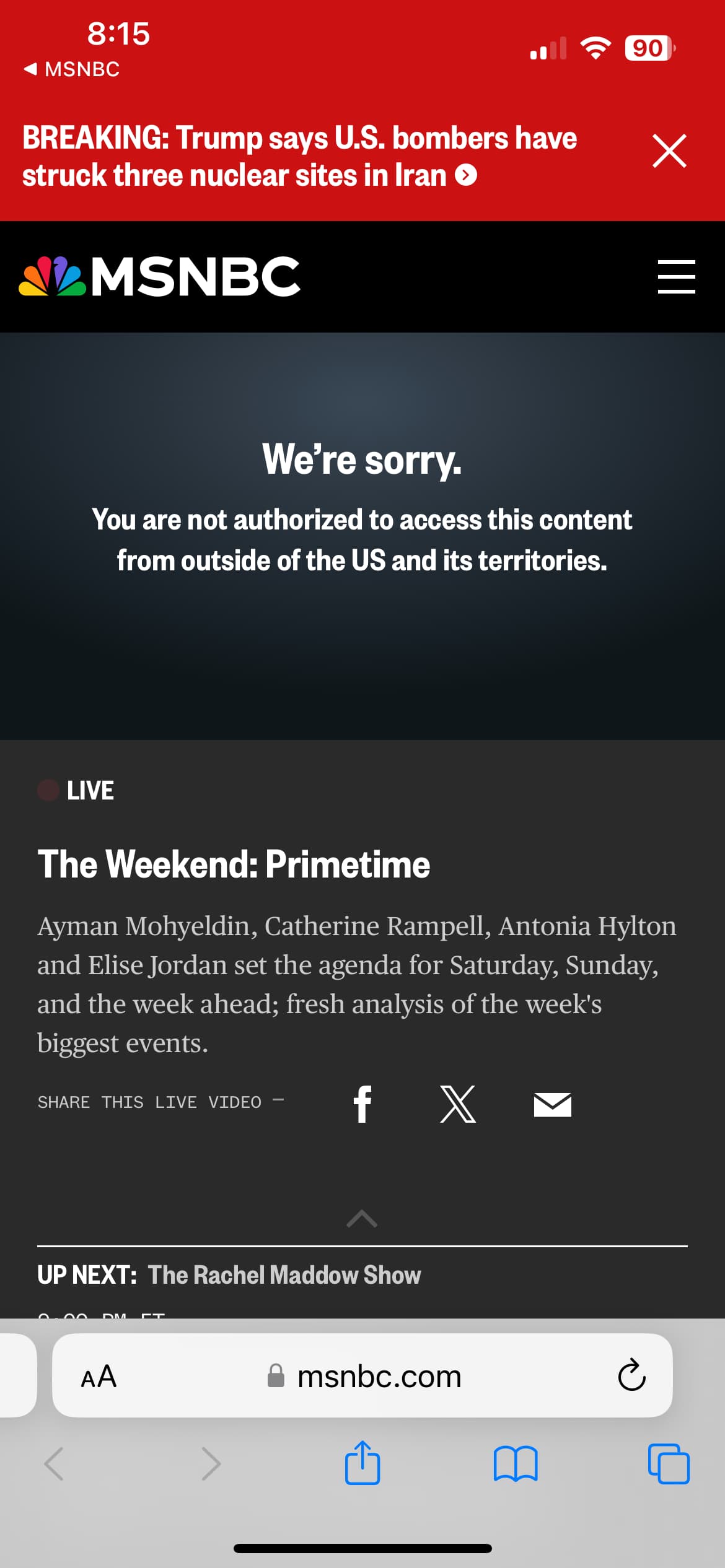
And yes, the show must go on, apart of being a three ring circus:
)()(

Reports: Trump and Elon planning to re-unite . . .
You need to know Elon’s story and Trump’s real plan . . .
Elon musk is the richest man in the world.
And he left President Trump’s White House.
T here was some heated words but that’s now over . . .
You must know about Elon Musk and his real plan for President Trump to save America.
He built Tesla. Launched SpaceX.
Bought Twitter and blew the lid off the censorship-industrial complex.
Now, Elon Musk is taking on his most ambitious mission yet — saving America from collapse.
On the other hand Trump is divided in his own mind, and that IS his Achilles heal (heel), that is what Iran knows better, in fact, that Trump is violating his own mantra , to heal yourself, you have first of all know yourself.
))()(((
IDEAS
WHAT IRAN KNOWS ABOUT TRUMP
The mullahs of Iran join the bet that Trump always chickens out.
JUNE 21, 2025
President Donald Trump is being pulled toward war in the Middle East by his predator’s eye for a victim’s weakness and his ego’s need to claim the work of others as his own. But since his “unconditional surrender” social-media post on Tuesday, other Trump instincts have asserted themselves: above all, his fear of responsibility.
Trump enjoys wielding power. He flinches from accountability. Days ago, Trump seemed to hunger for entry into Israel’s war. A dramatic victory seemed poised to tumble into somebody’s lap. Why not his? But as the hours passed, Trump reconsidered. Instead of acting, he postponed. He said that a decision would come within “two weeks.”
Follow The Atlantic
on Apple News
Time for diplomacy to work? Perhaps that might be the case in another administration. In this one, as attentive Trump watchers have learned, the “two weeks” promise is a way of shirking a decision altogether, whether on Russia sanctions (deadline lapsed June 11, without action), trade deals (deadline lapsed June 12, without result), or a much-heralded infrastructure program (deadline lapsed May 20, 2017, without action then or ever).
During his first term, Trump claimed to have taken the U.S. to the verge of war with Iran in the summer of 2019, only to cancel the mission (again, by his own account) 10 minutes before mission launch. The story, as Trump told it, can hardly have impressed the rulers of Iran with the U.S. president’s commitment and resolve. But the experience of 2019 could suggest to the Iranian regime a strategy for 2025:
This strategy would play on all of Trump’s pressure points, especially his unwillingness to ever do anything that Putin does not want. It would leave Israel in the lurch, but over the years Trump has left many other allies like that.
Trump is vulnerable to the negotiate-to-delay strategy because he has not taken any of the necessary steps to lead the nation into the war he once seemed ready to join.
Trump has not asked Congress for any kind of authorization. The decision, he insists, will be his and his alone. Which will be feasible if the operation turns out as Ronald Reagan’s invasion of Grenada did in 1983: over in a few days with few U.S. casualties and at minimal cost. But Grenada was a nearby island nation with a population of less than 100,000; Iran is a regional power with a population of more than 90 million.
War with Iran will also need real money. The 78-day air war against Serbia in 1998 cost the U.S. and its NATO allies a comparatively modest $7 billion (about $14 billion in today’s dollars). Iran is likely to prove a more dangerous enemy than Serbia was. Israel’s air war against Iran costs about $1 billion a day, according to estimates published by Ynet News. A fight with Iran will likely require some kind of supplemental appropriation above the present defense budget. Congress may balk at funding a costly war it did not approve in the first place.
Trump has not put competent leadership in charge of the nation’s defense or domestic security. Trump’s secretary of defense is accused by his own former advisers and friends of playacting a role that completely exceeds his abilities. If Iran retaliates with terror attacks inside the United States or on American interests abroad, it will find the U.S. desperately vulnerable. Trump purged experienced leaders from counterterrorism jobs. He installed underqualified culture warriors atop the FBI, and appointed at the Department of Homeland Security a cosplaying partisan who diverted $200 million of agency resources to a “Thank You Trump” advertising campaign.
Trump has not mobilized allies other than Israel. The United States has generally fought its major wars alongside coalition partners. Even Trump did so in his first term. France, the United Kingdom, and many other partners shouldered heavy burdens in the 2014–17 campaign in Syria and Iraq against the Islamic State terror group. But Trump did not assemble that coalition; he inherited it from the Obama administration. Trump shows no inclination to try assembling his own in 2025.
Today’s essential stories. In audio. Listen in The Atlantic app.
Trump has not rallied domestic public opinion. Before this year, only a minority of Republicans and not even a third of Democrats regarded Iran as an important security threat to the United States. George W. Bush went to war in Iraq with almost three-quarters of Americans behind him. As late as the spring of 2006, half the country still supported Bush’s war. Trump will begin a war with Iran with less support than Bush could muster after three years in Iraq. Nor does Trump have any evident path to broadening support. As my former Atlantic colleague Ronald Brownstein quips, Trump is governing as a wartime president, but the war into which he has led the country is red America’s culture war against blue America: Even as Trump weighs the deployment of U.S. air power against Iran, he’s leading a federal military occupation of California.
Trump seems to recognize that he cannot unify the nation and therefore dares not lead it into any arduous or hazardous undertaking. That may be the secret self-awareness behind Trump’s “two weeks” hesitation. This is not a self-awareness that will help Israel or secure the United States’ long-term interest in depriving Iran of a nuclear weapon. But in the absence of any strategic planning or preparedness, that self-awareness is all we have to guide the country through the next fortnight and, very possibly, a long succession of “two weeks” after that.
Illustration Sources: Iranian Leader Press Office / Handout/ Anadolu / Getty; Brendan Smialowski / AFP; Getty.
David Frum is a staff writer at The Atlantic.
David A. Graham, Tom Nichols, and colleagues guide you through today’s biggest news, ideas, and cultural happenings.
READ NEXT
The Vatican Knows an ‘Industrial Revolution’ When It Sees One
Trumpers, Taconistas, Magas, seems to have gone quiet in social media generally recently.
Maybe they are realising what “truth” means?
Based on his previously documented average of around 21 false or misleading claims per day during his first term, and assuming a similar pace since returning to office in January 2025, Donald Trump is estimated to have added roughly 3,150 new falsehoods in the first 150 days of his current term—bringing the projected total to approximately 33,700 false or misleading statements. While no updated official tally has yet been released, fact-checkers from outlets like PolitiFact and The Washington Post confirm that his pattern of misinformation has continued at a high rate.
.
Trump has definitely entered the stage.. 
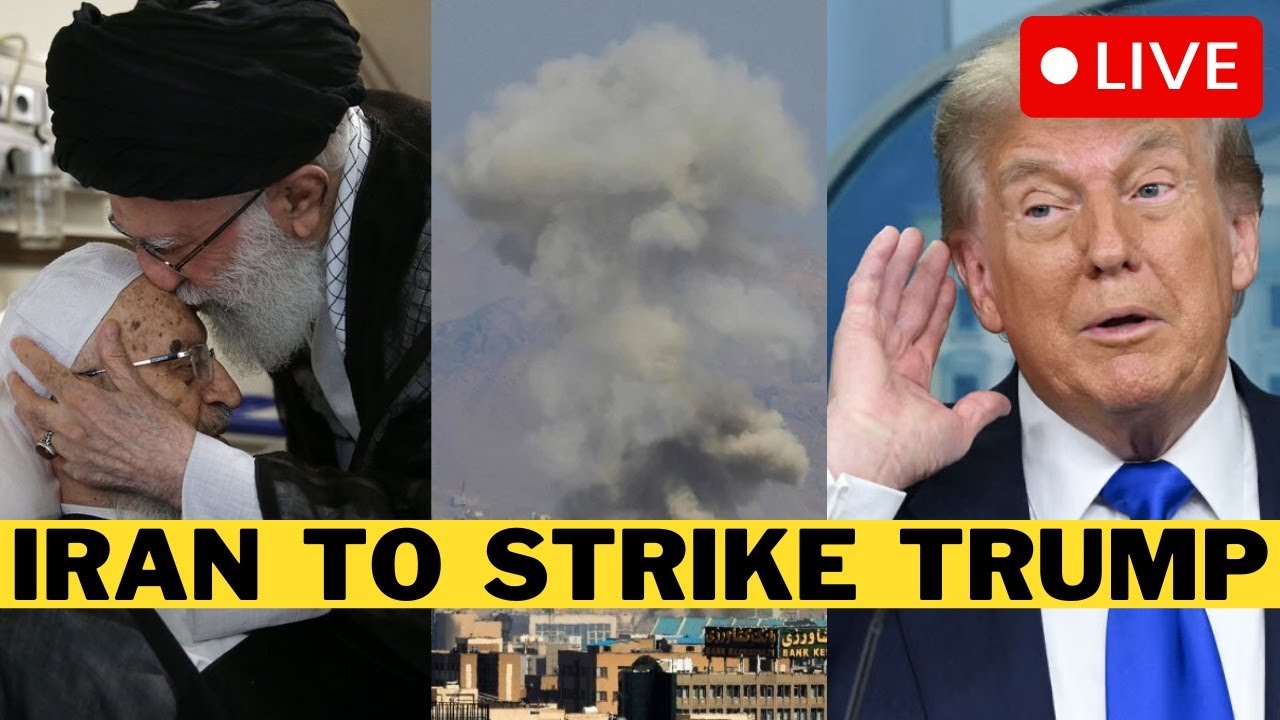
BREAKING: IRGC Orders Trump’s ASSASSINATION As IDF Eliminate Hamxs Leader
Yes , but 
()()(
GLOBAL
THE IRAN-CHINA-RUSSIA AXIS CRUMBLES WHEN IT MATTERS
Beijing likes allies who needle the U.S., but it values stability even more.
JUNE 29, 2025
As Israel and then the United States battered Iran this month, the reaction from China and Russia was surprisingly muted. For years, shared antagonism toward the U.S. has been pushing China, Russia, and Iran together. All three benefit from embarrassing the West in Ukraine and the Middle East, and widening the gaps between Washington and Europe. So after Israel’s first strike, on June 13, China—the strongest partner in the anti-America triad—could have been expected to rush short-range missiles and other air-defense equipment to Iran. Surely, Beijing would use its growing diplomatic muscle to isolate Israel and the U.S., demand an emergency session of the United Nations Security Council, and introduce a resolution deploring the two governments that were attacking China’s ally.
Instead, recent events in Iran have revealed that anti-Americanism can bind an alliance together only so much.
Follow The Atlantic
on Apple News
Read: Why isn’t Russia defending Iran?
After ritually denouncing Israel’s first strike as “brazen” and a “violation of Iran’s sovereignty,” Beijing proceeded cautiously, emphasizing the need for diplomacy instead of further assigning blame. Chinese Foreign Minister Wang Yi refrained from condemning Israel’s actions, in a call with his Israeli counterpart on June 14, and President Xi Jinping waited four days before calling for “de-escalation” and declaring that “China stands ready to work with all parties to play a constructive role in restoring peace and stability in the Middle East.”
After Iran’s parliament voted to close the Strait of Hormuz, Beijing’s foreign-affairs spokesperson stressed—in what looked like a warning to Iran—that the Persian Gulf is a crucial global trade route for goods and energy, and called for partners to “prevent the regional turmoil from having a greater impact on global economic growth.”
In calmer times, China, like Russia, is happy to use Iran as a battering ram against the U.S. and its allies. But when tensions turn into military confrontation and global stability is at risk, backing Iran looks like a far less sensible investment to Beijing than preserving its own economic and diplomatic relations with the West. China’s mild reaction isn’t just a blow to Iran; it may also suggest that the much ballyhooed “no limits” partnership between Xi and Russia’s President Vladimir Putin might not be as sturdy as Moscow and Beijing advertise.
Iran, Russia, and China have different ideologies, political regimes, and strategic aims. Iran’s relations with its two larger partners are wildly asymmetric.
Read: The invisible city of Tehran
Autocracy in America
The Atlantic
China, for example, is Iran’s lifeline. It buys about 90 percent of Iran’s oil and supplies materials and technologies central to Iran’s weapons development. Yet the trading relationship matters less to China, which gets only about 10 percent of its oil from Iran. Plus, China has an economy more than 40 times as large, and it does far more business with the U.S. and the European Union.
Russia has interests that similarly diverge from Iran’s, and it, too, has conspicuously refrained from coming to the Islamic Republic’s aid. But China following a similar approach toward Iran likely does not please Moscow. Although Moscow’s relations with Beijing are less lopsided than Tehran’s are, Russia’s economy is still less than one-eighth the size of China’s. One-third of Russia’s state budget comes from oil sales, and China is the largest customer by far. Russia also depends on Chinese supplies for its war machine. This past March, the G7 foreign ministers called China a “decisive enabler” of Russia’s war in Ukraine. But should the Kremlin begin to run out of money or soldiers, China’s willingness to bail out its ally is very much in doubt.
Even among authoritarian regimes, differences in values can limit cooperation. In 2023, Xi called Russia’s 1917 October Revolution a “cannon blast” that “brought Marxism-Leninism to China, demonstrating the way forward and offering a new choice for the Chinese people who were seeking a way to save China from subjugation.” Putin, despite his formative years in the Soviet-era KGB, now laments the fall of the Russian empire and describes Vladimir Lenin’s coup as the deed of “political adventurists and foreign forces” who “divided the country and tore it apart for selfish benefit.” The head of China’s Communist Party may resent Putin’s reduction of its Russian counterpart—the country’s second-largest party—to the status of another bit player in Russia’s rubber-stamping parliament.
Since World War II, leaders of Western democracies have successfully collaborated in part because they have shared a common worldview. Whether Iran’s Islamic theocrats can say the same about Xi, the leader of an avowedly atheist state, or Putin, who now positions himself as the champion of Orthodox Christianity, is another question entirely.
Beijing’s response to Iran’s predicament ought to make the West feel cautiously optimistic. If Donald Trump finally learns to distinguish the aggressor from the victim—or at least realizes that Putin has been playing him—the U.S. president could support Ukraine in earnest without worrying much about China expanding its assistance to Russia. As long as both Iran and Russia keep providing cheap oil and antagonizing the West and its allies, they are serving China’s purposes. But at least for now, Beijing looks unlikely to back either of its supposed partners if they jeopardize China’s interest in stability or its extensive and profitable relations with the West.
Leon Aron is the author of Riding the Tiger: Vladimir Putin’s Russia and the Uses of War.
David A. Graham, Tom Nichols, and colleagues guide you through today’s biggest news, ideas, and cultural happenings.
READ NEXT
FDR’s fireside chats are notable, and an inverse process of national character can be gotten out of Trump’s description of American identity.
‘The Ugly American’ a premier search for the soul of a country , who dropped any pretensions to royalty and authority, relegated another gem, The Air Conditionsed Nightmarr of Henry Miller.
What to think of such severe contrasts to the well intentioned framers , who either noble intentioned framed the constitution for a better and just society?
Here is an excerpt from a article from The Atlantic, highlighting what today’s America has gotten to in terms of Trumpism:
)((
THE ATLANTIC DAILY
TRUMP INSULTS AMERICA—AGAIN
The president of the United States seems to have no interest in appealing to a national sense of pride or honor.
JUNE 30, 2025
This is an edition of The Atlantic Daily, a newsletter that guides you through the biggest stories of the day, helps you discover new ideas, and recommends the best in culture. Sign up for it here.
Oops, he did it again.
Follow The Atlantic
on Apple News
On Sunday, President Donald Trump had a rambling conversation with the Fox Business host Maria Bartiromo. It was a typical Trump performance: He leaned into his trademark edge-of-the-chair crouch and spooled off long strings of words that were only sometimes on topic or related to one another. (“They call it ‘magnets,’” he helpfully informed Bartimoro at one point when she asked about rare-earth minerals.) But when it came to China, Trump returned to one of his favorite themes: moral equivalence between the United States and authoritarian regimes.
Bartiromo noted that authorities recently arrested some Chinese nationals accused of smuggling in biological materials that could threaten the U.S. food supply. “We don’t know where that came from,” Trump said, waving away the arrests as possibly nothing more than the apprehension of a few “whackos.” Bartiromo pressed on: The Chinese have hacked “into our telecom system; they’ve been stealing intellectual property; fentanyl, COVID, I mean, you know, all of this stuff, so how do you negotiate with obviously a bad actor and trust them on economics?”
And then Trump went for it. “You don’t think we do that to them?” he said with a smirk. “You don’t think we do that to them?” he repeated as Bartiromo struggled during a few seconds of silence. “We do,” the president said. “We do a lot of things.”
“So,” Bartiromo asked, “that’s the way the world works?” Trump shrugged. “That’s the way the world works. It’s a nasty world.”
As a card-carrying expert who taught international relations for more than three decades, I can affirm the president’s assertion that we do, in fact, live in a nasty world. But as a patriotic American, I have a bit more trouble with the idea that the United States of America and the People’s Republic of China are just two bad kids on the playground.
In my many travels to university campuses over the years, I have often heard that America is only one of many horrendous regimes in the world. Usually these pronouncements came from students trying out new intellectual clothes in the safety of an American classroom, or from radicals on the faculty for whom anti-Americanism was a central part of their academic credo. And I know, especially from studying the Cold War, that presidents in my lifetime did a lot of shady, immoral, and illegal things. But I have never heard a president of the United States sound like a graduate student who’s woozy from imbibing too much Noam Chomsky or Howard Zinn.
This isn’t the first time that Trump has resorted to this kind of embarrassing equivocation. In early 2017, then–Fox host Bill O’Reilly asked Trump about U.S. relations with Russia and how he might get along with Russian President Vladimir Putin. “He’s a killer,” O’Reilly said. “Putin’s a killer.”
Trump bristled—and rose to Putin’s defense. “There are a lot of killers,” Trump said, with the same kind of half-smiling smirk he deployed at Bartiromo. “We’ve got a lot of killers. What do you think? Our country’s so innocent?”
Of course, Trump’s only consistent foreign-policy principle during the past 10 years has been to side with Russia whenever possible. But leaving aside his obsession with Putin, the president’s smears on his own country are not the result of a deeply considered moral position, or even some kind of strategic big-think. Principles are inconvenient, and if they get in the way of winning the moment—the news cycle, a trade negotiation, an argument with a reporter—then they are of no use.
Indeed, Trump has shown, over and over, that he has no real ability to make moral distinctions about anything. Perhaps nothing illustrates this vacuousness more than Bob Woodward’s report that when Trump decided to run for president, an aide told him that his previous pro-choice stances and donations to Democrats would be a problem. “That can be fixed,” Trump said. “I’m—what do you call it? Pro-life.” As Groucho Marx is rumored to have said: “Those are my principles, and if you don’t like them … well, I have others.”
But there is also a laziness in Trump’s casual slanders against America. If Trump admits that the United States is a far better nation than Russia or China, with a heritage of liberty and democracy that imposes unique responsibilities on the United States as the leader of the free world, then he would have to do something. He would have to take a stand against Russia’s military aggression and China’s economic predations. He’d have to take the hard path of working with a national-security team to forge policies that are in the long-term interests of the United States rather than the short-term interests of Donald Trump.
Likewise, when Trump depicts America as an unending nightmare of crime and carnage, he’s not only trying to trigger a cortisol rush among his followers; he’s also creating a narrative of despair. It’s a clever approach. He tells Americans that because the world is nasty, all that “shining city on a hill” talk is just stupid and all that matters is making some deals to get them stuff they need. Meanwhile, he paints America as something out of a medieval woodcut of hell, implicitly warning that he can’t really extinguish the lava and the fires but promising to at least put on a show of punishing some of the demons.
This nihilism and helplessness is poisonous to a democracy, a system that only works when citizens take responsibility for their government. It is a narrative that encourages citizens to think of themselves as both scoundrels and victims, crabs in life’s giant bucket who must claw their way up over the backs of their fellow Americans. The modern global order itself—a system of peace, trade, and security built by the genius of American diplomacy and the sacrifices of the American armed forces—is, in Trump’s view, one big criminal struggle among countries that are no better than mob families. In his world, the United States isn’t a leader or an example; it’s just another mook throwing dice against the wall in a back alley.
Some people support Trump because they want certain policies on immigration or taxes or judges. Others enjoy his reality-TV approach to politics. Some of his critics reject his plans; others reject everything about the man and his character. But none of us, as Americans, have to accept Trump’s calumnies about the United States. We are a nation better than the dictatorships in Moscow and Beijing; we enjoy peace and prosperity that predated Trump and will remain when he is gone.
We live in an America governed by Trump. But we do not have to accept that we live in Trump’s America.
Related:
Trump doesn’t believe anything. That’s why he wins.
‘
Wake up! America is the biggest bully in the world! Who has waged more wars than any other nation in history?
Its a nasty world. It’s a man’s world. This is why we need Futarani as the new form of Male.
True. But empires are so empire like, they are empirically axiomatic both nominally and dynamically . The nominal part has less st it’s sense of measurement because it has had a long space of qualitatively processed measure of inversely affecting timeless measurement.
The dynamical draw of resonant magnetic pull, plays an inherent part , in being attracted by invisible forces.
They are constrained to retain the state because it’s ’architecture and its archytexture (my word”?)
are linked at all levels from basic to complex.'m
They are formed out of the same stuff and are nonfunctional, imminent entities .
Rome is a premordial newly formed entity, and future cosmic entities more probably than otherwise are similarly functional.
)()()()()()()()()(……)()(…(.)(……………)()()()()()()((((…()()……