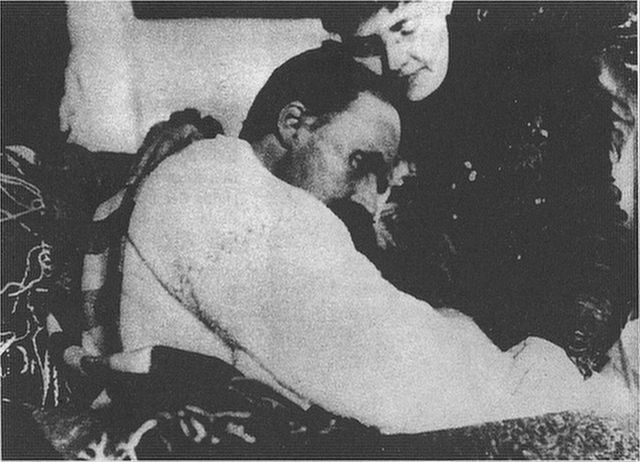
This idea was explored by Nietzsche in at least two of his books, Thus Spoke Zarathustra and Beyond Good and Evil. I am not saying with certainty he genuinely believed this, although I do think he tended to see truth along these lines. I simply do not claim to reduce his understanding of something so profound as the idea of truth itself to merely one interpretation, even as it was his own interpretation in these instances within his writing.
He wrote, “SUPPOSING that Truth is a woman–what then? Is there not ground for suspecting that all philosophers, in so far as they have been dogmatists, have failed to understand women–that the terrible seriousness and clumsy importunity with which they have usually paid their addresses to Truth, have been unskilled and unseemly methods for winning a woman? Certainly she has never allowed herself to be won.” -BGE
He also wrote, “Untroubled, scornful, outrageous—that is how wisdom wants us: she is a woman and never loves anyone but a warrior.” -TSZ
I believe there are other instances in which he wrote on this idea but I can’t seem to find them at the moment. In any case, the above suffices for now.
Do you think Nietzsche was right? What is it about the truth itself, whatever it is or how you conceptualize it, that led Nietzsche to this idea and do you think Nietzsche was merely expressing something about his own subjectivity, preferences and maybe desires, or was he expressing something profound about the nature of truth itself?
And what other possible ways can we understand what truth is, perhaps “truth is a man” makes just as much sense, or other interpretations? How do we value these various interpretations and how far into them do we want to go with philosophical analysis to determine a degree of truthfulness to them, outside of our own subjective value or more broadly the wisdom that may be revealed by these interpretations? Said otherwise, I want to explore the relationship between truth and wisdom as it relates to interpretations of truth like the ones Nietzsche was making.
I wonder if every person, or at least every philosopher makes his own interpretation of what truth is, and what extent this has to do with whatever it is that truth ‘itself’ is. Being truth itself, it could perhaps accommodate every possible interpretation of itself as aspects of itself, nested within itself as examples of certain truths regarding one or more ways in which truth itself can be understood.