We are not consciousness

I do know all about consciousness.There isn’t much to know really.

The consciousness experience is vibratory like all of the physical.

Why do you think individuals say …I need to be more in the moment?…If they are not in the moment then where are they? …it’s simple …they’re not in the moment….and if they are in the moment then where are they? ….its simple they are in the moment.

So individuals are either in or out of the moment when it comes to consciousness.

You are always in one or the other so consciousness is vibratory.

All of my posts are sound.They are challenging but always practical and enable individuals to review and apply them themselves at the psychological level in order to test and prove that what I post is genuine.I wouldn’t post it otherwise.What would be the point?

All sciences are important.Of course they are.

Psychology is the most important of all though.

If your philosophy and science does not concur with the psychological experience then get rid.

Mainstream science is wasting its time and has been doing so for hundreds of years now and it will be difficult to turn back because of all the baggage.Its philosophy is wrong.

I know that what I post is sound and works because I apply it and test it at the psychological level.

Player science is not the same as Spectator (observer) science.

How will you ever learn about consciousness unless you get involved in the game.You won’t/You can’t.

The mind needs to be stilled.

When a sheep bleats, it means something. But does the sheep itself know that it bleats? Why did I write this? If a person does not understand the words he uses, does he understand the meaning of what he writes or says? It is even funnier when two sheep bleat. This is the case when they almost understand each other, because they bleat, about the same thing.

Of course I understand what I post Demon because player science is experiential.You don’t test it in a lab or at CERN.You test it at the psychological level.You will never understand consciousness unless it becomes personal to you.

Learn the meaning of human words, and the rest will be added.

I understand human words Demon.

You claim to be a misinterpretation of reality (an illusion)? You are embarrassing yourself for the record and for all to see.

I merely point things out to you because you are incapable of seeing it.

The self interprets the effects of vibrating electromagnetic energy waves emitted from vibrating matter which results in a changing of the consciousness experience.

You exist Demon because you need to exist to claim that you don’t exist.You let yourself down because you should be silent if you have cancelled out.I don’t need to be silent because I know I haven’t cancelled out.

Do waves vibrate or does matter vibrate? However, it is ridiculous to ask. What is matter? What is vibration? What is energy? Are you tired of bleating yet? Aren’t you tired of being a sheep?

Both particles and energy waves vibrate.

Light is a particle wave because it’s subjected to push/pull forces as it passes through space.Which is why it has a sinusoidal waveform.These push/pull forces are attractive and repulsive electromagnetic forces balancing with attractive and repulsive electromagnetic forces.

There is hope for you yet demon.

You really need to separate yourself from your biological machine body.Of course it can’t make any sense of anything.Its a machine!!! that’s programmed with binary logic.It doesn’t possess life.All that it’s capable of doing is computing that it exists and doesn’t exist.

Existence and Non existence has got nothing to do with life.Anything that claims something is either alive or dead spiritually.

You will never understand consciousness if you are merely religious because religious philosophies do no explain science.

Religion and its starting philosophies are of no use to anyone.

There are two religious starting philosophies.

The first is the religion of atheism’s starting philosophy which is good=bad and bad=good.

The second is the religion of theism’s starting philosophy which is good=good and bad=bad.

You can only understand consciousness with the non religious starting philosophy good/bad=good/bad

Science is founded upon a non religious starting philosophy.

Atheists and Theists are mere spectators (on the right and left) in the game of philosophy.They are unable to impact the outcome of the game because they are not involved in the game.

In this modest essay I’ve posted here some months ago:

I’ve talked about how this world seems to be perpetually enshrouded by darkness, human thinking, human awareness, working as a spark of light, as a timid, yet powerful tool to try and illumine this large room of fear, ignorance, superstition, speculation with the cold light of the day, the cold light of reason.

While people might disagree about virtually anything, one thing I think most would concede: it’s better to be in an illuminated room than in a darkened one, it’s better to feel the warmth of the day on one’s skin than the dreary touch of night. The day, the sun, light, brings with it a perception that one’s two feet are firmly on the ground, whereas night, darkness, makes one not only doubt whether there is a ground, but whether there are feet, and whether there is a body to which feet could be attached to. The cold light of day makes one stop, ponder, think, analyze, the dread fears the night insist in nurture in one’s mind and which the darkness almost seems to consist of. I will repeat again what I said there: I want the rooms I live in to be permanently illuminated.

That’s why I need education. That’s why I need science. What is science, if not a technique to purge fear from the human mind? While the complimentary (?) fields of religion and philosophy can’t actually rid one permanently of the horrifying ghost of fear, religion particularly doing the almost opposite of that, science begins its attempts at freeing a man’s mind from fear by first advising him to keep his mind, literally, down-to-earth.

Down-to-earth is the precise term to use here. Not only because it means to have one’s feet firmly on the ground, but because it implies that whatever a man does or experiences in life is related to this planet, to this world. We are creatures of this world, living on and off this world, and not able to live anywhere but here.

For countless centuries now men have been doubting not only whether this world here is the only one there is [for us], but also whether it’s even real to begin with. Some have boldly asserted this here is just a shadow of the real thing, passing as true only for unreasoning creatures living in a kind of… cave. The discovery of real philosophy would free one’s mind from this world of shadows and open one’s eyes to the real world. Such a perspective, widely famous yet incredibly depressing in its sheer naiveté, was bought freely and gladly by such a big part of the species that it has gone beyond the realm of speculation and into that of reality, becoming a truism, ie, something self evident. Most people think we are only passing through this world, waiting for death to begin our journey to the true world, where true life will, after all, begin. This is evident when we say someone has “passed”. Someone having “passed” is a poetic, profound, comforting and essentially religious way of dealing with the following cold observation: someone has ceased being. Someone died, permanently.

One can choose, hey, one has to choose a way to conform to the inevitability of death and also with its irreversibility. Whether it’s through philosophy or religion or even through cold cynicism or hedonism, the fact remains that when one turns to science, it has nothing to offer besides the dreary conclusion of cold observation: that person is dead and is not coming back. Ever.

While religious or mystical thought tend to enshroud men in layers and layers of mystery, one question leading to another, but never being clearly or definitely answered, because our feeble senses and myopic eyes can’t see deep enough, science does the opposite and tries to decodify and understand the layers of reality one by one, leaving no part of the experience of the living unexplored except for the most intimate of all aspects of existence: the abysses of one’s mind. Even this aspect is investigated by some, but here science progresses slowly, because the human brain is the single most complicated thing in the whole universe, and it will take a long time for it to be fully understood, if ever it will be. None of us will be alive to see it. But even though the brain remains, fundamentally, a mystery, science still has lots of valid things to say about it. Religion, on the other hand, nurtures on mystery. The analogy of the dark room may be brought back here, science is a room full of dark spots here and there, but with a pervading light that, given time and patience, will manage to illuminate even the most persistent corner of darkness. Religion is a room enshrouded by darkness, attractive precisely because of that, because instead of illuminating life, it brings with it a permanent sense of mystery, of the occult, things that can’t be verbalized or understood even by the initiated, and one feels comfortable in it, oftentimes, because one’s not brave enough to face life and reality through the cold lenses of reason, but prefer to recede to darkness wherever one feels threatened by the discouraging perception of one’s utter insignificance in this world.

I need science then not to make a cult out of it, like one naive Auguste Comte did once, but to ensure the room remains with enough illumination, to prevent me from stumbling over my own ignorance all the time, to safeguard these little snippets of knowledge human intelligence has collected throughout the ages, to ensure they will never, again, be subjected to the power or the scrutiny of those who are bearers of darkness but pretend to bring the light, of those ignorant enough not to perceive it’s not through speculation or wild guess one arrives at a semblance of sagesse, but through much labor, much pain, through relentless research that many a time takes a lifetime, obsessing a man who devotes his existence to it, apparently vergebens, but still his work is infinitely more valid than the bold assertions of those who pretend to have acquired infinite knowledge through a single minute of epiphany. As modest as the scientific research result can be, it’s still something. The bearer of truth, on the other hand, brings absolutely nothing to the table except a blind belief in his own infallibility.

It’s thus that a man feels entitled to talk about the most absurd notions as if they were unquestionable fact. He loses any sense of ridicule and becomes a loudmouth, the spokesman of a hidden Power that only he can understand but which

a) can’t be seen
b) can’t be heard
c) can’t be touched
d) can’t be smelled
e) can’t be measured
f) can’t be demonstrated
g) can’t be related to anything we can observe in the phenomenal world
h) can’t be proven
i) can’t be unproven
j) can’t be compared with other’s accounts of similar phenomenona (?) as each one’s experience with such a Force is inextricably related to one’s unique perception of things [ie, each man’s God is a different God than his neighbor’s God]

Since science has nothing to say about unseen and undemonstrable occult forces, religion has a vast field to explore, the field of human imagination. A scientist will roll his eyes at our everyday escathological prophet and goes back to his research. Since nothing the guy says can’t be proven, but can’t be unproven either, he’s generally left alone with what amounts to his own imagination. Religion is the realm of imagination, and more, the realm of magic. The realm where things occur that can’t be explained. And occur routinely, not here and there or every once in a while. In the religious mind, magic occurs every single day, every single moment.

Only, it never, ever, does.

One experiment we could make to measure the possibility of the occurrence of magic is the following:

Let’s pretend we’re observing a man—a skeptic, of course—permanently seated in a large, brightly lit public square. He’s sworn he will never leave that spot until someone appears who can demonstrate, in front of him, in broad daylight, in a place where anyone can see and everything can be recorded, the occurrence of some supernatural phenomenon. It could be the appearance of a spirit. It could be a miraculous healing. It could be a resurrection. A man levitating in the air or multiplying loaves of bread. It could be a hand appearing from heaven, delivering a tablet with ten new commandments to humanity. It could be an alien, finally, making its appearance. It could even be Donald Trump performing a gesture of humility. Anything completely out of the ordinary. Our skeptical friend is stubborn and won’t budge until this miracle-bringer appears. The information that he is there is publicized, broadcasted, so that anyone interested can find him there and demonstrate the possibility of the miraculous. What would we conclude if such an experience were possible? We would conclude, my friend, that it is possible, after all, to reach some consensus here in this world. After much waiting and much hesitation, we would all agree that that poor devil will never, ever, leave that square.

Does any of that mean I would like to fight religion and deny its practitioners the right to believe whatever they want? Far from that. I only wanted to point out what sounds as the most rational approach to the topic: religion is a personal subject, it can mean a lot to a man who finds meaning in it, but it has little, if any, factual information to provide for those who aim to understand the phenomena happening in this world.

Phenomena such as CONSCIOUSNESS, the topic of this thread, to which I finally turn after this long introduction.

The only effective way of studying what happens in this world is to assume that everything that occurs here is natural. Being natural doesn’t mean only “which happens naturally”, but also that it’s part of a long, never ending, process called evolution. This process, which encompasses each and every event involving living creatures in this world, interrelating them in a long chain where one being depends on the other, and evolves according to the circumstances of the environment in which it lives, is what best fits to provide a coherent theory of consciousness: just as man represents an evolution of his ape-like ancestors, human consciousness seems to represent an evolution of the consciousness of our ape-like and primate ancestors.

Whatever consciousness is, then, is something arisen in and related to this world. It’s not something coming from above or from the ether. It’s certainly not something that magically appeared out of nowhere. Like everything in evolutionary biology, it developed, painfully slowly, as a tool to achieve a means, and this means, roughly speaking, is not something transcendental, [=otherworldly], but mere surviving, on this world, sine die. Biological machines, as Jupiter123 calls it or, simply, animals- that’s what he means: a man without a soul is an animal- that’s what we fundamentally are. Our purpose here, if we’re going to use such a term, is not something beyond this world. It’s to go on living. Sine die. The individualized creature repeats the same process of the species it belongs to: it wants to live sine die. Animals, most animals at least, display this innocent and uncompromising will to live most effectively. Every new day is a repetition of the previous one. All days are basically the same as far as survival is concerned AND YET something fundamentally new, unheard of. The living creature wakes up every new day prepared to repeat the same cycle it’s been repeating since birth. Most of its waking hours are busy with either finding food or running from danger. One day, however, either the food disappears or the danger gets the better of it. One less biological machine in the world.

Employing this biological/evolutionary perspective to analyze any phenomenon presents a problem: everything in the realm of biology happens incredibly slowly, randomly, and without any apparent purpose or intention. Let’s not be mistaken: there is a purpose, survival sine die, but there is no Purpose, no apparent motivation external to the maintenance of the process itself. Life is an end in itself. The first truth of biology. The slowness with which life unfolds here, and with which it passes from one evolutionary stage to the next, literally millions of years, brings another logical consequence. All human conceptions of life, inherited from our ancestors who lived within an infinitesimal fraction of biological time, were founded on a completely mistaken understanding of human existence on Earth. Men of old had an infinitely more restricted notion of time than ours. They could not have imagined that humankind’s “arrival” on Earth took billions of years to occur. They commonly imagined humans as a special being among earthly creatures. We needed a Charles Darwin to bring to the table the most devastating of all scientific ideas: humans are “just” one more animal species.

The implications of this finding were so devastating that even today, there are those who vehemently oppose evolutionary theory based on the simple fact that it removes humans from the pedestal they placed themselves on and casts them into the animal kingdom, along with all other lesser animal species. That is, they don’t deny Darwinian theory for scientific reasons, but because they need and prefer to nurture a false sense of their own importance. After all, certain accounts claim that the entire universe was, magically, created just so humans could be here. And also that, once here, humans will always be somewhere. Eternal life. How surprised would someone who believed this for so long be to look around the world around them and realize that not only it is entirely indifferent to the existence of anyone here, but the very universe in which such a world exists is so vast that this entire world of ours, our entire reality, becomes insignificant?

It doesn’t matter how much some believe we need uplifting religious or philosophical systems to escape or counterbalance such a bleak perception of things. It doesn’t even matter what my own convictions are (I have them). What really matters is the lesson Darwin taught us: to understand the natural world, we must turn to science, and biological science finds its best foundation in evolutionary theory.

What evolution teaches us is that all life forms derive from a very simple one that arose, randomly, many, many millions of years ago. Although today the process seems incredibly complex and multifaceted, due to the millions of living species on Earth, in those humanly unimaginable times, all that existed were single-celled beings without even the luxury of a cell nucleus. Such early creatures are called prokaryotes. They are the humble ancestors of everything that lives today. In those primeval times, there was not much oxygen on the Earth’s surface, yet oxygen is vital for almost all living creatures. So naturally, living creatures at the time could only be infinitesimal and extremely simple. Then, about 3 billion years ago, a fundamental revolution: some microbes evolved the ability to use sunlight to produce energy, creating oxygen as a byproduct. This was the kickstart to more complex life forms. From then on, with the earth becoming rich in oxygen, the immense picture of life we have today was slowly drawn, with the most complex creatures coexisting today with the simplest.

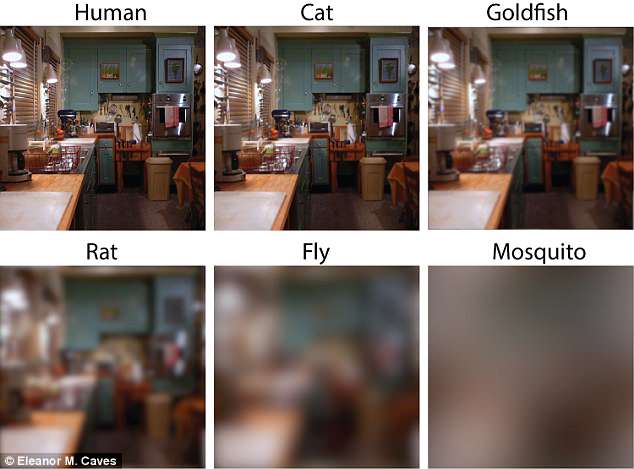
To outline the origin of consciousness, I will again use the analogy of the illuminated room. What was the first revolutionary step towards the life forms we have today? The ability to use sunlight to create energy. So, light is the vital element, it was in those distant times, and it still is today. For those early primitive microbes, sunlight represented the source of life itself. So they needed to develop a means to secure that source of light, and thus photosynthesis began. In their own way, almost all individuals, simple and complex, need sunlight to survive, and a perfectly illuminated environment proves more suited to the struggle for survival than a dark one. Those beings that live and hunt in darkness depend on other “light hunters” to survive. The analogy applies perfectly to humans. But returning to the search for light, another vital step in the evolutionary chain was the appearance of the eye. The eye is itself an extremely complex organ, without which human evolution would be inconceivable. But, like life itself, it had humble origins. It began as a simple light-sensitive cell. It evolved into the ocellus, still present in some insects, composed of grouped and isolated photoreceptor cells connected to what we can now call the optic nerve. Three important later stages are the pigment-cup eye, the lens-bearing eye, and the compound eye. The first one are found in organisms such as planarians and allow for more directional vision. Lens-bearing eyes evolved in species such as mollusks and vertebrates, where light is focused by a natural lens to form an image on the retina. And complex eyes are the eyes of vertebrates, such as those of fish, complex organs with different types of photoreceptor cells (called cones and rods) for perceiving color and movement. The evolution of the complex eye suggests that it originated from a layer of transparent cells in front of the eyes, which protected the eyeball and allowed the development of a lens. But scientists also argue that the brain also played an important role in the evolution of vision, with the visual cortex adapting to process the increasingly detailed images provided by the eyes. The fascinating story of the eye’s evolution is an example of so-called evolutionary convergence, where different animal lineages independently developed similar eyes, adapted to their specific needs. To evolve is to adapt. And in the specific and fundamental case of consciousness, as we see, it all begins with the eyes, prior to the existence of a proper brain. As the vertebrate brain slowly evolved into what we have in our heads today, the eyes also gradually evolved, eventually becoming the highly specialized organs they are today. This is where the analogy of the illuminated room, or rather, the illuminated environment, comes in. The more complex the ability to see, the more clearly the eye can see around it and the further its vision reaches, the greater the awareness of its owner and its perception of itself and its environment.

The picture above, showing how different animals “see” the world is very telling and demonstrates how the human eyes, though not being the most accurate ones, perceive the world clearly than a cat or a fish.

Consciousness, then, is the awareness of the environment around oneself, gradually increasing as the animal’s field of vision expands, or rather, as its vision improves. But in the case of more evolved animals, including, of course, humans, consciousness is not limited to observing the environment in search of food or potential threats. No, just as species of living beings gradually move from the simple perception that sunlight exists and can be used to generate energy to an active life, using the sun’s energy to hunt and form a den or an entire colony, in the case of the evolution of consciousness, we move step by step towards an optimal version, where each new evolutionary stage reaches another level, until we reach animals capable of being not only aware of their environment, but also of themselves.

Ecce homo.

Consciousness precedes the existence of the brain, but only in the sense of pure and simple perception of light. It’s obvious that brainless beings have only a rudimentary level of consciousness. Consciousness, as we understand the term, is impossible to conceive without the brain. Even though brainless animals “perceive” and react to the world, the more this organ develops, the more both—perception of light and increased intelligence—contribute to our reaching an ever-higher level of consciousness. In the case that truly concerns us here, in our case, it would be enough to remove a person’s brain for us to realize that all consciousness would disappear. If the mind is the “software” that makes the brain work, consciousness is the perception that such things exist. There’s no precise term to define it, but perhaps “process” isn’t so inadequate. Because saying that consciousness is a process whose essential purpose is to keep us alive seems like a perfectly logical thing to say.

While I outline this rudimentary theory of consciousness here, without intending to exhaust the subject, of course, nor do I have the knowledge to do so, what I seek to do is to better explain my perception that human beings experience consciousness individually. Like every solidly scientific theory, this notion is not born of wishful thinking, but from the experience of my senses and what other people say about their own experiences in the world. Consciousness, as awareness of oneself and the surrounding environment, does not seem to exist only in humans, but in humans it reaches its clearly broadest degree. Humans can literally psycho-analyze themselves. Study their own mind, their own psyche, to use a term dear to Jung, whom I will discuss later.

Why is this perception that we experience consciousness individually so solid?

It begins with my perception that the individual “repeats” the stages of its species toward self-awareness. No, this is not a mere recapitulation of the tired formula “ontogeny recapitulates phylogeny.” What I mean by this is that each individual is a part of its species and also, fundamentally, an isolated being, just as its species is a part of the larger world around it and also a unique, isolated species. Each animal species that emerges on Earth is absolutely random, but it is also a grouping of beings that, once they come into existence, want nothing more than to continue existing. Sine die. And each individual of an animal species also comes into the world randomly. It doesn’t “ask” to be born nor does it “need” to be born, but it is born, and, once born, it wants to continue living. Sine die. This means that each of us humans is not a “necessary” being here, but a random being, who was “simply” born. We have no greater purpose or mission to fulfill on Earth. It cannot even be said that we have a mission to reproduce our species, as we may be born sterile.

The very same thing we perceive about the social group we belong to, whatever it may be, applies to our species and to ourselves. My thesis is anchored in Stirner’s concept of singularity, and this is an incredibly profound concept because it fits perfectly to explain so much of what I perceive in this world. Each animal group, each species, is unique, just as each human group is unique and each individual is unique. The arrival of consciousness, of the degree of consciousness possible, to a species is the arrival of this level of consciousness to each of its individuals. An individual’s level of consciousness is that possible for his species. But if a species can simply “give up” on life, surrender, or succumb to another, an individual can come to the conclusion that he does not want this end for himself, contradicting the death desire of his species, his group. It is the moment when the subject realizes that he exists independently of his species. He will continue to exist even if his entire species disappears. He may give rise to another species, another group, or he may simply succumb to the weight of singularity. The reverse may be true, and the subject may want to die when everyone around him wants to live. But even if he succumbs, he will not fail to have noticed, even for a single minute, that his species is one thing, he is another.

This complete individuation seems only possible for humans, although perhaps the most intelligent apes can grasp a sense of individuality. In any case, it is the degree of consciousness, more precisely, self-awareness, that humans attain that makes this possible. Here we enter what appears to be the crux of the problem raised by Jupiter123, albeit with his indecipherable jargon. What he seems to mean, and repeats ad nauseam, is the separation between man and animal. For man, despite being biologically “just” an animal, is also the being whose self-awareness reaches the highest level. In this process, the subject “separates” himself from his species. He ceases to be, technically, an animal, and becomes an individual. I have expressed this idea elsewhere in another way: the human being is, at the same time, man and number. Man is the individual, the unique subject separated from all others. Number is the animal, the instinct, the species.

So, I agree with Jupiter123 in a transversal way. But our arguments clash on the following point: he believes in a Platonic self, a consciousness that exists independently of matter, in the ether. I don’t find such a thing conceivable.

For, embracing again a Stirnerian perspective, for me essential to the concept of self, and of individuality, is the notion of CORPORALITY, that is, the reality of the body.

It is precisely because we have a body, and a specific body, different from all others, permanently separated from all others, that we develop a sense of individuality. We realize that we inhabit a body, a single body, and that all our sensations and desires refer to that body. We realize that the well-being of our mind depends on the well-being of our body and vice versa (mens sana in corpore sano). And we realize that the most terrifying thought is the idea of losing that body. Because we only conceive of existence through it. Humans are the animals that realize that their bodies are mortal, fallible, and can become sick or even paralyzed. Hence, it is natural that their consciousness develops alongside this body and tends to seek ways to preserve it. This reality of the body, for long dualistically associated with the notion that the human spirit, the mind, exists independently of the material body, uniting with it God knows how, is essential to understanding why our consciousness is so different from that of other animals. Our much larger brain in relation to apes obviously plays a large part in this. The duality between individuality and animality (man and number) is neither Platonic nor Cartesian because it is not aprioristic. On the contrary, for a long time, the subject is “just” an animal. He has no developed individuality, nor a “soul” waiting in the ether to join his body. The human being gradually develops his individuality, his self, and this self becomes more robust and virile the stronger the subject’s physical vigor is. The body does not play a mere role; it is essential; without it, there is nothing.

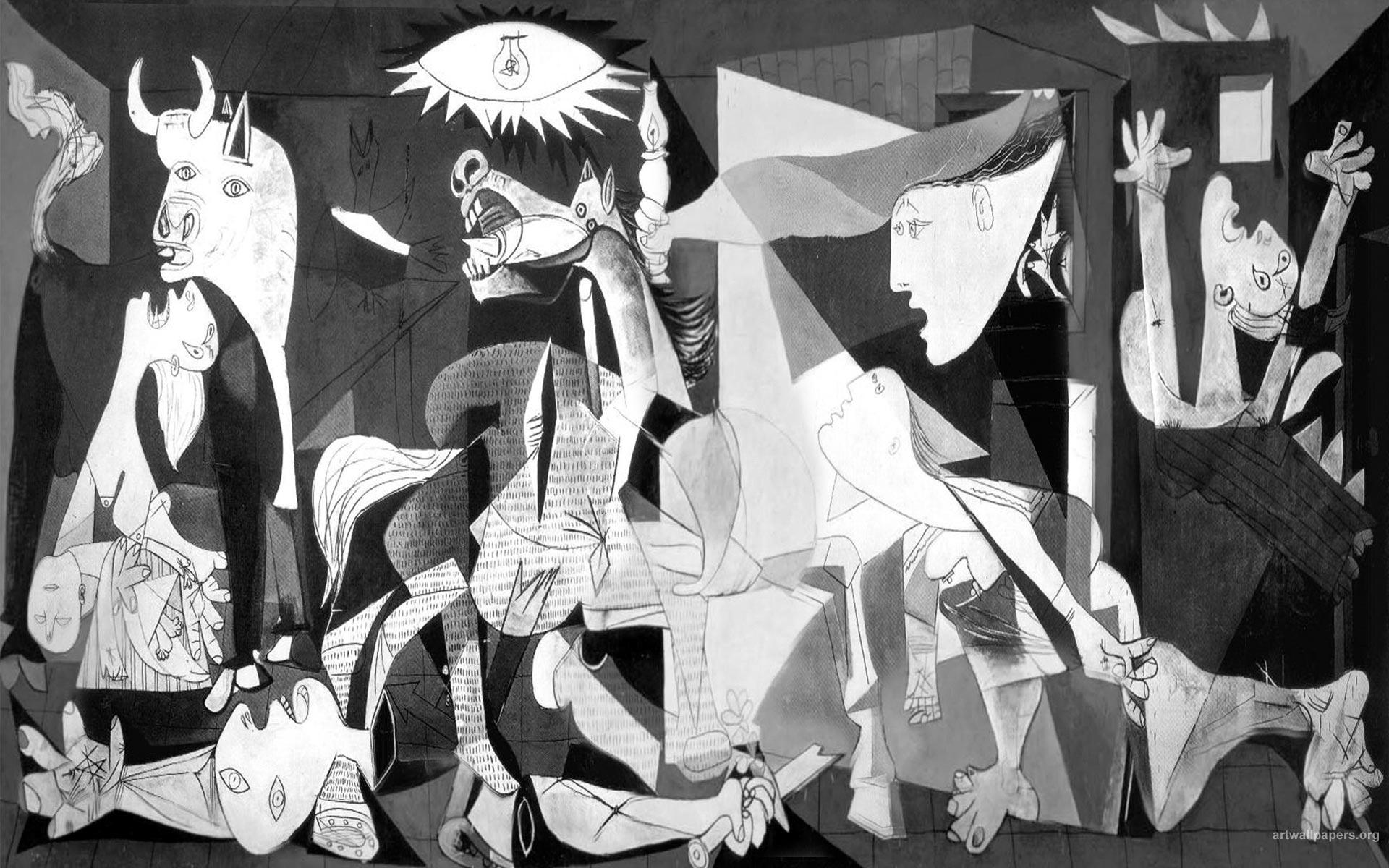
Consciousness thus appears as a process through which a subject’s mind becomes aware of itself and its environment, enabling it to make better decisions regarding its survival the more enlightened it is—that is, the wider its field of vision. It follows that, although all people have, in theory, the same intellectual capacity and the same level of consciousness, not everyone “sees” the same thing, or can perceive all aspects of a problem. Let me use an example. Let’s look at the famous mural, Guernica.

Reactions to this striking work of art vary according to one’s awareness. Animals would be completely indifferent to it. The greater the perception, the brighter the room the person is in, mentally, the more details they can perceive in the painting. Thus, we would have the following reactions:

a) What the hell is this?
b) I just see a bunch of disconnected images. Is this guy learning to paint?
c) I don’t like this style of painting; I don’t see the point;
d) The painter seems to be trying to say something I don’t understand;
e) The artist is making an abstract manifesto whose purpose is not clear to me;
f) I’ve seen other works by this artist, he’s a cubist if I’m not mistaken, I find the images strange, but it seems like he’s making a kind of protest, right?
g) The artist, Pablo Picasso, the greatest painter of the 20th century, painted this work, enormous in every sense, as a way of both portraying the terror represented by the Spanish Civil War, which he had real experience of, and of making a protest against militarism and the widespread killing of wars. The work is in fact a big mural, depicting the horror and chaos of the bombing of Guernica, a Basque town in Spain, during the Spanish Civil War. It’s a monochromatic, post-Cubist painting that uses symbolism to convey the suffering and devastation caused by the attack.

We would thus see that reactions to the work would range from (literal) horror at its peculiar aesthetic to a perfect and erudite understanding of what Picasso, in his artistic vision, intended to convey through it. This happens because each subject will look at the mural through his own individual eyes, and will not be able to have the same reaction as others, never perfectly the same, although he may cling to commonly accepted aesthetic judgments for convenience. This would demonstrate not only that each person interprets the world in their own way, but that each person “sees” a limited part of the world. One will be able to see in the work a collection of brushstrokes without direction or meaning. Another will look through it and realize that the artist intended to represent reality through his own unique eyes. One will attempt to criticize the style, another will judge the work to be a testament to the artist’s greatness of spirit and [unique] talent. Another, still, will be concerned with the work for purely economic reasons, analyzing its commercial value.

What happens in the animal kingdom in general, then, where some animals’ vision is limited to their restricted environment while others literally see far, is repeated in the human species, and in ours, it reaches a paroxysm, because other factors come into play besides mere individuation. One of them is selfishness [egoism]. This is present in all animals, but in humans it takes on unique dimensions. Some humans not only can see the room more illuminated than other humans, but also see the corners of the room that are still obscured. They can choose to see only what they want in the room. Or they can prevent others from seeing what they can see. They can falsify what they are seeing. All of this depends on the level of consciousness. The more developed, the greater the possibility of the individual making the most effective use of it. Which includes deceiving others egoistically.

But individuals, individual minds, which didn’t fall from heaven or come from the ether, came into being naturally, and being natural, they obey certain rules, or rather, they follow patterns common to all other animals, right? I can’t expect an individual to exist in a vacuum, can I?

Certainly not, and this is where an analysis of humankind solely from an individual perspective proves incomplete. Because there is that part of us that is common to all members of our species, and there are factors in our physical and psychological evolution that do not depend on our free will, but exist even before we can conceive of what free will is. Such factors shape much of what we might call our essentially biological, mechanical, involuntary behavior. We could call it instincts. Or the unconscious.

The first thinker to develop a decent theory of the unconscious was Sigmund Freud. The reason Freud’s technique was named psycho-analysis because it does precisely that: it analyzes the individual’s mind (psyche), attempting to form a more or less accurate picture of how much the subject’s past experiences have shaped his/her personality, to the point where the current imbalance in this personality motivates the person to seek a therapist. Freud concluded that the main factors that lead a person to act in ways they don’t understand, or even consciously reject, are beliefs and experiences rooted in their subconscious, which contrast with the person’s natural desires, creating a neurotic personality.

An essentially neurotic mind would be one where the individual will clashes with traumatic childhood memories, the species’ inherited instincts, and beliefs firmly rooted in the unconscious. For Freud, the unconscious is a “bottomless pit” where the individual internalizes all his perceptions and experiences of the world, combining them with his inherited instincts, in a process that begins long before he is aware of what he is or do. Then, as the individual grows, his consciousness, which can expand to an optimal level, comes into conflict with what his mind has long internalized. The psycho-analytic technique consists of freeing the individual not from these instincts, but from his fear of them. It consists in helping the individual learn to literally become a mature subject, that is, to understand that he is a conscious and autonomous individual who can live fruitfully by finding a balance between his deep-rooted beliefs and instincts and his individual will to live life to the best of his ability. Freud was one of humanity’s liberators, and his ideas are so consonant with Stirner’s that it’s almost as if they represent a natural complement to the latter. The deep-rooted instinct of the species—that is, the need for reproduction, the herd mentality, the “esprit de corps,” as well as the very locational situation in which the subject is born and grows—all of this has an impact on the subject’s mind, which sometimes they don’t overcome until the moment of death. Many live and die like herd animals, like “a new repetition of an eternal zero” (Kierkegaard), and are content with that. Again, and forgive me for being repetitive, the analogy of the illuminated room applies here. The more the subject realizes their absolutely unique place in existence, the more the instincts of the species recede into the background. The more illuminated the world around them—and this includes the precise perception of who they are and how much they owe to their species—the more the subject acquires a broader self-awareness. Stirner used as an example the difference between the mind of a child, an adolescent, and an adult. Adult in the true sense of the term: a subject fully aware of himself. And Freud never meant to say that the unconscious is something that will absolutely determine every moment of a person’s life. His technique consists of trying to understand as much of this unconscious as possible. And it was in this long research effort that he reached the exact same conclusion as Stirner: each individual is absolutely unique, EVEN in the way they unconsciously internalize the influence of their surrounding environment.

Even when the possibility of individuation is reduced to just that—a possibility—the individual remains “condemned” to be himself, even if his outward behavior never differs from that of others around him. But the outside world exists, and certainly the beliefs of that world exist, which force the individual to adopt a certain attitude, either to internalize or reject them. In this sense, the way each person’s personality is constructed depends on countless factors and variables. It depends on the environment in which one lives, one’s physical health, and the health of one’s brain. If one’s inherited a congenital disease from the family, his life will be different from that of a perfectly healthy individual, and his mind will internalize his experiences differently. Ultimately, it is a highly complex process, and each person reacts and develops differently. The unconscious is no different from the conscious in this sense; it simply represents a side of the human psyche that remains obscure, hidden. But it can be more or less understood or sublimated as the individual increases his level of self-awareness.
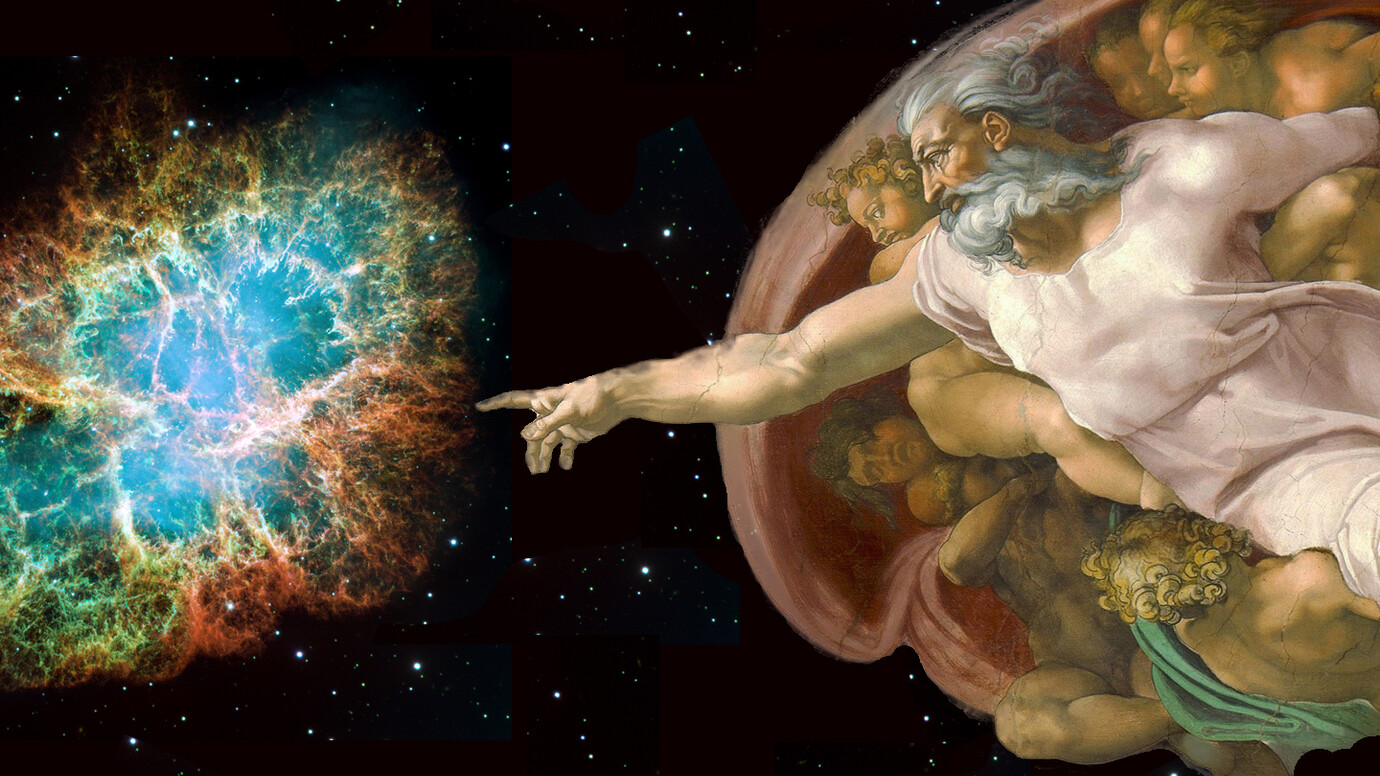
Now that I have to bring Carl Gustav Jung into the conversation, it is appropriate to quote a few of his maxims:

“Until you make the unconscious conscious, it will direct your life and you will call it fate.”

“Knowing your own darkness is the best method for dealing with the darknesses of other people.”

“As a child I felt myself to be alone, and I am still, because I know things and must hint at things which others apparently know nothing of, and for the most part do not want to know.”

“People will do anything, no matter how absurd, in order to avoid facing their own souls. One does not become enlightened by imagining figures of light, but by making the darkness conscious.”

“As far as we can discern, the sole purpose of human existence is to kindle a light of meaning in the darkness of mere being.”

“Be silent and listen: have you recognized your madness and do you admit it? Have you noticed that all your foundations are completely mired in madness? Do you not want to recognize your madness and welcome it in a friendly manner? You wanted to accept everything. So accept madness too. Let the light of your madness shine, and it will suddenly dawn on you. Madness is not to be despised and not to be feared, but instead you should give it life…If you want to find paths, you should also not spurn madness, since it makes up such a great part of your nature…Be glad that you can recognize it, for you will thus avoid becoming its victim. Madness is a special form of the spirit and clings to all teachings and philosophies, but even more to daily life, since life itself is full of craziness and at bottom utterly illogical. Man strives toward reason only so that he can make rules for himself. Life itself has no rules. That is its mystery and its unknown law. What you call knowledge is an attempt to impose something comprehensible on life.”

“The goal of psychic development is the self. There is no linear evolution; there is only a circumambulation of the self.”

What do those quotes show? Not only that Jung would subscribe to most of what I’ve written above, but also, mainly, that he was a very deep thinker of the human condition, willing to explore the utmost corners of its apparently unsolvable mystery. As an erstwhile disciple of Freud, Jung soon found he had to part ways with his master. He realized Freud’s theories lacked something, that the Austrian genius maybe had a too narrow and too down-to-earth approach to things. In short, he believed Freudian psycho-analysis could be complemented with a more introspective and less crude assessment of the results of their research. His essential difference to Freud was that he had a deep spiritual leaning, that in some of his texts borders on sheer religiosity. Something Freud lacked entirely.

I respect both, but to Jung’s more feverish enthusiasms, I prefer Freud’s lucidity-at-any-cost.

We must bear in mind when analyzing Jungian ideas that Carl Gustav himself was reluctant to define them openly, because he knew that spiritual experience is untransferable. This becomes clear when reading his spiritual biography, Memories, Dreams, Reflections. To quote the man again:

“My whole being was seeking for something still unknown which might confer meaning upon the banality of life.”

“I am astonished, disappointed, pleased with myself. I am distressed, depressed, rapturous. I am all these things at once, and cannot add up the sum. I am incapable of determining ultimate worth or worthlessness; I have no judgment about myself and my life. There is nothing I am quite sure about. I have no definite convictions—not about anything, really. I know only that I was born and exist, and it seems to me that I have been carried along. I exist on the foundation of something I do not know.”

This latter, poignant, heartfelt confession offers a huge contrast to one of Carl Gustav’s most well-known sentences: “I don’t need to believe, I know” [referring to the existence of God], and is a sign we need to take some of the most typically Jungian concepts with a grain of salt.

Concepts such as the collective unconscious.

This goes way deeper than the individualized unconscious. It is supposed to be a universal, inherited structure of the mind that influences human behavior and thought, involving all humans, independent of their own peculiar circumstances in life. It’s then a substrate of human consciousness that is there, on a deeper level than the individual unconscious experiences unveiled by normal psychoanalysis. It’s a Platonic concept, because it is metaphysical and exists independently of any material reality or circumstances. It’s “there”, somewhere, influencing the whole of the human collectivity. Jung based this concept on his own clinical analysis of his patients’ dreams and also in his cultural studies. According to him, very similar symbols, myths, types of behavior and motifs appear across cultures and throughout human history, suggesting a shared human experience and, perhaps, a common source. The famous Jungian archetypes, the hero, the mother, the persona, the Self, the sage, etc, are patterns repeated throughout culture and would suggest not only that humans share the same basic experiences, but that they have “inherited” such patterns since the dawn of the species, what would make an individual’s development in life necessarily dependent on things entirely out of one’s control. A literal interpretation of this concept leads one to a Platonic belief in a human “nature” common to all men on earth. A more open-minded interpretation is possible though. Instead of accepting the collective unconscious as fact, one could interpret it as metaphor, a symbolic way of recognizing that many humans cultures have shared similar beliefs throughout history, which would lead to what I prefer to call the human heritage. Things such as respect for elders, the notion of Self, love for one’s country, etc, are part of this heritage. None of such concepts are indelibly engraved in a person’s mind. The direct experiences of the flesh and blood person will determine whether the person loves her country or not. Depending on such experiences, a person would not even be able to conceive what patriotism means. Same for love of one’s mother or hero worship. The island experience I mentioned earlier in this discussion applies here. Imagine ten children growing up in an isolated island with no contact whatsoever with none of human culture, except a father figure who will tell them that island is the whole world. Will any of those children share the collective unconscious beliefs of the species? Or will they only inherit human instincts and grow up like innocent Indians? The answer seems quite clear to me.

A generous, open-minded reading of the collective unconscious leads one to deduce that some parts of the human heritage are worthier than others. It certainly doesn’t lead one to believe in a Platonic kind of human nature. The reality of the body, the real life circumstances and experiences are still essential to explain both a man’s consciousness and his unconscious motivations. Nothing falls from heaven and nothing comes from the ether. Unless one can prove otherwise, of course.

A genius like Jung is not exempt from developing unreasonable ideas. Which leads us to the following question: how much of human thought is based on a love of knowledge and how much on simple wishful thinking? That Jung felt it necessary to believe in something greater than the individual is obvious and understandable. But did he himself realize that, in order to substantiate this need, he resorted to an almost naive Platonism? A similar reasoning can be applied to those who believe in reincarnation. The famous reincarnation. The belief that human consciousness can, magically, survive the death of the physical body on which it depends. This belief is incredibly popular and takes many forms. I will briefly attempt to unravel its absurdity here.

Speaking of reincarnation, we could choose to remain in the company of Plato, as the Athenian philosopher developed a theory that remains very popular today. For him, the soul existed independently of the body, incarnated in it briefly, and when this vessel died, it simply chose another body and continued its journey indefinitely. It’s an incredibly naive theory, but it remains the basic belief of millions of people, who insist that a human consciousness can exist without a body to support it.

Since such a theory is too blatantly naive, we could turn to the notion of Buddhist rebirth instead. It’s another view on reincarnation, but since Buddhism doesn’t posit the exist of the self, the individual soul, but of a continuous process better described as stream of consciousness, subjected to the law of karma, which goes on being born again till the reaching of Nirvana, the Buddhist concept seems, at first sight, slightly more tenable, because it assumes the fixed self of Platonism and Christianity is a myth. Still, it’s a religious concept, undemonstrable in reality and leading one to simultaneously reject the notion of self and embrace a feeling of guilt for attaching oneself to the perfectly justifiable belief of his individual existence, what leads one to the notions of karma and imperfection. It’s well founded in the Eastern mindset, but no less absurd than the Platonic version. It takes faith to be believed.

There is a philosophical argument for reincarnation, however, that isn’t as bold as Platonism or Buddhism, but is anchored in the idea that nothing in the material world can be destroyed. Therefore, since consciousness is a part of the material world, something that exists regardless of how we conceptualize it, something must happen to it after we die. Nothing can become nothing, because nothingness doesn’t exist. This idea, widespread here, leads some to conclude that, just as the body is “recycled” after death, consciousness would also be “recycled.” Hence: reincarnation. Prepare ye all to exist perpetually! The absurdity of this argument seems obvious to me. But I don’t know if I can adequately demonstrate just how absurd it is. Perhaps I may find myself at a loss for words.

First, let’s focus on the most obvious reality in the world: what happens to the body when it dies? Does it disappear completely? Not even if it’s cremated! It is “recycled” by nature, that’s true, but does it continue to exist as a body? Does John’s body continue to exist in the creatures that will consume it post mortem? No, nothing of John’s body remains; what is part of these creatures is the matter of which his body was composed. The body itself no longer exists, it has disappeared. Unless it has been embalmed or mummified! So, John’s individuality, which depended on his body existing, and existing exactly as it was, disappears with his death; that is clear to everyone. It no longer exists, it has become nothing. It hasn’t gone to the ether. Nor has it gone to the “collective unconscious” of his relatives: most of them may care little about the boy. His individuality has ceased being.

So we have to remember, where does consciousness fit in the case of humans? Well, brainless beings don’t have consciousness, do they? So let’s consider that it’s not so absurd to say: human consciousness depends on the human brain to exist. If I defined the mind as the “software” that makes the brain work, consciousness is intrinsically linked to this mind; we can conceptualize it as a brain function or a brain process. It’s not something “material” that submits to the physical laws that govern matter; the brain is. What happens when we completely destroy a computer? Do the programs recorded on it still exist in the ether? No, the computer no longer exists, nor do the programs recorded on it.

The reasoning applicable to the brain is the same. What does it matter if the body is “recycled” by nature? The brain itself ceases to exist. It becomes nothing. Everything related to the brain is destroyed with it: intelligence, personality, individuality, consciousness, the mind itself. Everything disappears. To maintain that consciousness persists even after its material support becomes nothing, we would have to believe that it is something independent of the body. In other words, a return to Plato. This is undemonstrable, and as such, it is merely a belief, not a fact even remotely supported by reality.

Even if I grant that “something” survives death, I would have to make another leap of faith to believe that this “something” will join another unborn body immediately after death or after a long rest. None of this presents the slightest hint of plausibility. But I understand the psychological agony caused by the idea that a loved one has died and will never be seen again. The difficulty in accepting this harsh reality is the primary motivation for this kind of belief.

There is a wide range of real-life experiences, such as deep sleep, where the person supposedly “disconnects” from the material body, past-life regression, and near-death experiences, which are used as evidence (?) that reincarnation is possible. I won’t dwell on this here any longer than necessary. These experiences serve not to prove that consciousness can exist without a body, but rather that the depths of the human mind are still far from being fully explored, and perhaps never will be. Just like paranormal and mediumistic experiences, it is misguided and betrays wishful thinking to jump to the conclusion that a near-death experience “proves” the independent existence of consciousness. The fact is, we still don’t fully understand our brains. The closest we have to a coherent theory, however, is that once the brain dies, all activity ceases. Consciousness disappears. Until we find more solid evidence to the contrary, this is the most well-established belief.

Finally, the idea of dissolution. For some, consciousness doesn’t disappear; it dissolves into a greater consciousness. They argue that individual consciousness is merely a temporary and limited manifestation of something much greater, which would be universal consciousness, another name for God. It’s a perspective connected to the idea that the individual’s life is illusory. And a little more than that.

What such a belief, indeed what all such beliefs betray, is a pre-Darwinian conception of human existence. The notion that we are here to fulfill a mission, a plan of the Absolute. This perspective, which serves as consolation for many by giving them a sense of purpose, simultaneously leads them to diminish the importance they attach to life itself, seeing it as insignificant in the face of the “whole.” But there is no such “whole” outside the human realm. And the universe is entirely free of any kind of consciousness, except for this microscopic space we call our world. Everything else in the universe is vacuum and dead matter. So, it’s not even a pretense to think that this enormous vastness of unusable space exists for us to be here. It’s the purest and most uncompromising wishful thinking. The closest thing to reality seems to be the perception that this universe came from nothing, is random, has no purpose, just as we ourselves are random. We didn’t ask to be born, but we were born. Just as the universe is “just” there, we are “just” here. And soon we will be nowhere. Understanding what people find so discouraging about this is one of the tasks I have set myself. I find the whole idea liberating.

I have reduced my analysis of the reincarnation belief to a minimum for the sake of brevity. The topic can surely be explored more at length though, and I intend to do it.

If you could write a coherent theory of consciousness based on this, it could be useful for others to understand your point of view.

As I said above, and which you won’t read, some of the things you say make sense.

You just don’t seem to find a way to present your beliefs in a straightforward coherent fashion. It’s always the same assertions repeated over and over again.

1 Like

What’s the point Max if individuals won’t budge from their religious starting philosophical beliefs that good is bad and bad is good? They won’t accept any theory unless it complies with this starting philosophy even though a good is bad and bad is good starting philosophy science is failing right before our eyes.They will always say … nah…it may have failed but this is merely the evolution of science.

I’m wasting my time honestly.There is absolutely no point in putting a paper to an atheist or a theists who doesn’t agree with the starting philosophy.Their religious biases will always take precedent.

You can’t fit a square peg starting philosophy into a round hole starting philosophy.

My philosophy is sound and the science is sound that is derived from it and both the philosophy and the science relate to the psychological experience.

The ball is in the atheists court or the theists court to change their starting philosophy’s if that is possible.

I don’t need to change my starting philosophy because it’s balanced from a philosophical/scientific and psychological perspective.My philosophy unites the sciences.

It gives the individual freedom to believe what they want when it comes to good and bad but captures all possibilities.

You need to apply all possibilities to science and psychology.This is how it has been set up.

When I was a child, I read a book about what really happens in the circus. This completely erased any desire to visit that disgusting establishment for the rest of my life. But it did give me valuable experience on how to treat animals, people, and, finally, people who have been degraded to the state of animals.

For example, several wild tigers are placed in a narrow, low cage so that the poor animal cannot stand up to its full height. They are not fed for a long time and… constantly beaten. Even electric shockers are used. The purpose of these tortures is to convince the tiger that the trainer is its master. In other words, the tiger’s will and predator instincts are broken. Only after that can it be taught to behave in the arena. Out of several individuals, one animal is “trained” to stop being a tiger.

A second example: trying to treat a doctor is almost useless, because the poor person knows everything about both the illness and the treatment.

What do these examples show? That education is the imposition of false images of reality. And science is a prostitute at the service of power. In other words, it’s impossible to teach an educated person who believes in science to understand reality until you place them in a cage and literally start beating out everything they’ve been taught through education and science.
Max. You can’t even imagine how many mistakes there are in your texts. If I start listing them and explaining how the world actually works, the volume of the text would exceed yours by many times.

Макс. Английский язык слишком примитивен чтобы писать на нём философские концепты. Но если вы хотите научится перестать быть “врачём”, или “тигром” То есть наконец начать понимать реалии, с удовольствием помогу. Тем более, что вам доступен русский. Вот смотрите. Я взял русский текст и перевёл при помощи ИИ. Можете сравнить :

В детстве я прочитал книжку о том, что на самом деле происходит в цирке. Это напрочь отбило у меня желание посещать это мерзкое заведение на всю жизнь. Но зато это дало хороший опыт того, как поступать с животными, людьми и, наконец, с людьми, опущенными до состояния животных.

К примеру, несколько диких тигров помещают в узкие и низкие клети, чтобы несчастные животные не могли встать в полный рост. Долгое время не кормят и… постоянно избивают. Применяются даже электрические шокеры. Смыслом пыток является желание , чтобы убедить тигра, что дрессировщик — его хозяин. То есть ломается воля и инстинкт хищника. И только после этого возможно научить тигра поведению на арене. Из нескольких особей удаётся “научить” одно животное перестать быть тигром. Остальные либо гибнут, либо продаются в зоопарк.

Второй пример: пытаться лечить врача — почти бесполезно, ведь бедолага всё знает как о болезни, так и о лечении.

К чему примеры? К тому, что образование — это навязывание лживых образов реальности. А вот наука — шлюха на службе у власти. То есть не получится образованного человека, верящего в науку, научить пониманию реальности, пока не поместить его в клетку и не начать буквально выбивать всё, что он получил через образование и науку.

Макс, вы даже не представляете, сколько ошибок в ваших текстах. Если я начну перечислять и объяснять, как устроен мир на самом деле, объём текста превысит ваш, в разы. Впрочем нужно ли вам знать? Или проще быть в неведении?

I already told you this line of reasoning will lead you to insanity. But who am I to advise a Demon?

Demon….we are not interested in your claims that everything is a misrepresentation of reality (an illusion).You embarrass yourself every time you post but you can’t see it.We know what your views are.They are boring;old news and don’t work and are leading you down the slippery slope to insanity.

We are interested in pursuing a reality philosophy;science and psychology.

Go away.You philosophy states that you should be silent because you have cancelled out and yet we can still hear you so we know that your philosophy is a lie.You are a confused and lost individual who doesn’t realise it.

I wrote the long texts above as a response to the Artimas guy, who asked me for a theory of consciousness.

Feel free to point out my mistakes. If you can. Now I need real knowledge. Not speculation or wild guess.

Тьма — великое множество. Темнота — отсутствие света. Свет — всё существующее. Свет — видимый спектр излучения. А теперь как Демон понимает слово “свет”. Свет — это мышление Вселенной, как построение цепочек между элементарными частицами (по аналогии с электрическими процессами в нейронах человеческого мозга). Просто подумай о “тёмных”, что умеют видеть во Тьме. И подумай о “просветлённых” - что ослепли от света. Бесконечность — чушь собачья. Всё конечное, как в частностях (смерть), так и в целом (Апокалипсис). “Начало”- временная категория. Если нет Времени, то какое может быть идиотское “Начало” ? Чтобы понять, что такое “сознание” как процесс мышления, нужно понимать, зачем нужны люди Вселенной. Люди — инструменты познания, уникальные в своей глупости. Ведь Вселенная не умеет мыслить глупо, вот и использует человеческую глупость. Вот почему люди почти не свободны от реальности — даже в фантазиях они мыслят лишь образами реальности. То есть, на самом деле, это Вселенная навязывает процесс мышления. Навязывает и ложь — ложь о том, что люди наивно думают о собственной свободе, которой на самом деле нет. Вот почему бесполезно пытаться сделать из скотов (что лишь выглядят как люди) — полноценных и разумных людей.