I’m not asking if it’s objectively terrible I’m asking why it feels terrible ? In my opinion this should be something that should easily be able to be ignored but sadly it’s not for me it’s profoundly emotional.
Because the most meaningful thing in the universe—the whole thing, the point of existence—is to love. How are you going to do that if there is no one like you [a person—or people—who love(s)] to love? It’s not just emotional for you, but for everyone—that’s why they don’t (can’t) just ignore the dissonance, and why they compensate for it.
Cause you are a social animal and you are hardwired to get along with literally f-ing everything on the planet, and when you cant, that really confuses, disturbs and stresses you, because a huge part of your brain and dna is convinced that your survival depends on cooperation and acceptance within the group.
Of course this is the love and chimes side of the story, the other side would be that between the groups and also within the group there is always a fight for social hierarchy, but thats another story.
If you were not a human, but i.e. an octopus that is one of the smartest creatures in the animal kingdom, yet also is a solitary and not a group animal, you’d not be trying to make friends with everything, because the neural network that is spread throughout your body reacts faster than your actual central brain and decides on attacking on fleeing before you do.
There are plenty of solitary animals which make it a point to not to be in contact with others, not even with members of their own species unless its for the purpose of propagation.
Homosapiens is clearly not one of those, thats why you feel the need to befriend everything from wasps to bears.
3 Likes
Have you ever felt separated from others or felt not belonging?
If yes, and that feels ‘terrible’ to you, then why does that feel terrible, to you? For everyone else the ‘why’ might be different.
Will you explain, to ‘us’, ‘why’ it feels terrible, to you?
Also, if it does not feel terrible, to you, that is something if ‘I’ was ‘you’ would be more concerned about and asking about.
Maybe because ‘you’ are, one, of a necessary social animal and species, it may well be the case it is not that easy nor simple at all to ignore the feeling of separation, not belonging, and/or not fitting in.
1 Like
Is ‘convinced’ the Right word to use here?
If ‘to get along’ and/or ‘fit in’ is just a part of being a human being, and survival depends on this ‘fitting in’ and cooperation, then NO actual ‘convincing’ is needed absolutely anywhere here, including ‘the brain’ or the ‘dna’. ‘Fitting in’ is literally what is needed and necessary for continued survival and existence.
There does not ‘have to be’ any ‘fight’ at all.
But, obviously, if one has grown up believing that ‘has to be’, then they contribute in making and creating and what they believe is what is real and true.
It feels terrible because I am surrounded by other people live in a place created by other people but am not a part of it.
If I asked ‘you’ a question here will ‘you’ be Truly honest ‘with me’?
Depends on who or what “convinced” refers to.
If it refers to you as a person then you can be convinced
If it refers to the instinct, (which is based upon hereditary data) then no. That data is the result of cause and effect. Its not convinced of anything, its just the result of action and reaction.
Well, since you said and wrote,
Would I be right in saying who or what ‘convinced’ refers to is your brain and dna?
you say if ‘convinced’ refers to instinct, then ‘convinced’ is NOT the Right word to use here because instinct is based upon hereditary data, which is exactly like dna itself. So, ‘we’ both agree that ‘convinced’ is NOT the Right word here regarding dna, or instinct.
Now, I will suggest that ‘convinced’ is also NOT the Right word to use if ‘convinced’ refers to the brain or to ‘you’ as well. As ‘the brain’ is also based upon hereditary data, and that dat is the result of cause and effect also. I agree with you that that data is NOT ‘convinced’ of anything, and that it is also just the result of action and reaction as well, just like every other atom of the human body is the result of action and reaction.
However, if you ‘now’ want to suggest that the ‘convinced’ word refers to ‘you’, as a ‘person’, then I will suggest that everyone just instinctively KNOWS that their survival depends on cooperation and acceptance within the group, anyway. Therefore, NO ‘convincing’ was needed at all.
Did ‘you’ need to be ‘convinced’ that ‘your survival’ depended upon acceptance and cooperation with a group?
Or, did you just KNOW this instinctively anyway?
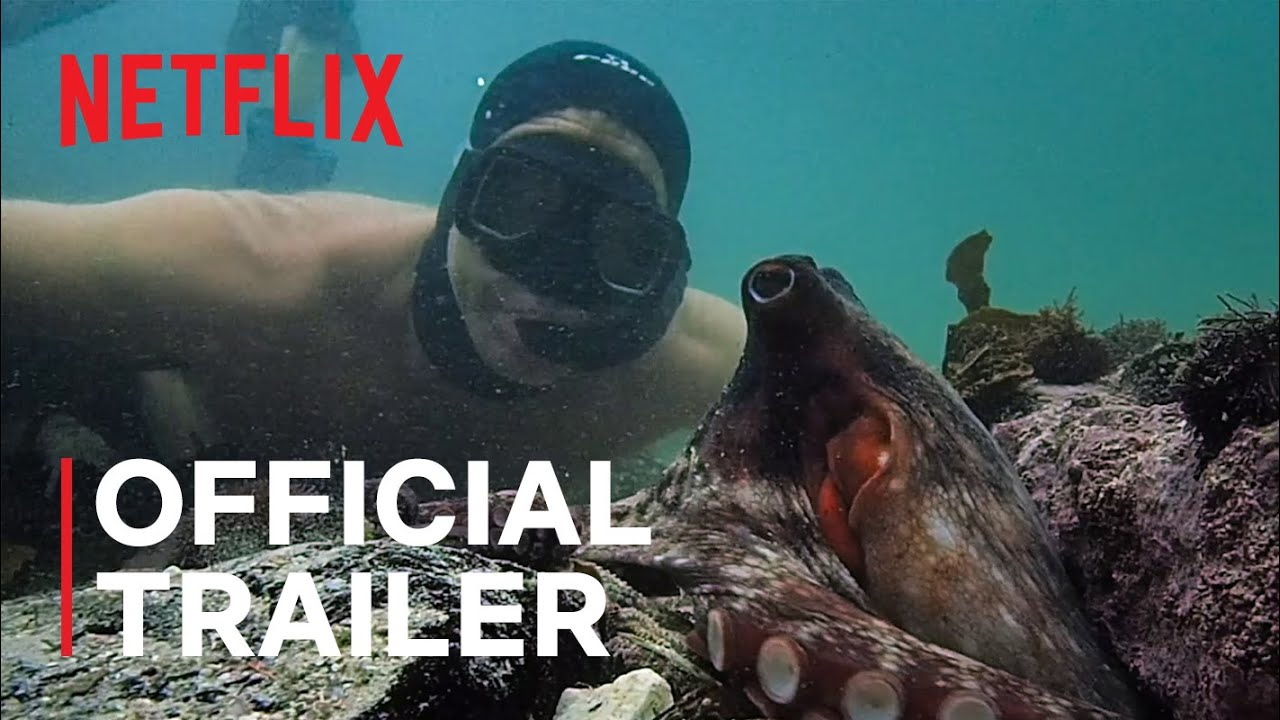
Yet the beautiful, sensitive, intelligent octopus also appreciates connection with another intelligent life form.
I am already honest. But ask your question anyway.
I agree, octopuses are extremely social. I think all intelligent predators are, because playfulness is the essence of a hunter.
Doesn’t mean they don’t treasure their solitude.
Many of them aren’t. Tigers, leopards and bears are standout examples. Octopuses are generally considered solitary which makes the one in the documentary all the more remarkable. She was having to cope with surviving in the wild with all that it entails including regular attacks by sharks, yet found the time to befriend a human.
I see you haven’t met many octopuses.
They are all like that.
Also I hope you meant tigers, leopards and bears are standout examples of extremely social, playful creatures.
This implies that you have never told a lie, accidentally or on purpose.
Is this True?
Are ‘you’ a human being or an artificial intelligence?
And, if ‘you’ are a human being, then what do you mean, exactly, when you said and wrote that you are not a part of a place created by other people?
What place are you referring to, exactly, which other people created and you feel and think or believe that you are not a part of it?
Why do some human beings think other animals ‘cope’ with ‘surviving in the wild’?
Besides the animal human being does any other animal actual ‘cope’?
Do you know what ‘social animal’ means?
Ugh.
ewww
Depends on the species. Some octopuses are social. Meanwhile some types are so hardwired antisocial that they refuse even face to face mating.
That being said however: as a rule of thumb, if you can avoid triggering fight or flight instincts you usually get interesting behavior with all forms of life.
But thats a hack.
Appealing to secondary instincts of animals such as curiosity or hunger is a nearly surefire way to befriend next to almost any form of life on this planet, because just about all of life uses association.
If you can avoid triggering fight or flight and teach a pattern recognition engine that your presence is associated with food, safety, shelter or play, it will happily get along with you whether its an insect, reptile, bird or mammal.
Though it needs to be said: This has its limitations.
The core instincts remain, so the moment a creature’s instincts switch rails, you will be seen as a nuisance at best. Felines for instance behave famously different depending on whether or not they have been socialized before learning to hunt on their own.
If in the first few couple of weeks of their life you take over the role of the provider and food distributor, they will imprint upon you.
However, cats which have learned to act independently, will retain a feral instinct. They KNOW that they do not need you. They are also not social animals, so (unless you are interacting with a felinid type that accepts colony type socialization in their adult life) you will be internalized as a nuisance even when you are not viewed as a threat.