Why does stepping away from a "clockwork" universe feel like vertigo rather than liberation?

When we trace the history of Western modernity, we often treat the steady dismantling of a purposeful, human-centric cosmos—culminating in hard physicalism, materialism, and a block-universe view of spacetime—as a tragic loss. Philosophers and cultural critics have spent the last two centuries lamenting how physicalism stripped the world of magic, meaning, and subjective agency, leaving us stranded in a cold, indifferent machine.

Yet, if you look closely at how humans actually react to the alternative—the idea that the future is genuinely open, that reality is participatory, and that time is presentist (where the past and future exist only as unrendered “possibility spaces” and actuality is continuously chosen)—it doesn’t just feel like liberation. It triggers profound vertigo.

Let’s call this psychological phenomenon “the agoraphobia of unrendered space”: the visceral, destabilizing anxiety that occurs when the pre-rendered, mind-independent safety net of physicalism is pulled away, and we realize that reality isn’t a finished, solid container waiting for us, but something continuously called into being through choice, attention, and meaning.

This raises a fascinating puzzle that I’d love to hear the forum’s thoughts on:

  1. Is this vertigo real and universal? Given that human subjective intuition strongly feels like we possess free will and live in a present moment that matters, why should an intellectual framework matching that intuition feel so existentially terrifying? Why does open space feel like a vacuum rather than open air?

  2. Is it a transhistorical human trait, or a pathology of our specific culture? Are we simply biological organisms hardwired to crave predictable, structural certainty (making any radical openness look like chaos), or is this agoraphobia specifically a trauma response bred by centuries of Western physicalism?

  3. The Spinoza Inversion: Consider Baruch Spinoza, who famously defended a strict, unyielding deterministic monism where we are completely bound by the chain of attributes. People hated him for it in his time; it felt crushing and bleak. Yet today, people panic at the opposite—at the radical responsibility of an open, participatory, non-deterministic reality.

If consciousness and choice are active architects of reality rather than passive epiphenomena riding on top of dead matter, why do we secretly long for the comfortable irresponsibility of the clockwork prison?

I’d love to hear how others parse this tension between our metaphysical desires and our psychological capacity to actually endure an open universe.
1 Like

Please correct me if I understood wrongly:

As “open” or “non-clockwork” universe I believe you refer to a non-deterministic reality, in which what happens in the future is not predefined but can have different outcomes. Your question is how we can hande such possibility.

In this forum I have argued several times that materialism (or physicalism) is not necessarily incompatible with a non-deterministic universe. Sure, many materialists/physicalists support the determinism, however, there is an alternative option: the Epicurean swerve (non-causal motion), which together with causality define reality.

The “vertigo” you mention is on those who believe that everything is well determined and could be potentially predicted given sufficient information. It is the Spinoza’s or Einstein’s approach of physics. Not everyone agrees to that. So, I do not think that there is a general issue on accepting an open universe scenario.

With regard to “magic”, I do not think we should blame philosophy. It is the advance of science that answered many ancient questions and “destroyed” the thrill of the unknown in many aspects of our life.

Definitely not universal, feels like a very specific problem a very small number of people have to deal with themselves.

It’s even more specific than that. Plenty of people in our culture are just fine with the idea of freedom.

I think more people find determinism distasteful even today.

That doesn’t mean it’s wrong. Obviously someone’s inability to cope with determinism, nor someone’s ability to cope with indeterminism, tells us anything about whether either of those ideas match the reality we find ourselves in. But I think you’re assuming a particular reaction to these ideas is more universal than it is.

If it’s your personal reaction to it, we should talk about it from that perspective. Why do you feel that way about this point of view? And why are you so sure this point of view is correct in the first place?

Yes, I guess I am talking about the scientific establishment.

Yes, I am realising that I am really talking about the scientific establishment here. For the rest of western society, it is less of a problem.

Scientists generally do not enjoy the idea of not being able to predict something. We invented probabilities to deal with randomness. Yet, intrinsic indeterminacy that quantum mechanics suggests “breaks” the prediction ability at the microcosmos. Physicists call this phenomenon simply as “measurement problem”.

Determinists believe that it is due to lack of sufficient information. Non-determinists consider it inherent feature of reality. The opinion of the scientists on this matter is basically driven by their philosophical perspective.

1 Like

Well, it doesn’t. It sharpens it dramatically.

Are you sure? You’re sure you’re not just taking about your own personal reaction to these ideas?

Do you have a reference on that? Something that shows how intrinsic indeterminacy leads to higher predictability?

I think that’s an excellent way to word it. They are fine with the idea. I am not sure how much they like freedom itself. Choosing between the presented options, ok. Free to say yes or no, ok. Those two I think most are just fine with. Freedom where there is a wide range. Where something off the table might be an option. Freedom of their whole organism, not the little thinky decider in the head, I’m not sure they are fine with that.

I’m not a determinist. I am trying to understand the reaction of some other people. I personally never found anything to dislike about free will, even when I didn’t believe in it (or didn’t have a clear idea what it is).

It seems natural to believe in free will, but that’s something inherently paradoxical about that.

1 Like

That’s what I don’t get, who? You talk like this is the typical, normal reaction. If it’s not you reacting like that, who? Are you sure that’s what they think? How are you sure?

Well, yes, it’s like not being able to make anything out, first because everything is extremely bright, and then because everything is completely dark.—Little over three and a half years ago, I wrote:

‘[When] you posit a goal […], the problem is that the goal in question is either completely arbitrary—namely, if it’s posited by free will—or it’s not really posited by oneself, but only through oneself—namely, if there are any factors (co)determining one’s positing of the goal.’ The Ideal of the One Who Paves the Way. A second amendment to Laurence Lampert's Leo Strauss and Nietzsche. - Page 2 - The Philosophy Now Forum

When freedom is lacking, it may seem like a good thing, and when guidance is lacking, that may seem like a good thing.

The first stop.
It has 2 problem categories associated with it.

  1. That this is not a phobia born out of irrationality, more out of ignorance
  2. That its subject to the individual cause not everyone has it/shares in it

In regards of 1. the idea is much like the fear of death.
Nobody who spent 2 braincells on the idea of death fears death or nonexistence itself, everyone fears the road that leads up to it. The pain, the sickness, the fright, the burden, the suffering, the sorrow of the loved ones, and so on.
Anyone with a knee deep understanding of one’s own existence in this world, is even at it’s worst apathetic towards the idea of being an insignificant little atom in something that points possibly infinitely further than just this universe which in and of itself is already so much monumentally larger that it dwarfs our existence as a whole.

In regards of 2. thats just is what it is.
Some people never had this fear, and some people learned enough to work around it.

What is real is subjective to the individual that perceives reality, and no, its not universal as i have pointed it out already.
As to why its terrifying, the answer to that will be in part in our DNA and the nature of the phenomena called biological life.

Life is hell bent on preserving it’s own existence. Everything alive is primed to sustain it’s own function and existence at all cost.
This is probably one of the most primal and prime codes built into all life. Fear of everything and anything that can be a potential threat, and while it’s edges and blades are completely torn off in a non-selfaware setting, all life that managed to screw itself with the trait of abstract thought.
Cause for us. Who are capable of abstract thought, fear has absolutely no f of a limit.
EVERYTHING can contain a potential threat.
The limits to horror, the limit to danger… is literally the limit to imagination.

Yes and no.
You cannot deny the billions of years of information your vessel is built upon.
But you are also an outlier due to abstract thought and self-awareness. Due to that, your perception of the world is malleable. There is nothing in this world you couldnt convince yourself of.

I will be honest with you. I could never really understand the “vibes” of the majority.
These concepts of the universe being bleak because you are somehow not the center of it and not everyone revolves around you… that to me is at best just comical, at worst utterly demented and insane.

The question i would propose is more: Where did this idea even come from?
Why does your life need to have a universal meaning, point and purpose?
Cause everything is bleak without it… what does that even mean?

Lets play a game.
Unpack this idea for me.
How people think that life is pointless, bleak and dreadful if they are not sky daddy’s little chosen RPG heroes and the main characters of this story of heroism. Unpack that for me.
Cause i would like to understand the basis for this notion.
I never had the illusion that my life mattered, so this is completely foreign and incomprehensible to me.

Even if i had a fraction of this delusion, i would still have to concede 99% of that to the fact that i share this life with other human beings who are technically all the same in the aspects of right and existential nonsense, meaning that we have 8 billion extra special individuals here suffering of main character syndrome, so even mathematically it does not check out that my life would be for some reason extra special. When everyone is special, nobody is.

So please. Break this notion of “i need to be important and my life needs to have a higher meaning” down for me.

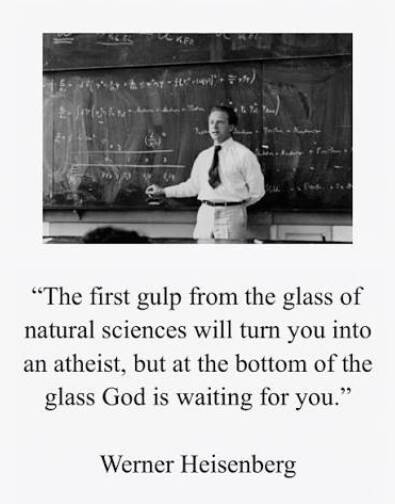
To answer your question broadly i will simply reach for the quote attributed to Heisenberg:

The mechanical clockwork universe is a surface level, comically simplified understanding of the universe.

I dont understand why even that would be a source of existential dread, but i can maximally stand behind the notion that as long as one gains enough understanding, the idea of a clockwork universe shatters.

Arguably, smearing all you will see behind the curtain on a god is also comical and worth it’s own fair share of criticism, but the idea of a clockwork universe is simply one born of ignorance.

1 Like

Everything has reasons for being what it is. Otherwise it would not be it.

Derive what you like from this fundamental truth. Free will can be understood in this context of “nothing just happens for literally no reason at all”, but in my experience most people do not bother trying to understand it that way. I suppose because it would involve more concerted effort of thinking through our notions and beliefs regarding things like “freedom” and “will” and how we experience and think and make decisions, etc.

‘Free will’ might be able to be understood in that context, but ‘free will’ can be understood in other ways also.

Just maybe those most people do not want to ‘look at’ and ‘see’ ‘free will’ in ‘a way’ that makes it impossible to exist.

Yes, some people do not like to ‘look at’ nor ‘see’ things in any other way/s than they have already chosen to believe is the one and only way.

For example, some people already believe, absolutely, that they cannot choose to ‘look at’ and ‘see’ things in any other way than they ‘currently do’ because they are literally not able to.

It’s so weird that I have a view of the situation that is a blend of both of your dichotomies. The block universe in a deterministic frame does not give me vertigo, it is just absurd because it doesn’t work. The “only now is actual” universe (with everything outside of it being possibility space) does not give me vertigo—in fact, it is the most grounding version, but also absurd and doesn’t work. What gives me vertigo is imagining the perspective of being who is/are grounded in now but the whole (what you call block, as it is not mere possibility space) is their now—and they allow us to be active participants as sub-architects. We are made of this being… and we help shape it/ourselves (but it is / they are ALWAYS and doesn’t/don’t change)… and the relationships between eachother. THAT’s vertigo, but it’s the only thing that works.

I’m sorry, @Ecmandu. It’s your own damn fault.

1 Like