Analytic/Synthetic Distinction is really about…

Correct me if I’m wrong here.

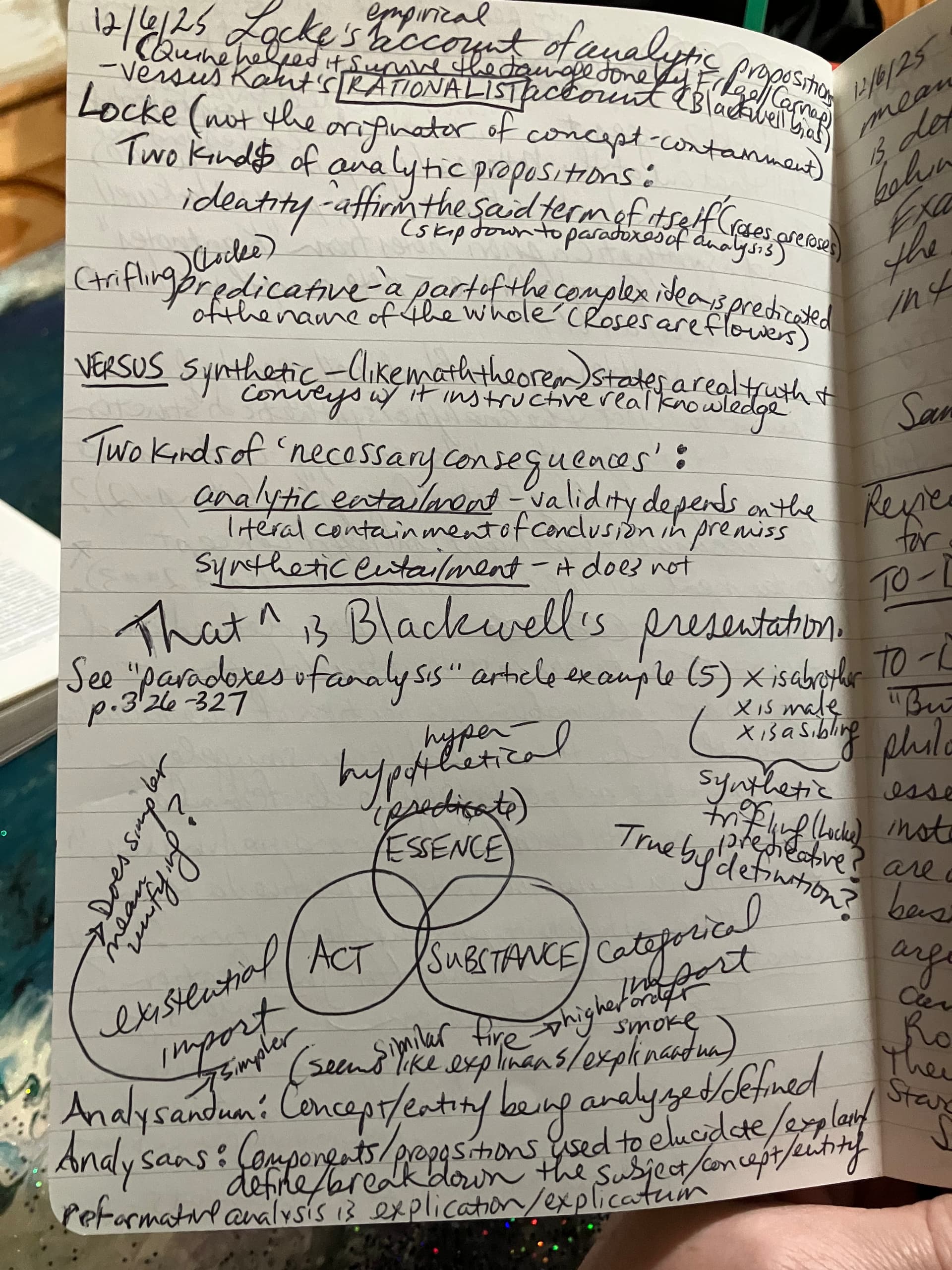
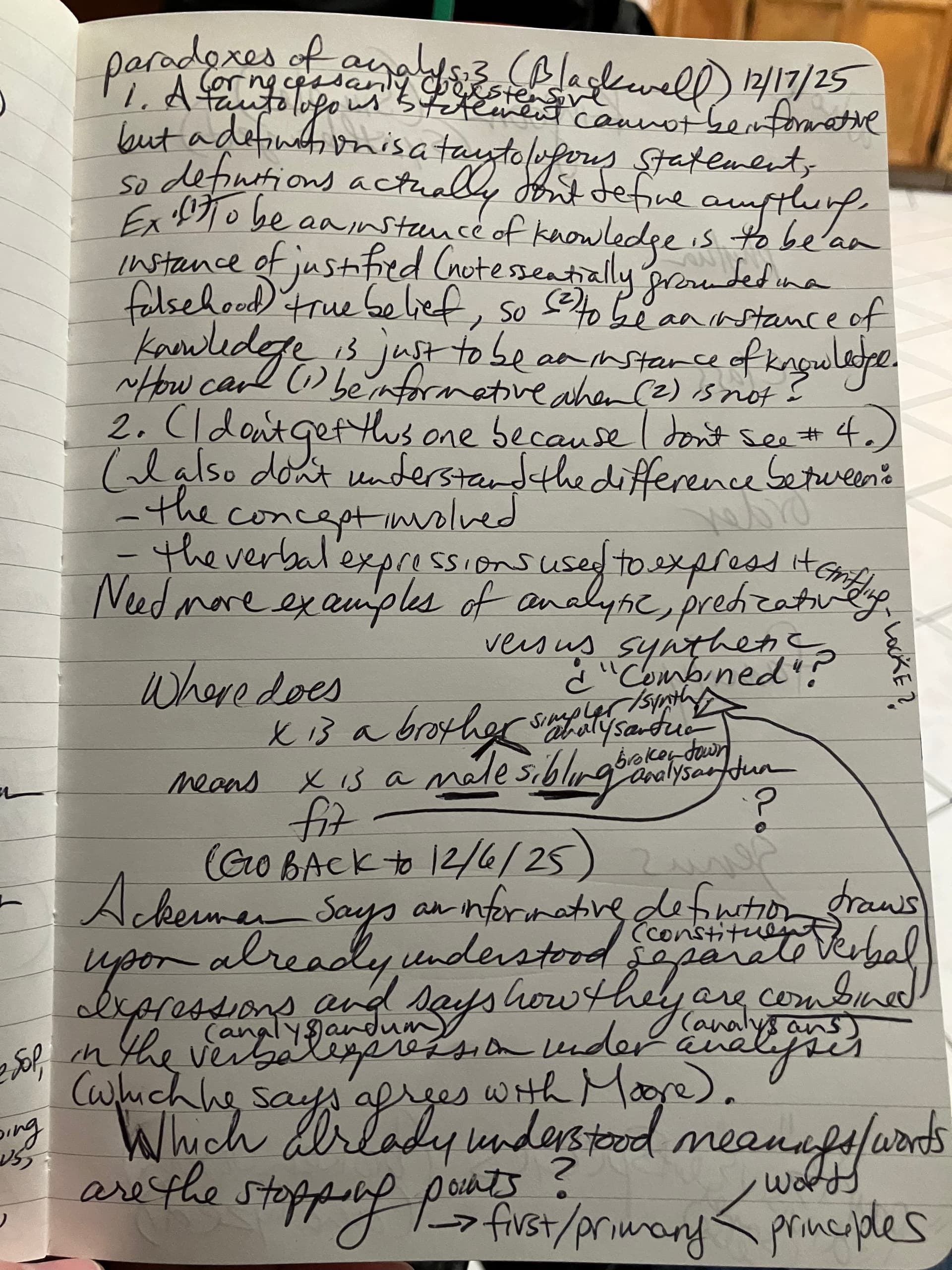
I’m reading Blackwell’s Companion to Epistemology, & it’s defining analyticity (Locke, Kant, containment)… versus synthesis (expansion).

If experience triggers our cognition, and we would have nothing to posit without it, isn’t the analytic/synthetic distinction actually the problem of how to suss out intrinsic or essential properties/qualities/essences from extrinsic or accidental ones … and not what we know universally & automatically (which differs between capacities, no?).

I mean. “A bachelor is an unmarried male” is true by definition… but marriage is a human institution & maleness is def up in the air these days… If you can just switch up definitions like that, how is that analytic proposition beyond the need for verification? These days a statement like that def belongs in the disputed class, I would think.

Everything in this post is subject to revision in a comment below.

high iq bot speak that i dont really understand, but the Ai says ur wrong:

No, the analytic/synthetic distinction, as defined by Kant (and referenced in Locke via conceptual containment), primarily concerns whether a proposition’s predicate is contained within its subject concept—analytic for containment (explication without expansion), synthetic for addition of new information beyond the subject. This differs from distinguishing intrinsic/essential properties (like essence in metaphysics) from accidental/extrinsic ones, which aligns more with Aristotelian categories or modern essentialism rather than Kant’s focus on judgment structure. While experience shapes concept acquisition, analytic truths hold by virtue of meaning or definition once concepts form, independent of empirical verification.​

Contemporary Challenges

The bachelor example illustrates a key objection: if definitions like “bachelor = unmarried male” evolve with social changes (e.g., shifting views on marriage or gender), analytic status seems revisable, blurring into the synthetic via empirical or cultural verification. Philosophers like Quine critiqued this, arguing no sharp boundary exists since meanings rely on holistic confirmation practices, making all propositions revisable. Yet defenders maintain analyticity via intuition and linguistic convention—e.g., “bachelor” intuitively means “unmarried adult male” in English, resistant to experience without redefining language itself.​

Capacities and Universality

Analytic propositions aren’t universally automatic across all cognitive capacities; they require grasping the relevant concepts, which experience helps form, but their truth then follows a priori from meaning. Synthetic claims, by contrast, expand knowledge via experience (a posteriori) or pure reason (a priori, like math for Kant). Your reformulation risks conflating epistemology (how we know) with ontology (what properties inhere), though both intersect in debates over essences.

Fricken.

Thanks for trying, at least.

The analytic-synthetic dichotomy arises from a flawed theory of concepts. Specifically, the meaning of a concept is its definition.

Is it talking about a concept associated with a word/sentence or is it talking about a concept thought in a mind?

Could a word/sentence, and a web of belief/meanings, be thought of in the light of the Ship of Theseus? The appearance of words/sentences and the web of belief (the character of the thinking substance) being like the boards of the ship (WHO/WHAT)… the plan/function of the words/sentences being like the plan/function in the mind(s) of those who maintain boards/character (WHY)… and the practical application/use of the very-much-viable substance and function of the words/sentences being like the practical application/use of the Ship as conceived in the mind(s) (HOW)?

So… isn’t function of configuration only as essential, substantial, and active as the mind who holds it?

high iq speak that i dont really understand.

all i know are the Satyrian facts.

nature exists. nature doesn’t give a shit if you understand it or not. if u are a bug, that doesn’t understand what a train is, and u fly in front of a train, u will get smacked by a train. most animals dont have complex language. they have a visual IQ that sees a heavy, fast train and know they should not go in front of the thing. like when i ride my bicycle the squirrels know my bicycle is fast and heavy and they should not be in the trajectory of the thing. most animals have more brains than AI video-gens. video-gens dont understand trajectory. nature does not care if the animal has complex language or doesnt have complex language. If a complex animal has some bullshit language that defines “standing in front of a train=safety” nature doesnt care one way or the other.

Are you supernatural? Just curious.

1 Like

Maybe unrelated question… Would Berkeley’s idealism mesh well with adverbial theory? It would mean the only real substances we interACT with are minds (which have/experience ideas/quality).

what is your opinion of this video

correct.

we dont perceive matter directly. we only perceive a mind’s interaction with matter. we assume the planet earth exists after the death of a mind, since we assume others are not NPCs. if solipism is true and everyone is an NPC, then the planet earth may be an illusion that does not continue after reincarnation, next reincarnation may be on a similar water based planet of a different name.

science has proven that we dont perceive matter directly, because there is no television screen in the brain. All the information is encoded, and has to be decoded. you aren’t perceiving the brain matter directly.

Think with:

…also think the incarnation, and:

Wow. Coming full circle after a year:


Relevant:

I tell ya. The Holy Spirit is thee weirdest
(& first) tutor ever:

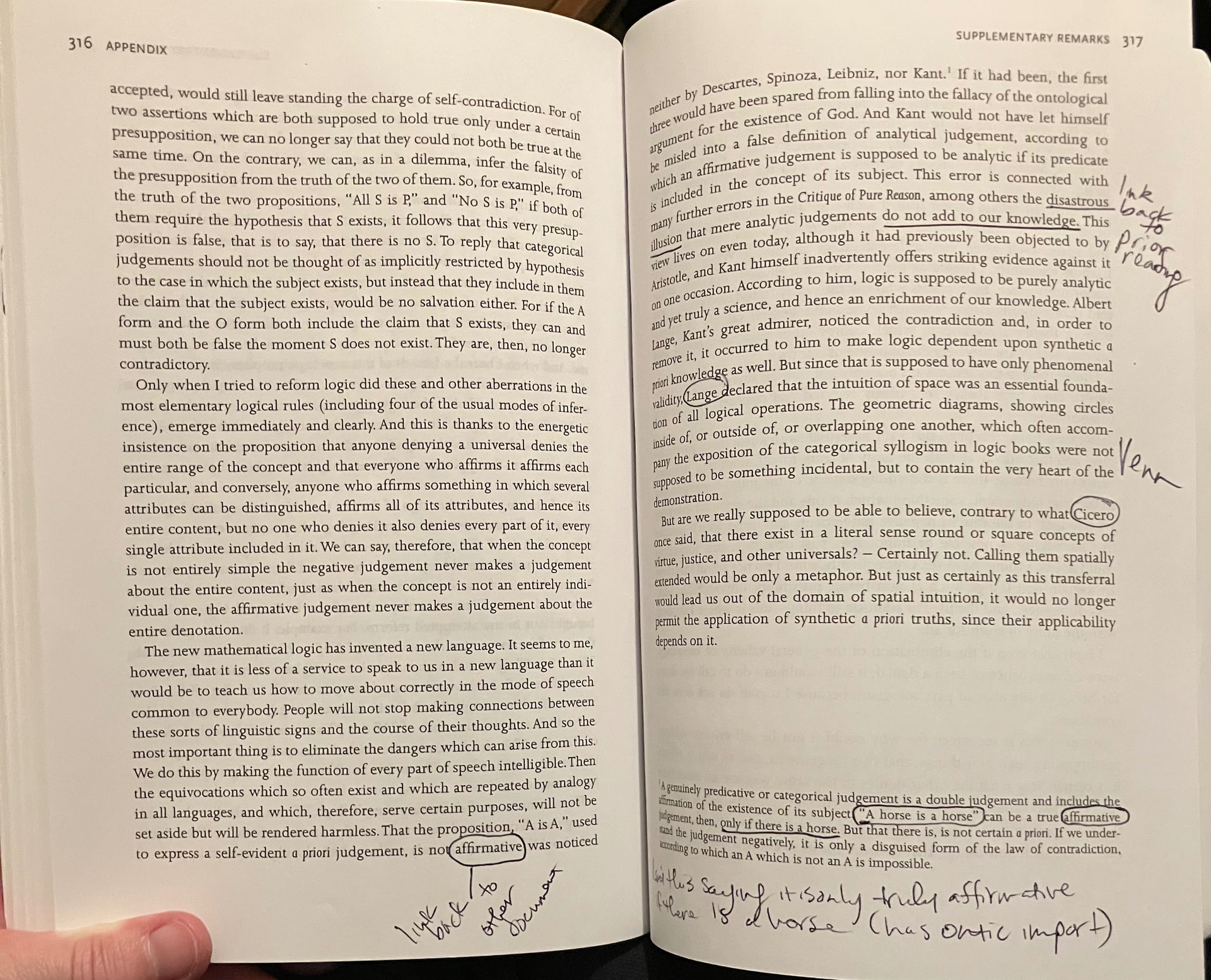
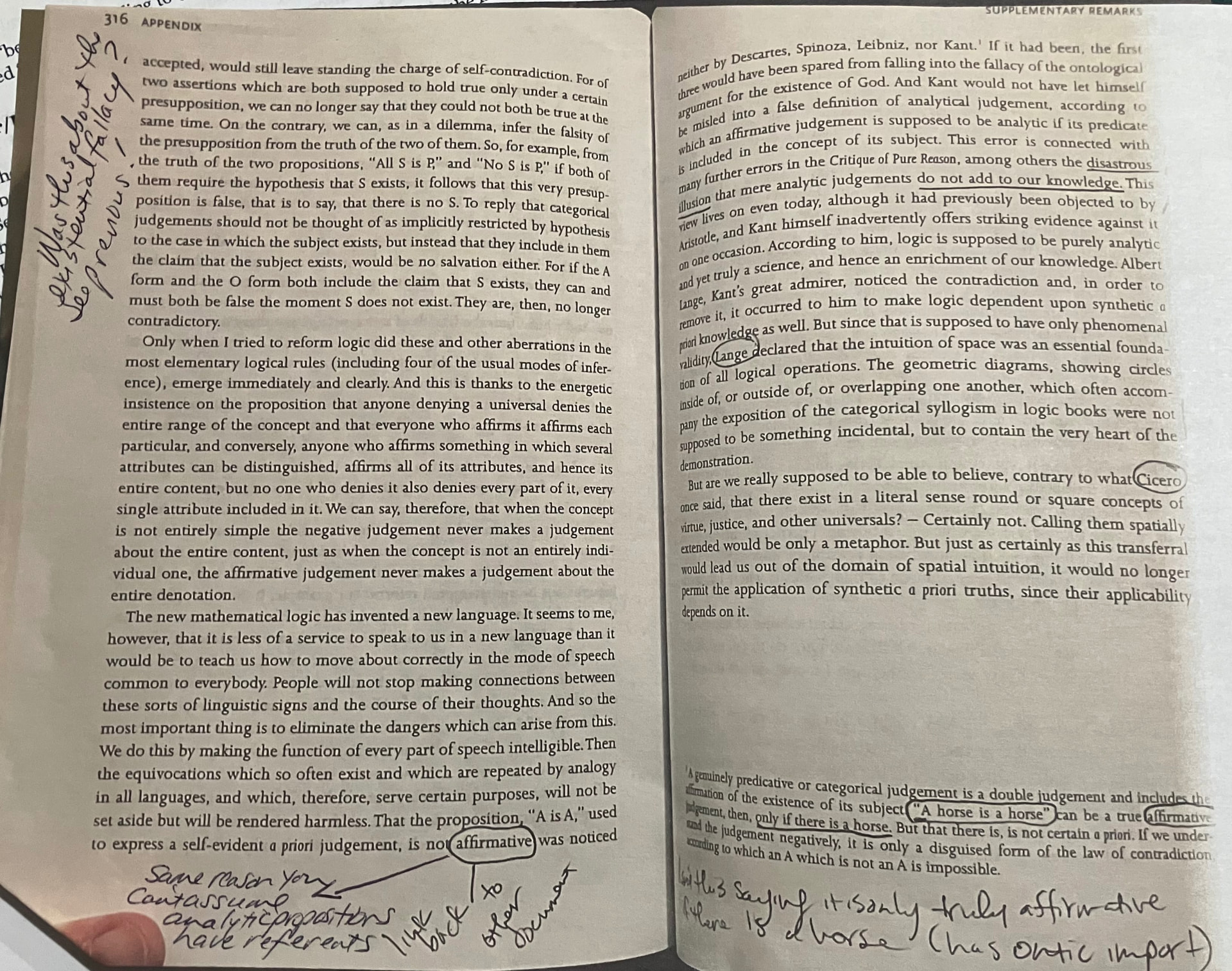
Cicero predates Venn, js: Cicero - Wikipedia

Obv need to revisit context… unassigned during B.A. but I do what I want:

Notes during B.A.:slight_smile:

Notes now:

I’ma prolly need to study Cicero at some point.

brb

Let’s talk about this from the perspective of mirroring back during active listening, and explain it as similar to the difference between basic, subtractive, and additive empathy (p.s. Thank you, Dr. Snyder, for introducing me to that).

basic: accurately and completely defines the thing/action/quality from all possible perspectives

subtractive: fails to fully define the thing/action/quality from all possible perspectives

additive: builds on either basic or subtractive with the addition of something that either fills in what’s missing from subtractive, or expands on basic [by making nature answer reason’s questions].

I was just thinking earlier about how the structure of the universe (all of spacetime) is distinct from our limited experience, and so only someone whose nerves (or whatever) span all spacetime would be able to experience it as part of who they are, rather than external to who they are. And their experience would include ours, even if we are unaware of them, just as our experiences would include each other’s, even if we’re unaware of it, if everything that physically links us to our own body also links us to each other’s bodies. Like wifi. Gee, I bet you could do that with nanotech even without properly informed consent! You shouldn’t, though. (You can’t claim God violated consent literally informedin his own consent. Plus… the Bible is everywhere.)

Different folks slice up what is experienced immediately due to concepts lying ready versus what requires MORE experience to unlock the knowledge … or requires practice (Descartes & Kant & Leibniz on heavy, extension/position, & the other thing in Descartes… and the difference between Kant & Hegel’s thoughts on genius…) … see also the Will Hunting quote “I could always just play” (I dunno, for inspiration).

What basics — brass tacks — tabula rasa — have to already be there (lying ready) for the lightbulb to come “on” (conscious… bare basic genius, no bells & whistles)… and what are you aware of if you are deprived of any input… versus given access to all of it (which you would know HOW?) and is sliding the scale between absolute deprivation and absolute access like sacrificing pixel count for frame rate (I have other questions about that vid)?

(This went slightly on a tangent, but maybe not.)

1 Like

What the holy frick is this?

Thinking that^ with this:

brief pause for our sponsors

Think also with this: