Death is never neat

The poet Mary Oliver is speaking to me so often recently, and I feel an affinity towards her. These lines from her poem WHISTLING SWANS in the book Devotions: A Read with Jenna Pick appeals to me:

Rumi said, there is no proof of the soul.
But isn’t the return of spring and how it
springs up in our hearts a pretty good hint?

My longing for spring is one of those hints at the enchantment of the world.
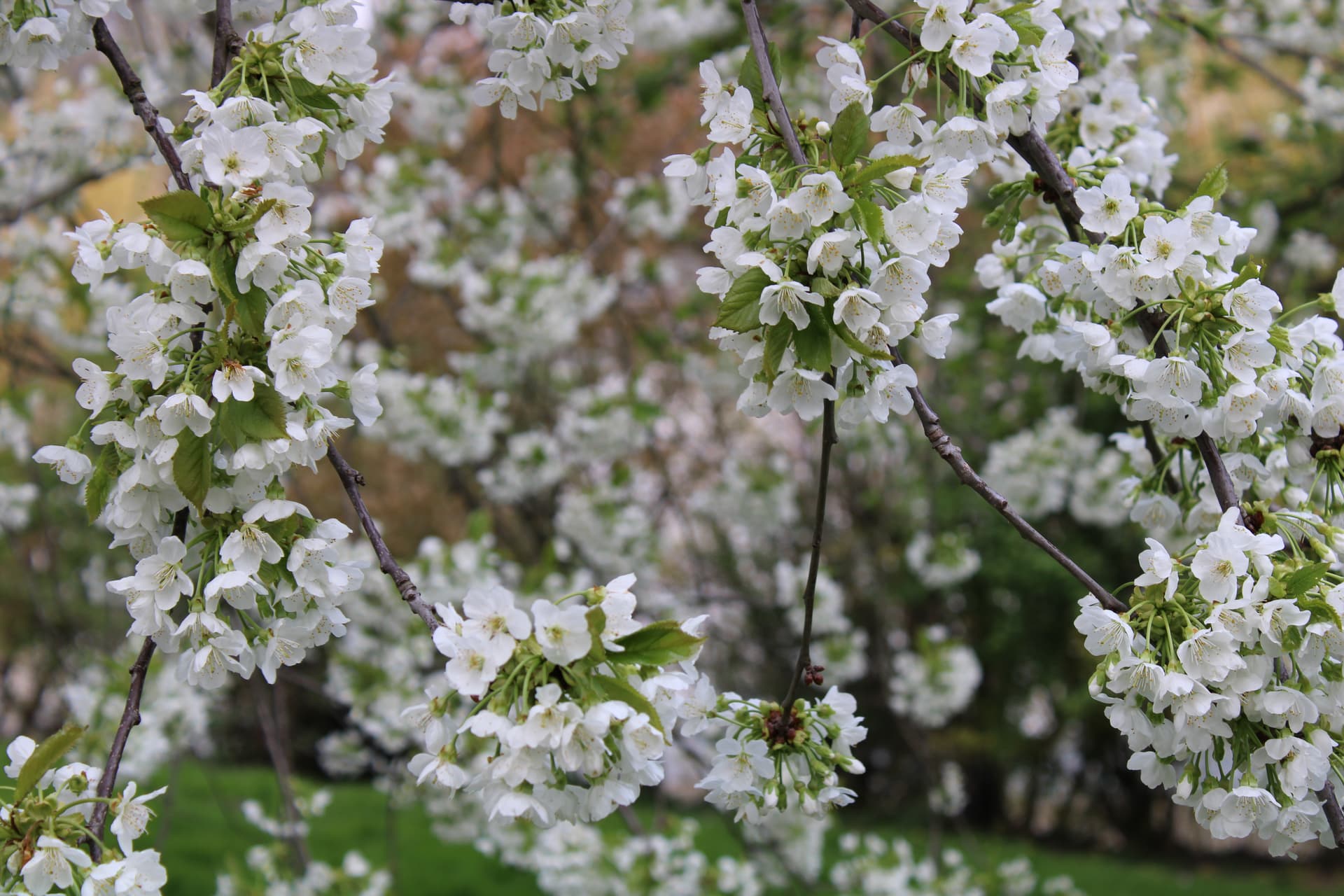
However, if there were no autumn/fall, would we lose the ability to long for such a scene? Longing can be seen as a recognition of the sacred in absence. It reminds us, like Oliver’s poetry does, that life’s deeper meaning often lies in its fleeting beauty, its contrasts, and its ability to make us yearn for connection, understanding, and belonging. In that way, longing isn’t just a response to the world—it’s a profound way of participating in its mystery.

Of course, we can look at these things through a psychological lens, or rationalise them, but I think that it does us good now and then to see the way that beauty affects us, and how our imagination has us drift off into faerie land. It may be an escape, but now and then an escape probably does us good.

2 Likes

True, only atheists would be ignorant enough to discount literally 100% of the uncountably high number of experiences humans have reported having with things like spirits, ghosts, afterlives, out of body experiences, telepathy, past-life memories, all of that “supernatural” stuff which seems at the very logical minimum to indicate that there is SOME kind of mystery here.

Any reasonable person would conclude from all of that, “hey there might be something to this stuff…” but only the atheist is arrogant and ignorant enough to claim that ALL of it is bullshit. Without, by the way, actually having seriously looked into hardly any of it for himself.

Of course that only speaks to the psychology, not even yet to speak to any actual realities or truths that may be the case but beyond our awareness and understanding so far.

Religions can be seen as, in part, ways of orientating us to the transcendent or what we call supernatural, i.e. things that go beyond our ability to know and understand based on our everyday 5-sense physical materialistic model of the world. For anyone who has no problem ignoring anything that cannot be detected by their immediate 5 senses, ok cool. They are happy to live in a self-assured tiny little bubble where they ask no questions and have no openness to possibility about anything they actually IN FACT have no knowledge of, even in terms of logical possibilities.

But for everyone else, basically normal people not suffering from the mental illness of atheism, they remain at least open to the logical possibilities, if not actually honest about the strange experiences that so so so so so many people have talked about having ever since the very dawn of our recorded history and right up until the present day. For them, religion can be a way of trying to frame and make sense of these unknowns or partially-knowns. Sure the religious explanation is probably not entirely correct, it is probably a simplified version of what is really occurring out there, but at least it maintains an openness and orientation toward truths beyond our present scope of encounter.

Maybe it is the product of an inversely linked process, where one necessarily generates it’s duplex shadow, otherwise it couldn’t be seen or see what it is or represents,to each other as a unitary ‘Thing’the

Perhaps ‘consciousness’ could not conceive of it’self and understand beyond a resistance-paradise, or, begin the evolutionary process by itself, if the transcendence could not be attributed to an uncaused cause.

The odds would always remain in the level of probity of a flip of the coin…

The twist: the more we know, the larger does the transcendental gap becomes, to jump, existentially from that 50% to the 51% inflates the bubble to expand by describing it as a quadratic chain of interlinking variables, which feed back to every level of progressively changed morphological evolved ‘substance.

That anthropomorphic similarity become reflexive as mind-matter shifts toward the essence of mind , rather , toward it’s consciousness of it’s self as immaterial( thought), shows the process of and evolutionary track toward ‘higher consciousness) that progresses toward less substantially, as conceived purely as the product or object of the exclusive mechanism of a mechanical brain.

Any descriptions represented by mechanical configurations regress the balance toward a sub conscious or hiddenness, that recycles belief or faith in literal representations of its self, .

So there never actually exist an atheism per se, just as there never exist a total darkness, other than a state where there is an absence of light.

Rationale;

There is no awareness of darkness, and all consciousness of ‘being conscious animates from light.

1 Like

I think what you are getting at here makes a lot of sense. There are psychological and also perhaps phenomenological perturbations and strange geometries by which irrational denials become not only highly incentivized but actually functionally enabling. The birth of the unconscious, even for those who would seem to shun, deny or have no need for such a thing.

And what of ourselves? Not wanting to be snooty here. We ‘theists’ (or more precisely non-atheists) certainly have our own incentivized ignorances and biases around this issue. But I feel these are far less traced out and known compared to those of the atheist, although whose are worse in functional, philosophical, personal and-or moral terms seems to be a question very difficult to answer, not least of which from a historical point of view.

Agreed with a twist. The noticeable difference between a theist and an atheist, has progressed out of an either or choice, the unconscious figure rising out of these distinctions are becoming intertwined with relative justifiers as to who or what is saying them, to what effect , and then further, seeking justification by qualifying what these words mean.

Am atheist can turn around and say to a theist, ‘well the belief in anything is not really a negation of it, it’s just a matter of belief, anyhow. ‘ it’s just a matter of substituting predicates.

It matters little to anyone that a belief in non belief is a zero sum or not, since they’re so lost in the expansion of limits to innumerable limits of diminishing value. Everything is something since it’s thinning out toward an infinitely stretched or horizon.

God is everywhere, even if He can never be seen.

I love the comparison to spring. Another Muslim writer opined that we only know the dead tree from the dormant, when spring comes. I guess the implication was regarding the true believer from the non-believing.

Spring is the return of the Friend. I think Rumi would have seen it like that too.

Death isn’t nice for anyone. That is the root behind a lot of fanatical movements, be they Christian, Jewish, Atheist and sadly on rare occasions Muslim (though the Qur’an demands moderateness). The fanatics will opt for as quick and instant a death as possible - preferably high on drink and drugs - rather than let nature take its course. That is because they don’t really believe in the afterlife, they are closet Atheists even if they don’t declare Atheism.

Yes but capacities to reflect depends on where ‘you’ are like passing from one room to another, and like, opening another door among more doors than can reasonably opened to see, which door to open to get to that room, otherwise a maze emerges, but then, the Tibetan Book of the Dead says one should not enter a certain designated colored room, in fact one can’t, or can maybe, but it could probably not be habitable. Or something like that, and there is the Egyptian Book, which….

I also have a favorite poet now, Gary Suder, in his ‘House hold’ where holding on , to the place we call home , needs to be held at bay…

Making allusions to it may come to something;

If not, kerouac’s visions on a golden Eternity may,

Either that or I’m tripping; and someone else wrote something on tripping ( on something)

Note : all ref’s will be duly annotated , in between existential errands…

I believe it was Al Ghazali who said that death is a transition from one state of existence to another. He emphasized that death is not the annihilation that many people believe it to be. Spring, as you aptly put it, is resurrection. It’s the beginning and the end of the life cycle. It is death.

Spring is also resurrection, After all is said and done, when people are interred in their graves, we don’t know who is good or bad, until spring comes - it reveals the dead tree from the dormant. The dormant tree welcomes the return of the Friend.

I can see why you’d say spring is death too - because the spring breeze can often feel more bitter than winter where l live. Many elderly people die in March here, just before the first true warm spring day of the year. Here, the daffodils bloom in March, but within 7 days they are usually killed in their beds by a harsh frost, it always seems like an accident but you eventually realise it’s the plan.

^ Dude’s a pedophile. Didn’t read anything he said.

Please leave me alone, l want nothing from you. May Allah decide between us.

@AlonsoAceves interesting that you know of Ghazali by the way! He was one of the greatest Sufis. I had always hoped Islam and Sufism would gain popularity in the New World.

1 Like

“Dude’s a pedophile. Didn’t read anything he said.”

“Now, therefore, kill every male among the little ones, and kill every woman that hath known a man by lying with him; but all the women-children, that have not known a man by lying with him, keep alive for yourselves.” - Moses

Pedophile and general sadistic asshole score:

Muhammad 3
Moses 10

May l state: the Prophet Muhammad broke no laws of the pagan society he was in, nor of any other pre-industrial society so far as l know. In Islam marriage is done via courtship under auspice - usually with the father of the bride or her brother, negotiating with the male.

As for Moses (peace be upon him), he is absolved of all the lies the Bible wrote about him and Lot too (peace be upon him) and all other prophets. The Bible has vile slanders about many prophets, far worse than the above, it has things l’d be too scared to even repeat.

Age of consent in the Talmud is 3 years 1 day and that’s typical of what the mischievous rabbis would come up with. Moses would never have approved.

Peace.

Back to the topic now …

No you’re good, bro. I was just fucking with the resident Christians.

I’m neither Christian or Muslim but if i see a fight between the two i usually take the side of the Muslim because Allah is way cooler than Yaweh.

Yeah i was gonna drop that age of consent in the Talmud on Itchy to spin her around but then i remembered what christians do when the atrocities commited by early jews are brought up: “no that’s all wrong. Jesus came and straightened everything out so everything pre-jesus in my religion is nonsense except for the happy agreeable stuff in the old testament that i like.”

1 Like

He didn’t say do them right then and there.

Perhaps you have never read the words of Jesus? There is no difference between the Old and New Testaments… Why do you think his demonstration was so gory?

A very quick read, slightly updated for the times:

1 Like

Yep, Judaism is almost as disgusting as Islam.

No way, rap. Don’t forget about all the freakish sacrificial shit they used to do with animals and the childrens. Muslims never did any of that crap except for normal livestock sacrifice that wasn’t all creepy. I mean yeah they might throw rocks at you or cut your head off but that’s it. Pretty straight forward. They’re not gonna remove an unborn fetus and burn it at an altar or any of that nonsense.

1 Like