How Christianity emerged

G. J. Goldberg has listed New Testament Parallels to the Works of Josephus New Testament Parallels to the Works of Josephus

Index to the Parallels

King Herod
The Slaughter of the Innocents
Archelaus
The Census of Quirinius
Jesus at Twelve
The Fifteenth Year of Tiberius
John the Baptist
Pharisees
Sadducees
All Things in Common: The Essenes
Samaritans
Insurrection in the City under Pilate
Jesus
James the Brother of Jesus
Theudas, and Judas the Galilean
The Famine under Claudius
The Death of Herod Agrippa I
Expulsion of the Jews from Rome
The Egyptian
Ananias the High Priest
Felix the Procurator, and his wife Drusilla
Festus the Procurator
Agrippa II and Berenice
The Widow’s Mite and Sacrifices
The Circumcision Requirement for Converts
Living as a Pharisee
Inner Temple Forbidden to Foreigners

He writes, “It is Luke’s writings, both the Gospel and the Book of Acts, that have the most points of contact with Josephus, particularly the Antiquities. Most notable are the numerous references in Luke to events and persons that are also discussed, and are explained more fully, by Josephus. Luke is clearly concerned with embedding the story of Jesus in a firm historical context, thus helping not only to date the story but also to persuade the reader of its genuineness.

More subtly, the vocabulary of Luke/Acts bears a greater resemblance to Josephus than does any other work in the New Testament (as Steve Mason once pointed out). A study of each author’s style seems to indicate that they at least learned Greek from teachers with similar backgrounds.

These connections have raised some possibilities that have been the focus of much attention by scholars. The weightiest question has been, did Luke read Josephus’ Antiquities and use it as the basis for the historical references in his work? Did Luke, perhaps, even know Josephus in Rome, as Thackeray suggested? But there are discrepancies between Luke and Josephus – particularly the census of Quirinius – which suggest Luke used a different source. Was he perhaps genuinely handing down the traditions of some of those who knew Jesus?

And the similarities of language – do they imply the two authors wrote in a similar place at a similar time?

The answer to these questions would help to tell us how and when Luke composed his works. If Luke read Josephus’ Antiquities, he could not have written his gospel before the 80’s CE, when the Antiquities was a work in progress, or the early 90’s, when it was published. The same conclusion can be drawn from language similarities. This happens to agree with the dating of Luke most often surmised by scholars; but some think he wrote much earlier, in the 50’s and 60’s for Acts and perhaps much earlier for the gospel, while others argue that Luke is a very late writer, circa 120 CE.

A reliance on the Antiquities would suggest also that Luke’s gospel is not constructed solely of authenticate reports about Jesus from the apostles and others who knew him. It would mean Luke combined some information from original Christian sources with other materials. It would thus be left to readers to determine which is which.”

A Chronology of the Life of Josephus and his Era

Life of Josephus Judean Events
4 BCE, Herod the Great dies. His kingdom is divided among his heirs into Judea, Galilee, and other states.
6 CE Birth of Matthias ben Joseph, descendant of the Hasmonean (Maccaabean) kings and priests. Will be the father of Josephus. 6 CE Archalaeus, Ethnarch of Judea, is deposed. Judea ceases to be governed by Jews and becomes a Roman province under Procurator Coponius. Census and taxes imposed.
6 Resistance movement against Rome begun by Judas the Galilean and Zadok: “No ruler but the Almighty.” Their insurgency will eventually lead to the War.
14 Emperor Augustus dies, is succeeded by Tiberias.
26 Pontius Pilate becomes Procurator of Judea.
Religious conflicts cause riots against him that are violently suppressed.
c. 31 Jesus of Nazareth gains following.
c. 33 Jesus executed in Jerusalem.
35 Pilate replaced by Marcellus.
37 Josephus born. His parents, of royal and priestly lines, are prominent in Jerusalem. 37 Tiberias dies. Gaius Caligula becomes Emperor.
41 Caligula assassinated. Claudius becomes emperor with the aid of Agrippa, grandson of Herod. Claudius bestows kingship of Judea and other lands on Agrippa.
c. 42-43 Agrippa I suppresses followers of Jesus, imprisons church leader Peter. Project to build “huge fortifications” around Jerusalem is begun.
44 Agrippa I dies. Judea again comes under the rule of a Roman procurator (Fadus).
50 Some Jewish lands assigned to kingship of Agrippa II.
51 Josephus at 14 is recognized for his understanding of Jewish law.
52 Felix becomes Procurator of Judea.
53 Josephus at 16 goes on spiritual search. Spends time with the Sadducees, Pharisees, and Essenes. Lives in desert with teacher Banus
54 Death of Claudius. Nero becomes Emperor.
56 Josephus returns to Jerusalem at age 19. Decides to align himself with the Pharisees. 54 and after. Jewish revolutionary activity heats up. “Sicarii” terrorists kill High Priest Jonathan. Felix uses force and executions to suppress revolt. Would-be prophets stir up the people; the “Egyptian,” a Messianic figure, gains followers, many of whom are killed by Felix’s army.
57 Paul visits Jerusalem to report to James about his efforts to gain followers among the non-Jews. While visiting the Temple he is accused of defiling the holy place and arrested.
59 Festus becomes Procurator. Paul presents his case to Festus and Agrippa II, then is sent to Rome to appeal to the Emperor.
59-62 Festus continues to battle Sicarii. Clashes between Jews and Greeks in Caesarea. An “impostor” promises salvation to Jews who followed him into the desert; he and his followers are killed by Festus’ cavalry. High priest Ismael and others are imprisoned in Rome by Nero after a dispute with Agrippa II.
62/63 Josephus, at 26, travels to Rome to free priests imprisoned there. with the help of a Jewish stage actor he gains the favor of Nero’s wife Poppaea, who attains their release. 62 Festus dies. While Judea waits for the new Procurator to arrive, the recently appointed High Priest Ananus arrests and executes “James, the brother of Jesus called the Christ.” Prominent Jews are angered and denounce Ananus to Agrippa II, who subsequently deposes Ananus after three months as High Priest.
62 Albinus is made Procurator.
62-65 Albinus wages an anti-terrorist campaign. Hostage-taking by the sicarii becomes commonplace.
65 Florus becomes Procurator. HIs abuses of power cause the sedition to gain followers. Violence breaks out in Caesarea and spreads to Jerusalem.
65 Josephus returns to Jerusalem to find revolt beginning and the Antonia fortress captured. He advocates against war. 66, Summer. Jewish War begins. Sacrifices for the Emperor are halted in the Temple. Masada is seized by the Zealots. The Roman garrison at the Antonia Fortress is captured. The High Priest is slain by the rebels.
66, Autumn. Gallus advances on Jerusalem with the Twelfth Roman Legion but withdraws. His forces are pursued into Syria.
66 The revolutionary government appoints Josephus commander of Galilee. He fortifies the major cities.
Spring 67 The Roman forces under Vespasian march into Galilee. The city of Gadara falls. Josephus withdraws to Jotapata.
July 67 Jotapata falls after a six-week siege. Josephus captured. Claims that the Messianic prophecies that began the war actually applied to Vespasian, who therefore was destined to become Emperor. Vespasian, charmed, retains Josephus as hostage and interpreter.
67-68 Vespasian continues operations in Galilee. Prepares for assault on Jerusalem.
68 Nero commits suicide. Galba and Otho, in turn become Emperor and are killed.
July 69 Vespasian’s legions proclaim him Emperor. Josephus’ prophecy having come true, he is freed. He takes Vespasian’s family name of Flavius and marries a captive.
70, Winter. Vitellius beheaded. Vespasian travels to Rome. Titus, the son of Vespasian, takes command of the forces in Judea. Josephus divorces his wife, marries another in Alexandria.
70, May 1. Titus encamps outside Jerusalem, beginning the siege. Josephus attempts to persuade the leaders of the revolt to surrender, but fails.
70, Tenth of Av (August 30). The Temple of Jerusalem is destroyed. Jerusalem is taken by Titus. The War effectively ends.
71 Josephus rewarded with land in Judea, but moves to Rome. Becomes Roman citizen. Is given a commission by Vespasian to write a history of the war.
73 Birth of Josephus’ son Hyrcanus.
c. 75 Josephus receives a gift of land in Judea from Vespasian. Divorces his second wife. Marries a Jewish woman of Crete.
76 Birth of Josephus’ son Justus.
c. 78 The Jewish War, Josephus’ first-hand account, is published.
78 Birth of Josephus’ son Simonides Agrippa.
79 Death of Vespasian. Titus becomes Emperor.
81 Death of Titus. Domitian becomes Emperor.
93 Antiquities of the Jews
c. 95-100 Against Apion, a defense of his previous work. 95 Death of Agrippa II.
c. 100 The Life of Josephus, an autobiography.
? Death of Josephus.

Richard Carrier summarised Steve Mason’s argument in his book Josephus and the New Testament that Luke knew of Josephus’ Jewish War (79 CE) and Jewish Antiquities (94 CE). At its core, the argument stems from a similar purpose behind the writings of Josephus and Luke-Acts history, buttressed by general and specific parallels between the authors.

If so then it appears Acts uses Josephus to give verisimilitude to his story. According to M. David Litwa’s hypothesis, Acts was written in the second century.

Dr. M. David Litwa gives the presentation on dating Luke/Acts which goes beyond 150 CE which he refers to in the above video.

https://www.youtube.com/live/6W8QQqnjOwo?si=4zOU7Tbl9BuMrzP0

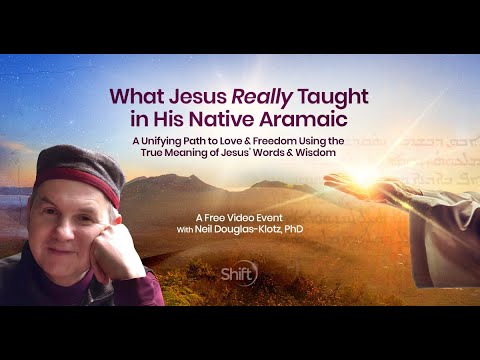
I enjoyed the talk, The fact that he connects Jesus‘s words with centering prayer is illuminating. Interesting that he quotes the words of Jesus from chapter 4 of the gospel of John which was originally written in Greek. As the Jesus seminar illustrates many modern scholars don’t consider most of Jesus words in John’s Gospel to be translations of the words of the historical Jesus. Nevertheless,I found Douglas-Klotz teaching there to be insightful. The gospel of John can also be read as a middle Platonic contemplation on the life of Jesus.

1 Like

12 It is necessary to boast; nothing is to be gained by it, but I will go on to visions and revelations of the Lord. 2 I know a person in Christ who fourteen years ago was caught up to the third heaven—whether in the body or out of the body I do not know; God knows. 3 And I know that such a person—whether in the body or out of the body I do not know; God knows—4 was caught up into paradise and heard things that are not to be told, that no mortal is permitted to repeat. 5 On behalf of such a one I will boast, but on my own behalf I will not boast, except of my weaknesses. 6 But if I wish to boast, I will not be a fool, for I will be speaking the truth. But I refrain from it, so that no one may think better of me than what is seen in me or heard from me, 7 even considering the exceptional character of the revelations. Therefore, to keep[a] me from being too elated, a thorn was given me in the flesh, a messenger of Satan to torment me, to keep me from being too elated.
II Corinthians 12

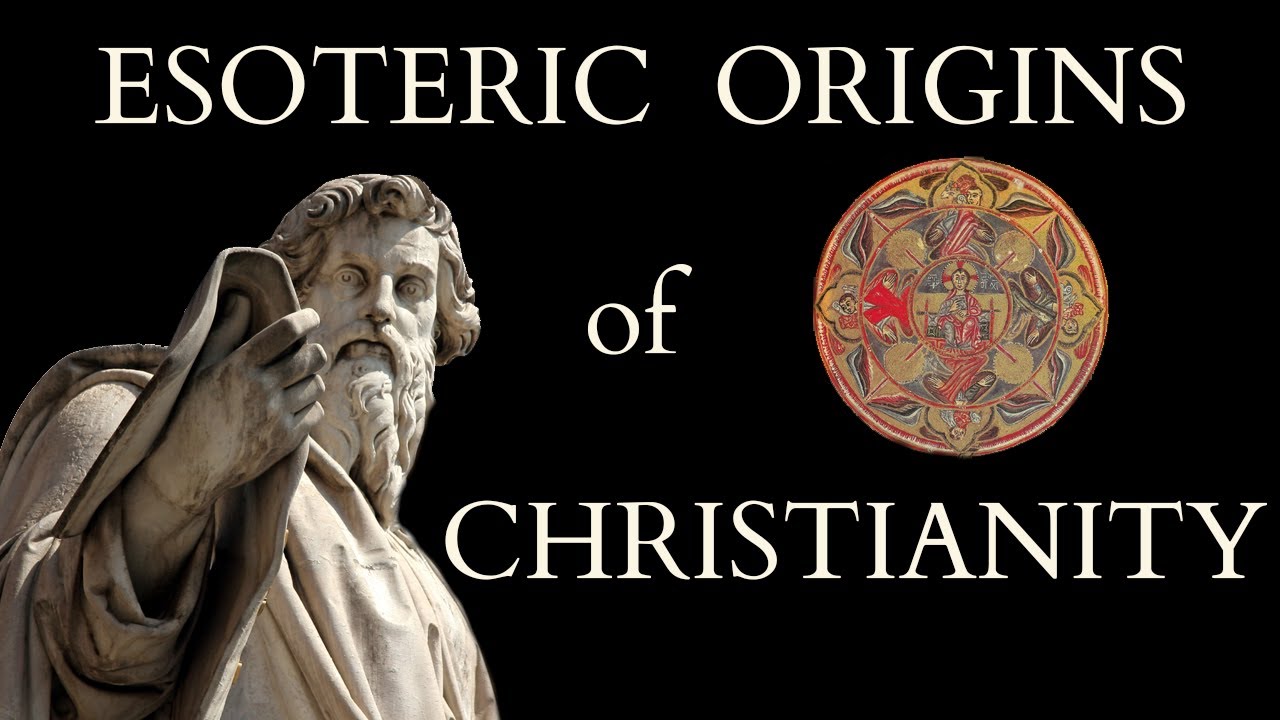
Ancient Jewish Merkavah Mysticism sought to ascend into the palaces of the divine realm, bypass fearsome angels of destruction to gain a vision of the very Chariot-Throne of God. By beholding the divine glory (kavod) one could gain magical powers and even be transformed into an eternal Angel. And it was this form of esoteric mysticism that it appears profoundly transformed none-less than St Paul. From his ascent into the Third Heaven to even his ‘mission to the gentiles,’ historical evidence now strongly indicates that Paul was a secret practitioner of this form of mystical ascent. And, recent studies are now revealing that his very Theology, Christology and Theory of Salvation likely drew upon this ancient esoteric Jewish ascent mysticism.
Justin Sledge

As Rev. Robert Taylor says in The Diegesis: “And from the apostolic age downwards, in a never interrupted succession, but never so strongly and emphatically as in the most primitive times, was the existence of Christ as a man most strenuously denied.” In this regard, Taylor also asserts:

Those who denied the humanity of Christ were the first class of professing Christians, and not only first in order of time, but in dignity of character, in intelligence, and in moral influence.
 The deniers of the humanity of Christ, or, in a word, professing Christians, who denied that any such man as Jesus Christ ever existed at all, but who took the name Jesus Christ to signify only an abstraction, or prosopopoeia, the principle of Reason personified; and who understood the whole gospel story to be a sublime allegory 
 these were the first, and (it is not dishonour to Christianity to pronounce them) the best and most rational Christians.

The Christ Conspiracy The Greatest Story Ever Sold REVISED EDITION - D.M. Murdock

I haven’t read the book, but academic historian, Bart Ehrman says this about it in his book “Did Jesus Exist, The Historical Argument for Jesus of Nazareth”, (2012):

IN 1999, UNDER THE nom de plume Acharya S, D. M. Murdock published the breathless conspirator’s dream: The Christ Conspiracy: The Greatest Story Ever Sold. 16 This book was meant to set the record straight by showing that Christianity is rooted in a myth about the sun-god Jesus, who was invented by a group of Jews in the second century CE.
Mythicists of this ilk should not be surprised that their views are not taken seriously by real scholars, that their books are not reviewed in scholarly journals, mentioned by experts in the field, or even read by them. The book is filled with so many factual errors and outlandish assertions that it is hard to believe that the author is serious. If she is serious, it is hard to believe that she has ever encountered anything resembling historical scholarship. Her “research” appears to have involved reading a number of nonscholarly books that say the same thing she is about to say and then quoting them. One looks in vain for the citation of a primary ancient source, and quotations from real experts (Elaine Pagels, chiefly) are ripped from their context and misconstrued. Still, in opposition to scholars who take alternative positions, such as that Jesus existed (she calls them “historicizers”), Acharya states, “If we assume that the historicizers’ disregard of these scholars [that is, the mythicists] is deliberate, we can only conclude that it is because the mythicists’ arguments have been too intelligent and knifelike to do away with.” 17 One cannot help wondering if this is all a spoof done in good humor. The basic argument of the book is that Jesus is the sun-god: “Thus the son of God is the sun of God” (get it—son, sun?). Stories about Jesus are “in actuality based on the movements of the sun through the heavens. In other words, Jesus Christ and the others upon whom he is predicated are personifications of the sun, and the gospel fable is merely a repeat of mythological formula revolving around the movements of the sun through the heavens.” 18 Christianity, in Acharya’s view, started out as an astrotheological religion in which this sun-god Jesus was transformed into a historical Jew by a group of Jewish Syro-Samaritan Gnostic sons of Zadok, who were also Gnostics and Therapeutae (a sectarian group of Jews) in Alexandria, Egypt, after the failed revolt of the Jews against Rome in 135 CE. The Jews had failed to establish themselves as an independent state in the Promised Land and so naturally were deeply disappointed. They invented this Jesus in order to bring salvation to those who were shattered by the collapse of their nationalistic dreams. The Bible itself is an astrotheological text with hidden meanings that need to be unpacked by understanding their astrological symbolism. Later we will see that all of Acharya’s major points are in fact wrong. Jesus was not invented in Alexandria, Egypt, in the middle of the second Christian century. He was known already in the 30s of the first century, in Jewish circles of Palestine. He was not originally a sun-god (as if that equals Son-God!); in fact, in the earliest traditions we have about him, he was not known as a divine being at all. He was understood to be a Jewish prophet and messiah. There are no astrological phenomena associated with Jesus in any of our earliest traditions. These traditions are attested in multiple sources that originated at least a century before Acharya’s alleged astrological creation at the hands of people who lived in a different part of the world from the historical Jesus and who did not even speak his language. Just to give a sense of the level of scholarship in this sensationalist tome, I list a few of the howlers one encounters en route, in the order in which I found them. Acharya claims that: The second-century church father Justin never quotes or mentions any of the Gospels (25). [This simply isn’t true: he mentions the Gospels on numerous occasions; typically he calls them “Memoirs of the Apostles” and quotes from them, especially from Matthew, Mark, and Luke.] The Gospels were forged hundreds of years after the events they narrate (26). [In fact, the Gospels were written at the end of the first century, about thirty-five to sixty-five years after Jesus’s death, and we have physical proof: one fragment of a Gospel manuscript dates to the early second century. How could it have been forged centuries after that?] We have no manuscript of the New Testament that dates prior to the fourth century (26). [This is just plain wrong: we have numerous fragmentary manuscripts that date from the second and third centuries.] The autographs “were destroyed after the Council of Nicaea” (26). [In point of fact, we have no knowledge of what happened to the original copies of the New Testament; they were probably simply used so much they wore out. There is not a scintilla of evidence to suggest that they survived until Nicaea or that they were destroyed afterward; plenty of counterevidence indicates they did not survive until Nicaea.] “It took well over a thousand years to canonize the New Testament,” and “many councils” were needed to differentiate the inspired from the spurious books (31). [Actually, the first author to list our canon of the New Testament was the church father Athanasius in the year 367; the comment about “many councils” is simply made up.] Paul never quotes a saying of Jesus (33). [Acharya has evidently never read the writings of Paul. As we will see, he does quote sayings of Jesus.] The Acts of Pilate, a legendary account of Jesus’s trial and execution, was once considered canonical (44). [None of our sparse references to the Acts of Pilate indicates, or even suggests, any such thing.] The “true meaning of the word gospel is ‘God’s Spell,’ as in magic, hypnosis and delusion” (45). [No, the word gospel comes to us from the Old English term god spel, which means “good news”—a fairly precise translation of the Greek word euaggelion. It has nothing to do with magic.] The church father “Irenaeus was a Gnostic” (60). [In fact, he was one of the most virulent opponents of Gnostics in the early church.] Augustine was “originally a Mandaean, i.e., a Gnostic, until after the Council of Nicaea” (60). [Augustine was not even born until nineteen years after the Council of Nicaea, and he certainly was no Gnostic.] “‘ Peter’ is not only ‘the rock’ but also ‘the cock,’ or penis, as the word is used as slang to this day.” Here Acharya shows (her own?) hand drawing of a man with a rooster head but with a large erect penis instead of a nose, with this description: “Bronze sculpture hidden
in the Vatican treasure of the Cock, symbol of St. Peter” (295). [This is not an image of Peter the cock. There is no penis-nosed statue of Peter the cock in the Vatican or anywhere else except in books like this, which love to make things up.] In short, if there is any conspiracy here, it is not on the part of the ancient Christians who made up Jesus but on the part of modern authors who make up stories about the ancient Christians and what they believed about Jesus.

Bart Ehrman is the author of books such as Jesus, Interrupted: Revealing the Hidden Contradictions in the Bible (And Why We Don’t Know About Them); Misquoting Jesus: The Story Behind Who Changed the Bible and Why; Whose Word is it? The Story Behind Who Changed The New Testament and Why; Forged: Writing in the Name of God–Why the Bible’s Authors Are Not Who We Think They Are.

He is known as the person who maintains that the Bible is full of forged and changed writing. Yet, when a classicist (Bachelor of Liberal Arts degree in Classics, Greek Civilization) comes along and says biblical symbolism is universal, and Jesus is a conglomeration of such symbolism, he reacts peeved.

I agree that Dorothy Murdock is a little too playful, which she says in an interview is perhaps her biggest weakness and the reason for the nom de plume Acharya S, but Ehrman deliberately makes fun of the book’s thesis that the figure Jesus is not what he is made out to be. She revised the 1999 version of the book and, as she says in the 2020 version, “expanded considerably the earlier sections, especially as concerns purported non-biblical evidence for Christ’s existence as a historical figure.” Of course, she died of cancers in her immune system and liver on December 25, 2015, so this version was posthumous.

The pride here in being a “real scholar” rather than a classicist who became curious at the American School of Classical Studies in Athens, Greece, about the NT using expressions which were not uncommon for her in her classic studies in another sense, and wondering why everybody is a mythicist with regard to pagan religions, but not with the outlandish claims of Christianity and Judaism.

The so-called “nonscholarly books” that she quotes are indeed written by people asking that specific question. She and others find it odd that the mythic origins of pagan religions are self-explanatory, but this is out of the question when the ruling religions are Judeo-Christian. She actually mentions the fact that such questions were only possible after the church lost its power to imprison, torture and kill dissidents. However, there are still enough people with vested interests who will push against the question.

Astrotheology played a foundational role in the development of many early religions. The worship of celestial bodies, the significance of the number twelve, and the integration of astronomical observations into religious practices all highlight the deep connection between ancient peoples and the cosmos. This perspective enriches our understanding of how religious ideas formed and evolved, emphasising the universal human quest to find meaning in the patterns of the natural world.

While the specific deities and myths varied between cultures, the underlying connection to celestial bodies and their cycles was a common thread. This connection reflects a deep human need to understand and harmonise with the cosmos. By observing the heavens, ancient peoples sought to make sense of their world and their place within it.

Modern interpretations of these ancient practices recognise astrotheology’s symbolic and practical significance. While contemporary religionists may not always appreciate or acknowledge these roots, understanding them provides valuable insight into the origins and evolution of religious thought.

The number twelve is prominent in many religious traditions and is often linked to the twelve zodiac signs. This number is considered a symbol of cosmic order and completeness.

  • Twelve Olympian Gods: In Greek mythology, twelve main gods resided on Mount Olympus.

  • Twelve Tribes of Israel: In Judaism, the twelve tribes of Israel represent the descendants of Jacob’s twelve sons, which seems to symbolise a connection to the zodiac and cosmic order.

  • Twelve Disciples of Jesus: In Christianity, Jesus had twelve disciples following the OT pattern.

Solar Festivals: Many early religions celebrated solstices and equinoxes, marking the changing seasons and the sun’s journey. For example, the winter solstice was often seen as the sun’s “rebirth.”

The god Serapis was a construct of the Ptolemaic period and a syncretic deity introduced during the Hellenistic period by the Ptolemaic rulers of Egypt. Serapis was created by merging aspects of Greek and Egyptian deities. He was primarily based on the Egyptian god Osiris and the Apis bull, combined with elements of Greek gods such as Zeus, Hades, and Dionysus. It has happened once. Why couldn’t it happen again?

Her statement about the Sadducees (sons of Zadok) in Jerusalem holding the high priesthood for centuries and being driven out of the Sanhedrin by the Pharisees in the first centuries before and after the beginning of the Common Era is generally consistent with historical accounts, even if it simplifies a complex history. During the Hellenistic period (following Alexander the Great’s conquests in the 4th century BCE), many Jews were influenced by Greek culture, philosophy, and customs. This period saw varying degrees of Hellenization across different Jewish communities.

While the Sadducees were conservative in their religious practices, they were also part of the aristocratic class that engaged with the Hellenistic rulers. This engagement often meant adopting certain Hellenistic customs and political practices to maintain their status and influence. Therefore, it’s somewhat accurate to say that the Sadducees were Hellenizing to a degree, particularly in political and cultural aspects, even if they maintained conservative religious views.

Murdock gives the example that while the sun “dies” and is “reborn” or “resurrected” daily, monthly, annually and professionally, as a “person”, Jesus can only undergo such experiences once. The synoptic Gospels suggest a ministry of possibly around one year after baptism. In Book II, Chapter 22 of “Against Heresies,” Irenaeus references a belief held by some groups that Jesus’ ministry lasted only one year and that he suffered in the twelfth month after his baptism. This view was associated with certain Gnostic groups and other early Christian sects. Irenaeus argues against this belief, stating that Jesus was older than fifty when he died. He uses this claim to counter the idea of a one-year ministry, emphasising a longer period of teaching and activity.

This is probably a bit confusing, but the book is over 500 pages long, and although some criticisms were revised (acknowledging them?), Ehrman oversimplifies Murdoch’s arguments.

The fact that a historical person is interpreted in terms of mythology doesn’t reduce that person to mythology. That should be obvious when we see people who fulfill features of the hero archetype everyday. I haven’t read Murdock’s book. To me, she’s doing a modern classical version of what the ancients did when they read or heard Jesus’ story. That is, they embed the story in their own cultural context. Thus do they creatively misunderstand it anew. According the NT Jesus lived in an Galilean culture most of us dimly understand. The canonical gospels were written from the standpoint of a Hellenized culture that Jesus was not a part of. Paul already represents that culture. Murdoch interprets Jesus in terms hospitable to her as a classical scholar with a liberal arts degree. Ehrman is a historian considered a leading expert on the historical Jesus. It’s a turf battle. People believe all kinds of whacky things about Jesus. From that fact it does not follow that he did not exist.

But isn’t that the problem? We dimly understand the culture in Galilee around the supposed time of Jesus, and so much was destroyed in the revolts, including the Jewish Christians, that a vaguely clear historical vision is possible of many events around Israel, albeit ideologically influenced, but hardly any inside the country. We only have the records “of the victors,” as they say, and we have seen by the fact that the Dead Sea Scrolls and the findings at Nag Hammadi were hidden, that oppression was widespread.

Galilee, during the time of Jesus, was a region where Hellenistic and traditional Jewish cultures intersected. We are told that despite the Hellenization and the influence of the Decapolis, Jesus was able to gather a following due to his teachings, healing, and the socio-religious context of the time. His Aramaic-speaking background and the rural focus of his ministry supposedly helped him connect with the common Jewish populace, allowing his movement to grow before facing suppression by the authorities. We are told the interplay of resistance to Hellenization and the search for spiritual and social relief contributed to the appeal of Jesus’ message.

“In a recent and important study of ancient imitations of Euripides’ Bacchae, Courtney J. P. Friesen provides the following general comparison: [B]oth Jesus and Dionysus are the offspring of a divine father and human mother (which was subsequently suspected as a cover-up for illegitimacy); both are from the east and transfer their cult into Greece as part of its universal expansion; both bestow wine to their devotees and have wine as a sacred element in their ritual observances; both had private cults; both were known for close association with women devotees; and both were subjected to violent deaths and subsequently came back to life. By the middle of the second century, observations of such relationships are explicitly made and would later be developed in various directions 
 A juxtaposition of Jesus and Dionysus is also invited in the New Testament Gospel of John, in which the former is credited with a distinctively Dionysiac miracle in the wedding at Cana: the transformation of water into wine (2:1–11). In the Hellenistic world, there were many myths of Dionysus’ miraculous production of wine, and thus, for a polytheistic Greek audience, a Dionysiac resonance in Jesus’ wine miracle would have been unmistakable 
 John’s Gospel employs further Dionysiac imagery when Jesus later declares, “I am the true vine” (áŸżÎ•ÎłáœŒ ΔጰΌÎč áŒĄ áŒ„ÎŒÏ€Î”Î»ÎżÏ‚ áŒĄ ጀληΞÎčΜ᜔, 15:1). John’s Jesus, thus, presents himself not merely as a “New Dionysus,” but one who supplants and replaces him.”(*)

R. MacDonald, Dennis. The Dionysian Gospel: The Fourth Gospel and Euripides (pp. 24-25). Fortress Press.

Note from the same book:

(*)Courtney J. P. Friesen, Reading Dionysus: Euripides’ Bacchae and the Cultural Contestations of Greeks, Jews, Romans, and Christians (STAC 95; TĂŒbingen: Mohr Siebeck, 2015), 19–22. James M. Scott surveyed how Hellenistic and Roman generals, kings, and emperors advertised themselves as new Dionysuses (Bacchius Iudaeus: A Denarius Commemorating Pompey’s Victory over Judea [NTOA 104; Göttingen: Vandenhoeck & Ruprecht, 2015], 34–41). Scott also makes a strong case that Pompey interpreted the god of the Jews as none other than an eastern Dionysus (126–27).

There was more going on in the beginning of the church than Acts lets on to. If the author of the Gospel of John was creating a literary counter-Dionysus, maybe to oppose the cult that was getting out of hand, and primarily for the slave owners, it could explain why the Christian communities had many slaves in the congregation. But this, in turn, reveals an aspect of Christianity’s rise that is seldom highlighted.

Sure, but most scholars think the so- called Gospel of John was written @ 70 years after Jesus’ death.It represents a middle Platonic interpretation of the life of Jesus. Christ as the divine Logos is the Reality of all positive things. He is the Way, the Truth, the Life, the Light, the Bread of Life, the Door the Way, the Lamb, the ladder. So of course he is the Vine as the source of divine life. Through him comes the divine name that connects us with the Father, eternal hidden source.

In the video below, James Tabor explores in depth to what degree the the so-called “Essene movement,” which most scholars associate with the group that wrote the Dead Sea sectarian scrolls, might be related to the John the Baptist/Jesus movement, that came 100 years later.

Scholars now agree that In one scroll the leader of the Dead Sea Scroll community called the Righteous Teacher, himself writes that someone in his inner council betrays him. Tabor speculates that perhaps this is what tends to happen. “The dynamics of messianic apocalypticism” he calls it. The Righteous Teacher identifies with the suffering servant in Isaiah 53 like Jesus in the gospels, Mythology arises because it is what happens to real life heroes. Josephus tells of other would-be messiahs in the early first century.

Jesus calling himself the “true vine” in John 15:1 has significant implications, especially in relation to Dionysus and Greek culture:

  • By declaring himself the “true vine,” Jesus is likely drawing a deliberate contrast with Dionysus, the Greek god of wine. This suggests Jesus is presenting himself as the authentic source of spiritual nourishment and joy, as opposed to Dionysus who was associated with earthly pleasures and intoxication.
  • Jesus may be positioning himself as the fulfilment or reality of what Dionysus only symbolised in Greek culture. While Dionysus was linked to wine and revelry, Jesus offers a deeper, spiritual “intoxication” through connection with the divine.
  • By using vine imagery, Jesus is reappropriating a powerful symbol in Mediterranean culture. He’s taking a concept familiar to his audience and infusing it with new, spiritual meaning.
  • In Greek thought, Dionysus was a god. By calling himself the “true vine,” Jesus is making a subtle claim to divinity, presenting himself as the real divine source of life and spiritual vitality.
  • The use of “true” implies there are false or inferior alternatives. In contrast to other religious or philosophical systems, Jesus is positioning his teachings and himself as the authentic path to spiritual life.
  • The vine was also an important symbol in Jewish tradition, often representing Israel. By calling himself the true vine, Jesus presents himself as fulfilling Israel’s purpose and the source of a new covenant.
  • Just as Dionysian cults formed communities around wine rituals, Jesus is inviting his followers to join a new spiritual community centred around himself.

This statement by Jesus can thus be seen as a powerful rhetorical move, simultaneously engaging with and challenging prevalent cultural and religious ideas of his time.

According to Albert Schweitzer in “The quest for the historical Jesus” “Jesus’s teachings in the Synoptics greatly differ from those in John. Since the 19th century, scholars have almost unanimously accepted that the Johannine discourses are less likely to be historical than the synoptic parables, and were likely written for theological purposes
” This opinion was supported in recent years by the Jesus seminar. How likely do you suppose it is that Jesus of Nazareth was alluding to the Greek god Dionysus? Isn’t it more likely that a writer schooled in Greek mythology and now member of a Christian sect some 70 years after the death of Jesus, realized that Jesus was the True Vine upon theological contemplation of the Jesus story?

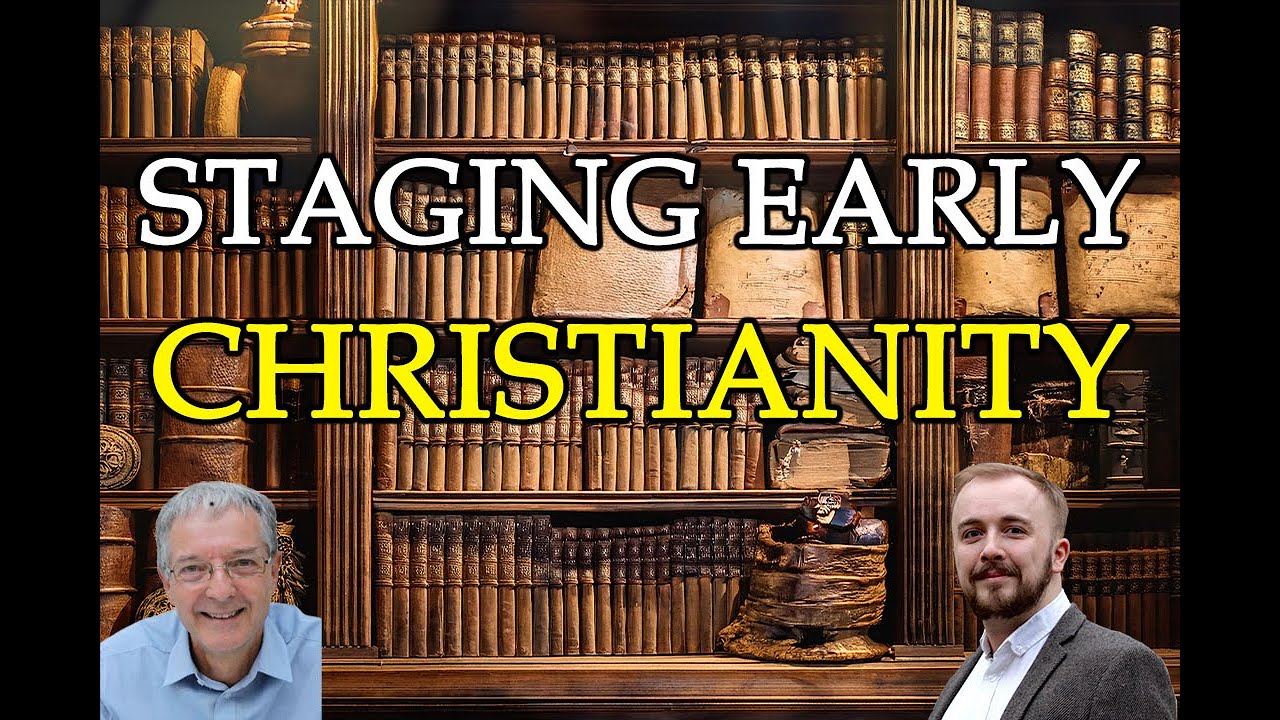
“Staging Early Christianity” a discussion between Markus Vinzent and Jack Bull about the origin of the gospels. They discuss the interaction between Marcion and the Apostle John regarding the gospels as witnessed by Papas.
“On the basis of Vinzent’s views, the early history and the nature of Christianity looks very different from our common understanding. Christianity developed as one of the Jewish sects and did not move beyond this framework before the reconceptualization by Marcion of Sinope in the years after 140 AD. Moreover, the various theologies and communities that mushroomed from the mid second century became gradually influenced by the ‘Gospel(s)’ and ‘Paul’.“

“It seems that the idea that we’re retrospectively applying that some great gospels were written and that they were always authoritative forever and ever and that they were basically canonical in the minds of all Christians from Papias onwards is actually not only a difficult position to hold but one that’s completely untenable because it’s rooted in a fantasy that we’ve got through early Christian scholars like maybe Eusebius and Jerome and people like that rather than actual historical data that we have.”

Once you have seen the marks of editing in the gospels, you can’t unsee it. And in Acts. And in some of the letters. The process was complicated. And it will never be conclusively unraveled. Thank Ehrman!

Among the earliest Christians there was a richness of possibility and as you said somewhere, a guiding star. That star was to be inverted by the repressive politics of empire. It died and was buried only to rise again. Nietzsche might not have worried.

1 Like

The New Testament is like a giant Zen Koan full of apparent contradictions. Christian orthodoxy requires its members to assent to a creed which they don’t understand. When you get it you are transformed like the Zen seeker, when she sees her true nature. The Gospel of John calls this being “born from above.”

The form in which the Christian church passes the absolute is shaped by the orthodox catholic tradition which modified it and suppressed expressions which it deemed heretical.

According to the canonical gospels, Jesus appointed twelve apostles. Paul wasn’t one of them yet his letters are the most numerous in the New Testament.

The Apostle Matthew supposedly wrote a gospel, yet the author does not identify himself and instead of an eye witness account, it is based on the Gospel of Mark. The author of that gospel doesn’t identify himself. According to tradition he was an associate of the Apostle Peter and Paul known as John Mark and he got his story from Peter.

The Gospel of Luke was supposedly written by an associate of Paul. At the beginning of his gospel he says that he reviewed the stories of others and includes the best of them in his gospel. The Acts of the Apostles is also attributed to him.

The Apostle John supposedly wrote the fourth gospel. Yet again the author does not identify himself in the text. Three NT letters are also attributed to him. Again the author(s) doesn’t identify himself in the text. So, we have the church tradition of authorship such as it is. For further exploration see Erhman et al.

The Sayings Gospel of Thomas found in Nag Hammadi was the hidden gem of Christian revelation in the 20th century. In this text we see gnosis is to Jesus what jnana is to Vedanta. Thus, the heart and center of Jesus was anathematized by catholicism. It survived persecution underground among the mystics. I further submit that the spiritual vision of John’s gospel is 100% compatible with nondual philosophy.

Mainstream catholicism eventually branded the original Jewish Christian church whom they called “Ebionites”, as heretics. That shows how far the Pauline Hellenistic, Romanized church deviated from the movement that Jesus started.

The movement started by John the Baptizer and Jesus of Nazareth was far closer to the ethos of the community that produced the Dead Sea Scrolls than to the catholic church.

“But the testimony I receive is not from man”

  • John yada yada

Yup. I bet you $500 Jesus was low-key married.

#criticalhermeneutics