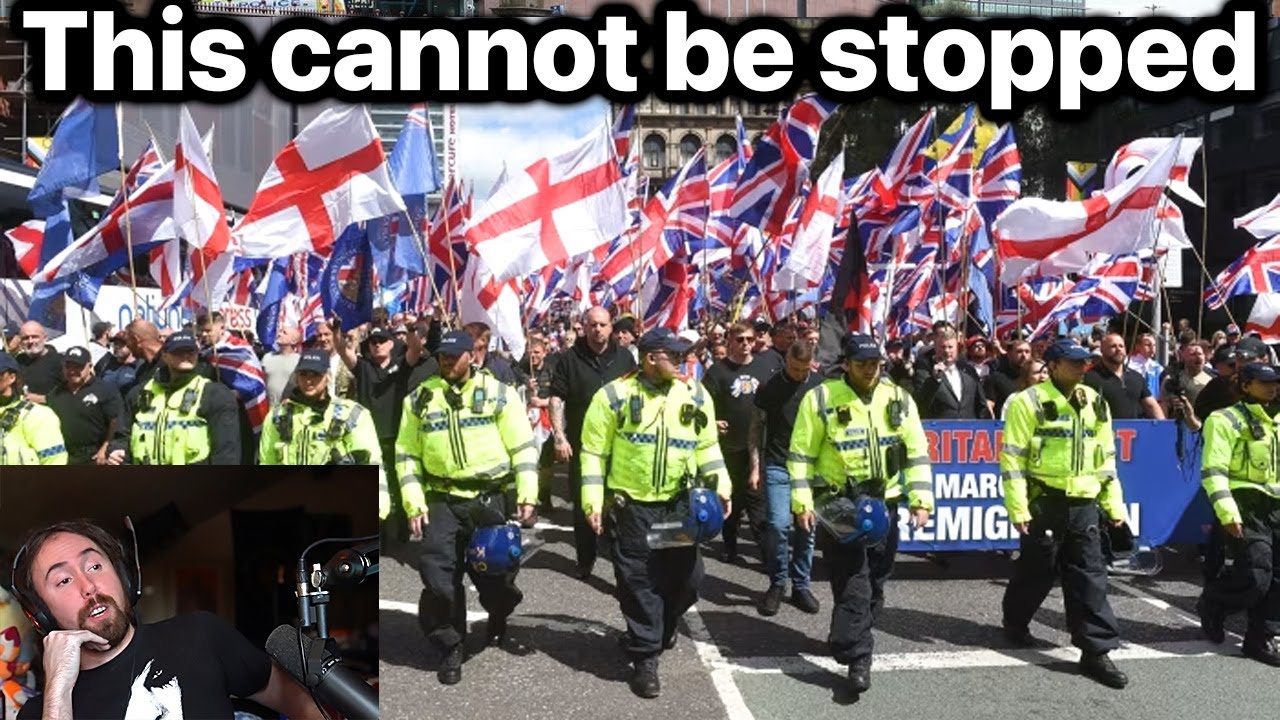
I get the fact that you and others are upset by the deaths of innocents and protest the situations in which this could happen, but you’ve swallowed the doctrine hook, line, and sinker. And attacking the parents of the victims is perhaps not the best way to approach the issue.
Much of what we are witnessing in global politics and society today is underpinned by a discernible pattern that has been favoured by particular interests for decades. Reflecting on my experiences after emigrating to Germany, I found that attending evening classes provided an interesting perspective on how deeply nationalism can influence a nation’s development. History shows that when Hitler rose to power, it wasn’t just the fervour of the masses that propelled Nazism, but also the influential backing of major industrialists — including notable support from certain American business figures. The abdication of the German monarchy created a vacuum that was quickly filled by this ‘new aristocracy’ of industrial power brokers.
Examining contemporary nationalist movements often reveals the quiet — sometimes overt — support of corporations and wealthy industrialists. This pattern endured beneath the surface until figures like Donald Trump made it unambiguously public. A historical pattern emerges: periods of upheaval, unrest and even war almost invariably benefit large corporations. These entities profit not only from the sale of arms and destruction, but also from the lucrative business of reconstruction. Crises such as the global financial collapse of 2008 and the 2019–2020 pandemic have demonstrated that while the average citizen bears the brunt and the public sector is depleted, the ultra-wealthy only become richer. My scepticism towards politicians stems from observing that, regardless of their rhetoric, these cycles seem to serve corporate interests disproportionately over those of the electorate.
Post-World War II history further illustrates how the fear of expanding socialism and communism — a fear stoked by the devastation attributed to these ideologies — fuelled discord among nations and within societies. Authors such as George Orwell, who were aligned with the left, warned of the corrupting dangers of power, irrespective of which side holds it. The real danger does not lie in any particular ideology, but in the concentration of power itself: as the old maxim warns us, power corrupts, and absolute power corrupts absolutely.
How does this legacy connect to today’s world? We are currently living in an era where powerful hegemonies actively suppress any challenges to their dominance. Russia wields its influence overtly, China asserts itself in more focused ways, and the United States has intervened globally for decades to safeguard its so-called “national interests”, which are often indistinguishable from corporate imperatives. The United Kingdom, once the exemplar of a great empire, continues to support and amplify American power, particularly in regions such as the Middle East.
The ongoing manipulation of Middle Eastern affairs is a case in point: peace talks are interrupted, moderate leadership is undermined, and any movement towards unity among Arab nations is proactively discouraged — particularly if it threatens Western access to resources or independent regional development. Leaders who offer public goods, such as free energy or education, are frequently deposed and their nations thrown into chaos, while aggressive projects, such as the colonisation of Palestine, are backed without restraint.
The consequences for Europe are profound. While the United States largely stands apart from the turmoil, the waves of refugees generated by these conflicts flow largely towards European countries. Many of these new arrivals are young and traumatised. Finding themselves marginalised in struggling urban environments, they are vulnerable to further radicalisation. The deliberate destabilisation of the Middle East thus feeds a cycle that challenges European social cohesion and security.
At the same time, it is important to recognise that America’s strategic aim of preventing the emergence of a unified, self-determining Arabia is closely linked to efforts to hinder European unity. Russia, with its historic wariness of a strengthening European Union, is only too willing to exacerbate these challenges.
Ultimately, these interconnected developments point to a troubling reality: the world order is shaped less by the will of ordinary people or the ideals of democracy and more by the relentless pursuit of profit and control by the powerful elite. This concentration of economic, political and military power remains the greatest risk to freedom, stability and genuine international cooperation.
Whether on the political left, right, or in religious or nationalist terms, radicalisation ultimately serves the interests of those in positions of corporate power. The more chaos and division that is sown within societies, the more likely citizens are to turn to extremist parties, believing that these factions will restore stability or eliminate threats. However, this shift does not challenge the underlying system; it perpetuates a cycle of disruption from which powerful corporations and elites continually profit.
This dynamic mirrors the world portrayed in George Orwell’s 1984, where the existence of an ongoing external or internal ‘threat’ is a deliberate strategy to control and manipulate the population. In Orwell’s vision, wars are less about conquest and more about preserving a perpetual sense of crisis. This ensures that the masses never have the freedom, security or clarity required to question those truly in control. In reality, as is often the case in his fictional universe, the chaos stirred by nationalist and populist movements provides both a distraction and a justification; it keeps populations divided and fearful while granting greater freedom to those at the top, especially corporate rulers, to act with impunity.
Thus, societal upheaval is not, as it may seem, a spontaneous outbreak of discontent or a failure of politics. Rather, it is often highly advantageous for major corporate actors: public attention is fixated on culture wars, social discord and manufactured enemies while the machinery of economic and political power operates unchallenged in the background.
In short, the proliferation of radicalisation and chaos is not incidental, but a central feature of a system that benefits most when people are divided, distracted and desperate for order — no matter who promises to deliver it.
And when supposedly “strong” men accuse supposedly “weak” men of not preventing it from happening, they are missing the point.


 snuff?