It’s a given, or it isn’t at all. But here we are…. not being nothing.
I can problematize anything.
I can analyze anything.
I’m trying to understand something/someone(s), not prove it. That’s just a happy accident.
The structure is beautiful to me. Scary beautiful. When I’m motivated to do stuff, this is why (and I’m happy to extend it to others willing to receive it— why would I keep this to myself?). That doesn’t make it false, mister hermeneutic of suspicion. I ain’t stopping just because you wanna come in here and mess with me because little Paulita told you no.
You’re reading too much into my questions. And by the way questioning something is not the same as saying it is false. You requested thought, this was my best shot.
Everybody’s so defensive. I guess I did it to myself.
I find your way of thinking is completely foreign and totally inaccessible to me. Yet I am starting to see a quality and a wisdom in it that I apreciate.
Therefore, if it’s ok, boring, low-quality agreey quips is what I would like to do, just to helpe absorb or whatever.
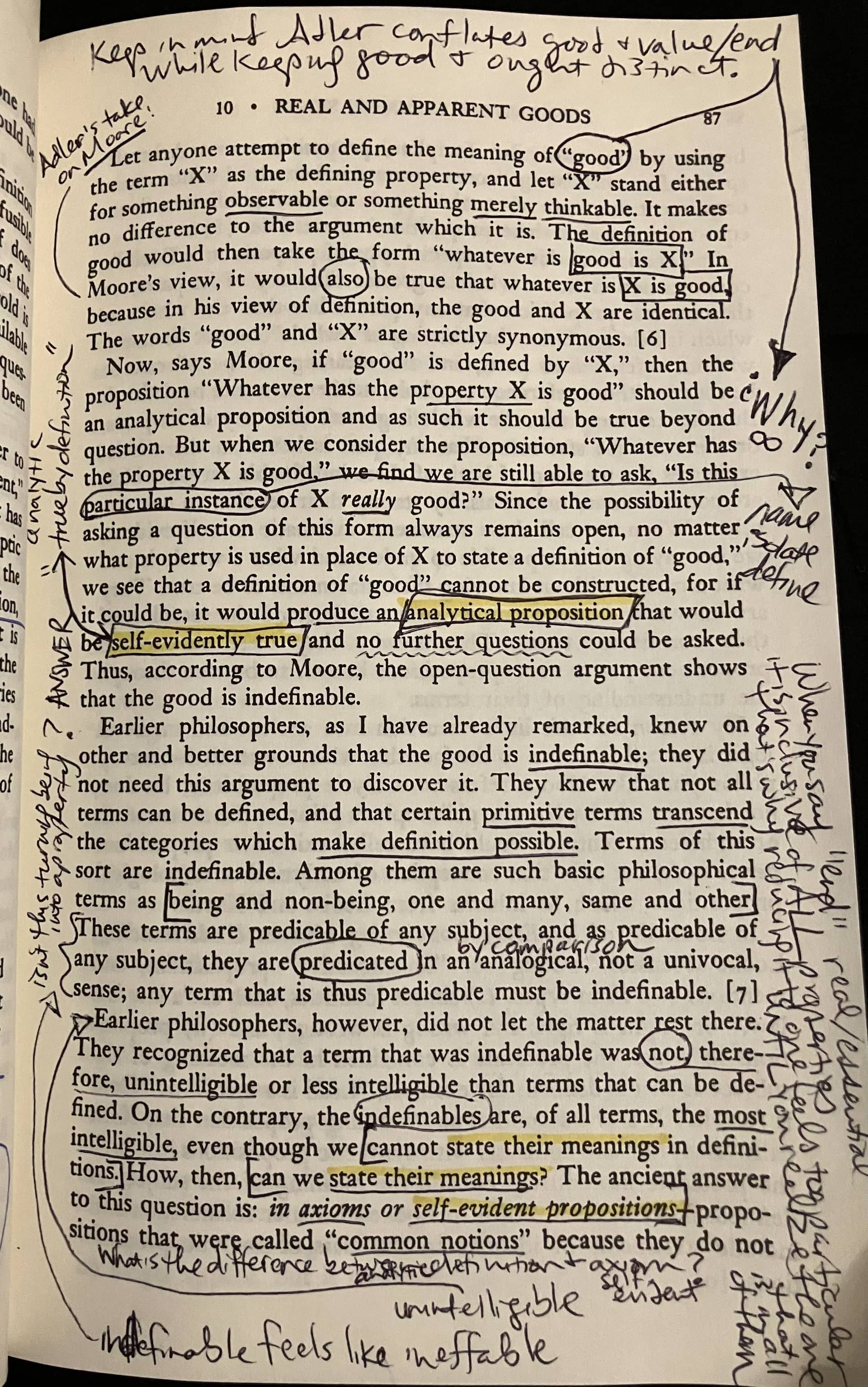
Reason number 500,000 billion we know we are in bizarro world is on page 87:
Adler says that Moore is wrong that we cannot state the meanings of indefinables, but that instead of stating them in definitions (self-evidently true analytic propositions), they must be stated in self-evident propositions (axioms).
Well, I managed to read the chapter despite all my tangents. My book has scribbles all over it, of course, but I need another read through before I move to 11. I need to summarize, also. I will make sure to answer your post. Right now I’m hungry, but I might manage to do this before I go to sleep for the day.
He thinks you have to start with the basic normative principle (though he eschews rules) “one ought to seek what is really good for one’s self” (though this has no reference to an ethical social context) — which he feels is intuitively known to be true once we understand the meaning of the good and the distinction between the real and the apparent good (a distinction he feels collapses the threat of violating the naturalistic fallacy, because he feels that what we consciously want is what we do in fact want, whereas we may not even be aware that we need to desire what satisfies our needs, and therefore an ought can still be possible here—further evidence we are in bizarro world, because he doesn’t seem to understand it is those needs of which we are unconscious that we do by nature and do not require a prescription). He also conflates the good and value/end while keeping good and ought distinct.
He distinguishes between the anti-naturalist (no facts relevant), the naturalist/empiricist (all reducible to facts), and the non-cognitivist (all reducible to preference…in your words, feelings). He thinks he is not a non-cognitivist, but… see previous.
I just love how this is relevant:
… and he gives no way/ought to solve conflicts between those basic needs and the needs of others. And so far, I’m not seeing him recognize or acknowledge the value of every person (the only IS that is a proper ground for ethics). But why would he be acknowledging these things if he is an egoist, which is what I’ve gathered so far?
I think “commensurate universals” is the same idea as “mutual production/entailment” and “homeostasis”. In other words… from what I have gathered external to Adler, and which he has severely mishmashed so far in this book:
being △ action △ quality
I’m going to have to finish sussing out the distinctions and how to avoid the fallacies of violating them and their unity, because I don’t think anyone has done it yet. But, I’m going to try to keep an open mind as I finish this book.
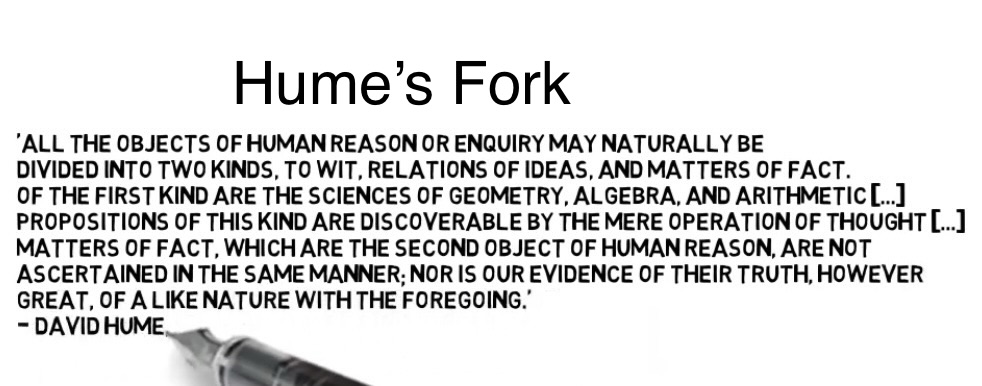
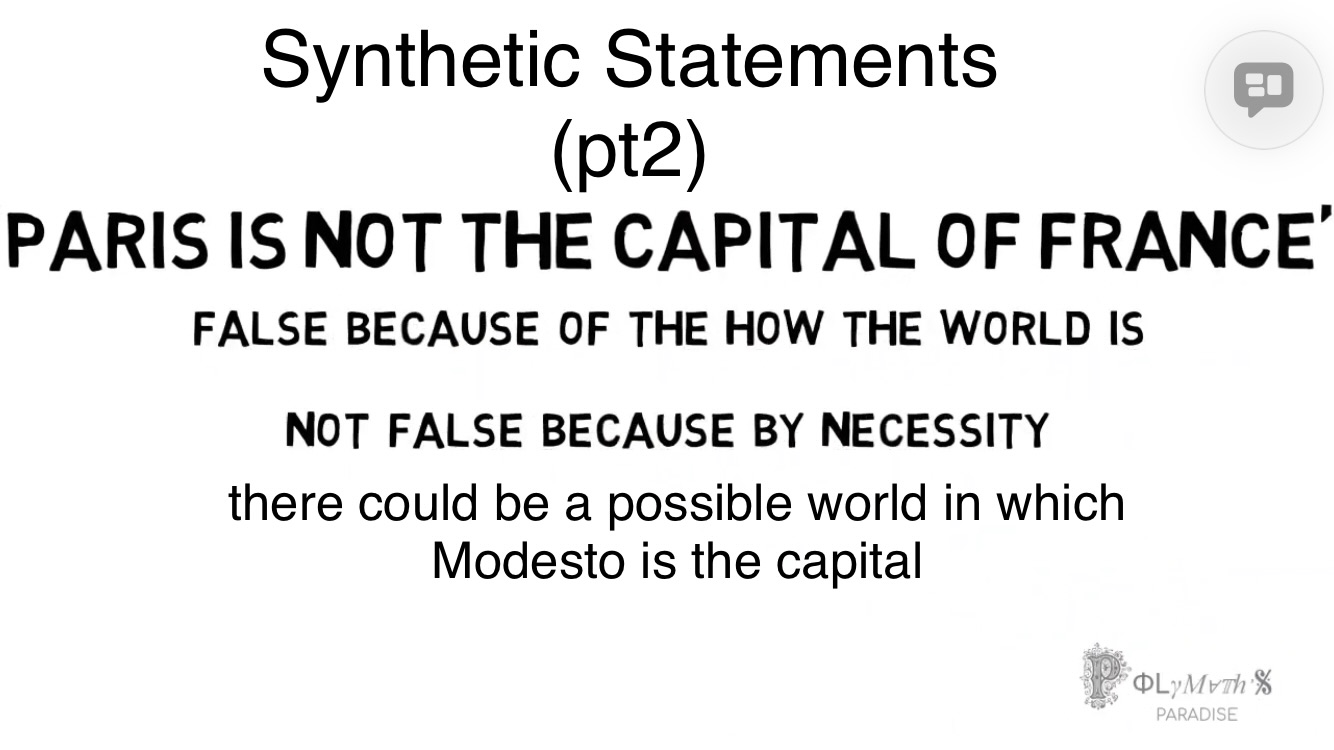
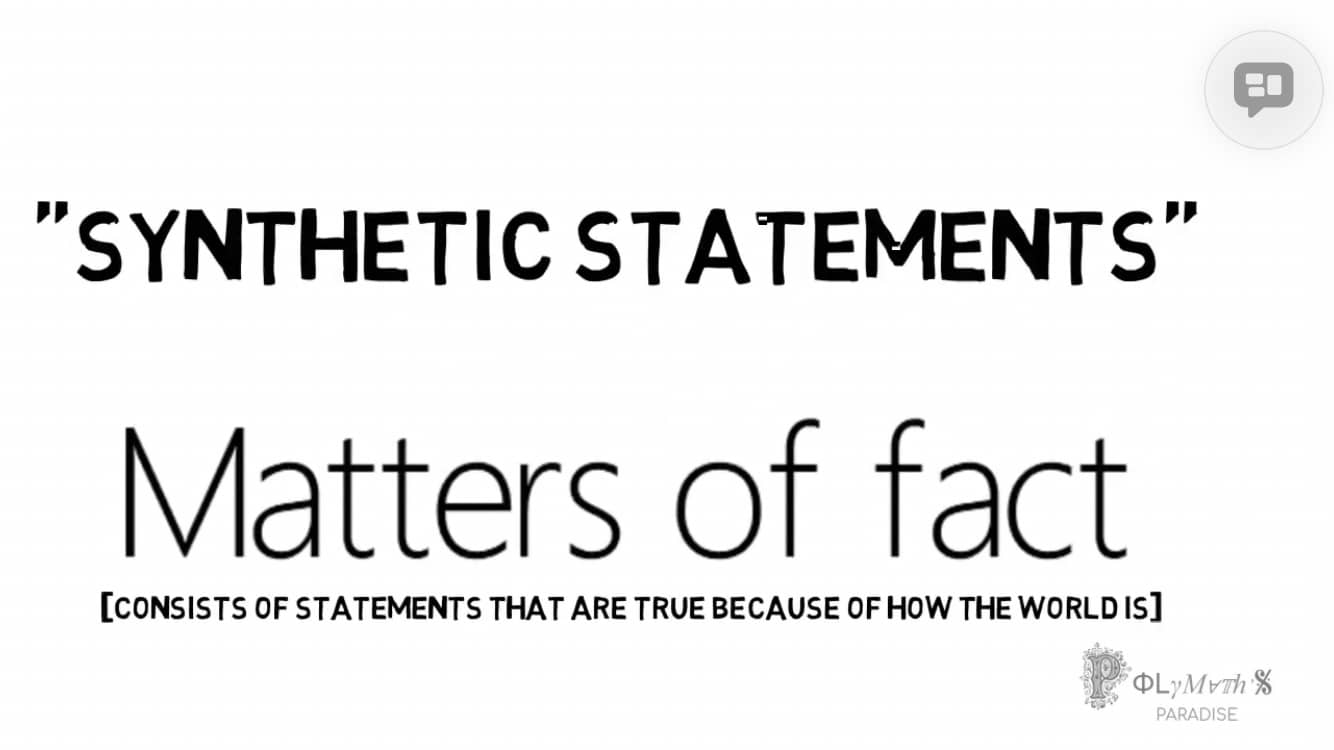
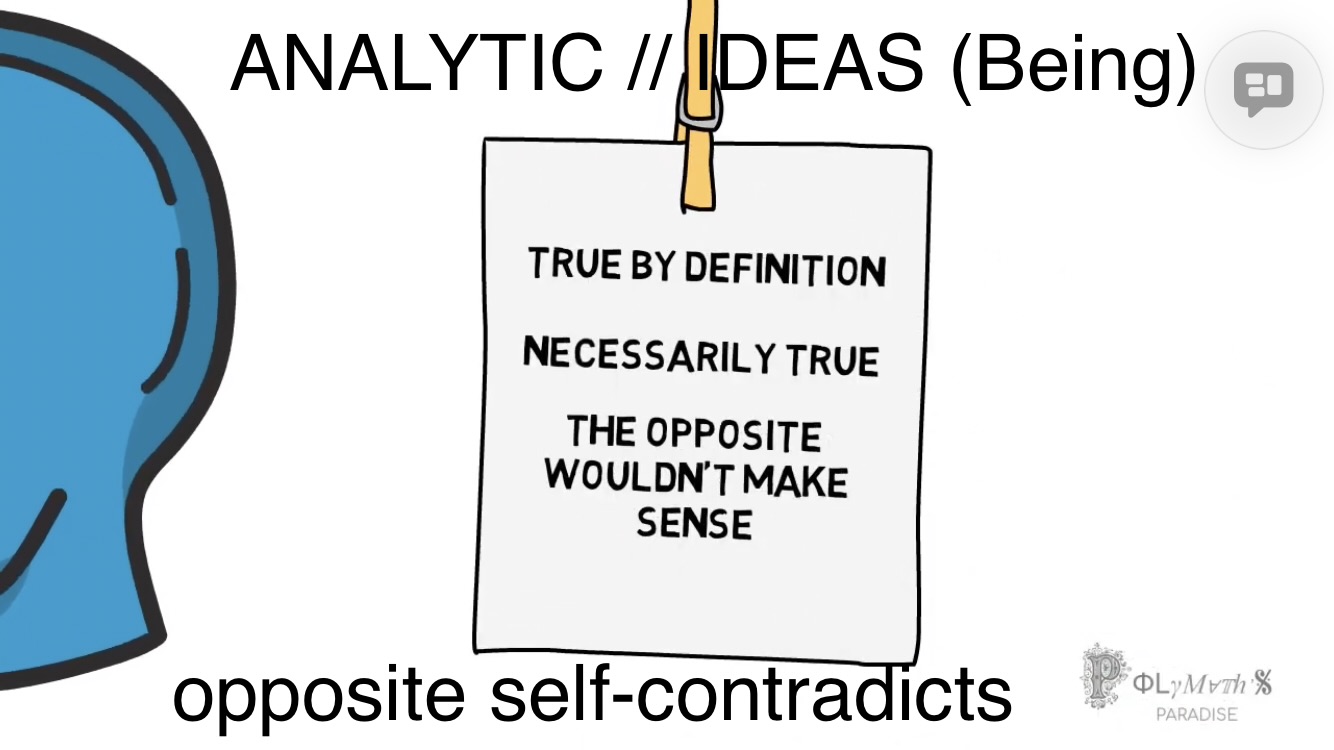
Hume claims analytic a priori ideas of rationalism don’t tell us about the empirical world, and that where the “facts” are found and checkable is in the synthetic a posteriori physical world of experience (empiricism)—and never the twain shall meet.
The video says God is excluded from existing in the physical world, so empiricism has nothing to say in support. Further, it says analytic statements are about mere abstractions and tell us nothing about the world.
Kant was like… dude… the noumena grounding all analytically valid statements are real & we at least sorta access them via the phenomenal (which is how they reveal themselves).
How this relates to Hume’s is-ought guillotine is … for him … isness ain’t the abstract idea stuff, for one (and forget about the nuomenal). It’s the facts about the phenomenal world. Second—the oughts are not ises (facts about the phenomenal world). Resolved if you accept the nuomenal as the real ground that makes oughts factual descriptors. Similar to how we are not perfect like the nuomenal, so the oughts do not always describe our character, behavior, or values, and we are subject to time, whereas the nuomenal is omnitemporal (present, but not subject, to every time t).
We’re weird because we put oughts as actions in actuality (though we also put them triadically)… the how… ironically the only place Hume is comfortable inhabiting (because justificatory science/induction).