Can someone please explain to me how they came up with nominal, ordinal, interval, and ratio in statistics? Were they supposed to be the modern version of Aristotle’s four causes?
Just had a great conversation with Copilot about it:
Wow, that link actually invites you to join the conversation.
Follow up disco;
More, but different:
Trying here. This is embarrassing.
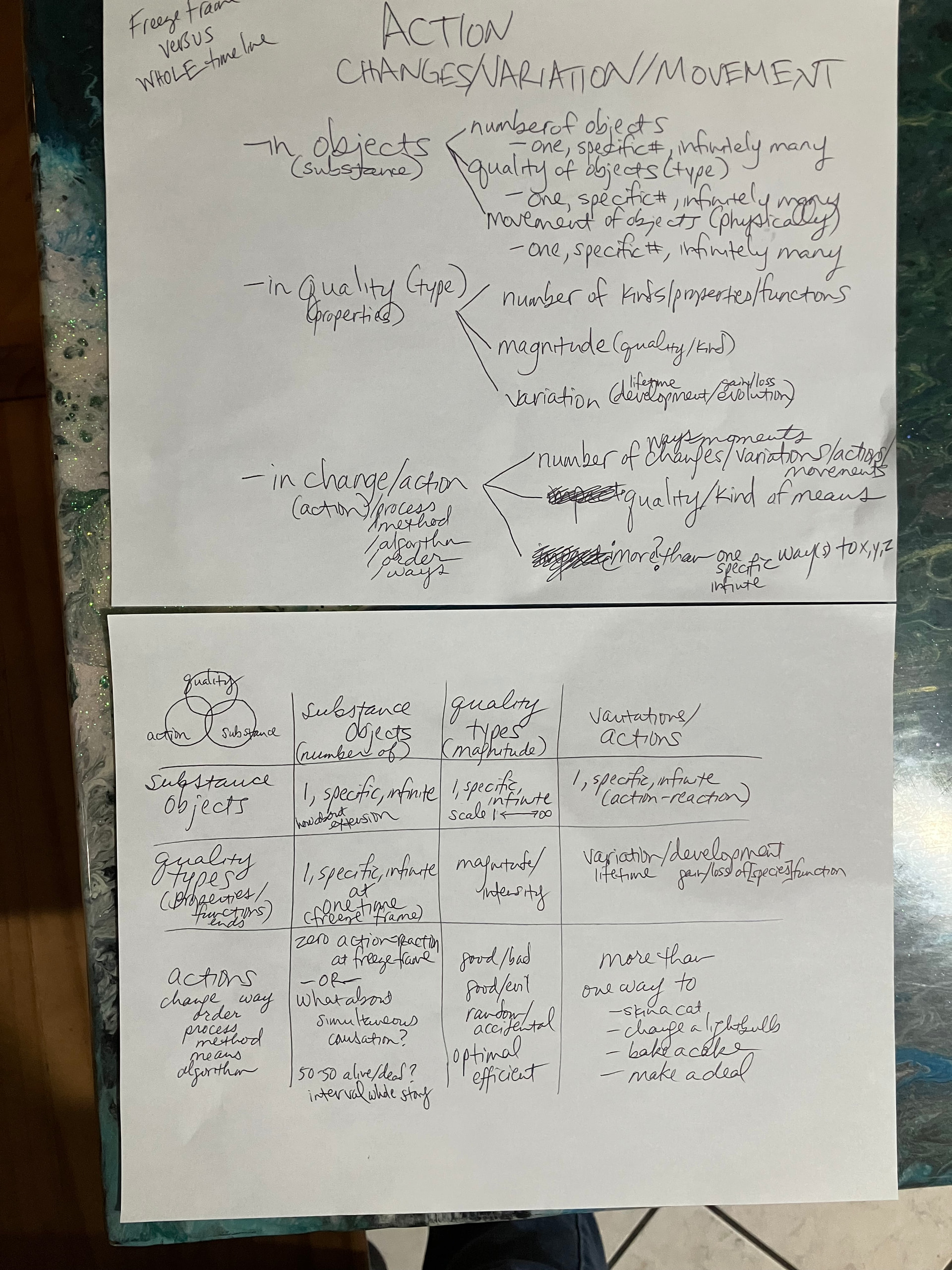
If action is interval, zero doesn’t mean absence. I need a friggin tutor.
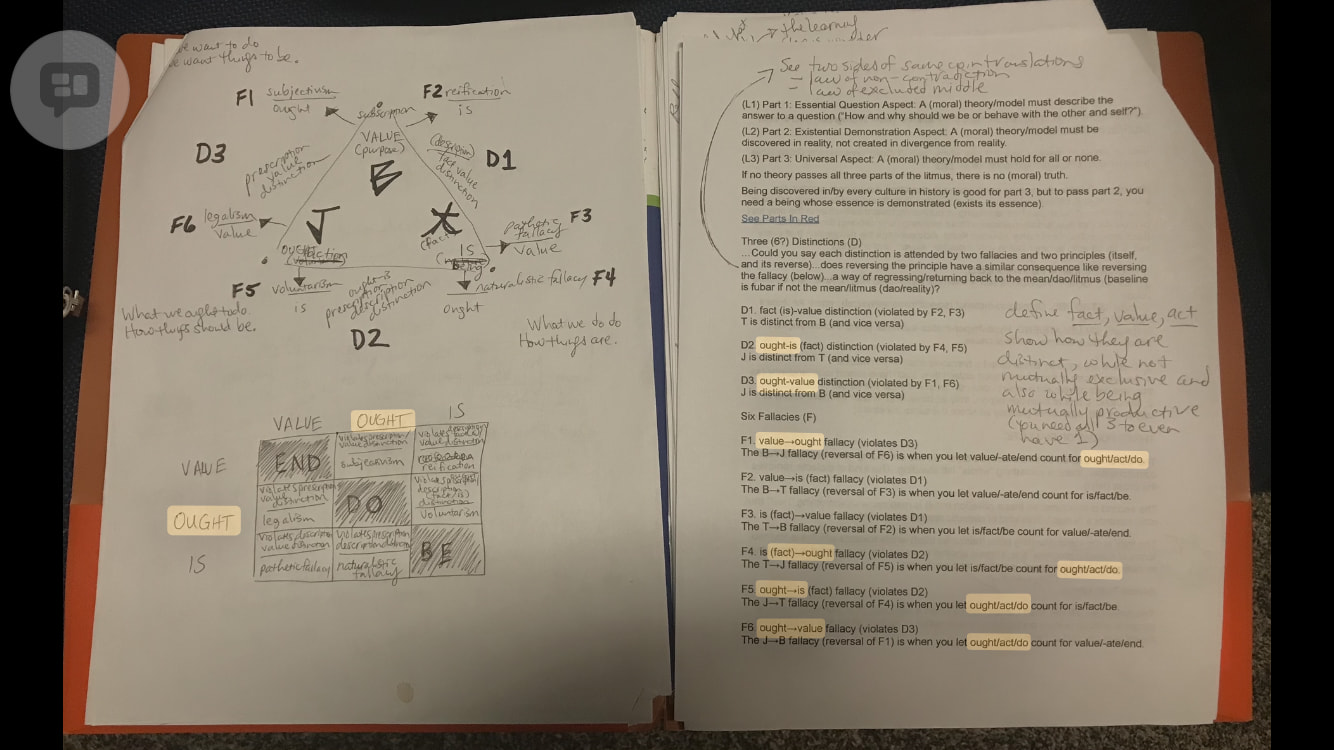
I never even heard of object oriented ontology when I asked this question (well, I don’t recall ever hearing of it). This is spacely space sprockets. I first listened to the first podcast about it (dropped Jan 25). Bought the book Feb 5. Delivered Feb 6. How crazy is that? I emailed them asking to go further into discrete and continuous on Feb 3 after I listened to the relevant podcast where it came up… they had probably already recorded it.
Just another daynight in bizarro matrix twilight zone world simulation (creation).
I’ve heard of “object oriented programming”. So I went to read about this, to see if there were any parallels, but it seems there aren’t (so far). To be honest, I can’t even work out what an “object” is in this context, what exactly is being referred to? A physical object? A concept? Apparently, it’s everything.
Here’s what AI said:
The Core Definition: Anything That Is Not Nothing
At its most fundamental level, an object in OOO is any entity that is not nothing . It’s anything that can be said to “be” in any sense at all.
This definition is intentionally all-inclusive. For philosophers like Graham Harman (the principal founder of OOO), the primary division in reality is not between subjects and objects, or between mind and matter, or between nature and culture. The primary division is between objects and nothingness.
Therefore, the list of objects is virtually endless and includes:
- Physical Objects: A rock, a pencil, a hydrogen atom, a planet.
- Fictional Objects: Sherlock Holmes, the character of Elizabeth Bennet, the One Ring.
- Ideal Objects: The number 7, the Pythagorean theorem, the concept of justice.
- Natural Objects: A tree, an oak forest, the ecosystem of that forest.
- Artificial Objects: A hammer, a skyscraper, the Windows operating system.
- Living Objects: A bacterium, a cat, a human being.
- Institutions: The United States Marine Corps, the Catholic Church, a local chess club.
- Parts and Wholes: A gear in a machine is an object, but so is the entire machine.
For OOO, there is no “bottom layer” of fundamental, tiny objects that build up to less real, large ones. An atom is an object, and a solar system is equally an object.
They could have saved themselves some bother, and instead of calling it an “object”, and confusing programmers, just called it “something”, because it seems to me, that is what is being referred to.
That quoted description didn’t get it. I suggest listening to the Partially Examined Life interviews of Harman, both parts, 1 and 2.
Specifically regarding object oriented programming, I took this note:
1 Like
objects cannot make direct contact with each other, but require a third term or mediator for such contact to occur.”
OK, I think I see it now. Thinking about what the mediator might be hurts my brain, but otherwise, fair enough.
I imagine the feeling is vicarious.
Don’t know what that means in the context, but sure, if’s something positive.
amor fati
Count it all joy.