No, there’s this opposite thing you do where you scrape away their connections to each other & reality, so no one follows their implications, and instead they follow an unreal narrative. It’s gross. Like lukewarm vomit.
1 Like
I call that trick, “making compelling arguments for conclusions you don’t like”. Truly devious.
Well. You need to work on the compelling part. Big time.
Nah, the nauseous feeling you describe is motion sickness. Like the ground moving beneath you, one part of your mind is trying to stand still, while another part is compelled to move.
.
@Carleas I said I don’t want to make a prediction.
Voting -to me- is more a gamble than a prediction, in that, will your vote pay off… come election day.
.
@Meno4 …most of them have moved to Europe, and most of those to the UK… Cotswolds way etc.
The UK doesn’t want them.
.
Well it is the heart of the political hub, so not really surprising that it needs protecting… especially after the assassination attempts on Trump.
Right, and I said you are implicitly making one: “will your vote pay off” embeds predictions about how a candidate will affect policy and how a policy will affect outcomes, a.k.a. pay offs.
What you don’t want to do is make an explicit prediction.
Martial law would absolutely be surprising. Even deployments to of the National Guard to DC are surprising, because they are exceedingly rare.
In general, the military is not responsible for protecting the President or the District. The Secret Service protects the President. The Capitol Police protect Congress. The National Park Police protect the monuments. DC Metropolitan Police do most local policing. The DC National Guard is deployed in a policing capacity only in extreme circumstances, such as when a violent riot overwhelm the Capitol Police. Or when a wannabe dictator wants a photo op.
The military is not a police force, it is not typically deployed domestically, and any deployment of the military domestically is and should be surprising.
Trump is not in particular need of protection. Obama got 30 death threats a day, multiple assassination attempts were made against him, and he never deployed the military to DC.
.
None of that is reflective of how I vote, so does not apply to me.
.
Well we all saw what happened when Trump was being ‘protected’ by The Secret Service, so I guess that decisions are being based off of that for the best way to protect him.
Many Presidents, globally, ride around with a military entourage, especially if their victory was a controversial one.
.
Obama made his choice, Trump’s team have made their’s… why risk One’s life, when there is a perfectly good solution to resolve that concern.
We love our military here… why does the sight of them concern some so?
One of us is misunderstanding the other, and if it’s me I apologize. But I’d like to drill down on this a bit.
You say “voting … is more a gamble than a prediction”. My claim is not that voting itself is the implicit prediction, but that it embeds an implicit prediction. For example, suppose Person A likes tariffs, so they vote for the candidate that says, “I will impose massive tariffs”. My claim is that doing so implies a prediction: if elected, this guy will impose massive tariffs (or at least more tariffs than the other candidate).
You can see this more clearly if you consider how Person A might react to a candidate from the Globalism and Free Trade and Open Borders Party (GFTOBP) saying, “I will impose massive tariffs”. There, they might still vote against the GFTOBP candidate, because they don’t trust the candidate’s words. The candidate said the same words, but given other information Person A might predict that the candidate won’t follow through.
That’s the sense in which I say voting embeds predictions. I would extend it further and say that even policy preferences embed predictions, because policies are instrumental towards some social end, e.g. Person B might support a policy like “don’t give refugees asylum” because they they predict that that policy will lead to fewer assaults.
I recognize that in some sense these are normative claims: voting should be about policy preferences, and policy preferences should be about social outcomes. And maybe all you’re saying is that yours aren’t. Is that what you’re saying?
https://www.politico.com/live-updates/2024/11/21/congress/gaetz-withdraws-00190894
.
More a hope than a prediction… because I still don’t see it as a prediction.
I don’t think that that difference in thought, is worth quibbling over.
.
I am not.
.
The totality of opinion polls is the predictive outcome, my opinion alone is not.
…you were right.
That’s a fair point about voting, that it is more like a gamble. It may or may not pay off in the end. And since we cannot know the full scope of the cheating and rigging going on behind the scenes, but we know there is a fair amount of that, I guess the logical approach would be something like “well why not at least vote and see if we get lucky, maybe we can tip things”.
I can get behind that. Interestingly and although I didn’t vote I did feel a strong emotional impulse to vote. I had to resist this feeling with reminding myself objectively and logically that my one vote doesn’t change anything, so the impulse is not one of coming from truth but rather coming from a psychological need to validate myself emotionally-meaningfully as part of a group identity. Philosophically I cannot accept that sort of reasoning as trumping (lol pun intended) a more authentic truth-impulse, so I resisted and stayed home.
But I can definitely understand the reasons why people do vote, indeed part of my own justification for abstaining comes from the thought that maybe if enough people were to consciously abstain from voting for an evil corrupted system then we can get rid of it and make a better system… which is the same sort of logic people who vote use to feel like their one vote matters.
In the end, if my one vote doesn’t matter then neither does my one non-vote. I am irrelevant either way, lol. But that is why I also feel that voting is over-hyped because it serves as an excuse to avoid doing other things that would or at least reasonably could be expected to produce an actual political influence. Like starting a political organization or a non-profit to push the political ideas and values you want, or donating your time and money to work on a political campaign, or going to talk in person to your local representatives. Or trying to convince your friends and others to agree with your ideas, which could in theory have a ripple effect forward in the future… but most people don’t really do any of that, they just vote. And by just voting they feel like they contributed something meaningful.
Oh well. Who am I to criticize? I just realized one day that voting for any person or any party is still a vote cast in support of the overall system. Despite what Trump pretends about being against the system. Considering the last 4 years he was in office, by now we know he is just another part of the system same as any other. He has his role to play, and part of that role is to talk tough and appease the anti-establishment people with false dreams of a glorious new utopia under the guise of some sort of quasi-libertarian ‘Christian nationalism’ and return to supposedly conservative society. Yeah, that’s not gonna happen. Trump will propel the same stuff forward as is already being pushed, although he may do it in ways that also happens to do a few good things here and there.
In the end, the only winner is the false dialectic. And perhaps all of us who get pushed onto a different track that doesn’t need to involve dying in WW3, although that remains to be seen. Trust me though, they have plans and alternate tracks for any possibility. The future is going to keep being steered in the direction they want it, regardless of how it gets there or how long it takes to get there. That is what I see anyway, through the whole veil of modern politics. Feel free to disagree and I am sure you’ll sleep better at night.
1 Like
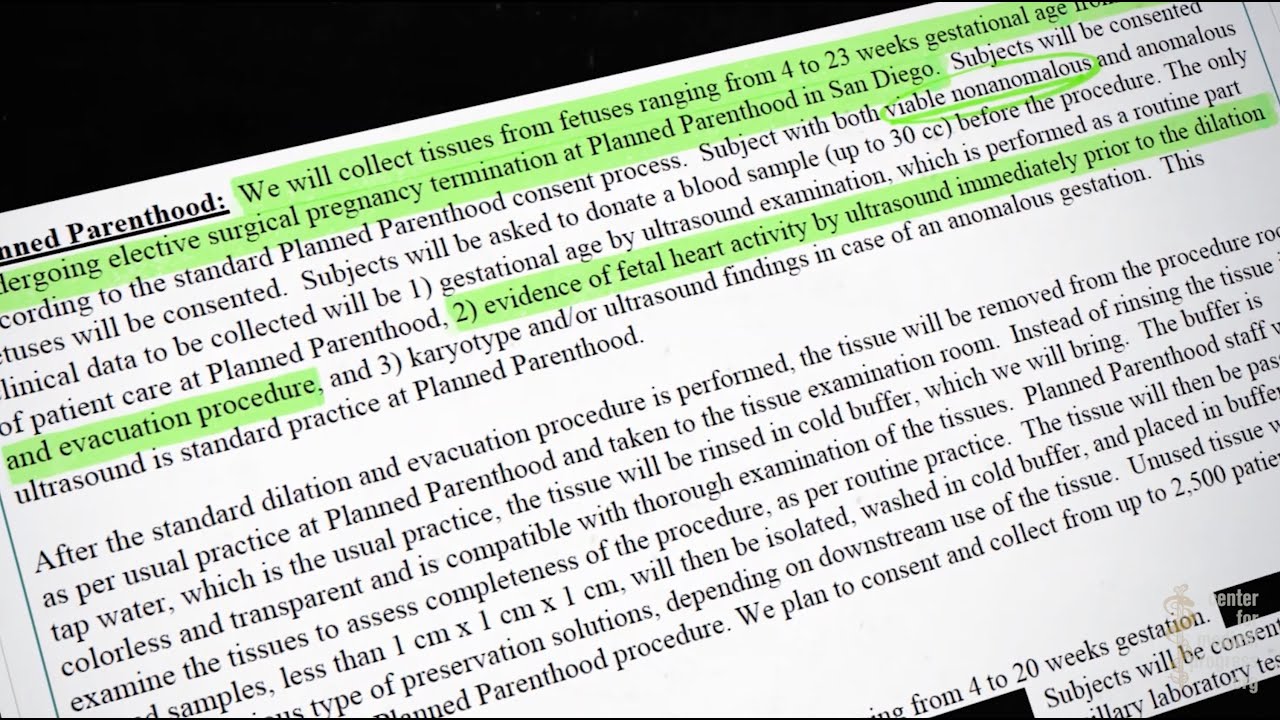
Musk’s new D.O.G.E. has “identified the hundreds of millions of taxpayer dollars subsidizing Planned Parenthood’s abortion empire as ripe for defunding” … I can’t imagine why … Well, I don’t have to, due to their being exposed as trafficking in viable premies born alive for research profits… hiding that fact from the Spanish, but not English, disclosure forms… and submitting the mothers to torturously quick and painful chemically hard labors…
oh heyyyyyllll yeah!
https://abcnews.go.com/Politics/marjorie-taylor-greene-head-new-doge-house-subcommittee
Next up. How’s about corporate & fake-mom & fake-pops landlords have to adjust to a drastic increase in solar powered (& otherwise green) tiny home farms which completely account for our ¡¡¡INCOME-BASED!!! housing inventory deficit?
I hear Elon Musk is in that sort of business.
lovely party
Carleas said:
I am less surprised at the outcome of the election in the US than I was in 2016, but I am still baffled by what Trump’s supporters are thinking. ←
That’s because we’re getting our information from completely different sources.
We’re all confused about the world. In fact, I like to say we’ve entered another dark age–not one characterized by a lack of information but by too much (conflicting) information–no one knows what to believe anymore.
In fact, I remember explaining to Peter Kropotkin one time my view that we’re all living on media-created “islands” without even knowing it:
Gib said:
Seriously, where did you [Kropotkin] hear this? I’m honestly interested. One of the most interesting phenomena that’s come out of these left/right battles of the last several years is how misinformation is spread, not only in general, but to target groups. I can enumerate a few occasions where I spoke to leftist to learn that they’ve been fed falsities that I didn’t even know were going around. And I know that many of the details of this protest, the ones that speak in favor of it, are only known by those who follow the news sources that dish them out. What I mean is, if you’re being fed right leaning information by your favorite internet algorithm, you’ll know things that no left leaning enthusiast will have even heard of, let alone disagree with, and if you’re being fed left leaning information… well, visa-versa. It’s interesting how it’s creating silos of media-built worlds for us to live in without even knowing we’re living in them. We all kinda assume that, right or wrong, believe it or not, approve of it or not, that whatever major events of the day are going on in the world, everyone who’s paying attention knows about it. But I’ve recent become disillusioned to this. Only our local group (or immediate internet network of peers) knows about what’s happening on the media-constructed islands we live on… and who knows what’s going on on other islands. We can no longer take for granted that the island we find ourselves on is the world.
What do these two things have in common? Hamas being sore losers because we won’t feed them. Ukraine being accused of becoming a nuclear power.
Answer: Iran is funding Hamas, and is in danger of becoming a nuclear power.
And yet another cease-fire goes kaput.
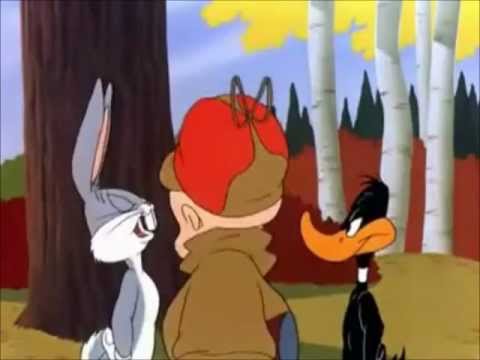
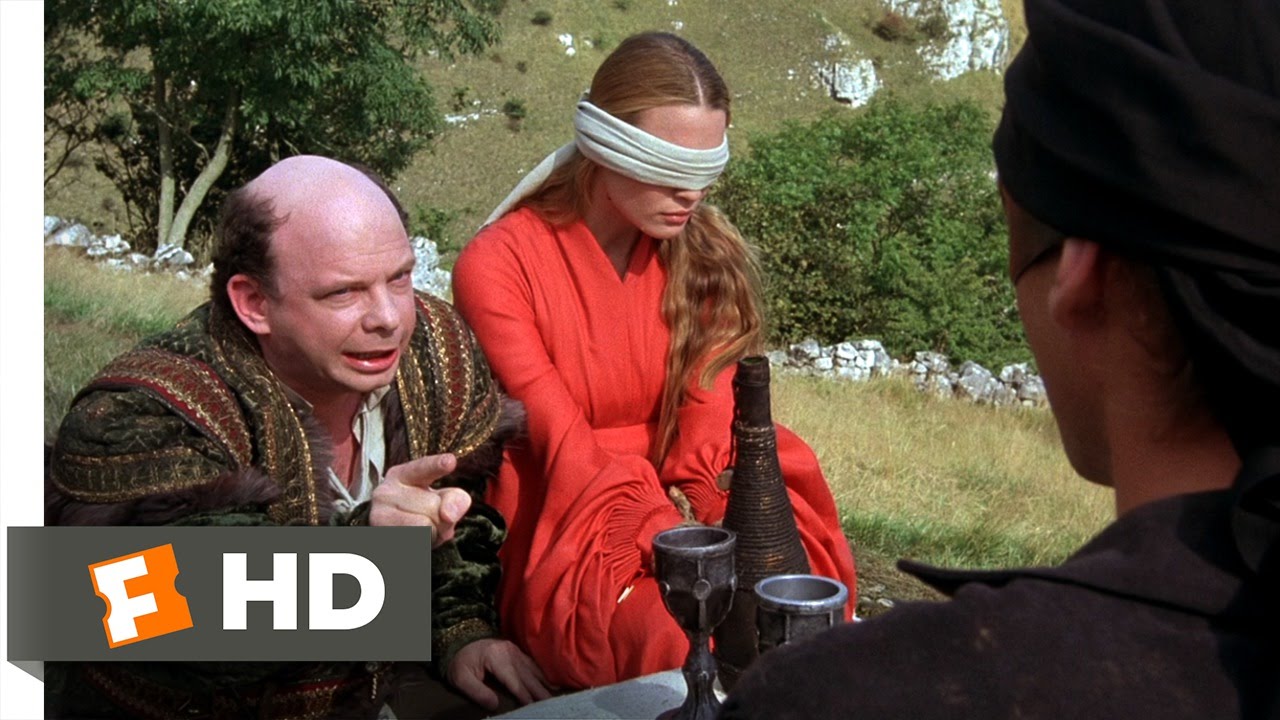
The narrative is Opposite Day. Some examples:
So it seems we agree that policy preferences should be about social outcomes. Should voting be about policy preferences – do you vote for people based on how you expect them to affect policy?
I don’t understand this framing, how is it like a gamble? Just because there are multiple outcomes and some are preferable to others? Do you win more if you vote and the vote comes out the way you want than you would if you didn’t vote and the vote comes out the way you want?
This I understand, I do think it’s important to resist the emotional impulse. I disagree with the idea that “one vote doesn’t change anything”, though I see the reasoning. But in 2024 there were multiple states decided by <2% of the electorate, if you made that argument to 100 people there’s a reasonable chance you could convince 2 of them not to vote, and that’s enough to swing the outcome.
Of course, if you aren’t in one of the states, my counter-argument doesn’t work. Where I live, the electoral college reliably goes to the Democratic candidate by >90%
But there’s motivations besides winning that can justify voting. The past couple elections I’ve voted for the Democrat because popular vote totals matter when resisting populism. Before that I voted for a third party that I thought might have a chance to secure federal funding.
That’s part of what I’m up to with this thread: If I think Trump supporters are mostly confused, I can test that belief by making predictions that they disagree with about the consequences of a Trump presidency. If they are confident that they aren’t confused, they can make similarly concrete predictions, and in 4 years we can see whose beliefs held up better.
While misinformation and media bubbles confound this, it’s still meaningful to predict what a specific source will say. Even biased sources are constrained by facts to some degree. Especially because, if a biased source is predictable, its rivals can front-run it and undermine whatever effect its biased reporting is meant to have.
It’s not perfect, but a good check on misinformation is to test if we ourselves are being misled by it. Self skepticism is an increasingly useful skill.
- The US will not acquire additional territory from Canada, Mexico, or Greenland (which is not currently subject to a dispute) during the second Trump administration. (95%)
- Trump won’t make a social media post about acquiring/annexing/purchasing/etc. land in Canada/Mexico/Greenland for at least 2 months following the inauguration. (80%)
My thinking here is that this is a distraction rather than an actual policy, and he’ll move on soon enough. Hedging a bit in #31 because the most likely edge case is that there’s an island or sliver of coast that’s technically claimed by more than one nation and Trump does a photo op with it or something.
Resist? What if the impulse is a good one?
I’m talking about a specific emotional impulse.
Another , more specific impulse hedges around the clean the swamp political premise that is described by a pretty non biased source of information, that is, that the swamp Trump is talking about coalesces with what is actually happening in swampy Florida’s Mar de Lago, that is shady billionaires seeking their own interests are migrating there, pulled like sharks used to meeting , like Salmon pulled to Alaskan shores, making a swampy configuration even more bizarre and ameliated .
Asa a matter of fact, into such confusing aquarium, all other issues of currencies can be included, as examples of general forms swallowing their own distinctive categorical sources of confusion.
It’s becoming like a panicke feed , for all, in advent of some hope that no closure of particular instances of any one school can be swallowed before adequate rationale can be found to support the various specific claims thereof.
The feed it’self is suspect of contaminating rather than clarifying that differing of particular interests.