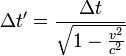
You don’t need to worry about the practicalities of things like air molecules and exact photon to clock sizes. We are discussing the ideals involved, not a practical model.
Huh? How did you determine that? You seem to be thinking in terms of a special reference frame for the light that might be different from other objects. SRT doesn’t allow the light to have its own special reference frame.
If I had said that the station was traveling at 0.4c and the train was traveling at 0.9c during all of this, would you still say that the station stayed centered with respect to the flash points?
SRT specifies that from every frame of reference, light must be measured to travel at the same velocity within that frame. That means that if any clock, moving or not, is centered between any flash points, from that clocks pov, the light from both flashers must travel to it in the same amount of time because as far as that clock’s pov, the clock is not moving relative to the flash points whether the flashers were moving or not.
See above;
Hi Ed,
Wait. “t0” is one fixed point in time when the clock reads 0, not a variable in that equation.
k1 is a variable, t.
t varies from its initial t0. t0 doesn’t vary.
t0 is the one instant when all clocks are initialized/reset. Perhaps think of it as the trains are coming and at one instant, all clocks are reset to 0. At that moment, the front train is closer to the station than the rear train and both clocks have been reset to 0. That means that the x0 for each clock is different with respect to the station. Thus the x distance from the station clock cannot determine any value at all because at that one moment, every clock, at every x distance, would read zero.
The x distance is NOT the distance from the station clock, but the distance from whenever the clock in question was reset or initialized, its x0 and t0. Each clock must have its own “x0” and “x”; “xr” and “xf” for the rear and front clocks measured from xr0 and xf0 (or P1 and P3 in that diagram). The station’s “x” is always zero because the station isn’t moving relative to the station frame’s “x0”.
You have to calculate each clock separately. Each clock has a different x0.
… but for each clock separately because the “x0” from which x is measured is different for each clock. And xr is always equal to xf (D1 and D2 in the diagram).